

 EN
EN
 русский
 Español
 عربى
عربى Français
Single-Person XL Outdoor Portable Toilet: A Spacious, Flexible Solution for Modern Outdoor Sanitation
Admin 2026-08-24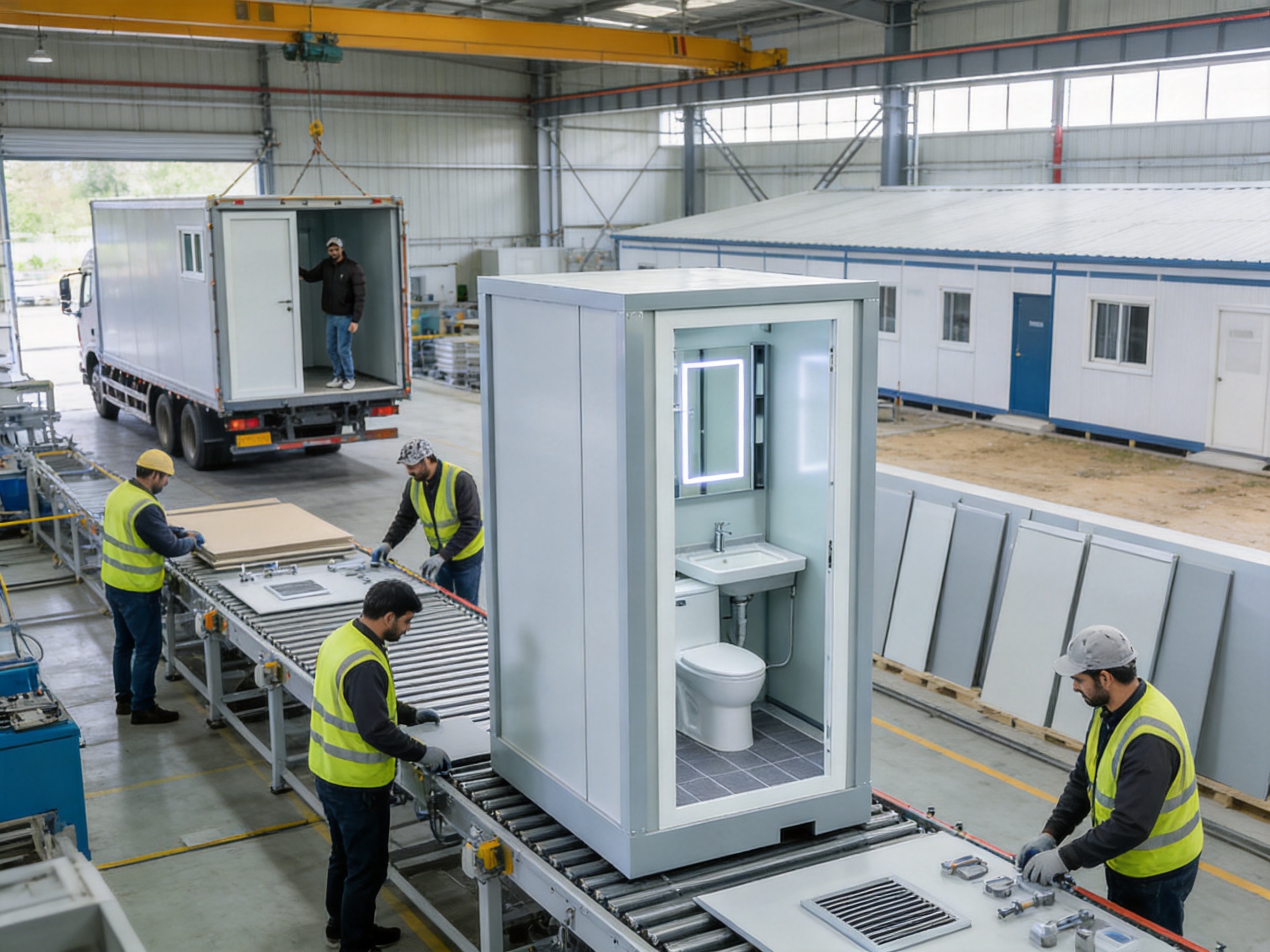
Content
- 1 What Is a Single-Person XL Outdoor Portable Toilet?
- 2 Why Interior Space Matters in a Portable Restroom
- 3 Key Product Advantages
- 4 Applications Across Multiple Outdoor Environments
- 5 Comparison with Standard Portable Toilets
- 6 Manufacturing Strengths Behind the Product
- 7 Materials, Stability, and Outdoor Performance
- 8 Hygiene and Maintenance Planning
- 9 Planning the Installation
- 10 Customization and Project Adaptability
- 11 Why Choose an Experienced Modular Building Manufacturer?
- 12 Operational and Economic Value
- 13 Environmental Considerations
- 14 Quality, Safety, and Delivery Considerations
- 15 Q&A: Single-Person XL Outdoor Portable Toilet
- 15.1 Q1: Who is this portable restroom designed for?
- 15.2 Q2: Is the unit intended for one person at a time?
- 15.3 Q3: Can a washbasin be installed inside?
- 15.4 Q4: Does the restroom require permanent plumbing?
- 15.5 Q5: Can the unit be relocated?
- 15.6 Q6: Is it suitable for frequent outdoor use?
- 15.7 Q7: How is the XL model different from a standard portable toilet?
- 15.8 Q8: Can the unit be used with temporary housing?
- 15.9 Q9: What should be prepared before delivery?
- 15.10 Q10: Can the product be customized?
- 15.11 Q11: How often should the restroom be cleaned?
- 15.12 Q12: What makes the manufacturer suitable for larger projects?
- 16 Recommended Buyer Evaluation Checklist
- 17 Conclusion
- 18 References
- 19 Product: Single-Person XL Outdoor Portable Toilet
Single-Person XL Outdoor Portable Toilet: A Spacious, Flexible Solution for Modern Outdoor Sanitation
Providing reliable sanitation in outdoor and temporary environments is a practical challenge for construction companies, event organizers, emergency response teams, camp operators, public agencies, and private property owners. A restroom must be easy to transport, quick to install, durable enough for changing weather, and comfortable enough for repeated daily use. At the same time, it should provide the privacy and cleanliness expected from a permanent facility, even when it is installed far from a conventional sewer system or permanent building.
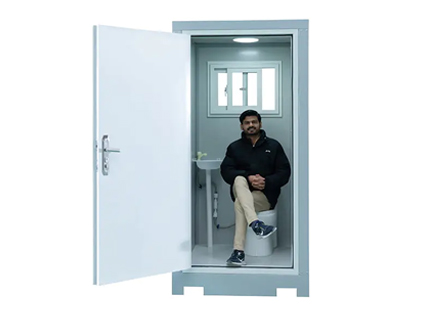
The Single-Person XL Outdoor Portable Toilet is designed to answer these requirements with a larger, more private, and more adaptable configuration than a standard compact portable toilet. It is a single-user mobile restroom with an XL interior that gives occupants more room to enter, turn, sit, stand, and use optional hygiene equipment. Its purpose is not simply to provide a basic toilet compartment. It is intended to function as a more comfortable sanitation station for outdoor sites, temporary accommodations, emergency relief operations, remote work areas, camping locations, and other situations where a permanent restroom is unavailable or impractical.
Its central advantage is the balance between portability and interior usability. Many portable toilets focus on minimizing external dimensions and reducing initial transportation costs. While this approach may be suitable for short-term events, it can produce a confined interior, limited movement, and few options for handwashing or personal hygiene. The XL design takes a different approach by prioritizing individual comfort and privacy while retaining the flexibility of a relocatable structure.
What Is a Single-Person XL Outdoor Portable Toilet?
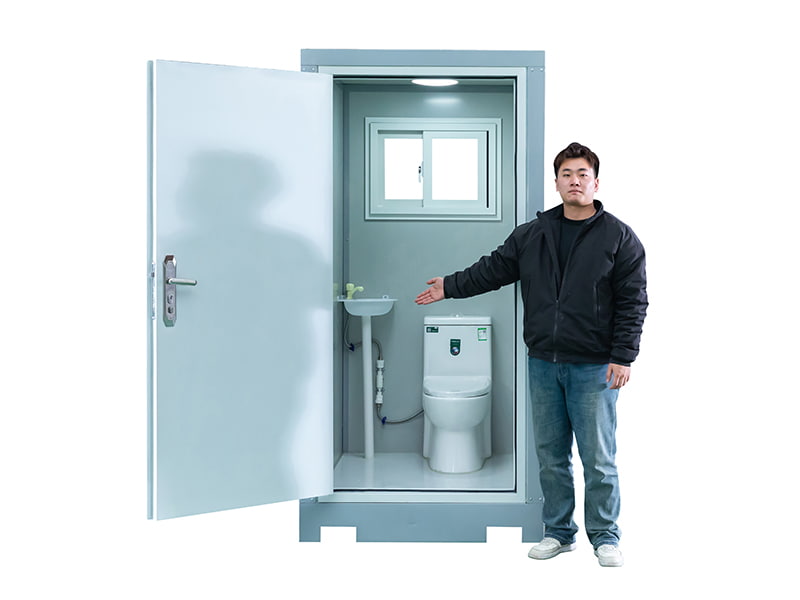
The Single-Person XL Outdoor Portable Toilet is a self-contained or site-connected mobile restroom structure designed for one user at a time. Its spacious interior creates a more private personal environment than many conventional compact portable units. Depending on the project configuration, the interior can be equipped with a washbasin, handwashing equipment, or other personal hygiene facilities.
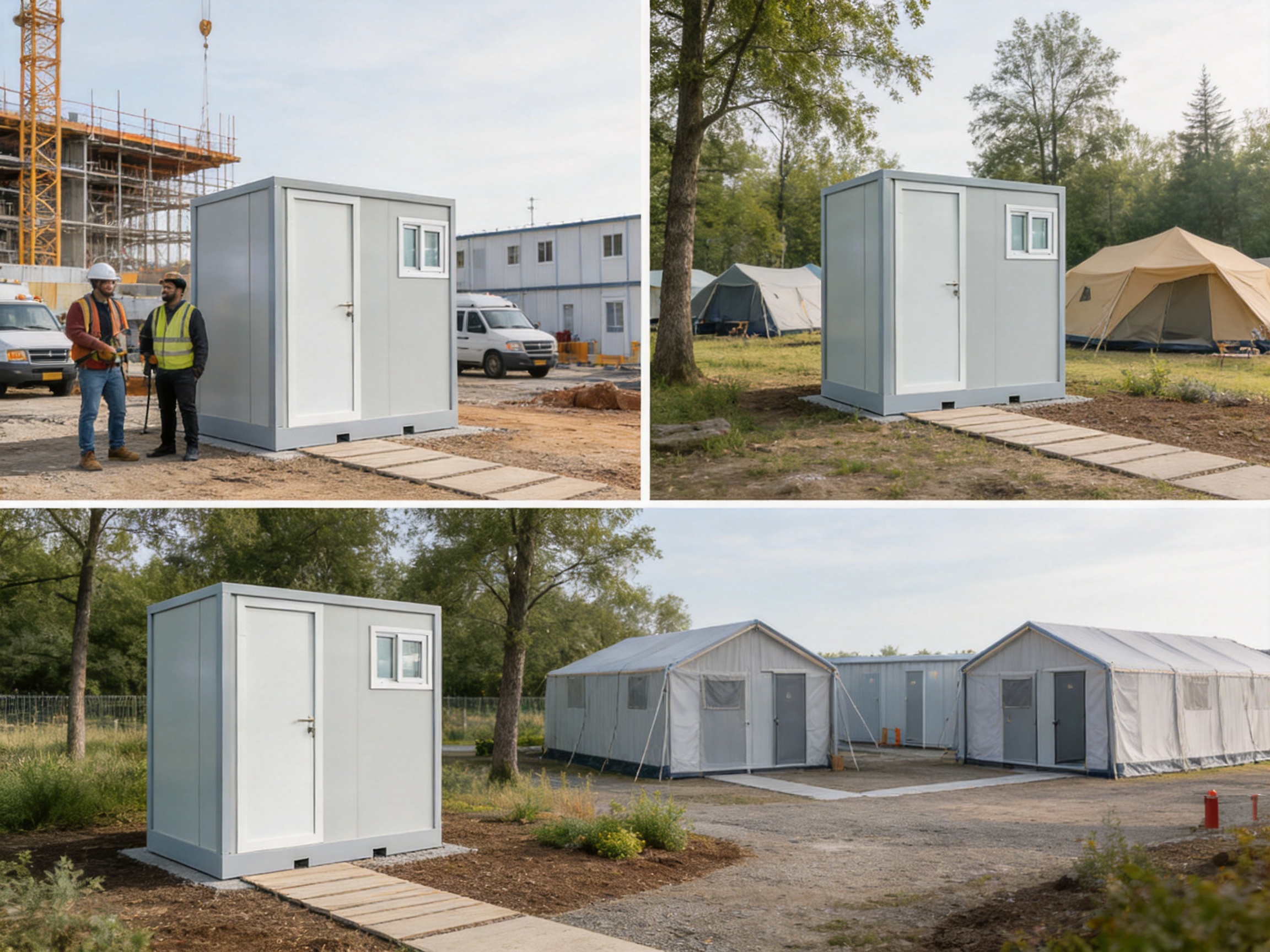
The structure is suitable for deployment in locations where a permanent building cannot be completed quickly, where construction is temporary, or where the site may need to change over time. It can support construction sites, agricultural operations, parks, campgrounds, outdoor gatherings, emergency accommodation areas, temporary housing projects, renovation sites, and remote workplaces.
Because it is designed as a flexible mobile facility, the unit can be transported to a project location, positioned on a prepared surface, connected to the required services where applicable, and placed into operation after setup. Its durable construction is intended to withstand frequent relocation and outdoor exposure. The result is a sanitation solution that can be used as an independent facility or as a practical extension of a wider temporary building project.
The single-person format also has an important operational benefit. It gives users a private compartment without requiring a large multi-stall building. A site operator can deploy several individual units in different areas, place one beside a temporary office, or install a single unit near a remote work zone. This makes it easier to adapt restroom capacity to the actual needs of a project.
Why Interior Space Matters in a Portable Restroom
Interior space is one of the most important differences between a basic portable toilet and a more advanced mobile restroom. A compact unit may provide the minimum area required for toilet use, but it can be uncomfortable for users who need additional room to move, change clothing, manage personal belongings, or use hygiene equipment. It may also be unsuitable for people who require greater maneuvering space.
The XL interior addresses this limitation by creating a more usable single-user environment. A user can enter without feeling immediately confined and can move more naturally within the compartment. Additional room may also help make the facility more suitable for longer periods of use, temporary accommodation projects, outdoor workplaces, and applications where users may need to wash their hands or complete personal hygiene tasks inside the unit.
A larger interior improves the perceived quality of the facility. In many temporary projects, the restroom is part of the user’s overall impression of site management. A cramped, poorly organized facility can reduce satisfaction and create operational complaints. A spacious, clean, stable, and private unit communicates that the project operator has considered both functionality and human comfort.
Interior space is also valuable when the unit is configured with a washbasin. A washbasin requires additional clearance for the user, plumbing components, cleaning access, and the storage or placement of essential hygiene supplies. The XL layout provides more practical possibilities for integrating these functions without making the entire compartment difficult to use.
For emergency relief and temporary accommodation, the importance of space is even greater. People using such facilities may already be dealing with stress, displacement, demanding working conditions, or limited access to services. A private and comfortable sanitation room can contribute to dignity, safety, and a more livable temporary environment.
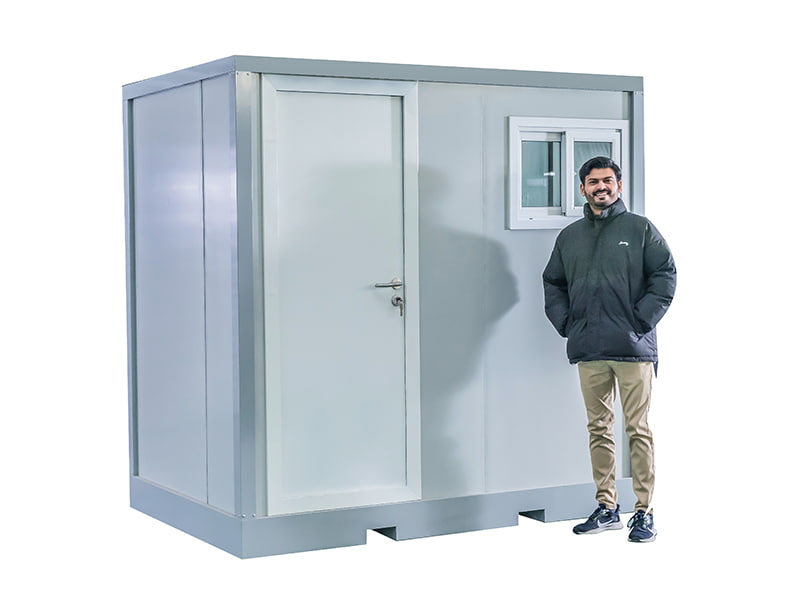
Single-Person XL Outdoor Portable Toilet
Key Product Advantages
1. XL Private Space for Individual Comfort
The most visible advantage of this portable restroom is its spacious single-user compartment. The enlarged interior supports privacy while giving the occupant more room than a conventional compact unit. It is designed for people who prefer a less restrictive environment and for applications where comfort is a priority rather than an optional feature.
The single-person arrangement also reduces the feeling of exposure that can occur in shared or dual-compartment facilities. Each unit serves one occupant at a time, allowing the user to focus on personal needs without sharing the interior with another person. This format is suitable for workplaces, family-oriented outdoor locations, temporary residences, and managed public facilities.
2. Optional Washbasin and Hygiene Facilities
The unit can be equipped with a washbasin or personal hygiene setup. This optional configuration changes the function of the product from a basic toilet into a more complete sanitation station. Users can wash their hands immediately after using the toilet, which supports better hygiene management and reduces the need to locate a separate handwashing point.
For remote sites, combining toilet and handwashing functions in one private structure can simplify planning. Operators may need fewer separate facilities, shorter utility routes, and less space for support equipment. The exact washbasin, water supply, drainage, storage, and sanitation configuration can be selected according to the project’s local conditions and operating model.
In temporary accommodation, a hygiene-equipped unit may also support washing, personal care, and daily routines. This is particularly useful for emergency projects, outdoor camps, worker support areas, and locations where permanent plumbing facilities have not yet been constructed.
3. Durable and Stable Construction
Outdoor sanitation facilities must withstand more than ordinary indoor use. They may face rain, sunlight, dust, temperature changes, wind, frequent cleaning, transportation vibration, and repeated installation. The Single-Person XL Outdoor Portable Toilet is designed with a robust and stable structure for these practical conditions.
Durability is not limited to the outer shell. A reliable facility also requires stable flooring, secure doors, functional hardware, dependable internal fittings, and surfaces that can be cleaned as part of a regular maintenance program. The structure should remain usable after relocation and should support repeated deployment during the life of a temporary project.
Stability is especially important when the unit is placed on a construction site, a temporary event area, uneven ground, or a remote location. Proper site preparation and installation remain necessary, but a structurally stable restroom can make positioning and daily operation more predictable.
4. Quick Deployment
The portable restroom is intended to be ready for use shortly after setup. Fast deployment is valuable when a project has a narrow preparation schedule or when sanitation services must be restored quickly. Construction teams may require facilities before the main building is complete. Emergency response agencies may need immediate sanitation in a temporary settlement. Event organizers may have only a short installation window before visitors arrive.
A fast setup process can reduce labor requirements and limit disruption to the surrounding site. It also allows operators to respond more efficiently when the location, workforce, or user population changes. When the unit is part of a larger modular project, the restroom can be integrated into the overall site plan without waiting for a full permanent structure.
5. Portable and Flexible Use
The product is suitable for locations that may change over time. It can be used at a remote construction area during one phase of a project and later moved to another work zone, temporary camp, event area, or accommodation site. This flexibility helps owners avoid treating temporary sanitation equipment as a single-use investment.
Its mobility is also useful for organizations that manage multiple sites. A company may deploy the unit where demand is highest, relocate it as work progresses, and store or redeploy it when a project is finished. Public agencies and emergency organizations can use the same principle to support changing operational priorities.
Applications Across Multiple Outdoor Environments
Construction Sites
Construction sites often begin operating before permanent restrooms are available. Workers may be spread across a large area, and the distance to a temporary office or existing building can make ordinary facilities inconvenient. A portable restroom located close to the active work zone can improve access, reduce unnecessary travel, and support daily site management.
The XL format is useful for large construction projects where workers spend long hours on site and where comfort influences morale. It can be positioned near temporary offices, worker accommodation, storage areas, or isolated work sections. As the project progresses, the unit may be relocated to reflect changes in site activity.
Camping and Outdoor Recreation
Camping areas, recreational facilities, and private outdoor properties may not have permanent plumbing or sufficient restroom capacity. A private XL toilet can provide a more comfortable alternative to a compact shared unit. Optional washbasin facilities can support hand hygiene and make the installation more practical for guests, staff, and families.
For campsites, the unit may be installed near cabins, tent areas, outdoor kitchens, or activity zones. It can also support seasonal operations in parks, resorts, nature areas, and temporary recreation facilities.
Emergency Relief and Disaster Response
After a natural disaster or infrastructure failure, sanitation is a basic public health requirement. Temporary shelters and relief sites may need facilities before water, sewerage, and permanent buildings are restored. A mobile restroom can be transported and deployed as part of a broader emergency response plan.
The private single-user design can help restore dignity in difficult circumstances. When equipped with handwashing or hygiene functions, it can provide a more complete sanitation point for displaced residents, relief workers, and volunteers. Its ability to be relocated is valuable as shelter layouts and population needs change.
Temporary Accommodation
Temporary housing and worker accommodation projects frequently require independent sanitation facilities. A restroom can be placed beside a modular room, dormitory unit, site office, or temporary living area. The XL interior gives residents a more comfortable experience than a minimal construction-site toilet.
In a modular accommodation plan, the portable restroom may serve as a short-term solution while a larger bathroom block is being manufactured or installed. It can also remain in service as an additional facility during periods of peak occupancy.
Outdoor Events and Public Gatherings
Outdoor events require careful planning for visitor flow, accessibility, hygiene, cleaning, and service capacity. A flexible single-person unit can be distributed around an event area rather than concentrated in one location. This may reduce walking distances and help organizers serve different zones of a venue.
The unit’s larger private space can be useful for families, staff members, vendors, and visitors who need more room than a standard event toilet provides. The final placement and service plan should always consider local regulations, accessibility requirements, cleaning schedules, and the expected number of users.
Agricultural and Remote Work Areas
Farms, plantations, mining support areas, outdoor maintenance zones, and other remote workplaces may be far from permanent buildings. Installing a portable toilet near the active work location can improve convenience and reduce downtime. The durable structure is intended for outdoor use, while its portable nature allows it to follow the movement of seasonal or temporary operations.
Comparison with Standard Portable Toilets
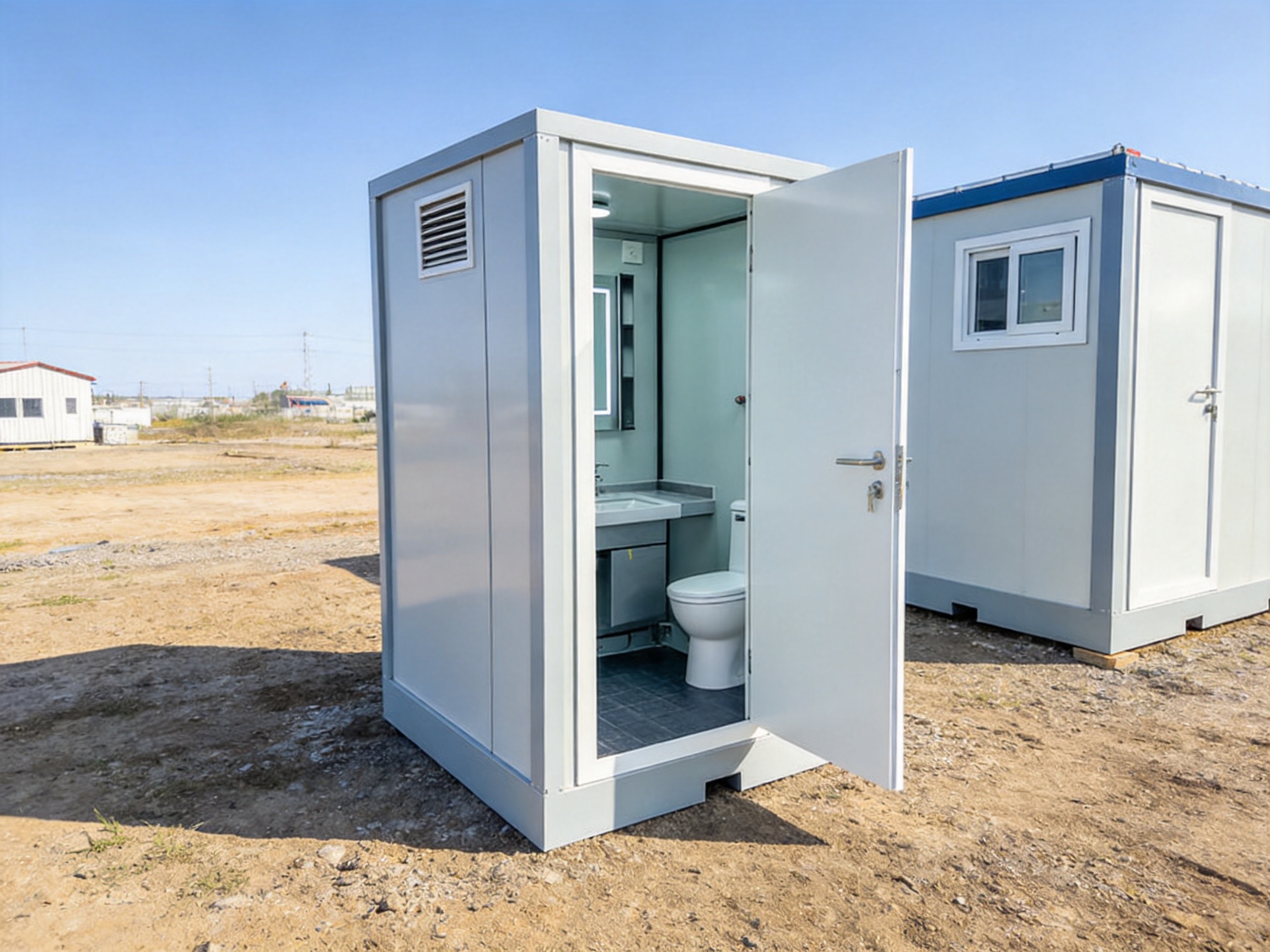
Standard portable toilets remain useful for many short-term needs, particularly where compact dimensions and basic functionality are the main priorities. However, their limited interior area and simple configuration may not meet every project’s requirements. The Single-Person XL Outdoor Portable Toilet is positioned as a more comfort-oriented and adaptable alternative.
| Evaluation Area | Standard Compact Portable Toilet | Single-Person XL Outdoor Portable Toilet |
|---|---|---|
| Interior environment | Compact space designed primarily for basic toilet use | Larger single-user space designed for improved movement and comfort |
| Privacy | Private compartment, usually with limited room | Private individual compartment with a more spacious interior |
| Hygiene equipment | Often limited or provided separately | Can be configured with a washbasin or personal hygiene facilities |
| Typical deployment | Short-term events and basic site use | Construction, camping, emergency relief, temporary accommodation, and flexible outdoor use |
| User experience | Functional and compact | More comfortable, less restrictive, and better suited to extended or repeated use |
| Relocation potential | Portable, depending on service arrangements | Designed for flexible relocation and repeated outdoor deployment |
| Configuration potential | Generally standardized | More adaptable to project-specific sanitation and washing requirements |
The table shows that the main competitive distinction is not simply size. It is the combination of space, privacy, optional hygiene equipment, structural stability, and flexible deployment. A compact toilet may be the lowest-cost choice for a brief event, but the XL unit can offer greater value where users will visit repeatedly, where a washbasin is needed, or where the restroom must support a wider temporary facility plan.
The product can also compete effectively against improvised site-built toilets. A site-built solution may require more labor, more materials, longer preparation time, and additional coordination for weather protection and hygiene. A manufactured portable unit offers a more controlled and repeatable approach, particularly when the project schedule is demanding.
Manufacturing Strengths Behind the Product
The quality of a portable restroom depends on more than its appearance. The manufacturing process influences structural stability, dimensional consistency, material coordination, ease of installation, maintenance access, and the ability to adapt the unit to different projects. Suzhou Taimao Integrated Housing Co., Ltd. brings experience in modular building solutions, prefabricated structures, temporary housing, and integrated construction systems to the development and production of mobile facilities.
The company specializes in modular design, proprietary manufacturing technologies, and end-to-end digital software support. These capabilities are relevant to portable sanitation products because they encourage a factory-controlled approach rather than relying entirely on variable site construction. Components can be planned, processed, assembled, inspected, and prepared for delivery in a controlled production environment.
Factory-Controlled Production
Factory production allows the manufacturer to organize materials and processes in a repeatable sequence. Structural components, wall panels, doors, flooring, internal fittings, and optional sanitation equipment can be prepared according to an approved design. This can help reduce inconsistencies that may occur when a temporary facility is assembled entirely on site.
Controlled production also makes it easier to coordinate dimensions. A portable restroom must accommodate the structure, toilet, door swing, ventilation, possible washbasin, service connections, and user movement. Careful factory planning helps ensure that these elements work together instead of being treated as unrelated additions.
Before shipment, the unit can be prepared for efficient installation and transport. This approach supports project scheduling and gives buyers a clearer understanding of the product configuration before it reaches the site.
Modular Design Methodology
Modular design is a major strength for products intended to be transported and deployed in different locations. Instead of viewing the restroom as a one-off building, the manufacturer can treat it as a coordinated module with defined interfaces, components, and installation requirements.
This methodology can support variations in internal layout, hygiene equipment, exterior finish, utility connections, and placement. It also makes it easier to develop complementary products for temporary accommodation, site offices, worker facilities, and other modular structures.
For buyers, modular design may simplify future expansion. A project can begin with a single restroom and later add additional units or combine the restroom with a wider temporary building system. The exact feasibility depends on site conditions and engineering requirements, but the modular approach provides a practical foundation for organized development.
Integration of Building Systems
The company’s flagship SIP modular building system integrates structure, insulation, mechanical, electrical, and plumbing elements, heating, ventilation, air conditioning, interior finishes, and smart home technologies into a unified solution. Although a portable toilet has a smaller scale and a more specialized purpose, the same integrated design philosophy can improve its development.
For a sanitation unit, integration means considering the relationship between the structure, interior finish, water supply, drainage, ventilation, lighting, electrical safety, cleaning access, and optional equipment. A restroom should not be designed as an empty shell with fixtures added later. Its performance depends on how all components function together.
This systems-based approach is particularly helpful when a unit includes a washbasin or hygiene station. Water and drainage routes must be considered alongside floor structure, wall penetrations, maintenance access, and transport requirements. Factory coordination can help reduce installation uncertainty and support a more efficient site setup.
Digital Design and Software Support
End-to-end digital software support can assist with design coordination, production planning, configuration management, and project communication. Digital tools can help translate a buyer’s requirements into a defined product arrangement, including dimensions, equipment options, finishes, service points, and delivery information.
For customized portable facilities, digital coordination is valuable because small changes can affect several systems at once. A washbasin may influence the wall layout, plumbing, drainage, electrical provisions, ventilation, and internal clearance. Digital design review can help identify these relationships before manufacturing begins.
Clear digital documentation can also support communication between the manufacturer, buyer, logistics provider, installer, and site manager. Better coordination may reduce misunderstandings and help the project move from order to delivery more efficiently.
Off-Site Construction and Faster Site Assembly
Off-site manufacturing shifts a significant portion of construction and finishing work from an uncontrolled outdoor environment to a managed factory environment. This can reduce exposure to weather during production and shorten the amount of work required at the destination.
The company’s modular building experience is based on the principle that prefabricated modules can be shipped to a project site and assembled in days or even hours, depending on the project scale and configuration. For a portable restroom, the same principle supports rapid deployment after transportation and site preparation.
Shorter site assembly can be beneficial where labor is limited, access is restricted, or the facility must be operational quickly. It may also reduce disturbance to an active construction site, event venue, emergency camp, or remote work area.
Materials, Stability, and Outdoor Performance
A portable restroom must be designed for the realities of outdoor use. It should protect the interior from ordinary weather exposure, maintain a dependable enclosure, and provide a stable environment for users. The selection and coordination of structural materials, panel systems, door components, floor surfaces, roof elements, and interior finishes all influence the final result.
Weather resistance is important because the unit may be exposed to rain, wind, direct sunlight, dust, and changing temperatures. The structure should be planned to limit water intrusion and to support regular inspection of seals, joints, roof edges, and service openings. Proper maintenance and site installation remain essential, but durable factory-made components create a stronger starting point.
Interior surfaces should be selected with cleaning in mind. A restroom requires regular cleaning and disinfection, so the design should avoid unnecessary dirt traps and should provide practical access to areas that need attention. The actual cleaning products and procedures should follow the recommendations for the selected materials and installed equipment.
Floor stability is another important consideration. Users should feel secure when entering, turning, sitting, and leaving the unit. The floor should also support routine cleaning and resist the effects of normal moisture exposure. A stable base and correct leveling at the site help the unit perform as intended.
Door and hardware quality contribute to privacy and daily reliability. The door should close securely, provide a clear indication of occupancy where required, and withstand repeated operation. Hinges, handles, locks, seals, and other hardware should be checked during installation and maintenance.
Hygiene and Maintenance Planning
A high-quality portable restroom is most effective when paired with a clear hygiene and maintenance plan. The larger interior and optional washbasin create a strong foundation, but daily cleanliness depends on proper servicing, user guidance, and regular inspection.
Operators should establish a cleaning schedule based on the number of users, frequency of use, climate, application, and local health requirements. High-traffic event units may need servicing several times a day, while a remote construction unit may follow a different schedule. The plan should cover the toilet area, floor, door handles, washbasin, fixtures, ventilation openings, and frequently touched surfaces.
If the unit is connected to water and drainage systems, those connections should be inspected for leakage, blockage, freezing risk, and damage after relocation. If it uses a self-contained waste system, the tank or collection arrangement should be serviced according to its capacity and the operating conditions. The manufacturer or qualified service provider should be consulted for the appropriate maintenance procedure.
Handwashing supplies should be replenished consistently when a washbasin is installed. Soap, water, paper products, and waste containers should be checked as part of each service visit. Clear signage can help users understand how to operate the facilities and dispose of waste correctly.
Ventilation is also important for comfort and odor management. The ventilation arrangement should not be obstructed, and any fan, grille, or filter should be checked as recommended. Good airflow supports a more pleasant interior and helps manage moisture when washing facilities are included.
Planning the Installation
Before delivery, the buyer should identify a suitable installation location. The site should be accessible to the transport vehicle and, where necessary, to service personnel. The ground should be stable, reasonably level, and capable of supporting the unit under expected conditions.
Drainage and water requirements should be decided before the unit arrives. Some projects may use a self-contained configuration, while others may connect the restroom to local water, sewerage, electrical, or waste-management systems. The correct arrangement depends on the project design, local regulations, climate, and intended duration of use.
The unit should be positioned where users can reach it safely and where cleaning and waste servicing can be completed without interfering with hazardous operations. On a construction site, it should be separated from vehicle paths, lifting operations, open excavations, unstable ground, and areas with falling-object risks.
For public or semi-public applications, the project team should consider lighting, access paths, privacy from surrounding areas, signage, and accessibility needs. The XL interior provides additional room, but the final suitability for specific accessibility requirements must be confirmed against applicable local standards and the selected configuration.
In cold or hot climates, the project team should evaluate insulation, ventilation, water protection, freeze prevention, and temperature management. In windy areas, additional anchoring or site protection may be required. These considerations should be discussed during the design and ordering stage rather than after delivery.
Customization and Project Adaptability
Different projects need different sanitation arrangements. A construction site may require a simple, durable unit with fast relocation. A campsite may prioritize appearance, user comfort, and handwashing. An emergency relief project may require rapid delivery, easy cleaning, and standardized deployment. A temporary accommodation project may require a washbasin, better interior organization, and coordination with other modular rooms.
The Single-Person XL Outdoor Portable Toilet can be discussed as a configurable product rather than a fixed one-size-fits-all item. Potential project discussions may include internal hygiene facilities, washbasin placement, utility connections, exterior colors or finishes, ventilation options, lighting, signage, flooring, and service access. The final configuration should be confirmed through technical drawings and a formal quotation.
Customization is most effective when it is balanced with manufacturing efficiency. Excessive variation can complicate production and maintenance, while a well-managed range of options can provide flexibility without sacrificing reliability. The manufacturer’s modular design and digital support capabilities help create a structured process for identifying which changes are practical and which may require additional engineering.
For buyers managing multiple projects, standardized configurations can simplify procurement. A company may select one model for construction sites, another with a washbasin for camps, and a third arrangement for emergency response. Using a consistent product family can make training, cleaning, spare parts, and operational procedures easier to manage.
Why Choose an Experienced Modular Building Manufacturer?
Portable sanitation products are closely related to the broader field of temporary and modular construction. An experienced modular building manufacturer understands how structures are transported, assembled, connected, maintained, and adapted to changing project requirements.
Suzhou Taimao Integrated Housing Co., Ltd. focuses on globally certified modular building solutions, modular design, manufacturing technologies, and digital project support. Its experience spans temporary housing, portable buildings, mobile homes, small and large modular homes, construction-site facilities, and integrated building systems. This broader product knowledge can benefit buyers who need more than a standalone restroom.
A buyer may begin with a portable toilet and later require a site office, worker accommodation, shower unit, storage module, or complete temporary housing solution. Working with a manufacturer that understands these related applications can support better coordination between products. The restroom can be considered as part of a complete site environment instead of an isolated purchase.
The company’s mission emphasizes accelerated project timelines, improved operational efficiency, reduced ecological impact, and high standards of quality and safety. These priorities are relevant to portable facilities because buyers generally need fast delivery, predictable assembly, durable service, and responsible use of materials.
Manufacturing in a controlled environment can also support more consistent quality than improvised field construction. While every product still requires proper inspection and site management, factory-based processes help establish repeatable methods for fabrication, assembly, finishing, and preparation for transportation.
Operational and Economic Value
The purchase price is only one part of the total cost of a temporary restroom. Buyers should also consider transportation, installation labor, site preparation, service requirements, relocation, cleaning, repairs, storage, and future reuse. A unit that provides better comfort and can be redeployed may offer stronger long-term value than a minimal facility that is used only once.
The Single-Person XL design can support operational efficiency by combining toilet and optional handwashing functions. When users do not need to walk to a separate hygiene point, site movement may be reduced. On remote sites, this can save time and simplify daily routines.
Relocation potential can also improve asset utilization. A unit may support several construction phases or different projects during its service life. Organizations with recurring temporary facility needs can treat the product as a reusable equipment asset rather than a disposable project expense.
Comfort may produce indirect value as well. Workers, visitors, campers, and residents are more likely to use a clean, private, well-designed facility properly. Improved user acceptance can support better site hygiene, fewer complaints, and a more professional operating environment.
Environmental Considerations
Temporary buildings and portable facilities can contribute to more efficient resource use when they are designed for reuse, relocation, and controlled production. A portable restroom that serves multiple sites may reduce the need for repeated site-built structures. Factory production can also support more organized material planning and reduce some forms of on-site waste.
The company’s modular building mission includes minimizing ecological impact. In practice, environmental performance depends on the materials selected, manufacturing controls, transportation distance, service life, maintenance, waste handling, and final disposal or recycling arrangements. Buyers should evaluate the complete life cycle rather than focusing on a single feature.
Water management is another consideration. A washbasin configuration should be planned to prevent unnecessary water waste and to ensure that wastewater is handled safely. Depending on local conditions, the project may consider low-flow fixtures, controlled water storage, appropriate drainage, and responsible waste treatment.
Because the unit can be moved, it may help avoid permanent ground disturbance in locations where temporary use is required. Nevertheless, installation should be carried out responsibly, with attention to local environmental rules, surface protection, wastewater management, and restoration of the site after removal.
Quality, Safety, and Delivery Considerations
Before placing an order, buyers should request clear product specifications, layout drawings, material information, optional equipment details, utility requirements, packaging information, and delivery conditions. They should also confirm the intended use, expected number of users, operating climate, installation surface, and required service connections.
Safety should be evaluated at three stages: transportation, installation, and operation. During transportation, the unit must be properly secured and protected. During installation, lifting and positioning should be performed by trained personnel using suitable equipment. During operation, the floor, door, fixtures, ventilation, lighting, and service connections should be inspected regularly.
Buyers should also confirm whether the product configuration complies with relevant local building, sanitation, electrical, plumbing, accessibility, and environmental requirements. Regulations vary by country, region, site type, and intended use. The manufacturer can provide technical information, but the project owner and local professionals remain responsible for obtaining required approvals.
Packaging and delivery planning are particularly important for remote sites. The route, vehicle type, unloading equipment, access width, overhead clearance, and final placement area should be reviewed in advance. A well-prepared logistics plan reduces delays and protects the structure during handling.
Q&A: Single-Person XL Outdoor Portable Toilet
Q1: Who is this portable restroom designed for?
It is designed for construction sites, camping areas, emergency relief operations, temporary accommodation, outdoor events, remote workplaces, agricultural locations, and other sites that require a private, movable restroom. It is also suitable for buyers who want more interior room than a standard compact portable toilet provides.
Q2: Is the unit intended for one person at a time?
Yes. It is a single-user restroom designed to provide individual privacy and comfort. Its larger interior gives one occupant more room to move and use optional hygiene equipment.
Q3: Can a washbasin be installed inside?
Yes. The unit can be equipped with a washbasin or personal hygiene facilities, subject to the selected configuration and the project’s water, drainage, and service requirements.
Q4: Does the restroom require permanent plumbing?
Not necessarily. The required utility arrangement depends on the selected configuration and the project location. It may be planned as a self-contained facility or prepared for connection to water, drainage, electrical, or waste-management systems. These details should be confirmed before production.
Q5: Can the unit be relocated?
Yes. Portability and flexible relocation are core advantages of the product. Relocation should be planned with appropriate transport equipment, site preparation, utility disconnection, and safe installation procedures.
Q6: Is it suitable for frequent outdoor use?
It is designed with a durable and stable structure for outdoor conditions and frequent relocation. Regular cleaning, inspection, servicing, and correct installation are still necessary to maintain performance.
Q7: How is the XL model different from a standard portable toilet?
The main difference is the larger single-person interior and the greater potential for integrated hygiene facilities. The XL layout is intended to provide improved movement, comfort, and privacy rather than only the minimum space required for basic toilet use.
Q8: Can the unit be used with temporary housing?
Yes. It can serve as an independent restroom beside a temporary room, modular home, worker accommodation unit, site office, or emergency shelter. It may also support a wider modular building project during construction or peak occupancy.
Q9: What should be prepared before delivery?
The buyer should prepare a stable and accessible installation area, confirm transportation and unloading arrangements, determine water and drainage requirements, review local regulations, and identify the cleaning and service plan.
Q10: Can the product be customized?
Project-specific options may include washbasins, hygiene facilities, internal arrangement, finishes, lighting, ventilation, utility connections, and other details. Customization should be confirmed through technical drawings and a formal manufacturing review.
Q11: How often should the restroom be cleaned?
The cleaning frequency depends on usage, climate, site conditions, and local requirements. A high-traffic event may require several service visits per day, while a low-use remote site may follow a less frequent schedule. The operator should establish a written maintenance plan.
Q12: What makes the manufacturer suitable for larger projects?
The manufacturer combines modular design, factory production, integrated building-system experience, digital software support, and a broader portfolio of temporary and permanent modular structures. This can help buyers coordinate portable restrooms with site offices, accommodation, and other prefabricated facilities.
Recommended Buyer Evaluation Checklist
Before selecting a portable restroom, buyers should identify the expected number of users and the intended duration of use. A single unit may be sufficient for a small remote site, while a large construction project or public event may need multiple units distributed across different zones.
The buyer should decide whether the unit will be self-contained or connected to local services. This decision affects the internal arrangement, delivery plan, site preparation, cleaning process, and operating cost. It is also important to identify whether handwashing is required inside the unit or can be provided separately.
The climate and location should be reviewed. Extreme temperatures, heavy rainfall, strong winds, dust, snow, or high humidity may influence insulation, anchoring, ventilation, water protection, and maintenance requirements. A local technical review can help determine the appropriate configuration.
Transport and relocation should be considered from the beginning. A unit that is technically portable may still require a suitable vehicle, lifting equipment, access route, and prepared foundation. Planning these requirements early avoids unnecessary delays and additional costs.
Finally, buyers should evaluate the manufacturer’s ability to provide technical documents, product customization, quality support, after-sales communication, replacement components, and future modular building solutions. A reliable supplier should be able to discuss the complete life cycle of the facility rather than only the initial delivery.
Conclusion
The Single-Person XL Outdoor Portable Toilet is a practical response to the limitations of basic temporary sanitation. It combines a spacious private interior with portability, durable outdoor construction, rapid deployment, and the option to add a washbasin or personal hygiene facilities. This combination makes it suitable for construction sites, camping, emergency relief, temporary housing, outdoor events, remote workplaces, and many other changing environments.
Its strongest competitive advantage is the focus on individual comfort. Instead of treating a portable restroom as a minimal enclosure, the XL design approaches it as a usable personal sanitation room. More interior space supports better movement, stronger privacy, and greater flexibility in arranging hygiene equipment.
The product also benefits from the manufacturing strengths of a company experienced in modular building systems. Factory-controlled production, modular design, integrated system planning, digital software support, and off-site construction principles can contribute to more consistent quality and faster installation. These capabilities are especially valuable for buyers who need portable sanitation as part of a larger temporary building or infrastructure project.
For organizations that require a relocatable facility with a more comfortable user experience, the Single-Person XL Outdoor Portable Toilet offers a balanced solution. It can be deployed quickly, adapted to different applications, and reused as project conditions change. With proper site preparation, utility planning, cleaning, and maintenance, it can provide dependable private sanitation wherever permanent facilities are not yet available or cannot be built economically.
References
1. Product information supplied for the Single-Person XL Outdoor Portable Toilet, including features, applications, and configuration options.
2. Modular construction principles for factory-controlled production, off-site assembly, integrated building systems, and temporary facilities.
3. General guidance on outdoor sanitation planning, portable restroom maintenance, hand hygiene, wastewater management, and site safety.
4. General principles of prefabricated and modular building design, including transport planning, installation coordination, and lifecycle reuse.
5. Company information supplied for Suzhou Taimao Integrated Housing Co., Ltd., including modular design, manufacturing technologies, SIP building systems, and digital project support.
Product: Single-Person XL Outdoor Portable Toilet

For exclusive deals and latest offers, sign up by entering your email address below.

-
TEL:+86 18762912902
-
Email:cntaimao@163.com
-
WhatsApp:
-
Add:Group 5, Cao Village, Zhenze Town, Suzhou, Jiangsu, China
Copyright © Suzhou Taimao Integrated Housing Co., Ltd.
All Rights Reserved.
 Wholesale movable homes for sale
custom built modular homes
Wholesale movable homes for sale
custom built modular homes