

 EN
EN
 русский
 Español
 عربى
عربى Français
Single-Person Outdoor Portable Toilet: A Compact, Reliable Solution for Temporary Sanitation
Admin 2026-08-02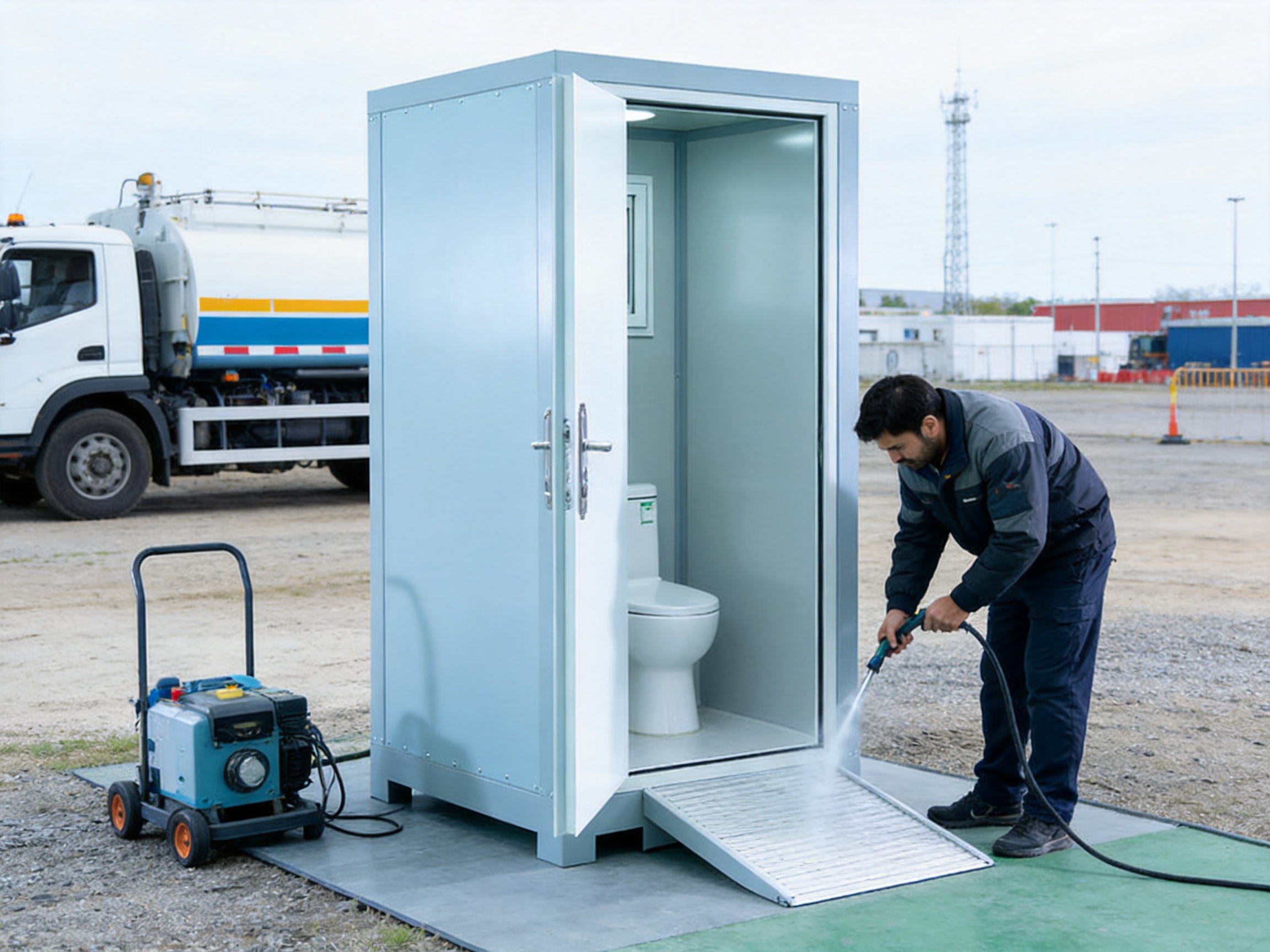
Access to clean, private, and convenient sanitation is essential wherever people work, gather, travel, or live temporarily. Construction sites, outdoor events, municipal projects, emergency-response locations, recreational areas, and temporary installations often need restroom facilities before permanent infrastructure is available. In these situations, a practical portable toilet can provide immediate service without requiring extensive construction, complex plumbing, or a large installation footprint.
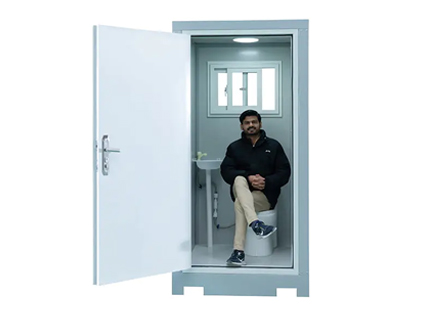
The Single-Person Outdoor Portable Toilet is designed specifically for these requirements. It is a compact, mobile, and fully functional restroom unit intended for individual use. Its design focuses on efficient use of space, dependable daily performance, convenient relocation, and cost-effective deployment. While larger portable restrooms may provide additional internal capacity or multiple compartments, they also require more room, more transportation space, and potentially higher installation costs. This single-person model offers a focused alternative for projects where simplicity and space efficiency are priorities.
The unit is suitable for temporary sanitation needs in locations where a permanent restroom building would be impractical, too expensive, or too time-consuming to construct. It can support individual users while helping project managers, event organizers, contractors, property owners, and public-service operators maintain basic hygiene standards in changing environments.
Content
- 1 Understanding the Single-Person Outdoor Portable Toilet
- 2 Why Compact Sanitation Matters
- 3 Key Product Advantages
- 4 Applications Across Different Environments
- 5 Comparison with Larger or Dual-Compartment Units
- 6 Manufacturing Strengths Behind the Product
- 7 Quality, Safety, and Lifecycle Considerations
- 8 Customization and Project Adaptability
- 9 How to Select the Right Portable Toilet for a Project
- 10 Deployment and Maintenance Recommendations
- 11 Customer Value and Long-Term Business Benefits
- 12 Why Choose an Integrated Modular Manufacturer
- 13 Frequently Asked Questions
- 13.1 What is the Single-Person Outdoor Portable Toilet designed for?
- 13.2 How is it different from an XL portable toilet?
- 13.3 Is the unit suitable for construction sites?
- 13.4 Can the toilet be relocated during a project?
- 13.5 Is the product weather-resistant?
- 13.6 Does the compact size mean that functionality is limited?
- 13.7 What should be prepared before installation?
- 13.8 How often should the unit be cleaned?
- 13.9 Can the manufacturer provide customized solutions?
- 13.10 What other products can the company provide?
- 13.11 Why is factory production important for a portable restroom?
- 13.12 What information should buyers provide when requesting a quotation?
- 14 Conclusion
- 15 References
- 16 Product: Single-Person Outdoor Portable Toilet
Understanding the Single-Person Outdoor Portable Toilet
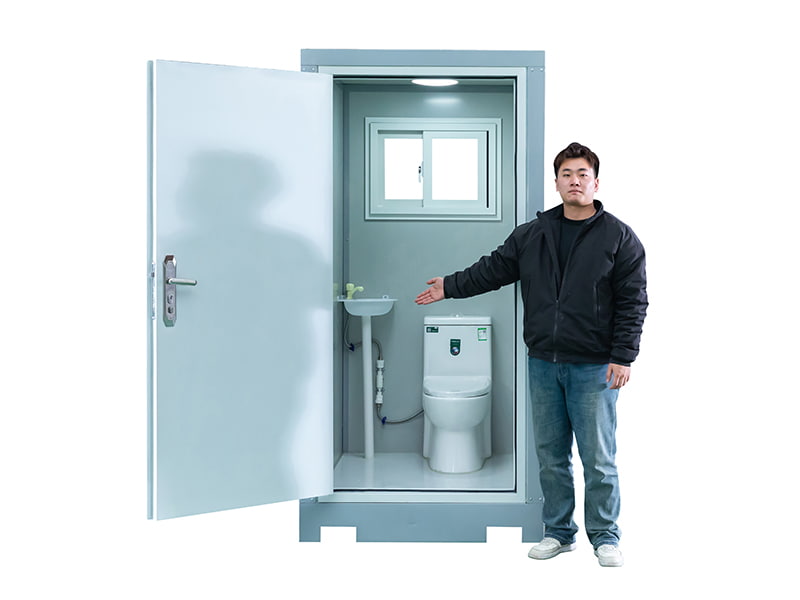
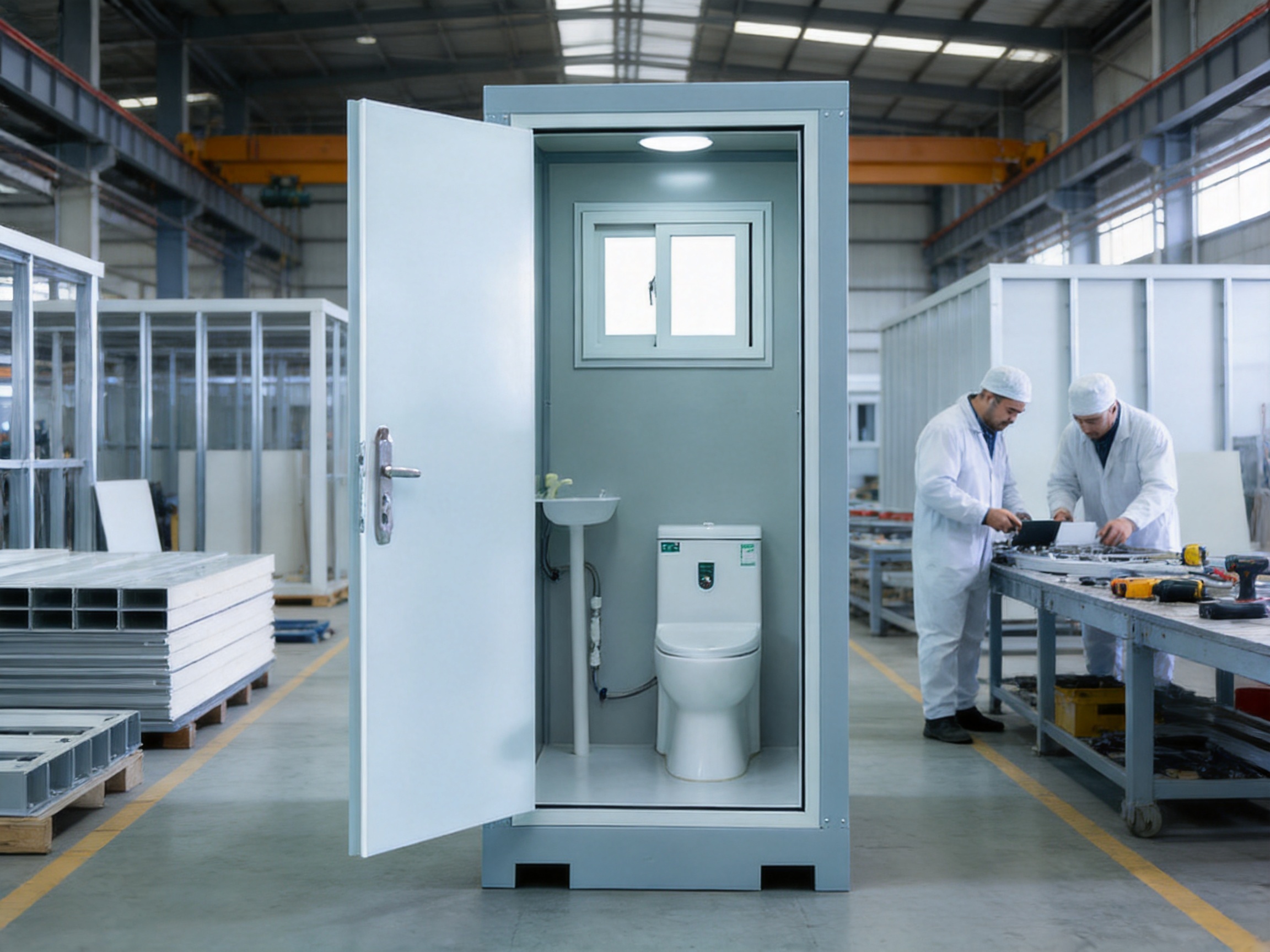
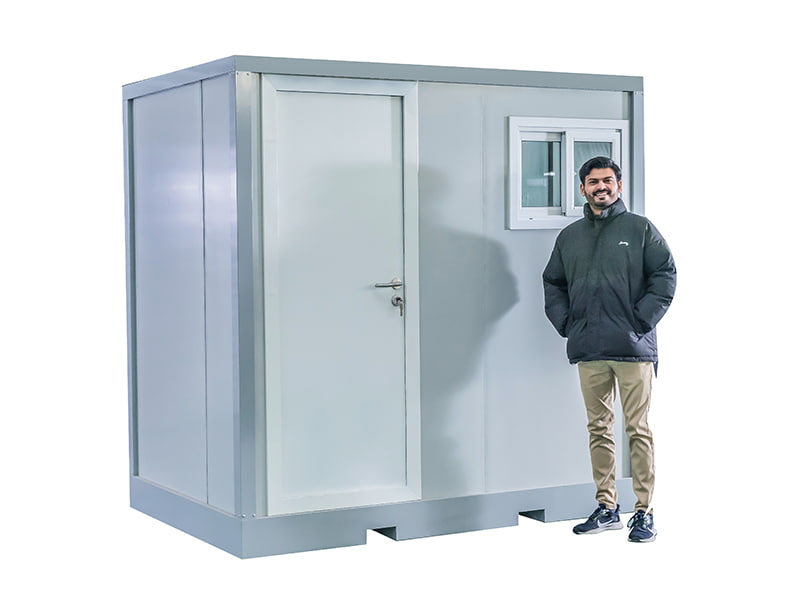
The Single-Person Outdoor Portable Toilet is a standalone outdoor restroom designed for one user at a time. It combines a compact enclosure with the essential facilities expected from a temporary toilet. The structure is intended to provide privacy, protection from outdoor conditions, and a convenient sanitation point in areas without direct access to a conventional building.
Its single-user configuration is one of its most important characteristics. Instead of allocating space to multiple compartments, oversized circulation areas, or additional service zones, the design concentrates on the basic needs of one person. This results in a smaller footprint that can be placed in narrow work areas, compact event layouts, temporary accommodation zones, or other restricted environments.
The unit is also designed to be portable. It can be deployed when needed, moved as site conditions change, and removed when a temporary project is completed. This flexibility is valuable for construction companies and event operators that frequently adjust site layouts. It is equally useful for organizations managing emergency facilities, seasonal public spaces, temporary camps, renovation projects, and short-term commercial activities.
Although compact, the unit is not intended to sacrifice basic functionality. It is designed to provide a practical and complete individual restroom experience. Its value comes from balancing size, usability, durability, mobility, and affordability in one integrated product.
Why Compact Sanitation Matters
Many outdoor projects face a simple but significant challenge: there may be enough demand for a restroom, but not enough space for a large portable facility. An oversized unit can interfere with pedestrian routes, reduce usable work area, occupy valuable event space, or create additional transportation and placement requirements. In urban construction zones, every square meter may be important, particularly when equipment, materials, safety barriers, and access routes must all fit into a constrained site.
A single-person portable toilet provides a more targeted solution. Its smaller footprint can make site planning easier and allow sanitation facilities to be positioned closer to the people who need them. This can reduce walking distances for workers, visitors, and service personnel while helping maintain a more organized layout.
Space efficiency is also valuable during transportation. Smaller units can be easier to handle, stage, and position than larger multi-user facilities. Depending on the project arrangement and transportation method, compact units may allow operators to plan deliveries and temporary storage more efficiently. The ability to use only the number of units required for actual demand can also help avoid unnecessary costs.
In addition, a compact toilet is often more appropriate for low-traffic locations. A remote work point, roadside maintenance area, small outdoor gathering, private construction project, or temporary agricultural site may not require a large restroom block. Installing a smaller unit can match capacity to real requirements rather than creating excess infrastructure.
Key Product Advantages
Compact and Space-Saving Design
The most immediate advantage of the Single-Person Outdoor Portable Toilet is its compact configuration. The unit is intended to occupy limited ground space while still providing the privacy and essential functionality expected from an outdoor restroom. This makes it appropriate for locations where a larger facility would be difficult to position.
Compact design does not only refer to physical dimensions. It also reflects a simplified operational concept. A single-user unit can be easier to include in a temporary site plan, easier to allocate to a specific work zone, and easier to reposition when construction phases change. For project managers, this can reduce the planning burden associated with temporary sanitation.
The smaller format may be particularly beneficial in urban construction areas. Streetside projects, building renovations, utility repairs, and infrastructure works often operate within strict boundaries. A compact toilet can be positioned without consuming excessive space needed for machinery, materials, or pedestrian protection.
Complete Basic Restroom Function
A portable toilet must do more than provide an enclosure. It must offer a usable, private, and practical sanitation environment. The Single-Person Outdoor Portable Toilet is designed to include the basic restroom facilities required for individual use. This allows users to access a dedicated facility without entering a nearby building or leaving the project area.
The product’s focus on essential functions makes it suitable for temporary deployment. It does not rely on unnecessary complexity to provide value. Instead, it emphasizes the features that users need most: privacy, accessibility, weather protection, and a stable space for personal sanitation.
This practical approach can also simplify the process of evaluating a temporary restroom. Buyers can focus on the product’s purpose, construction quality, portability, and suitability for the site rather than paying for functions that are not required.
Durable and Weather-Resistant Construction
Outdoor facilities are exposed to changing environmental conditions. Sunlight, wind, rain, dust, temperature changes, and repeated use can all affect a temporary structure. For this reason, durability is an essential consideration when selecting a portable restroom.
The Single-Person Outdoor Portable Toilet uses a robust structural concept intended to provide stability and reliable service in outdoor environments. Its weather-resistant design helps it remain suitable for temporary placement in construction sites, event areas, public spaces, and other locations where outdoor exposure is unavoidable.
Durability also contributes to product value over time. A unit that maintains its structural integrity through repeated deployment and relocation can be more useful than a lower-cost product that requires frequent repair or early replacement. Buyers should evaluate not only the initial purchase price but also expected service life, maintenance requirements, transportation needs, and operational reliability.
Easy Deployment and Relocation
Temporary facilities must adapt to changing circumstances. A construction site may progress from foundation work to structural installation, while an event venue may require a different layout for each occasion. Emergency-response operations may need facilities to follow changing population or work zones. In all of these cases, portability is a practical advantage.
The Single-Person Outdoor Portable Toilet is designed for quick deployment and convenient relocation. Its mobile format allows operators to place it where it is needed and move it when site conditions change. This flexibility can reduce the disruption associated with temporary facilities and help organizations respond more quickly to operational requirements.
Relocation may also be useful when a project is divided into phases. Instead of installing separate permanent restroom infrastructure for each phase, the same portable unit can potentially be repositioned as work advances, subject to proper handling, site preparation, and local regulations.
Practical and Affordable Operation
Temporary sanitation does not always justify the cost of a permanent building. Constructing a conventional restroom may require foundations, drainage, water supply, electrical work, permits, interior finishing, and a long construction schedule. A portable unit can offer a more direct alternative for short-term or changing needs.
The single-person format can support cost control by matching facility size to actual demand. A small project that requires one private restroom may not need the investment associated with a larger multi-compartment installation. The compact structure may also reduce the space, transport, and handling resources required for deployment.
Affordability should be considered together with quality. A cost-effective product is not simply the cheapest option; it is a solution that provides appropriate performance, durability, portability, and usability for the intended application. The Single-Person Outdoor Portable Toilet is positioned around this balance.
Single-Person Outdoor Portable Toilet
Applications Across Different Environments
Construction Sites
Construction sites are among the most common locations for temporary restroom facilities. Workers may be operating in areas where the permanent building is not yet complete, where existing restrooms are unavailable, or where the site is too far from an occupied building. Providing a dedicated portable toilet can improve convenience and help workers remain within the designated work area.
The compact size is useful on sites where materials, scaffolding, vehicles, cranes, and safety systems already occupy much of the available space. A single-person unit can be placed at an appropriate distance from active work zones while avoiding unnecessary interference with access routes.
As the project develops, the restroom may be relocated to remain close to current work areas. This can be especially valuable on large sites or projects conducted in stages. Contractors can plan sanitation facilities as part of the overall site logistics strategy rather than treating them as fixed structures.
Urban Renovation and Infrastructure Work
Road repairs, utility upgrades, building renovations, sidewalk improvements, and public infrastructure projects often operate in dense areas. These projects may have limited staging space and strict requirements for pedestrian and vehicle movement. A compact outdoor toilet can help meet worker sanitation needs without requiring a large installation area.
In urban settings, appearance, placement, and operational discipline are also important. The unit should be located on a stable surface, maintained regularly, and positioned in accordance with local rules. Its small footprint can support a cleaner and more organized arrangement when space is limited.
Outdoor Events
Small festivals, markets, sports activities, exhibitions, weddings, community gatherings, and temporary commercial events may require additional restrooms. The need can be seasonal or limited to a short period, making permanent construction unnecessary.
A single-person portable toilet can supplement existing facilities or serve a small event with modest attendance. It may be positioned near a staff area, service point, backstage zone, entrance, or remote activity area. Because it is designed for individual use, it can provide privacy without occupying the same amount of space as a larger restroom block.
Event organizers should consider expected attendance, event duration, user turnover, cleaning schedules, accessibility requirements, and local public-health regulations when determining the number and type of units required. The product can be one component of a broader temporary sanitation plan.
Temporary Camps and Remote Work Areas
Remote work locations may not have access to municipal sewer systems or completed buildings. Examples include agricultural operations, forestry projects, mining support areas, environmental surveys, maintenance operations, and temporary field offices.
In these situations, a portable unit can provide a dedicated sanitation point near the working population. Its mobility allows it to be used during a defined project period and removed when operations end. The compact format can be beneficial when remote transportation and available ground space are limited.
Emergency and Recovery Operations
After natural disasters, accidents, infrastructure failures, or other emergencies, sanitation facilities may be urgently required. Temporary toilets can support relief workers, residents, medical teams, volunteers, and logistics personnel while damaged facilities are repaired.
The Single-Person Outdoor Portable Toilet offers a straightforward option for individual use in temporary response locations. Its value in these situations depends on fast delivery, suitable placement, effective servicing, and coordination with local authorities. The ability to deploy and relocate facilities can help response teams adapt to rapidly changing needs.
Private and Residential Projects
Home renovations, new residential construction, landscaping projects, and temporary property improvements may create periods when indoor restrooms are inaccessible or unsuitable. A portable toilet can provide an independent facility for contractors and visitors.
The compact format is often appropriate for residential properties because it can reduce the impact on driveways, gardens, pathways, and surrounding areas. It can remain in service during construction and be removed when the project is complete.
Comparison with Larger or Dual-Compartment Units
Different portable restroom formats serve different purposes. XL units and dual-compartment facilities can be appropriate when a site has high traffic, requires separate user areas, or needs additional internal capacity. However, larger units are not automatically better for every project.
A larger structure generally requires more placement space and may be more difficult to transport or reposition. It can also create additional purchase, delivery, cleaning, and service costs. For a low-traffic location or a project with only occasional individual use, the additional size may not provide a meaningful operational benefit.
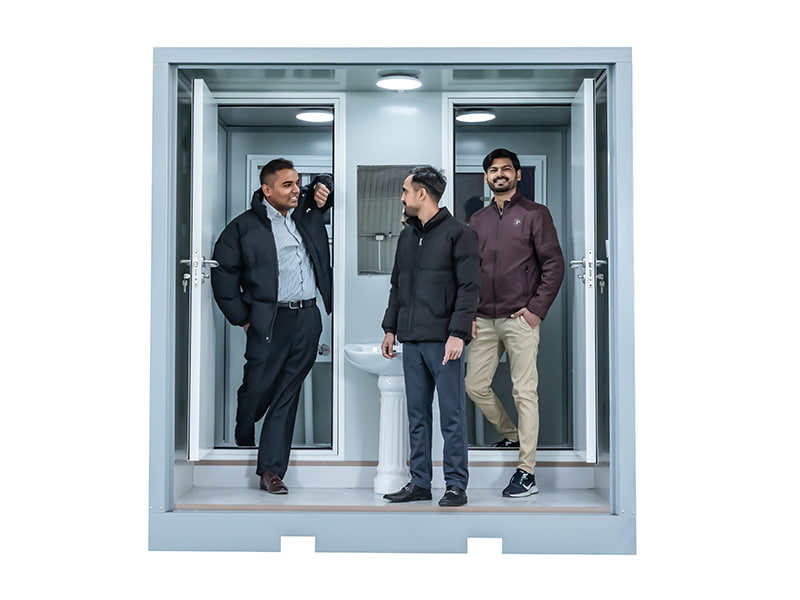
The Single-Person Outdoor Portable Toilet focuses on a specific use case: one user, limited space, essential facilities, and flexible deployment. This specialization is its competitive advantage. Instead of attempting to serve every possible requirement, it provides an efficient solution for customers who value a smaller footprint and straightforward operation.
| Consideration | Single-Person Portable Toilet | Large or Dual-Compartment Unit |
|---|---|---|
| Primary purpose | Individual use in compact locations | Higher-capacity or multi-user service |
| Space requirement | Small footprint for restricted sites | Greater area generally required |
| Portability | Designed for convenient relocation | May require more planning and handling resources |
| Typical deployment | Small projects, work zones, events, and temporary installations | Large events, busy sites, or locations needing multiple compartments |
| Cost approach | Practical option when individual capacity is sufficient | Higher capacity may involve higher overall deployment costs |
| Best competitive strength | Space efficiency and simplicity | Greater capacity and multiple-user functionality |
This comparison does not mean that one format is universally superior. The correct choice depends on expected usage, available space, service frequency, budget, accessibility needs, and regulations. The single-person design is especially competitive when the project requires a compact, reliable, and economical unit rather than a high-capacity restroom block.
Manufacturing Strengths Behind the Product
The quality of a portable restroom depends not only on its visible appearance but also on the manufacturing systems used to design, assemble, inspect, and support it. Suzhou Taimao Integrated Housing Co., Ltd. specializes in modular building solutions and integrated housing products. Its broader manufacturing capabilities provide a foundation for producing practical prefabricated structures for construction, temporary accommodation, sanitation, and other applications.
The company combines modular design, manufacturing technologies, and project-oriented technical support. This approach is important because temporary buildings and portable facilities must be designed for more than one moment in their lifecycle. They must be manufactured consistently, transported efficiently, assembled or positioned effectively, maintained during use, and potentially relocated or repurposed later.
By applying a structured manufacturing process, the company can support repeatable production and consistent quality. Factory-based production also provides a controlled environment for preparing structural elements, enclosure components, finishes, service provisions, and other integrated parts before delivery. This can reduce dependence on uncertain site conditions and help improve project coordination.
Modular Design Methodology
Modular design divides a building or facility into organized components that can be manufactured, inspected, transported, and assembled according to a defined system. This method can improve production planning and reduce unnecessary variation between units.
For portable sanitation products, modular thinking can support efficient use of materials, standardized assembly procedures, and clearer quality-control checkpoints. It also allows the manufacturer to adapt product specifications to different project requirements while maintaining a consistent core design.
A modular approach can be especially valuable for customers who need multiple units or recurring deliveries. Once a suitable configuration has been approved, future production can follow an established process. This may help reduce uncertainty in lead times, component coordination, and field placement.
Factory-Controlled Production
One of the major advantages of prefabricated manufacturing is the ability to complete significant work in a controlled factory environment. Unlike fully site-built construction, factory production is less affected by rain, wind, poor ground conditions, limited working hours, and restricted site access.
Controlled production allows workers and supervisors to follow defined procedures for material preparation, structural assembly, sealing, interior installation, and finishing. It also makes it easier to organize tools, equipment, inspection points, and production records in a consistent location.
For customers, factory-controlled production can translate into more predictable quality and more efficient delivery. The product can arrive substantially prepared for use, reducing the amount of work required at the destination. This is particularly useful for temporary projects that need fast deployment.
Integration of Building Systems
Suzhou Taimao Integrated Housing Co., Ltd. promotes an integrated modular building system that can combine structure, insulation, mechanical, electrical, plumbing, heating, ventilation, air conditioning, interior finishes, and smart-home technologies. While the Single-Person Outdoor Portable Toilet is a compact sanitation product rather than a complete residential module, the company’s system-level experience is relevant to the way prefabricated products are planned and manufactured.
Integrated design encourages different building functions to be considered together instead of being treated as unrelated tasks. This can improve coordination between structural components and service provisions. It can also reduce rework, simplify installation, and help ensure that the finished product performs as a unified system.
For portable facilities, integrated thinking is valuable because internal space is limited. Every component must fit within the enclosure without reducing usability or creating unnecessary maintenance difficulties. Careful coordination of structure, openings, fixtures, drainage arrangements, ventilation, and interior surfaces can support a more practical product.
SIP and Prefabricated Building Expertise
The company’s flagship Structural Insulated Panel, or SIP, modular building system demonstrates its knowledge of high-performance prefabricated construction. SIP-based systems combine structural and insulation functions into engineered panels, helping improve manufacturing efficiency and building-envelope coordination.
Experience with SIP systems and modular construction can contribute to a broader understanding of thermal performance, panel connection, factory precision, material optimization, and rapid site assembly. These capabilities are particularly relevant to a manufacturer serving container houses, portable houses, temporary buildings, and modular homes in addition to sanitation products.
For buyers, the value of this background lies in the company’s ability to approach products as engineered assemblies rather than as isolated pieces. The objective is to deliver structures that are practical to produce, efficient to transport, straightforward to install, and reliable in operation.
Digital Support and Project Coordination
Modern prefabricated construction benefits from digital planning and information management. Suzhou Taimao Integrated Housing Co., Ltd. provides end-to-end digital software support as part of its broader modular building services. Digital tools can help coordinate design information, production details, project schedules, material requirements, and delivery arrangements.
Better information coordination is important when a customer needs customized dimensions, multiple product types, specific finishes, or coordinated delivery to a complex site. It can also help reduce misunderstandings between the design team, factory, logistics provider, installer, and customer.
For a portable toilet project, digital support may be used to clarify site conditions, unit placement, quantity requirements, access limitations, transportation planning, and any requested modifications. Clear technical communication helps ensure that the delivered product matches the intended application.
Quality, Safety, and Lifecycle Considerations
A portable restroom should be evaluated across its entire lifecycle. The initial purchase is only one stage. Buyers should also consider transportation, placement, daily use, cleaning, inspection, repairs, relocation, storage, and final removal. A robust design can support better performance across these stages.
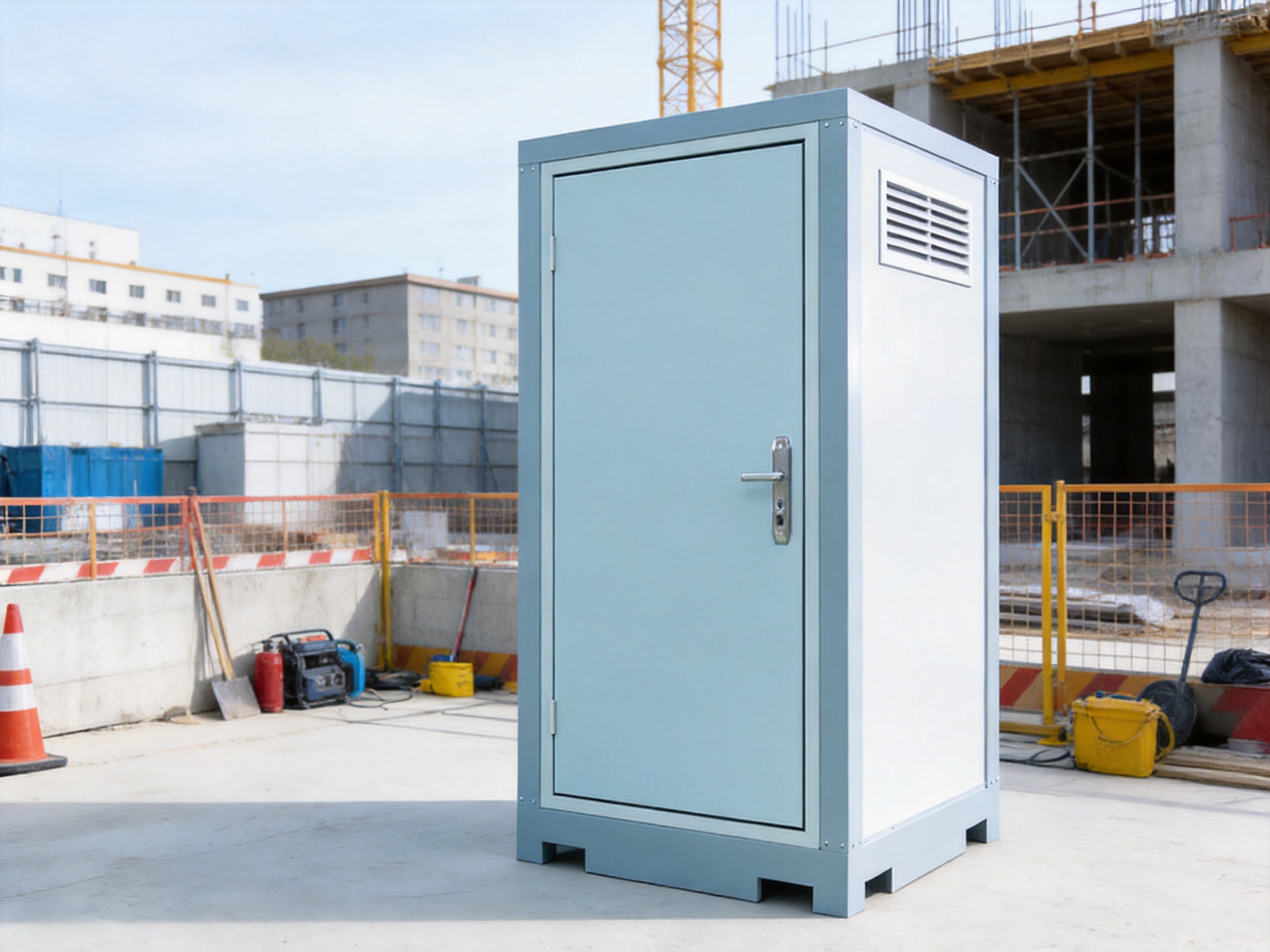
Safety begins with stable placement. The unit should be installed on a firm, level surface that can support its weight and expected use. It should not obstruct emergency routes, vehicle access, pedestrian paths, drainage channels, or other critical site functions. Local requirements may specify additional rules for anchoring, separation distances, servicing, accessibility, and waste management.
Weather conditions should also be considered. Areas with strong winds, heavy rainfall, extreme heat, freezing temperatures, or uneven terrain may require additional site preparation or anchoring measures. The product’s durable and weather-resistant design supports outdoor use, but responsible installation remains essential for safe operation.
Regular cleaning and maintenance are equally important. A well-designed unit can provide a practical facility, but hygiene depends on scheduled servicing, appropriate waste handling, ventilation, cleaning products, and timely inspection. Operators should establish a maintenance schedule based on usage levels and local sanitation requirements.
Doors, hinges, locks, structural joints, floor surfaces, ventilation points, and internal fixtures should be inspected periodically. Early identification of wear or damage can help prevent service interruptions and extend the useful life of the unit.
Material Efficiency
Compact products naturally use fewer resources than larger facilities when the functional requirement is limited to individual use. A smaller enclosure may require less structural material, less surface area, and fewer transportation resources than a larger multi-compartment unit.
Material efficiency should not be confused with reduced quality. The goal is to use materials appropriately, place strength where it is needed, and avoid unnecessary bulk. The manufacturer’s modular and prefabricated approach can support more organized material planning and controlled production.
Customers seeking sustainable temporary construction should consider the full environmental profile of the product. Relevant factors include manufacturing efficiency, expected service life, transport distance, maintenance requirements, repairability, potential reuse, and end-of-life handling. A portable unit that can be relocated and used for multiple projects may provide greater practical value than a facility designed for one short deployment.
Reduced Site Disruption
Traditional on-site construction can involve excavation, concrete work, plumbing installation, electrical work, wet trades, and extended periods of noise and vehicle movement. For a temporary restroom, such a process may be disproportionate to the actual requirement.
A prefabricated portable toilet can reduce site disruption by arriving substantially prepared for placement. This can help projects maintain progress, particularly when the facility is needed quickly or when the surrounding area is already active.
Reduced site work can also be beneficial in environmentally sensitive locations, occupied properties, and public areas where construction activity must be limited. However, all local installation, waste-management, and environmental requirements should still be followed.
Customization and Project Adaptability
Different customers may require different configurations depending on climate, project duration, transportation conditions, usage intensity, and local standards. A modular manufacturer can often evaluate these requirements and determine whether product adjustments are appropriate.
Potential project considerations may include exterior color, signage, door orientation, ventilation approach, fixture selection, internal layout, floor treatment, service access, and deployment method. Any customization should be reviewed from the perspective of structural integrity, sanitation, maintenance, transportation, and compliance.
The company’s experience with custom container houses, temporary housing, mobile homes, modular buildings, and prefabricated structures supports a project-oriented approach. Rather than treating every order as an identical off-the-shelf transaction, the manufacturer can analyze the intended use and recommend a practical configuration.
Customization should not add complexity for its own sake. The best result is usually a product that meets actual operational requirements while remaining easy to manufacture, transport, maintain, and relocate. A clear specification process helps align customer expectations with technical possibilities.
How to Select the Right Portable Toilet for a Project
Evaluate User Demand
Start by estimating the number of users, expected daily frequency, peak periods, and project duration. A single-person unit may be suitable for a small work crew, a remote maintenance point, a private construction project, or a limited event area. High-traffic locations may require several units or a larger facility.
It is better to match capacity to actual use than to select a product based only on the largest possible scenario. At the same time, planners should avoid underestimating demand, especially during long events or multi-shift construction work.
Review Available Space
Measure the proposed installation area and consider access for delivery, servicing, cleaning, and removal. Check whether the unit will interfere with doors, driveways, pedestrian routes, emergency access, equipment movement, or property boundaries.
The compact design of the Single-Person Outdoor Portable Toilet can provide an advantage in restricted locations, but sufficient clearance must still be maintained for safe use and service access.
Consider Ground and Weather Conditions
The site should provide a stable foundation or prepared surface. Sloped, soft, waterlogged, or unstable ground may require additional preparation. Wind exposure, rainfall, snowfall, temperature, and sunlight should also be considered during planning.
Discuss unusual environmental conditions with the supplier before ordering. A suitable placement strategy can protect the unit, improve user comfort, and reduce maintenance problems.
Plan Servicing and Waste Management
Portable sanitation facilities require an appropriate servicing plan. This should cover cleaning frequency, waste removal, consumables, odor control, inspections, and emergency maintenance. The required schedule depends on usage, climate, project length, and local regulations.
Service vehicles must be able to reach the unit, and operators must have appropriate procedures for handling waste and cleaning materials. Planning these details in advance is essential for maintaining a hygienic facility.
Check Compliance Requirements
Customers should confirm applicable building, sanitation, environmental, accessibility, transportation, and workplace regulations before deployment. Requirements can vary by country, province, state, municipality, project type, and user population.
The supplier can provide product information and technical documentation, but the buyer and local project authorities remain responsible for confirming that the planned installation meets all applicable requirements.
Deployment and Maintenance Recommendations
Before delivery, prepare a level and accessible location. Remove debris, identify underground services, and verify that the route can accommodate the delivery and handling equipment. If the unit will be placed on a temporary platform or prepared base, make sure the surface is strong enough and properly supported.
After placement, inspect the structure, door operation, locking mechanism, ventilation, interior surfaces, and service connections where applicable. Confirm that the unit is stable and that users can enter and exit safely.
During operation, establish a regular cleaning schedule. High-use sites may require more frequent servicing than low-traffic locations. Cleaning should address floors, walls, fixtures, handles, locks, ventilation openings, and other high-contact surfaces.
Inspect the unit after severe weather or relocation. Look for movement, damage, loosened components, water entry, or changes in stability. Any problem that could affect user safety or sanitation should be corrected before continued use.
When the project ends, the unit should be emptied, cleaned, inspected, and prepared for transport or storage. Proper end-of-project handling helps preserve the product for future use and supports more sustainable asset management.
Customer Value and Long-Term Business Benefits
For construction companies, a reliable portable toilet can improve site organization and worker convenience. Keeping workers close to their assigned areas can reduce unnecessary movement and support more efficient daily operations.
For event operators, compact units can help expand sanitation capacity without requiring a large permanent installation. They can be arranged according to the event layout and removed after the event concludes.
For property owners, the product can provide a temporary facility during renovation, rebuilding, or utility work. It avoids the need to expose workers or visitors to incomplete indoor facilities and can help keep construction areas separate from occupied spaces.
For rental and facilities-management companies, a durable and easily relocatable unit can support repeated deployment across different projects. Standardized products may simplify inventory management, transport planning, inspection, cleaning, and customer service.
For international buyers, working with a manufacturer experienced in modular and prefabricated construction can provide access to broader technical knowledge. A supplier familiar with container houses, portable buildings, temporary accommodation, SIP systems, and integrated building solutions may be better equipped to discuss site conditions, delivery planning, customization, and project coordination.
Why Choose an Integrated Modular Manufacturer
An integrated manufacturer can contribute value beyond the production of a single product. Suzhou Taimao Integrated Housing Co., Ltd. provides modular building solutions supported by design, manufacturing, digital coordination, and project-oriented services. This broader capability can be important for buyers who need several types of temporary or prefabricated facilities.
For example, a construction project may require portable toilets, site offices, worker accommodation, storage buildings, guard rooms, and temporary public facilities. A supplier with experience across modular building categories can help customers coordinate these requirements more efficiently than purchasing each product from unrelated sources.
The company’s mission emphasizes faster project timelines, improved operational efficiency, reduced ecological impact, and high standards of quality and safety. These priorities align with the main advantages of prefabricated construction: controlled manufacturing, reduced site work, repeatable production, and faster deployment.
Its SIP modular building system further demonstrates a commitment to combining structural performance, insulation, building services, interior finishes, and smart technologies within organized factory-made modules. This system-level capability supports the company’s position as a manufacturer of integrated construction solutions rather than only a supplier of individual components.
For buyers of the Single-Person Outdoor Portable Toilet, the practical benefit is access to a manufacturer that understands how compact structures fit into larger project requirements. The product can be evaluated not only as a restroom but also as part of a complete temporary-site strategy.
Frequently Asked Questions
What is the Single-Person Outdoor Portable Toilet designed for?
It is designed for individual use in temporary or outdoor locations where a compact, private, and functional restroom is required. Typical applications include construction sites, small events, remote work areas, renovation projects, temporary installations, and emergency-response locations.
How is it different from an XL portable toilet?
The single-person model emphasizes a smaller footprint and efficient use of space. An XL unit may provide more internal room or additional features, but it generally occupies more space and may involve greater transportation and placement requirements. The best choice depends on the project’s user demand and available area.
Is the unit suitable for construction sites?
Yes. Its compact and portable design makes it suitable for construction sites, especially where workers need a restroom near active work areas and available space is limited. The unit should be placed on a stable surface and maintained according to site safety and sanitation procedures.
Can the toilet be relocated during a project?
Yes. Portability is one of its key features. It can be moved when construction phases change, event layouts are adjusted, or temporary operations shift to a new area. Relocation should be performed using suitable equipment and safe handling procedures.
Is the product weather-resistant?
The unit is designed with a durable and weather-resistant structure for outdoor use. However, installation conditions remain important. Sites exposed to strong winds, flooding, extreme temperatures, or unstable ground may require additional preparation or protective measures.
Does the compact size mean that functionality is limited?
The design prioritizes essential restroom functions for individual use. It does not attempt to provide the capacity of a large multi-compartment facility, but it is intended to offer a complete and practical sanitation solution within a smaller footprint.
What should be prepared before installation?
Customers should prepare a level, stable, accessible location and verify delivery access, service access, drainage considerations, local regulations, and any required anchoring or safety measures. The final installation plan should reflect the expected usage and environmental conditions.
How often should the unit be cleaned?
Cleaning frequency depends on the number of users, project duration, weather, and local health requirements. High-use units generally require more frequent servicing than units used by a small work team or occasional visitors. A documented maintenance schedule is recommended.
Can the manufacturer provide customized solutions?
The manufacturer specializes in custom modular and prefabricated building solutions. Depending on the project, customers may discuss layout, finishes, service requirements, signage, delivery conditions, and other specifications with the technical team.
What other products can the company provide?
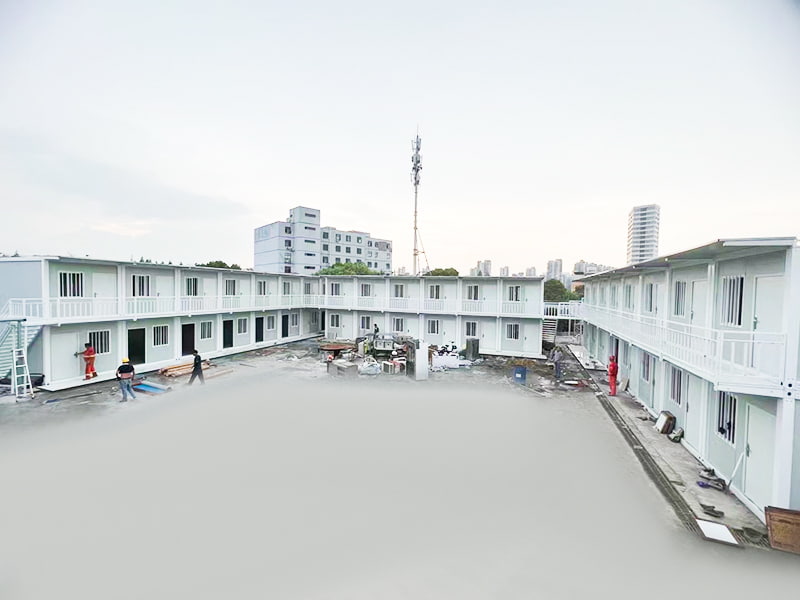
The company offers modular construction solutions related to container houses, folding container houses, double-wing expandable container houses, K-type prefabricated houses, steel structures, portable buildings, temporary housing, mobile homes, and modular homes. This broader product range can support projects requiring multiple types of prefabricated facilities.
Why is factory production important for a portable restroom?
Factory production provides a controlled environment for material preparation, assembly, inspection, and finishing. It can improve consistency, reduce weather-related delays, limit site work, and support faster deployment. Factory-based manufacturing also makes it easier to organize quality-control procedures and coordinate different product components.
What information should buyers provide when requesting a quotation?
Buyers should provide the intended application, quantity, project location, expected usage, available installation space, delivery requirements, climate conditions, desired customization, applicable standards, and target schedule. Clear information allows the manufacturer to recommend a more suitable configuration and provide a more accurate quotation.
Conclusion
The Single-Person Outdoor Portable Toilet is a focused solution for temporary sanitation requirements. Its compact footprint, durable construction, complete basic functionality, convenient mobility, and practical cost profile make it especially suitable for locations where space and installation time are limited.
Compared with larger or dual-compartment portable restrooms, it offers a more efficient alternative when individual capacity is sufficient. Its competitive strength is not maximum size; it is the ability to provide dependable restroom service with less spatial and operational burden.
The product also benefits from the manufacturing experience of Suzhou Taimao Integrated Housing Co., Ltd., a company specializing in modular building solutions, prefabricated structures, SIP systems, digital project support, and integrated construction technologies. Its factory-controlled approach can support consistent production, coordinated components, efficient delivery, and adaptable project solutions.
For contractors, event organizers, property owners, facilities managers, and public-service operators, the unit can provide an immediate and flexible sanitation facility without the time and expense of permanent construction. When correctly selected, placed, serviced, and maintained, it can support safe, organized, and convenient operations across a wide range of temporary outdoor environments.
References
1. International Organization for Standardization. General principles for quality management and quality assurance in manufactured products.
2. International Labour Organization. Guidelines for occupational safety, worker welfare, and sanitation on construction sites.
3. World Health Organization. Sanitation, hygiene, and public-health considerations for temporary and emergency facilities.
4. International Code Council. Principles of safe temporary structures, building placement, and public-use facilities.
5. Prefabricated Housing and Modular Construction Industry Practices. Factory-controlled production, modular coordination, and off-site assembly methods.
6. Structural Insulated Panel Construction References. Integrated panel systems, thermal-envelope coordination, and prefabricated building performance.
7. Temporary Event Planning and Facility Management Guidance. Capacity planning, sanitation servicing, user safety, and site logistics.
Product: Single-Person Outdoor Portable Toilet
For exclusive deals and latest offers, sign up by entering your email address below.

-
TEL:+86 18762912902
-
Email:cntaimao@163.com
-
WhatsApp:
-
Add:Group 5, Cao Village, Zhenze Town, Suzhou, Jiangsu, China
Copyright © Suzhou Taimao Integrated Housing Co., Ltd.
All Rights Reserved.
 Wholesale movable homes for sale
custom built modular homes
Wholesale movable homes for sale
custom built modular homes