

 EN
 русский
 Español
 عربى
 Français
Two-Person Outdoor Portable Toilet: A Ready-to-Deploy Sanitation Solution for Modern Outdoor Projects
Admin 2026-09-19Content
- 1 Introduction
- 2 1. Product Overview
- 3 2. Why Separate Compartments Matter
- 4 3. Lighting for Safer Outdoor Use
- 5 4. External Handwashing and Hygiene Support
- 6 5. Robust Construction for Outdoor Conditions
- 7 6. Advantages Over Conventional Portable Toilets
- 8 7. Applications Across Different Industries
- 9 8. Factory Manufacturing and Quality Advantages
- 10 9. Digital and Integrated Manufacturing Support
- 11 10. Deployment and Installation Planning
- 12 11. Maintenance and Daily Operation
- 13 12. Sustainability and Resource Efficiency
- 14 13. Customization and Project Coordination
- 15 14. Why Choose an Experienced Modular Manufacturer?
- 16 15. Purchasing Checklist
- 17 16. Frequently Asked Questions
- 17.1 Q1: What is the Two-Person Outdoor Portable Toilet designed for?
- 17.2 Q2: Does the unit have separate male and female areas?
- 17.3 Q3: Is a handwashing station included?
- 17.4 Q4: Can it be used at night?
- 17.5 Q5: How quickly can it be deployed?
- 17.6 Q6: Can the unit be relocated?
- 17.7 Q7: Is it suitable for construction sites?
- 17.8 Q8: Can it be used for emergency relief?
- 17.9 Q9: How is this product different from a basic single portable toilet?
- 17.10 Q10: Is it a permanent replacement for a building restroom?
- 17.11 Q11: What should be prepared before delivery?
- 17.12 Q12: Can the product be coordinated with other modular buildings?
- 17.13 Q13: What manufacturing advantages does the supplier provide?
- 17.14 Q14: How should the unit be maintained?
- 17.15 Q15: How can a customer request a quotation?
- 18 Conclusion
- 19 References
- 20 Product: Two-Person Outdoor Portable Toilet
Introduction
Reliable sanitation is one of the most important requirements at any outdoor location. Construction sites, festivals, sports events, camping areas, emergency shelters, public gatherings, and temporary work camps all need clean, safe, and accessible restroom facilities. However, installing a permanent building is often too expensive, too slow, or simply impractical. Traditional indoor restrooms require foundations, utility connections, lengthy construction, and ongoing maintenance. Standard single-unit portable toilets may be easy to move, but they often provide limited privacy, minimal convenience, and few supporting hygiene features.
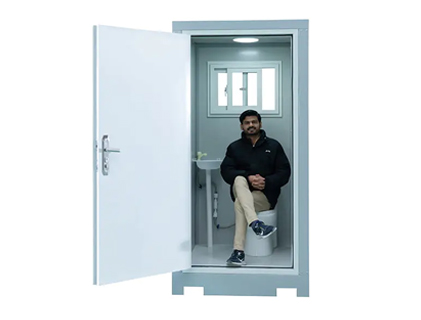
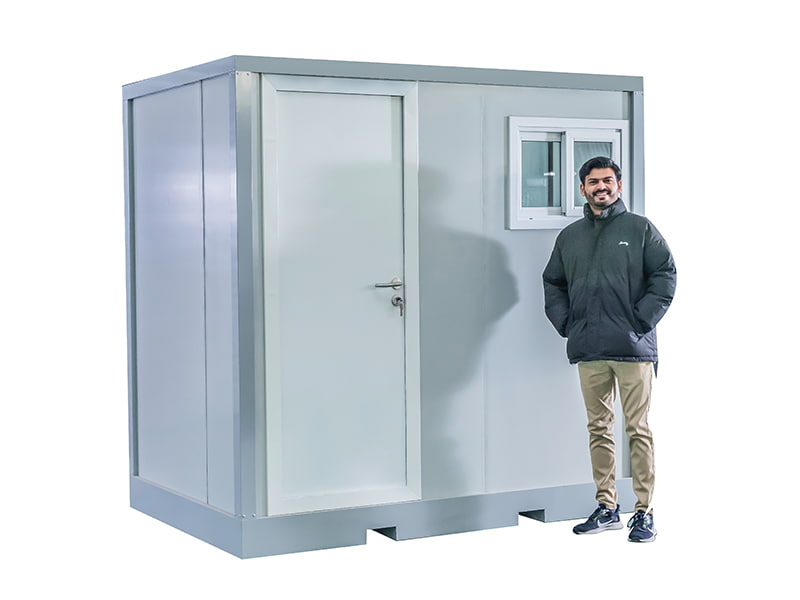
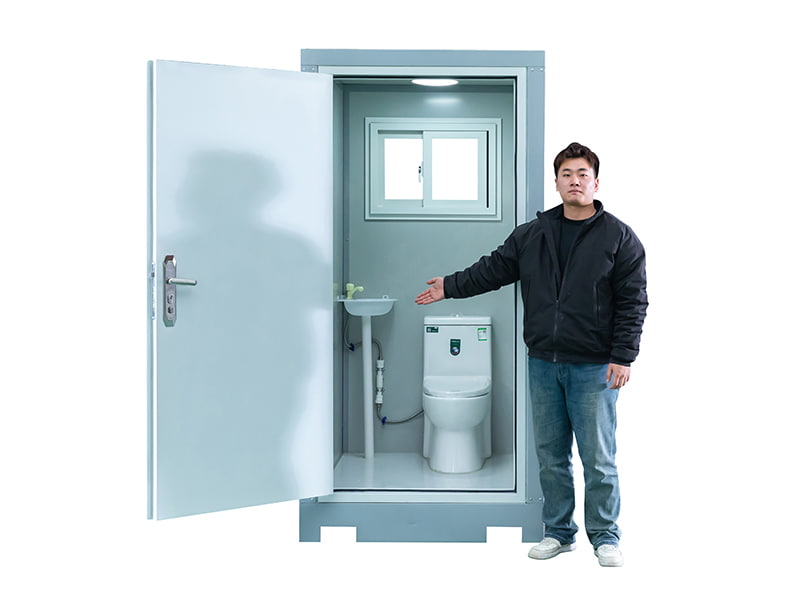
The Two-Person Outdoor Portable Toilet offers a practical alternative. Designed as a compact mobile restroom, it combines separate male and female compartments, outdoor durability, built-in lighting, and an external handwashing sink in one pre-assembled sanitation facility. The unit is intended for fast deployment and flexible relocation, helping project managers and event organizers provide dependable restroom access without waiting for permanent construction.
Its value is not limited to portability. The design addresses several common weaknesses found in basic portable sanitation products. It provides greater privacy than a single shared compartment, better hygiene support than a restroom without a handwashing station, and improved nighttime usability through integrated lighting. Its robust structure is also intended to withstand repeated movement and outdoor exposure, making it suitable for temporary facilities that may be relocated as project conditions change.
Manufactured by Suzhou Taimao Integrated Housing Co., Ltd., the unit benefits from the company’s broader experience in modular construction, prefabrication, integrated building systems, and controlled factory production. While this product is specifically designed for sanitation rather than accommodation, it reflects the same manufacturing principles used in the company’s container houses, portable buildings, steel structures, and modular housing systems: standardized production, efficient assembly, integrated functions, and a focus on rapid installation.
This article examines the product’s design, applications, advantages over conventional alternatives, manufacturing strengths, deployment process, maintenance requirements, and purchasing considerations.
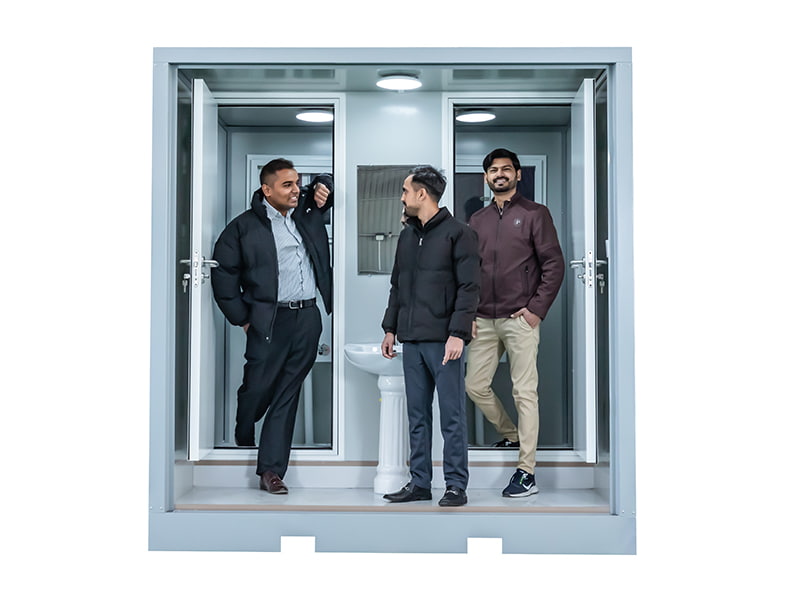
Two-Person Outdoor Portable Toilet
1. Product Overview
The Two-Person Outdoor Portable Toilet is a compact restroom facility designed for locations where permanent sanitation infrastructure is unavailable or insufficient. Its central purpose is to provide two independent restroom compartments in a single mobile structure. The separation of male and female areas improves organization, privacy, and user comfort, especially at public events and shared work locations.
Unlike a basic portable toilet that generally consists of one small enclosed cubicle, this unit is configured as a more complete sanitation station. It includes independent compartments, integrated lighting, and an external sink for handwashing. These functions allow the facility to serve a larger range of users and to operate more effectively during both daytime and nighttime hours.
The unit is intended to arrive in a condition that supports quick commissioning. It is pre-assembled before delivery, reducing the amount of work required at the destination. Once the unit is positioned, connected, checked, and prepared for use, it can become operational much faster than a conventional restroom building constructed on site.
Its portable format is especially valuable for temporary or changing environments. A construction project may need restroom facilities near one work zone during one phase and near another area later. An event organizer may require sanitation facilities for a weekend gathering and then transfer the unit to another venue. A relief organization may need to establish basic services rapidly after a natural disaster. The product is designed around these changing requirements.
| Product Element | Function | Practical Benefit |
|---|---|---|
| Separate male and female compartments | Provides independent restroom areas | Improves privacy, organization, and user comfort |
| Built-in lighting system | Illuminates the interior and access areas | Supports safer use during nighttime and low-light conditions |
| External handwashing sink | Provides a convenient hygiene station | Encourages handwashing and reduces the need for a separate sink installation |
| Robust mobile structure | Protects the facility during outdoor use and relocation | Supports repeated deployment in demanding environments |
| Pre-assembled configuration | Reduces site installation work | Allows faster setup and more predictable project scheduling |
2. Why Separate Compartments Matter
Privacy is a fundamental requirement in public sanitation. A facility that does not provide clear separation between users can create discomfort, confusion, and lower acceptance. The Two-Person Outdoor Portable Toilet addresses this concern by including independent male and female compartments within one compact unit.
This arrangement is particularly useful at construction sites, where workers may need convenient restroom access without leaving the work area. It is also suitable for outdoor festivals, markets, sports competitions, temporary offices, and camping grounds, where a large number of people may share the same sanitation facilities.
Separate compartments improve traffic flow as well. Instead of creating a single line for one shared space, users can enter the appropriate side of the facility. At events with high attendance, this can make the restroom area easier to manage. It also allows organizers to position the unit in a visible but orderly location without having to install multiple individual units.
A two-compartment design can offer an advantage over low-cost single-cubicle portable toilets when the project requires a more organized and professional appearance. Individual plastic units may be inexpensive for small-scale use, but they can create a scattered layout and may not provide a coordinated hygiene area. A combined structure presents a more unified solution.
The two-compartment arrangement also supports better supervision and maintenance. Facility managers can inspect one compact structure instead of monitoring multiple separate units placed throughout a site. Cleaning schedules, supply checks, and access management can therefore be planned more efficiently.
3. Lighting for Safer Outdoor Use
Outdoor restrooms are often used after sunset, during early morning shifts, or in areas where natural light is blocked by buildings, trees, temporary structures, or construction equipment. Without adequate illumination, users may face difficulty locating the entrance, identifying surfaces, or moving safely inside the compartment.
The built-in lighting system is an important part of the product’s usability. It provides illumination in low-light conditions and supports the safe operation of the restroom at night. This feature is especially relevant for construction sites operating in multiple shifts, campsites used after dark, emergency response areas, and festivals that continue into the evening.
Integrated lighting is more convenient than relying entirely on portable lamps or external temporary fixtures. External lighting may be moved, damaged, disconnected, or positioned too far from the entrance. A lighting system incorporated into the facility is easier to include in the deployment plan and can provide a more consistent user experience.
Lighting also contributes to the perceived quality of the restroom. A well-lit sanitation facility appears cleaner, safer, and more accessible than a dark enclosure. For public events and commercial venues, this can have a direct effect on visitor satisfaction and the overall image of the organizer.
When preparing the unit for operation, the site manager should confirm the power arrangement, lighting controls, cable protection, and local electrical requirements. The exact connection method may depend on the project location and configuration. Any electrical work should be completed by qualified personnel and inspected before public use.
4. External Handwashing and Hygiene Support
Handwashing is one of the simplest and most effective ways to improve sanitation. A restroom without a nearby sink may technically provide toilet access, but it does not provide a complete hygiene solution. Users may need to walk to another building or rely on separate dispensers located far away. This can reduce handwashing compliance, especially in busy outdoor environments.
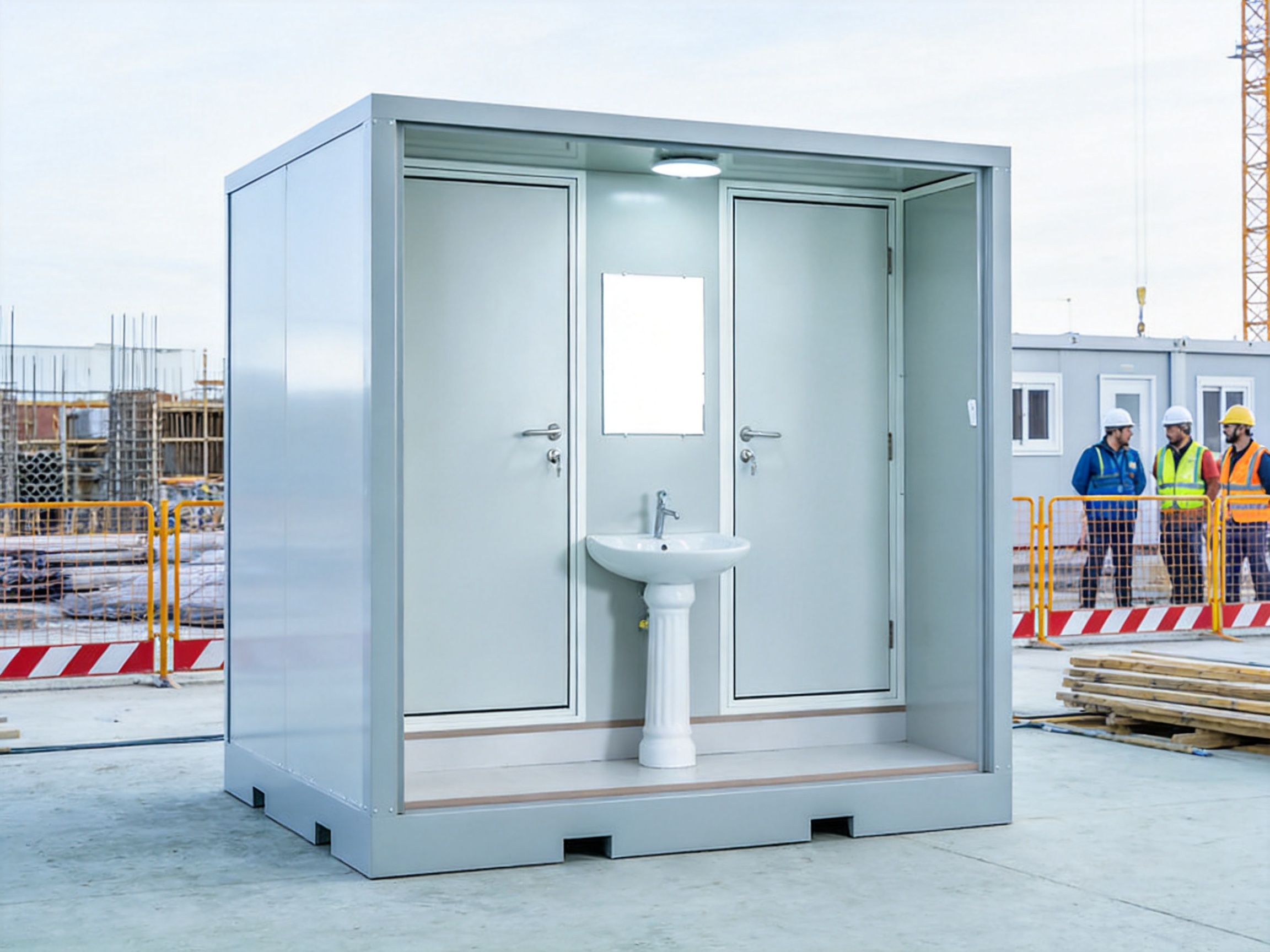
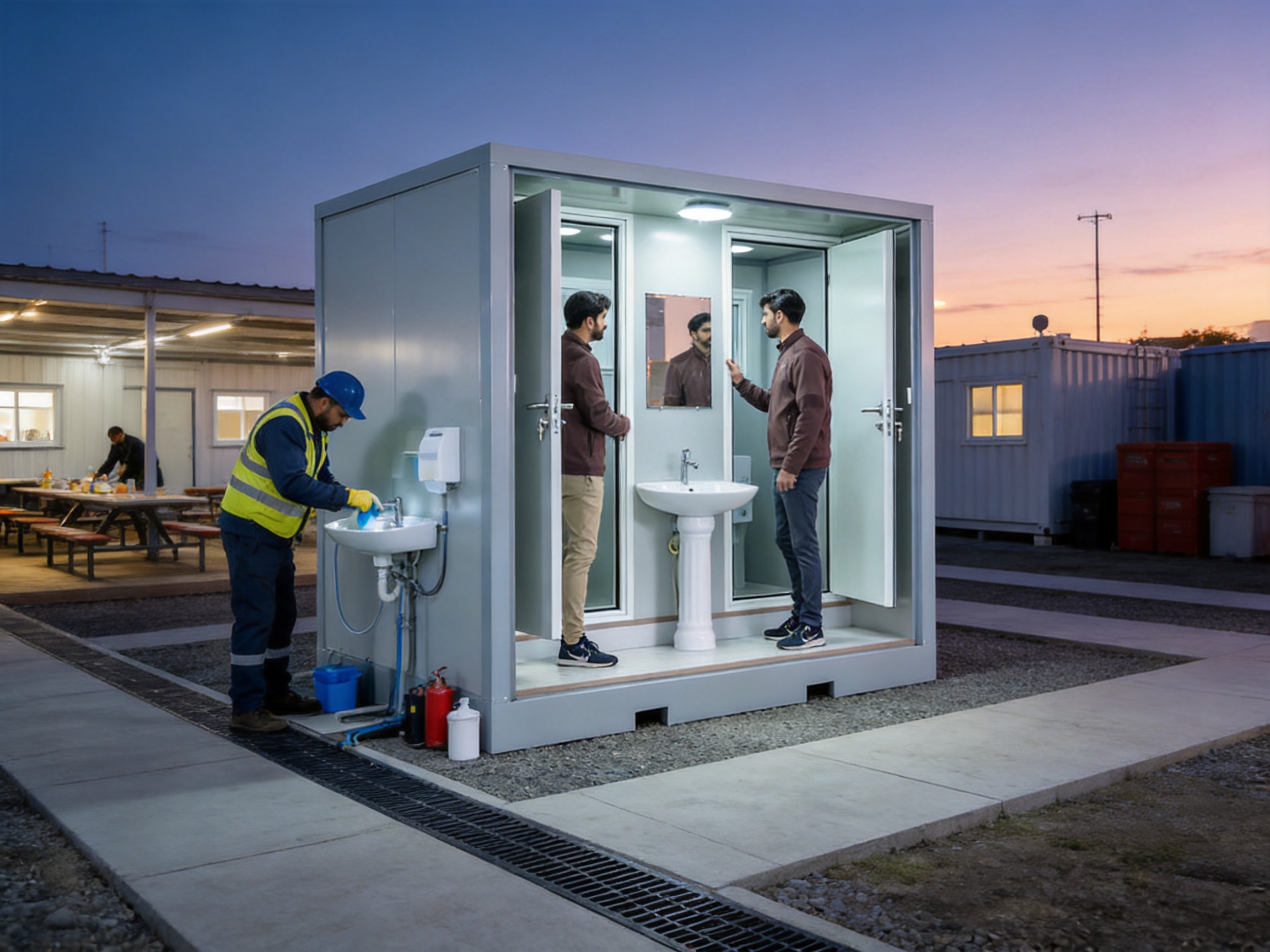
The Two-Person Outdoor Portable Toilet includes an external handwashing sink as part of its functional design. Placing the sink outside the compartments makes it accessible to users from both sides and helps keep the washing activity separate from the enclosed restroom areas. It also provides a visible reminder that hand hygiene is part of the facility’s intended use.
The external sink is useful at food markets, outdoor dining areas, festivals, construction sites, agricultural locations, and emergency camps. In locations where people handle tools, materials, food, or shared equipment, convenient access to water and handwashing supplies can improve general hygiene conditions.
Operators should plan for the necessary water supply, drainage, soap, paper towels, or hand dryers according to the selected project configuration. The sink itself provides the physical station, while consumables and service arrangements should be determined by the site operator. In areas with limited water availability, a suitable tank-based or controlled supply system may be considered, subject to local regulations.
The external sink can also reduce the need for additional temporary washing equipment. Instead of renting a separate handwashing stand, the project can use a coordinated facility that combines restroom access and basic hygiene support. This may simplify transportation, placement, inspection, and daily servicing.
5. Robust Construction for Outdoor Conditions
Outdoor sanitation facilities are exposed to changing weather, dust, rain, sunlight, temperature fluctuations, and frequent user traffic. A product designed only for occasional indoor use may not withstand these conditions effectively. The Two-Person Outdoor Portable Toilet is built around a robust and stable structure intended for outdoor operation and repeated relocation.
Structural stability is important for user confidence. A restroom that shifts, vibrates, or feels unstable can create discomfort and may present a safety concern. A stable structure helps the unit remain properly positioned during normal use and supports a more secure experience for users of different ages and physical abilities.
The unit’s outdoor-ready concept also supports deployment at locations where the ground surface may not be part of a permanent building foundation. Before installation, the operator should select a level and accessible location with adequate drainage and sufficient clearance around doors, the sink, and service areas. Proper positioning can significantly improve both safety and serviceability.
Durability is also relevant to transportation. Temporary facilities may be loaded, unloaded, moved, and installed more than once during their service life. A robust structure can help reduce the risk of damage caused by ordinary handling and relocation, provided that lifting and transport procedures follow the supplier’s instructions.
Compared with improvised structures assembled from separate panels and temporary fixtures, a factory-produced mobile unit offers a more consistent configuration. Components are selected and assembled according to a defined design rather than being adapted on site. This improves repeatability and can reduce the likelihood of missing parts or incompatible fittings.
6. Advantages Over Conventional Portable Toilets
The market includes many types of temporary sanitation products, from basic single-cubicle plastic toilets to trailer-mounted restroom buildings and site-built temporary rooms. The Two-Person Outdoor Portable Toilet occupies a practical position between these options. It offers more functionality and organization than a basic individual unit while remaining more compact and easier to deploy than a large restroom trailer or permanent building.
6.1 More Organized Than Individual Cubicles
Individual portable toilets can be useful when a project requires a large number of units distributed across a wide area. However, they may produce a fragmented appearance and require separate inspection and servicing. A combined two-compartment unit consolidates key functions in one location and offers a more organized layout.
6.2 Faster Than Conventional Construction
A permanent restroom requires design work, ground preparation, foundations, building construction, plumbing, electrical installation, interior finishing, inspections, and final commissioning. Even a small building can take considerable time. The pre-assembled portable toilet reduces the amount of work required at the destination and is therefore better suited to urgent, temporary, or short-duration projects.
6.3 More Complete Than a Basic Enclosure
A low-cost enclosure may provide only a toilet compartment. The Two-Person Outdoor Portable Toilet adds independent male and female areas, lighting, and a handwashing sink. These features make it a more complete facility for public use and can reduce the need for separate temporary accessories.
6.4 Easier to Relocate Than a Permanent Facility
Once a permanent restroom is built, it is not normally moved. By contrast, a portable sanitation unit can follow the changing needs of a construction project, event schedule, emergency response plan, or temporary camp. Relocation allows the same asset to be used at multiple stages or locations.
6.5 More Suitable for Professional Projects
Appearance, cleanliness, and organization influence how users perceive a project. A coordinated restroom unit can present a more professional image than a collection of unrelated temporary fixtures. This can be particularly valuable for public events, commercial developments, government projects, and facilities serving customers or visitors.
| Comparison Factor | Basic Single Portable Toilet | Site-Built Temporary Restroom | Two-Person Outdoor Portable Toilet |
|---|---|---|---|
| Deployment speed | Fast | Usually slow | Fast after delivery and positioning |
| Privacy arrangement | One individual compartment | Can be customized | Separate male and female compartments |
| Handwashing provision | Often separate | Can be installed but requires work | External sink included |
| Lighting | May require external equipment | Installed during construction | Built-in lighting system |
| Relocation | Generally easy | Not practical | Designed for portability and relocation |
| Project suitability | Small-scale or basic needs | Long-term fixed use | Events, worksites, camps, and emergency use |
7. Applications Across Different Industries
7.1 Construction Sites
Construction workers need restroom access close to their work area. If the nearest permanent building is far away, workers lose time walking to and from the facility. A portable restroom can be positioned within a reasonable distance of the active work zone and moved as the project develops.
The two-compartment layout is suitable for mixed-gender project teams, administrative staff, visitors, and subcontractors. The built-in lighting supports early shifts and late work, while the external sink helps workers clean their hands after handling construction materials.
7.2 Outdoor Events
Concerts, fairs, sporting events, markets, exhibitions, weddings, and community gatherings all require temporary sanitation. The unit can be placed near an event entrance, parking area, food service zone, spectator area, or backstage location, subject to the event’s layout and local requirements.
Its organized appearance and independent compartments can help event managers provide a more comfortable experience than a small group of isolated single-cubicle units. The lighting is particularly useful when events continue into the evening.
7.3 Camping Areas and Recreational Locations
Campgrounds, temporary outdoor retreats, hunting areas, and recreational sites may not have permanent plumbing infrastructure. A portable restroom offers a practical way to improve visitor services without constructing a full building.
The unit can be installed near cabins, tent areas, activity zones, or temporary accommodation facilities. Its portability also allows site managers to adjust the layout as seasonal occupancy changes.
7.4 Emergency and Disaster Relief
After floods, earthquakes, storms, fires, or other emergencies, permanent sanitation facilities may be damaged or inaccessible. Rapidly deployable toilets can support shelters, field hospitals, relief distribution points, and temporary housing areas.
The product’s pre-assembled form and mobile structure can help relief organizations establish basic sanitation faster than building new facilities from the ground up. Lighting is valuable when local infrastructure is damaged, while the handwashing sink supports hygiene in crowded conditions.
7.5 Temporary Labor Camps and Remote Projects
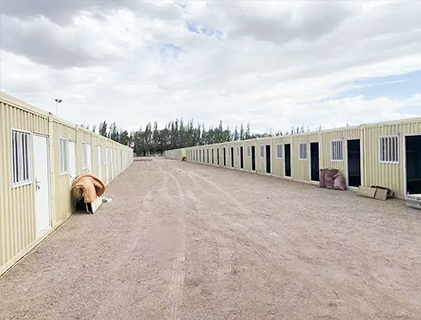
Mining, agricultural, infrastructure, energy, and road projects may operate in remote locations for limited periods. Workers may need sanitation before permanent buildings or utility systems are completed. The portable toilet can function as part of a temporary site-services package alongside portable offices, accommodation units, dining rooms, and storage buildings.
7.6 Public Works and Municipal Projects
Municipalities may require temporary restrooms during park renovations, road work, public-space upgrades, or seasonal events. A mobile unit allows local authorities to provide basic public facilities without committing to a permanent structure at every location.
8. Factory Manufacturing and Quality Advantages
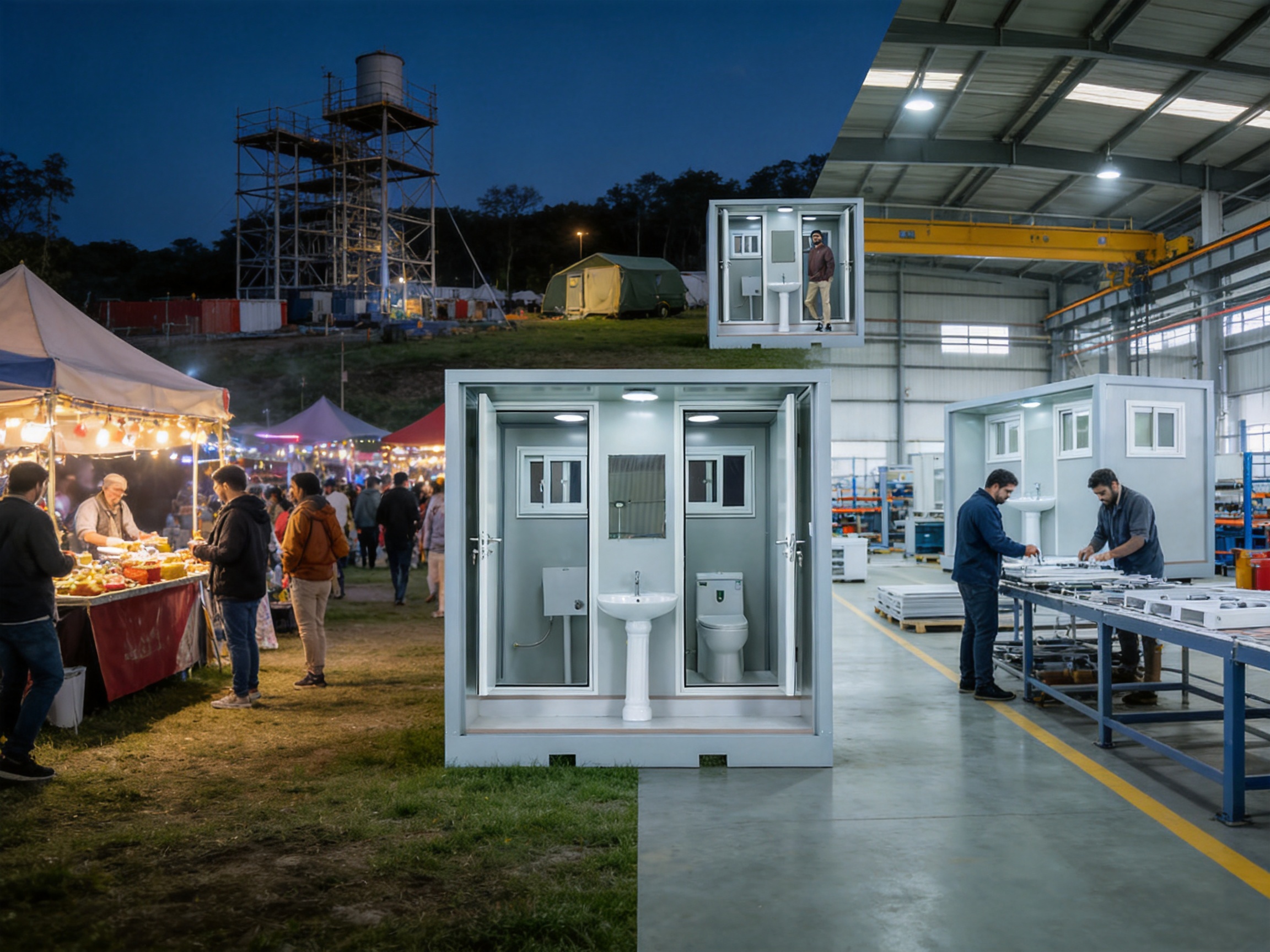
The performance of a portable building depends not only on its visible design but also on how it is manufactured. Factory production provides a controlled environment for material preparation, component assembly, inspection, and finishing. It reduces dependence on weather conditions and helps create a more consistent product than fully site-built construction.
Suzhou Taimao Integrated Housing Co., Ltd. specializes in modular building solutions and has developed capabilities covering modular design, prefabrication, integrated systems, and digital support. These capabilities are relevant to the production of portable sanitation facilities because the product requires multiple functions to work together within a compact structure.
A controlled manufacturing process can include standardized cutting, frame preparation, panel installation, internal fitting, electrical integration, surface finishing, and quality checks. Factory assembly makes it easier to identify problems before shipment. Doors, lighting, sink connections, internal partitions, and structural components can be inspected in a planned sequence rather than being completed under rushed site conditions.
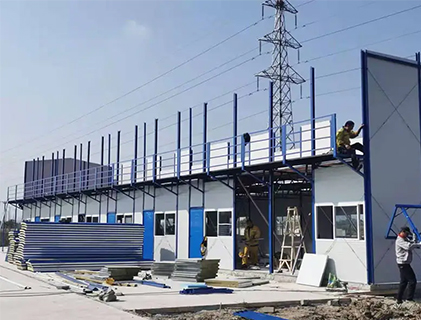
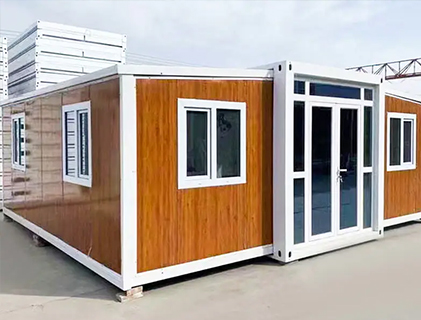
The company’s wider product range includes container houses, folding container houses, double-wing expandable container houses, K-type prefabricated houses, and steel structures. This product experience contributes to an understanding of transportation, modular dimensions, structural stability, rapid installation, and repeated use. Although a restroom has a different purpose from a living or office module, the same engineering principles support efficient production.
The company also describes an integrated SIP modular building system that combines structure, insulation, mechanical, electrical, plumbing, heating, ventilation, air conditioning, interior finishes, and smart-home technologies into a unified factory-produced solution. The Two-Person Outdoor Portable Toilet is a sanitation-focused product rather than a residential SIP module, but the company’s broader integrated approach demonstrates its ability to coordinate multiple building functions within prefabricated products.
Factory manufacturing can offer several competitive benefits:
1. Consistency: Repeated production methods help maintain uniform dimensions, component placement, and finish quality.
2. Efficiency: Materials and components can be organized in a dedicated production workflow, reducing unnecessary handling.
3. Better pre-delivery inspection: The unit can be reviewed before it leaves the factory rather than relying entirely on site completion.
4. Reduced site labor: More work is completed before delivery, helping shorten installation time.
5. Improved scheduling: Factory production allows the supplier and customer to coordinate manufacturing, transportation, and site preparation in advance.
6. Scalable supply: A modular product can be produced for individual projects or larger site-service programs, subject to capacity and specification.
9. Digital and Integrated Manufacturing Support
Modern modular construction increasingly depends on digital planning. Digital design tools can help coordinate dimensions, service paths, component locations, and production requirements before physical work begins. This is especially valuable when a compact product contains structural, electrical, lighting, and plumbing functions in a limited space.
Suzhou Taimao Integrated Housing Co., Ltd. states that it provides end-to-end digital software support for modular building projects. Such support can contribute to more efficient communication between design, manufacturing, logistics, and installation teams. Clear digital documentation can also help customers review layouts, confirm specifications, and plan the destination site.
For a portable toilet project, digital coordination may include the location of male and female compartments, entry doors, lighting points, sink position, service connections, ventilation arrangements, and transportation requirements. Early coordination reduces the possibility of changes after production has started.
Integrated manufacturing also means considering the unit as one complete facility rather than as unrelated components. The structure must accommodate user movement, maintenance access, electrical safety, drainage, lighting, cleaning, and transportation. A coordinated design is generally more reliable than adding individual functions after the enclosure has already been built.
For customers ordering multiple units, standardized digital documentation can simplify procurement and future replacement. Operators can maintain records of product dimensions, service points, cleaning procedures, and spare components. This supports more organized fleet management when several portable restrooms are used across different locations.
10. Deployment and Installation Planning
Although the unit is designed for quick deployment, careful planning remains important. A portable restroom should not simply be placed wherever a vehicle can unload it. The site must provide a safe, accessible, and serviceable location.
10.1 Site Selection
The selected area should be as level as possible, stable enough to support the unit, and accessible to users and service personnel. It should not be located in a depression where rainwater collects. The area around the doors and sink should remain clear of equipment, stored materials, cables, and construction debris.
10.2 Access and Accessibility
Users should be able to reach the unit safely from nearby paths, work areas, parking zones, or accommodation facilities. If the facility serves the public, the project manager should evaluate local accessibility requirements and determine whether additional accessible sanitation facilities are needed for the intended population.
10.3 Utility Preparation
The operator should confirm how lighting will be powered and how water will be supplied to the handwashing sink. Drainage and waste-handling arrangements must be planned in accordance with local regulations and the selected sanitary configuration. The exact requirements can vary by region, climate, site conditions, and project duration.
10.4 Transportation and Positioning
Delivery personnel should use suitable vehicles and handling equipment. The unit should be secured during transportation and placed according to the supplier’s lifting and positioning instructions. After placement, the structure, doors, lighting, sink, connections, and internal areas should be checked before opening the facility to users.
10.5 Commissioning
Commissioning should include a visual inspection, functional testing, cleaning, stocking of hygiene supplies, and confirmation that service access is available. A short operating checklist can help site managers verify that the unit is ready for use.
11. Maintenance and Daily Operation
Regular maintenance is essential for any shared restroom, regardless of whether it is permanent or portable. A well-designed unit can simplify maintenance, but cleanliness and service quality still depend on the operator.
Cleaning frequency should reflect the number of users, operating hours, weather, and project type. High-traffic events may require multiple inspections per day, while a small construction site may follow a daily or scheduled service plan. Floors, doors, fixtures, walls, sink surfaces, and touch points should be cleaned with products suitable for the installed materials.
The external sink should be checked for water supply, drainage, soap, paper towels, and visible cleanliness. The lighting should be tested regularly, particularly before evening use. Any damaged fitting, loose component, unusual electrical behavior, or water leak should be reported and corrected promptly.
Ventilation and odor control should also be considered. Adequate airflow, regular waste servicing, and correct cleaning practices help maintain a more comfortable environment. The unit should not be overloaded beyond its intended capacity or used for storing chemicals, tools, or unrelated materials.
When the restroom is relocated, it should be emptied, cleaned, disconnected, secured, and transported using an appropriate procedure. Relocation without preparation can cause damage to fittings or create unnecessary hygiene risks.
| Maintenance Area | Recommended Management Action | Reason |
|---|---|---|
| Interior compartments | Inspect and clean according to traffic level | Maintains hygiene and user comfort |
| External sink | Check water, drainage, soap, and hand-drying supplies | Supports effective handwashing |
| Lighting | Test operation and inspect visible connections | Improves nighttime safety |
| Doors and partitions | Check hinges, locks, handles, and privacy features | Preserves reliable access and privacy |
| Structure and placement | Inspect stability and surrounding ground conditions | Reduces safety risks during outdoor use |
| Waste and drainage | Service according to capacity and local requirements | Prevents overflow, odor, and unsanitary conditions |
12. Sustainability and Resource Efficiency
Temporary buildings can support sustainability when they are designed for repeated use rather than disposal after one project. A relocatable restroom can serve multiple sites during its useful life, reducing the need to construct a new temporary facility for every event or work zone.
Factory production may also improve material efficiency through planned cutting, standardized components, and controlled assembly. Completing major work in a manufacturing facility can reduce site waste and limit the need for repeated deliveries of small materials and tools.
The unit’s compact footprint can help organizations provide sanitation while using less land than a permanent building. Its portability also supports more efficient use of existing sites, since the facility can be moved when a project area is redesigned.
Sustainability performance depends on the full operating system. Responsible waste handling, efficient lighting, proper water management, durable materials, routine maintenance, and eventual recycling or responsible disposal all contribute to the product’s environmental profile. Customers should discuss specific material, energy, water, and waste requirements with the supplier when preparing a project specification.
13. Customization and Project Coordination
Different projects may require different delivery, layout, utility, color, branding, accessibility, or service arrangements. The basic two-compartment concept provides a practical foundation, while project-specific details should be confirmed during the ordering process.
Customers may need to coordinate the unit with container offices, worker accommodation, folding houses, expandable houses, steel structures, or other temporary buildings. A supplier experienced in integrated housing can help develop a more coherent site plan in which sanitation facilities are positioned in relation to offices, sleeping areas, dining spaces, entrances, and emergency routes.
Before placing an order, the customer should confirm the intended capacity, operating period, delivery location, road access, local climate, utility availability, cleaning plan, and regulatory requirements. These details help determine the most appropriate preparation and service arrangement.
For international projects, shipping dimensions, customs documentation, electrical standards, local plumbing practices, and import requirements should be reviewed in advance. A clear technical file can help reduce delays and misunderstandings between the supplier, carrier, installer, and end user.
14. Why Choose an Experienced Modular Manufacturer?
A portable restroom may appear simpler than a house or office module, but it still requires coordination between structure, enclosure, privacy, lighting, plumbing, drainage, transportation, and user safety. An experienced modular manufacturer can bring a broader engineering perspective to this coordination.
Suzhou Taimao Integrated Housing Co., Ltd. focuses on integrated housing and modular building solutions for customers in different markets. Its company information emphasizes certified modular solutions, proprietary manufacturing technologies, digital support, factory-controlled production, and reduced on-site construction work.
The company’s experience with container houses and prefabricated structures is relevant to portable sanitation because the products share important requirements: they must be manufactured efficiently, transported safely, assembled or commissioned quickly, and used in locations where conventional construction may be inconvenient.
Its SIP modular building system demonstrates a capability to combine several building functions in a unified factory process. This approach is useful when customers want more than a basic enclosure and instead require a ready-to-use facility with coordinated services and finishes.
The company also positions its manufacturing approach around shorter project timelines, operational efficiency, reduced ecological impact, quality, and safety. These goals align closely with the needs of temporary sanitation projects, where delays can affect worker productivity, event readiness, public satisfaction, and emergency response effectiveness.
15. Purchasing Checklist
Before purchasing a Two-Person Outdoor Portable Toilet, the customer should prepare a detailed project checklist. This reduces the risk of ordering a product that does not match the site’s capacity, utilities, or regulatory requirements.
First, determine the number of users and expected peak demand. One two-compartment unit may be suitable for a small construction team, private event, or limited camping area, while a large festival may require several units or additional accessible facilities.
Second, determine the required operating period. A weekend event, six-month construction project, and long-term remote camp may have different requirements for durability, servicing, spare parts, and relocation.
Third, verify the delivery route. Narrow roads, low bridges, soft ground, steep slopes, and restricted access can affect the choice of vehicle and unloading equipment.
Fourth, confirm utility arrangements. The customer should understand how the lighting will be connected, how the sink will receive water, and how wastewater or waste will be handled.
Fifth, review local standards. Sanitation, electrical safety, accessibility, waste disposal, fire safety, and public-event requirements may vary by country, province, city, or project type.
Sixth, establish a maintenance plan. A portable toilet is not a set-and-forget product. The customer should assign responsibility for cleaning, supply replenishment, lighting checks, water management, and emergency repairs.
Finally, request product drawings, specifications, transport information, installation guidance, warranty terms, and after-sales support details before confirming the order.
16. Frequently Asked Questions
Q1: What is the Two-Person Outdoor Portable Toilet designed for?
It is designed for temporary or mobile sanitation at construction sites, outdoor events, camping areas, emergency response locations, remote projects, public works sites, and other places where permanent restrooms are unavailable or impractical.
Q2: Does the unit have separate male and female areas?
Yes. The unit includes separate male and female compartments. This arrangement improves privacy, organization, and comfort for mixed-gender users.
Q3: Is a handwashing station included?
Yes. An external handwashing sink is included. Water supply, drainage, soap, hand-drying supplies, and local utility arrangements should be confirmed for each project.
Q4: Can it be used at night?
Yes. The unit includes a built-in lighting system intended to support use during nighttime and low-light conditions. The electrical connection and commissioning procedure should comply with local safety requirements.
Q5: How quickly can it be deployed?
The unit is pre-assembled to reduce site work and support rapid deployment. Actual commissioning time depends on transportation, site preparation, utility connections, local inspections, and the selected sanitary configuration.
Q6: Can the unit be relocated?
Yes. Portability and relocation are central features of the design. Relocation should be performed using suitable equipment and the handling procedures recommended by the supplier.
Q7: Is it suitable for construction sites?
Yes. Its separate compartments, lighting, sink, robust structure, and mobile format make it suitable for construction projects. The site manager should position it on stable ground and establish a regular cleaning and waste-service schedule.
Q8: Can it be used for emergency relief?
Yes. The pre-assembled and portable format can support temporary shelters, field operations, relief distribution centers, and other emergency locations. Local authorities and relief organizations should confirm sanitation and waste-handling requirements before use.
Q9: How is this product different from a basic single portable toilet?
It provides two independent compartments in one coordinated structure, together with built-in lighting and an external handwashing sink. This makes it more suitable for organized public use and mixed-gender sites than a basic single-compartment unit.
Q10: Is it a permanent replacement for a building restroom?
The product is primarily intended as a portable and temporary sanitation solution. It may serve for extended periods when properly maintained, but customers should evaluate local regulations, capacity, servicing, durability, and project conditions before using it as a long-term facility.
Q11: What should be prepared before delivery?
The customer should prepare a level and accessible placement area, confirm transportation access, plan water and drainage, arrange electrical service for lighting, and establish cleaning and waste-management procedures.
Q12: Can the product be coordinated with other modular buildings?
Yes. It can be planned alongside container houses, portable offices, accommodation units, expandable buildings, steel structures, and other temporary facilities. Coordinated site planning can improve access, utility management, and overall project organization.
Q13: What manufacturing advantages does the supplier provide?
The supplier specializes in modular building solutions, factory-controlled production, integrated systems, digital support, and prefabricated construction. Its broader experience includes container houses, SIP modular systems, steel structures, and other portable buildings.
Q14: How should the unit be maintained?
Maintenance should include regular cleaning, inspection of compartments and doors, testing of lighting, checking of the external sink, replenishment of hygiene supplies, and scheduled waste or drainage service. The frequency should match the number of users and operating conditions.
Q15: How can a customer request a quotation?
A quotation should be based on the intended application, quantity, delivery location, utility conditions, configuration, and any project-specific requirements. Customers can contact Suzhou Taimao Integrated Housing Co., Ltd. through its sales communication channels for product information and project coordination.
Conclusion
The Two-Person Outdoor Portable Toilet is designed to solve a practical problem: how to provide clean, organized, and dependable sanitation in places where permanent construction is too slow, costly, or inflexible. Its separate male and female compartments improve privacy, while the built-in lighting supports nighttime use and the external sink adds an important hygiene function.
Compared with basic single portable toilets, it offers a more complete and coordinated facility. Compared with a site-built restroom, it can be deployed more quickly and relocated more easily. Compared with improvised sanitation arrangements, it provides a purpose-designed structure manufactured for outdoor use.
Its value is strengthened by the manufacturing capabilities of Suzhou Taimao Integrated Housing Co., Ltd. The company’s experience in modular housing, container buildings, SIP systems, steel structures, digital planning, and integrated factory production supports a disciplined approach to portable facility manufacturing. This background helps connect structural design, utility coordination, prefabrication, transport, and site deployment in one project process.
For construction companies, event organizers, campsite operators, municipalities, emergency agencies, and remote project managers, the product offers a flexible sanitation option that can adapt as site requirements change. With proper site preparation, utility planning, cleaning, and maintenance, it can provide a reliable restroom service for temporary and mobile applications.
As modular construction continues to develop, portable sanitation products are becoming an important part of complete temporary infrastructure. A successful project is not defined only by accommodation or office space; it also requires safe, accessible, and hygienic support facilities. The Two-Person Outdoor Portable Toilet is designed to provide that essential service in a compact, practical, and ready-to-deploy format.
References
1. Product information supplied for the Two-Person Outdoor Portable Toilet, including product features, applications, and configuration details.
2. Suzhou Taimao Integrated Housing Co., Ltd. company information concerning modular design, factory manufacturing, digital support, SIP building systems, and integrated construction solutions.
3. General principles of temporary sanitation planning for construction sites, outdoor events, camping facilities, and emergency response locations.
4. General guidance on portable building site selection, utility coordination, cleaning, maintenance, and safe relocation.
5. General modular construction principles concerning prefabrication, controlled factory production, integrated services, and reduced on-site installation work.
Product: Two-Person Outdoor Portable Toilet

For exclusive deals and latest offers, sign up by entering your email address below.

-
TEL:+86 18762912902
-
Email:cntaimao@163.com
-
WhatsApp:
-
Add:Group 5, Cao Village, Zhenze Town, Suzhou, Jiangsu, China
Copyright © Suzhou Taimao Integrated Housing Co., Ltd.
All Rights Reserved.
 Wholesale movable homes for sale
custom built modular homes