

 EN
 русский
 Español
 عربى
 Français
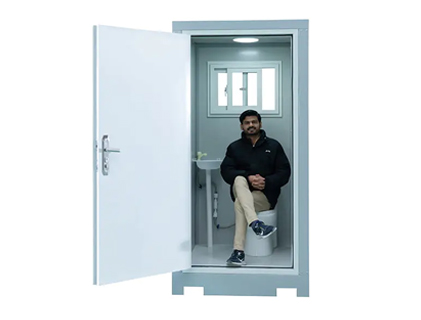
Single-Person Outdoor Portable Toilet: A Compact, Durable, and Efficient Sanitation Solution
Admin 2026-10-23Reliable sanitation is essential wherever people gather, work, travel, or live temporarily. Construction sites, outdoor events, parks, roadside service areas, emergency response locations, temporary camps, and small commercial projects all require restroom facilities that can be installed quickly and operated safely. In many of these environments, a full-size permanent restroom is impractical because of limited space, high construction costs, long installation schedules, or changing site requirements.
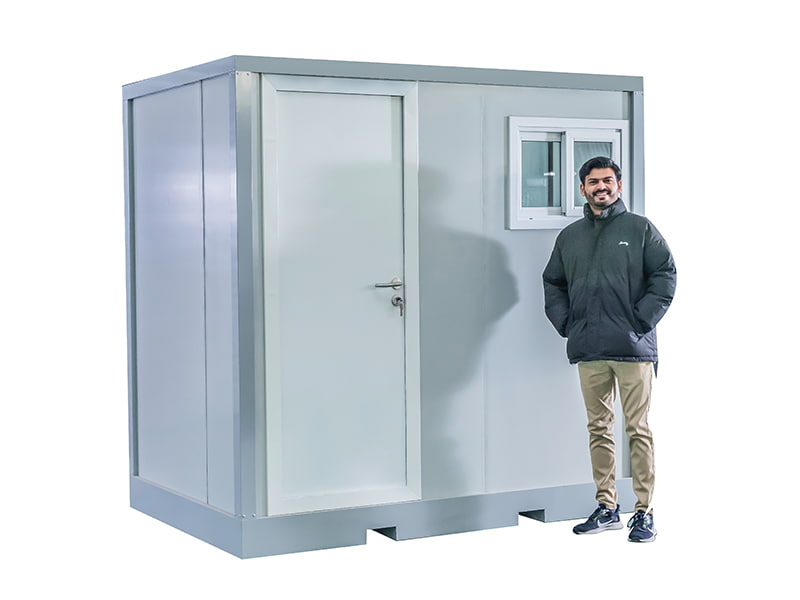
The Single-Person Outdoor Portable Toilet provides a practical response to these challenges. Designed for individual use, it combines a compact footprint with the essential functions required for convenient outdoor sanitation. Its structure is intended to withstand regular use and changing weather conditions, while its portable design allows it to be deployed, relocated, and removed with minimal disruption.
Unlike larger portable restroom models, including XL units and dual-compartment facilities, this product focuses on efficiency. It does not occupy more space than necessary, yet it remains a complete restroom solution rather than a temporary enclosure with limited functionality. This balance makes it suitable for applications where every square meter matters and where a simple, dependable sanitation unit is more valuable than an oversized facility.
Manufactured by Suzhou Taimao Integrated Housing Co., Ltd., the unit benefits from the company’s broader experience in modular construction, prefabricated building systems, integrated manufacturing, and project-oriented housing solutions. The company’s production philosophy combines factory-controlled fabrication, quality management, configurable design, and efficient delivery. These strengths help create portable facilities that are practical for immediate use while remaining suitable for different project environments.
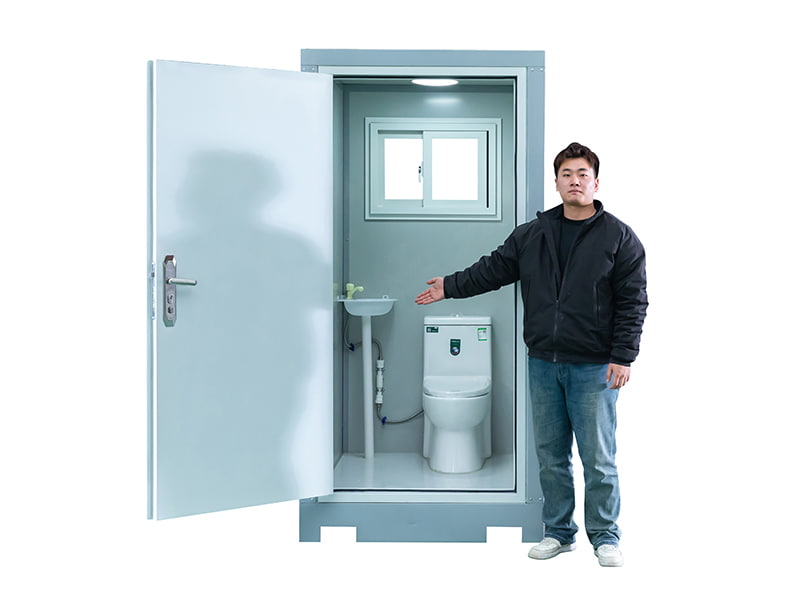
Single-Person Outdoor Portable Toilet
Content
- 1 Understanding the Need for Compact Outdoor Sanitation
- 2 Core Product Advantages
- 3 Comparison with Conventional and Oversized Alternatives
- 4 Applications Across Different Environments
- 5 Manufacturing Strength Behind the Product
- 6 Quality, Safety, and Reliability Considerations
- 7 Custom Manufacturing and Project Adaptability
- 8 Logistics, Installation, and Deployment Planning
- 9 Environmental and Operational Benefits
- 10 How to Select the Right Portable Toilet for a Project
- 11 Why Manufacturer Experience Matters
- 12 Recommended Operating Practices
- 13 Frequently Asked Questions
- 13.1 What is the main purpose of the Single-Person Outdoor Portable Toilet?
- 13.2 How does it differ from an XL or dual-compartment portable toilet?
- 13.3 Can the unit be relocated after installation?
- 13.4 Is the unit suitable for construction sites?
- 13.5 Can it be used at outdoor events?
- 13.6 Is the product weather-resistant?
- 13.7 Does it include basic restroom facilities?
- 13.8 Can the unit be customized?
- 13.9 How should the installation area be prepared?
- 13.10 How often does the portable toilet require maintenance?
- 13.11 What should buyers ask the manufacturer before ordering?
- 13.12 Why consider a manufacturer with modular housing experience?
- 14 Conclusion
- 15 References
- 16 Product: Single-Person Outdoor Portable Toilet
Understanding the Need for Compact Outdoor Sanitation
Temporary sanitation requirements are often underestimated during the planning stage of a construction or outdoor project. A worksite may have sufficient space for equipment and materials but lack a suitable area for a large restroom building. An event organizer may need additional toilets for a short period without investing in permanent infrastructure. A rural project may require facilities in a location where conventional plumbing and building services are not yet available.
In these situations, the size and mobility of the restroom become important decision factors. A large portable toilet may offer additional internal space, but it can also create challenges related to transportation, placement, access, and cost. When only one person needs to use the facility at a time, a single-person unit can provide a more efficient use of land and budget.
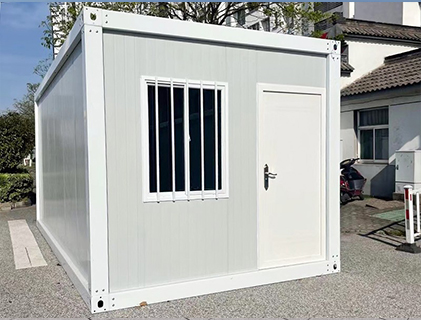
The Single-Person Outdoor Portable Toilet is designed around this principle. It provides a dedicated enclosed space for individual use while reducing unnecessary volume. Its compact configuration allows project planners to position sanitation facilities close to work areas, visitor zones, temporary accommodation, or service points without consuming valuable operational space.
Compact does not mean incomplete. The unit is intended to include the basic facilities expected from a functional portable restroom. It offers privacy, shelter, convenient access, and a stable internal environment for individual use. The result is a focused sanitation solution for projects that require practicality rather than excessive size.
Core Product Advantages
Compact and Space-Saving Design
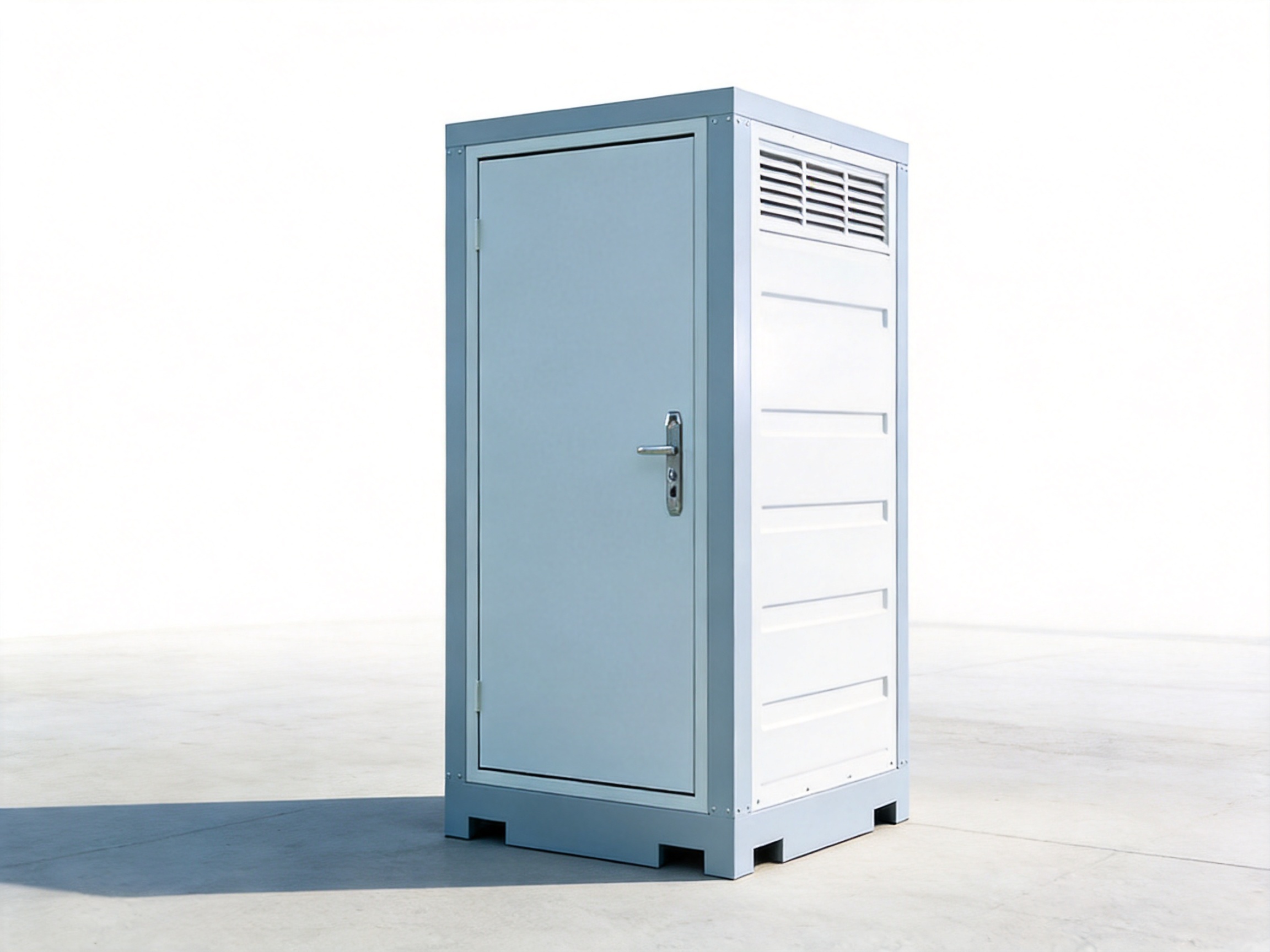
The primary advantage of this portable toilet is its efficient use of space. A single-person layout eliminates the need for unnecessary internal capacity while preserving the basic dimensions required for comfortable and practical use. This makes the unit especially valuable in urban construction zones, small event venues, roadside locations, temporary camps, and narrow service areas.
Space efficiency can influence more than the installation footprint. A smaller unit may simplify transportation planning, reduce the amount of site preparation required, and allow several units to be positioned in an organized arrangement. For event organizers, this can help preserve space for stages, seating, food service, emergency access, and pedestrian movement. For construction managers, it can help keep sanitation facilities close to workers without interfering with machinery, storage, or material handling.
The compact form also supports flexible deployment. A unit can be placed beside a temporary office, near a site entrance, close to an outdoor work area, or at a designated visitor location. Because it is designed for individual use, it can serve as a focused facility in areas where a large restroom block would be disproportionate to actual demand.
Portable and Easy to Relocate
Temporary projects change over time. Construction activities move from one section of a site to another, event layouts are adjusted, and emergency facilities may need to be transferred to a new location. A fixed restroom structure cannot respond easily to these changes. The Single-Person Outdoor Portable Toilet is designed as a mobile facility that can be deployed when needed and relocated as site conditions develop.
Its portable nature supports quick installation and removal. This is particularly useful for projects with short timelines, seasonal operations, or phased construction schedules. Instead of building a permanent facility and later demolishing it, users can position the portable unit for the active project period and move it when the work plan changes.
Relocation can also support better hygiene management. If a location becomes unsuitable because of ground conditions, drainage concerns, traffic patterns, or changes in access, the unit can be moved rather than abandoned. This provides operators with greater control over the user experience and the maintenance environment.
Durable and Weather-Resistant Construction
Outdoor toilets must operate in conditions that may include sunlight, rain, wind, dust, temperature fluctuations, and frequent daily use. A weak enclosure can deform, deteriorate, or become unstable, creating safety and maintenance problems. This product is built around a robust structure intended to provide dependable performance in temporary outdoor environments.
Durability is important at several levels. The outer structure must remain stable during regular use. Materials and connections must support repeated handling, transportation, and placement. Interior components must be suitable for a sanitation environment, where cleaning, moisture, and contact with users are routine considerations. The facility must also maintain privacy and functional integrity throughout its service period.
Compared with improvised site-built enclosures, a manufactured portable toilet offers more consistent construction. Factory production allows components to be prepared according to established processes instead of being assembled from unpredictable materials at the project site. This helps reduce variation between units and supports more reliable quality control.
Complete Basic Restroom Functionality
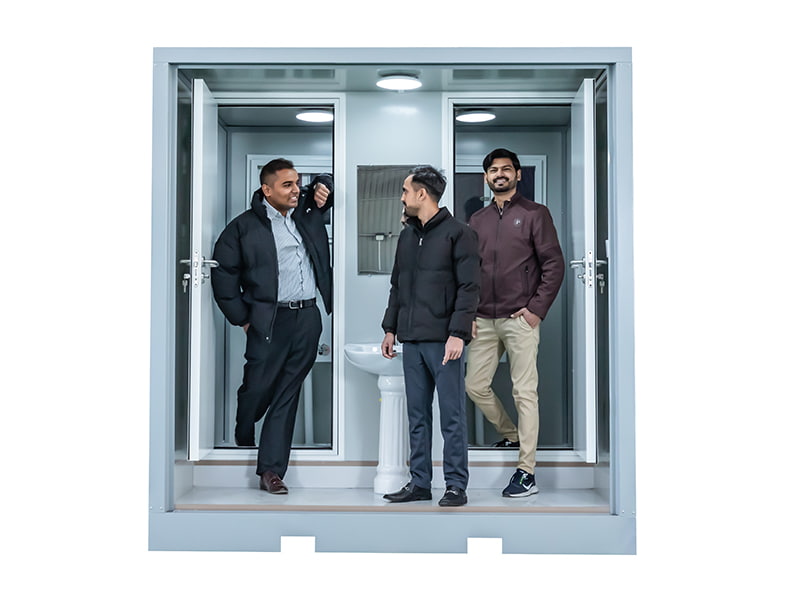
A portable restroom should be more than a small shelter. It must provide a usable and private environment for individual sanitation needs. The Single-Person Outdoor Portable Toilet is designed as a fully functional unit that includes the basic facilities required for practical use.
This functional approach is important for organizations that want to improve site conditions without investing in a full permanent building. Workers, visitors, and event participants can access a dedicated restroom facility instead of relying on distant public buildings, improvised arrangements, or unsuitable temporary spaces.
The unit’s individual-use design also supports privacy. A single occupant can use the facility without sharing the interior with another person. This is valuable at work sites, public events, temporary housing areas, and locations where user comfort and personal dignity are important considerations.
Practical and Cost-Effective Operation
Cost efficiency is not determined only by the purchase price. A complete evaluation should also consider transportation, installation, site preparation, maintenance, relocation, and eventual removal. A compact portable toilet can help reduce several of these costs by limiting material volume and simplifying deployment.
For temporary projects, the ability to use a facility only for the required period can prevent unnecessary investment in permanent construction. For small sites, selecting a single-person unit instead of a larger model can help match the facility to actual demand. This avoids paying for unused capacity while still maintaining acceptable sanitation standards.
The product’s practical value is particularly evident when multiple locations must be supported. A project manager may place individual units at different work zones instead of constructing one large restroom in a distant location. This can improve convenience and reduce time lost when workers travel away from their immediate work areas.
Comparison with Conventional and Oversized Alternatives
The portable sanitation market includes many types of facilities, from simple temporary enclosures to large multi-user restroom blocks. Each type has a suitable application, but not every project needs maximum capacity. The Single-Person Outdoor Portable Toilet is differentiated by its focused design: it provides essential functionality in a smaller, easier-to-manage format.
| Evaluation Area | Single-Person Outdoor Portable Toilet | Large or Dual-Compartment Portable Toilet | Permanent Restroom Building |
|---|---|---|---|
| Space Requirement | Compact footprint suitable for restricted locations | Requires more placement space | Requires land, construction space, and service access |
| Deployment Speed | Designed for quick installation and use | Generally deployable but may require more logistics | Usually requires a longer construction schedule |
| Mobility | Suitable for relocation as project conditions change | Relocatable, but larger size can increase handling demands | Normally fixed after construction |
| Capacity Focus | Efficient individual use | Higher capacity or multiple users | Designed for long-term, higher-volume use |
| Best Application | Small sites, temporary projects, and targeted sanitation points | Large events and high-traffic areas | Permanent facilities and developed properties |
| Project Flexibility | High flexibility for changing layouts | Moderate flexibility | Limited after construction |
The table demonstrates that the most suitable restroom depends on the project’s actual requirements. A dual-compartment unit may be appropriate for a major festival, while a permanent building may be necessary for a long-term commercial development. However, for compact sites and short-term applications, a single-person facility can offer a more balanced combination of cost, mobility, and convenience.
Compared with improvised structures, the product offers a more professional and controlled solution. Improvised structures may lack weather resistance, privacy, stable flooring, reliable doors, or consistent sanitation features. A factory-produced unit is designed as a complete product, which helps reduce the risks associated with field-built alternatives.
Applications Across Different Environments
Construction Sites
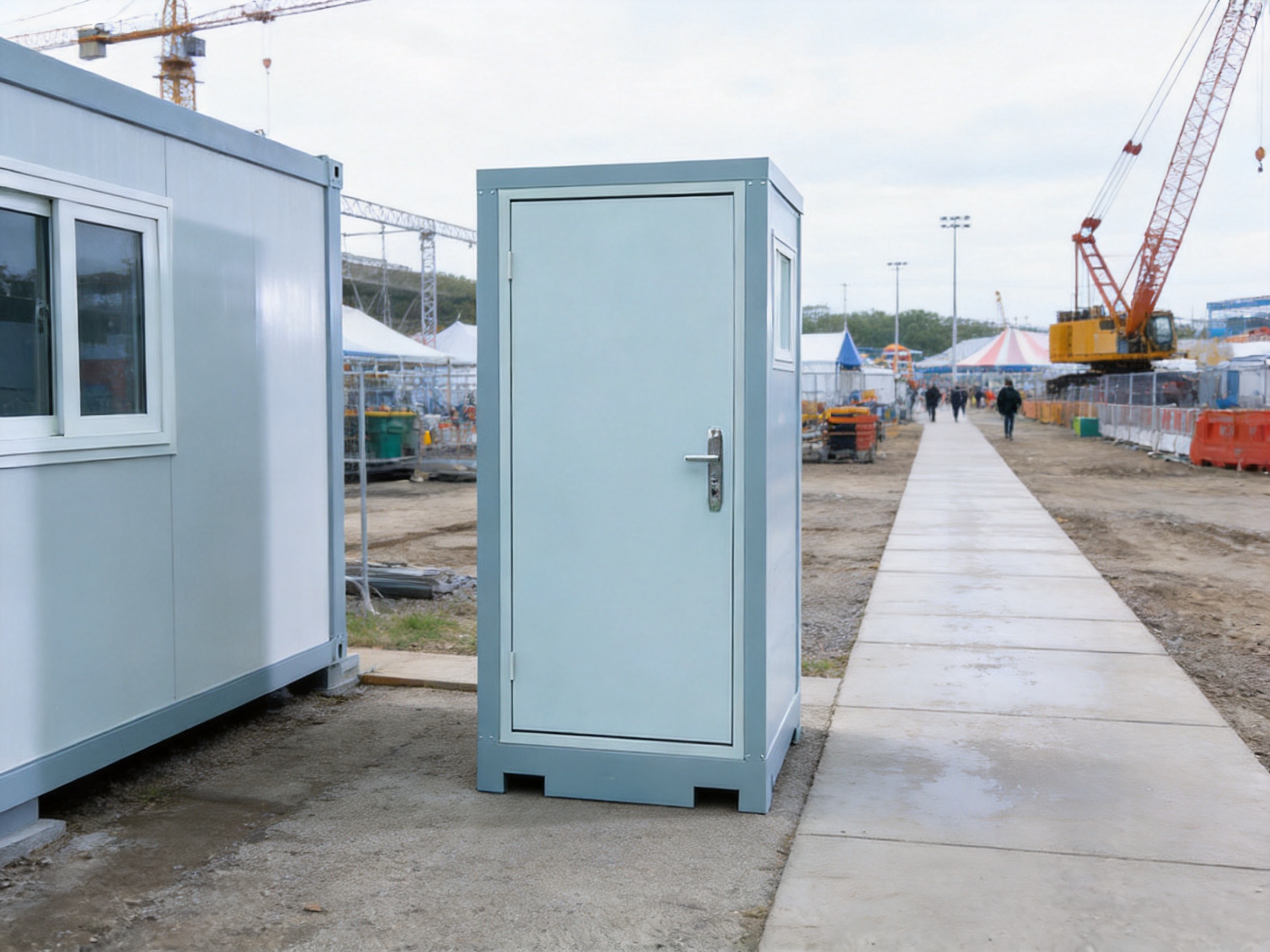
Construction sites are among the most common environments for portable restrooms. Workers may operate far from existing buildings, and the project may last from several weeks to multiple years. During the early stages of construction, permanent plumbing systems may not yet be available. A portable toilet can provide immediate sanitation access while the main building is still being developed.
The compact single-person format is especially useful on small residential projects, renovation sites, roadwork areas, utility projects, and urban developments where space is restricted. It can be placed near a site office, material storage area, or designated worker zone while avoiding major interference with machinery and deliveries.
As a project advances, the unit can be relocated. For example, a facility initially placed near an excavation area may later be moved closer to the structure under construction. This adaptability helps maintain convenient sanitation access throughout different project stages.
Outdoor Events and Small Venues
Outdoor events often require temporary restroom capacity without permanent construction. Community festivals, sports activities, markets, weddings, exhibitions, and temporary performance venues may operate for only a few hours or days. In such cases, portable facilities can be installed before the event and removed afterward.
The single-person unit is suitable for smaller events where planners need additional restroom capacity but do not require a large multi-user complex. Its compact footprint can help preserve valuable space for guests, vendors, seating, emergency routes, and event equipment.
Event organizers can also use individual units to serve specific zones. A unit may be positioned near a backstage area, staff zone, entrance, food service area, or accessible route, depending on the event layout. The ability to distribute facilities can improve convenience and reduce congestion in one central restroom area.
Temporary Work Camps and Remote Projects
Remote construction, agricultural operations, infrastructure maintenance, and field service projects may take place far from public facilities. Transporting workers to distant restrooms is inefficient and can interrupt productivity. A portable toilet gives project teams a localized sanitation option without requiring immediate permanent construction.
Because the unit is intended for outdoor use, it can support projects where the surrounding environment is still being developed. It may be used at temporary accommodation areas, equipment yards, forestry locations, rural worksites, and other locations where access to utilities is limited or still under planning.
Emergency and Temporary Relief Facilities
After natural disasters, infrastructure failures, or other emergencies, sanitation services may need to be restored quickly. Portable toilets can be deployed to temporary shelters, relief distribution points, field medical stations, and recovery work areas.
The compact format is valuable when relief sites are crowded or when transportation capacity is limited. A unit that occupies less space can be distributed among several locations, helping support sanitation access without consuming excessive shelter or logistics space.
Commercial and Public-Service Locations
Retail developments, outdoor dining areas, roadside service points, maintenance compounds, and temporary public-service stations may need additional restroom capacity during renovation or expansion. A portable single-person unit can provide a practical interim solution while permanent facilities are unavailable or insufficient.
It may also serve as a supplementary unit during peak periods. For example, a property undergoing restroom renovation can use a temporary portable facility to maintain basic service continuity while construction is underway.
Manufacturing Strength Behind the Product
The performance of a portable sanitation unit depends on more than its visible shape. Manufacturing consistency, material preparation, assembly accuracy, finishing quality, inspection procedures, and packaging all influence the final user experience. A unit may be compact and attractive, but it must also be structurally reliable, practical to transport, and suitable for repeated use.
Suzhou Taimao Integrated Housing Co., Ltd. brings experience from the broader modular construction sector. The company specializes in modular building solutions and provides integrated manufacturing capabilities for prefabricated facilities, container houses, temporary buildings, and related structures. This background is relevant to portable restroom production because both product categories require factory-controlled assembly, structural planning, efficient logistics, and attention to installation conditions.
Factory-Controlled Production
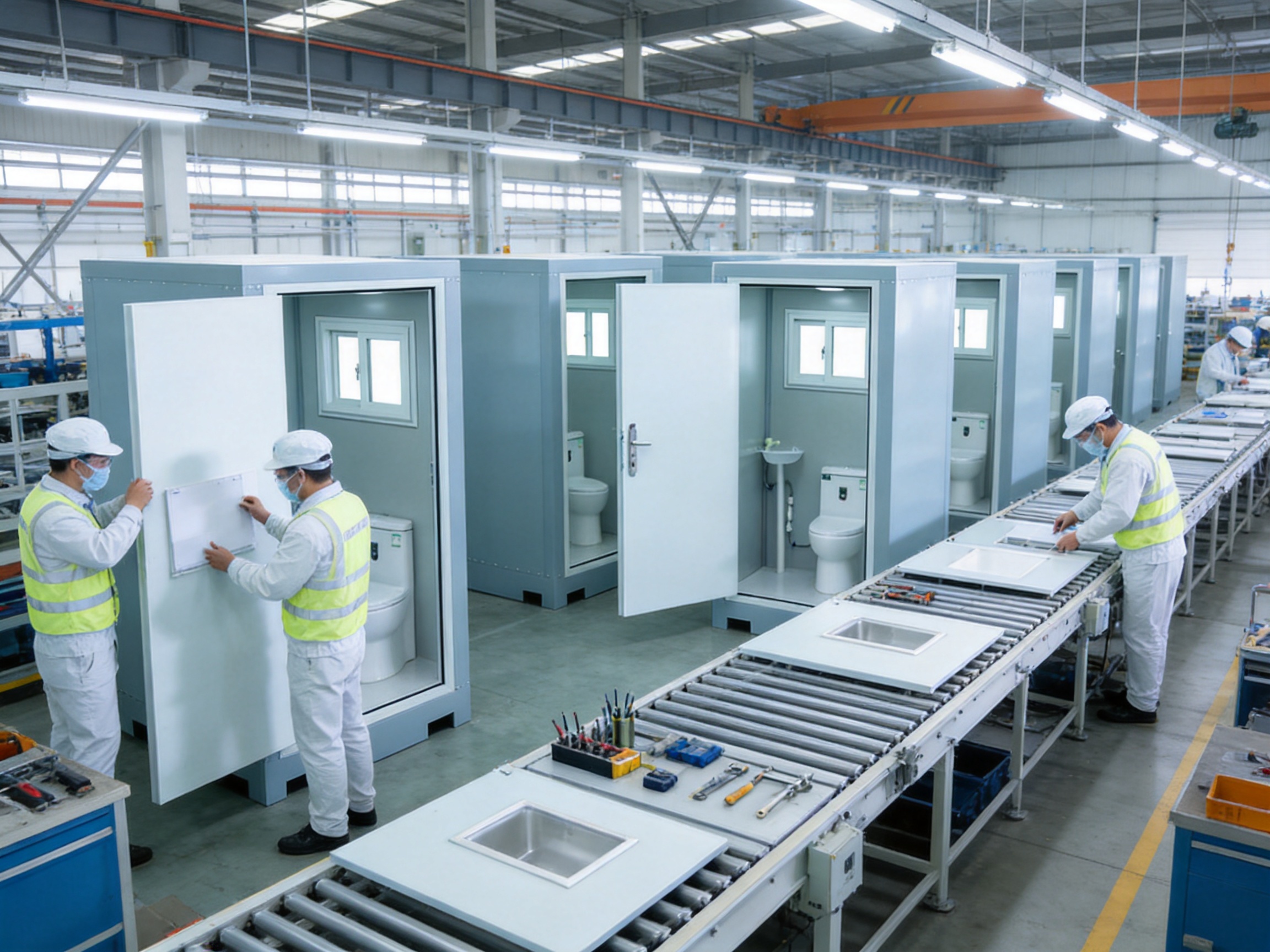
Factory production offers several advantages compared with uncontrolled site fabrication. Components can be cut, prepared, assembled, and inspected in an organized environment. Workstations can be arranged for consistent production, while quality checkpoints can be integrated into different stages of the manufacturing process.
Controlled production also helps reduce exposure to weather during assembly. When products are built outdoors, rain, dust, temperature changes, and uneven working conditions can affect materials and workmanship. Indoor or managed factory processes provide a more predictable environment for fabrication and finishing.
For buyers, factory-controlled production can improve repeatability. When several units are ordered for a project, consistent dimensions, appearance, and functional arrangement are important. Standardized procedures help ensure that each unit meets the same basic expectations.
Integrated Design and Engineering
Modular manufacturing requires coordination between structure, enclosure, internal functions, transportation, and final installation. The company’s experience in integrated housing supports a design approach in which these elements are considered together rather than treated as unrelated components.
For a portable toilet, integrated design can help address practical questions such as how the unit will be moved, how it will sit on the ground, how users will enter and exit, how internal components will be maintained, and how the enclosure will respond to outdoor conditions. Considering these issues during design can reduce complications after delivery.
Integrated engineering is also important when customers require project-specific adaptations. Depending on the application, buyers may need a particular color, layout, hardware arrangement, exterior finish, or delivery configuration. A manufacturer with modular design experience is better positioned to evaluate these requests systematically.
Digital Support and Project Coordination
The company describes its operations as including end-to-end digital software support. Digital tools can contribute to more efficient project coordination by helping teams manage drawings, production information, component details, order communication, and delivery planning.
For customers purchasing temporary facilities, clear communication is essential. The buyer must understand what is included, how the unit will be delivered, what preparation is required at the destination, and how the facility should be handled after installation. Digital documentation and coordinated project support can make these steps easier to manage.
Digital processes may also support design review and customization. When a customer requests adjustments, drawings and production data can help confirm whether the changes are practical, how they may influence cost or lead time, and whether they affect transportation or installation requirements.
Modular Construction Expertise
Suzhou Taimao Integrated Housing Co., Ltd. specializes in modular building systems that combine multiple functions into coordinated prefabricated solutions. Its flagship SIP modular building system integrates structure, insulation, MEP systems, HVAC, interior finishes, and smart home technologies into a unified approach.
Although a single-person portable toilet is much smaller and simpler than a complete modular home, the same manufacturing principles remain relevant. These include planning the product as a coordinated assembly, completing as much work as possible in the factory, reducing unnecessary site labor, and checking the product before shipment.
Factory completion can shorten the time required at the destination. Instead of constructing every element on-site, the customer receives a prepared unit that is designed for placement and immediate project integration. This is particularly useful for temporary applications where speed and minimal disruption are important.
Quality, Safety, and Reliability Considerations
Portable sanitation products must be evaluated from both user and operator perspectives. Users need privacy, stability, cleanliness, and straightforward access. Operators need a product that can be transported, positioned, cleaned, maintained, and removed without excessive difficulty.
Structural Stability
A stable structure supports user confidence and helps protect the unit during outdoor operation. The base, enclosure, entry system, and internal arrangement should work together to provide a secure experience. Stability is especially important on temporary sites, where ground conditions may differ from one location to another.
Site operators should select a firm, level placement area whenever possible and follow the manufacturer’s handling and installation guidance. Proper placement complements the product’s engineered structure and helps reduce risks associated with uneven ground, standing water, or obstructed access.
Weather Protection
Outdoor facilities must remain useful in changing weather. A weather-resistant enclosure helps protect the internal area from rain, wind, dust, and direct environmental exposure. It also supports a more comfortable experience for users who need to access the unit during difficult conditions.
Weather resistance does not eliminate the need for maintenance. Operators should inspect the exterior, entry area, roof or upper enclosure, and drainage surroundings periodically. Early identification of damage or wear can help preserve the unit’s service life.
Hygiene and Maintenance
Cleanliness depends on both product design and operating procedures. A portable toilet should be included in a regular maintenance schedule covering cleaning, sanitation, consumable replenishment, waste management, odor control, and inspection of high-contact surfaces.
The compact single-person design can make routine inspection straightforward because the operator can quickly assess the entire interior and exterior. A smaller internal area may also reduce the time required for cleaning when compared with a larger multi-compartment facility, although service frequency must always reflect actual usage.
Operators should establish a service plan based on user volume, climate, project duration, and local sanitation requirements. Proper maintenance protects the user experience and helps extend the working life of the unit.
User Privacy and Accessibility Planning
Privacy is a fundamental requirement for any restroom facility. The enclosure and entry system should provide a clear separation from surrounding work and public areas. When planning the site, managers should position the unit in a location that is convenient but not exposed to unnecessary pedestrian traffic or operational hazards.
Accessibility requirements vary by country, project, and user population. If an application requires access for people with disabilities, buyers should discuss suitable dimensions, door arrangements, internal clearances, and other relevant adaptations before ordering. A single-person standard unit may be appropriate for general use, while a separate accessible model may be required for inclusive site planning.
Custom Manufacturing and Project Adaptability
Different customers may have different expectations for a portable restroom. Some need a standard unit for immediate deployment, while others are coordinating a large project with specific branding, color, delivery, or site requirements. A manufacturer with modular production experience can help determine which aspects of the product can be adapted without compromising structural or operational performance.
Potential customization discussions may include exterior color, identification panels, hardware, internal accessories, ventilation arrangements, packaging, and shipment quantities. The exact options depend on the project and should be confirmed with the manufacturer during the design and quotation stage.
Customization is most effective when requirements are communicated early. The customer should provide information about the intended environment, estimated usage, project duration, transportation route, available placement area, climate, and local regulations. This allows the manufacturer to recommend an appropriate configuration rather than applying changes after production has begun.
For larger projects, modular manufacturing can support phased delivery. Customers may order units according to construction progress, event schedules, or regional deployment plans. This can reduce the need to store all units at one location and may improve coordination between production and site operations.
Logistics, Installation, and Deployment Planning
Portable products are valuable partly because they reduce installation complexity, but good planning remains necessary. Before delivery, the customer should identify the final placement area, access route, unloading method, ground condition, service requirements, and maintenance schedule.
The delivery route should accommodate the transport vehicle and allow the unit to be unloaded safely. Narrow streets, low bridges, construction barriers, soft ground, or restricted event access may affect the delivery plan. Early review of these conditions helps prevent delays.
The destination should provide a stable and reasonably level base. The unit should not block emergency routes, interfere with machinery, obstruct public access, or sit in an area vulnerable to flooding. It should also be positioned so that cleaning and service personnel can reach it efficiently.
For a temporary installation, the removal plan should be considered at the beginning of the project. The same access route used for delivery may not remain available later. Planning for both installation and removal supports a smoother project lifecycle.
Environmental and Operational Benefits
Temporary construction does not need to create unnecessary waste. A reusable portable toilet can support multiple projects over its service life, reducing the need to build and demolish separate temporary structures for every site. Its relocatable design also allows the same asset to serve different locations as project needs change.
Factory production can contribute to material efficiency through planned cutting, coordinated assembly, and controlled use of components. Producing units in a managed environment may reduce the material waste and rework that can occur during unplanned field construction.
The company’s wider mission includes reducing ecological impact through efficient modular construction. In the context of portable sanitation, this philosophy supports practical decisions such as manufacturing durable units, minimizing unnecessary site work, and designing products that can be transported and reused.
Environmental performance also depends on operation. Responsible waste handling, appropriate cleaning chemicals, regular maintenance, and correct disposal procedures are essential. Buyers should follow local regulations and use qualified service providers where required.
How to Select the Right Portable Toilet for a Project
Assess the Number of Users
The first consideration is expected usage. A single-person unit is well suited to targeted or moderate-demand applications, but a large public event may require several units or a combination of different restroom types. Estimating peak demand helps avoid both insufficient facilities and unnecessary expenditure.
Review the Available Space
Measure the proposed installation area and confirm that the unit can be delivered, positioned, accessed, cleaned, and removed safely. Consider surrounding structures, pedestrian paths, equipment movement, emergency access, and future changes to the site layout.
Define the Project Duration
Short-term events, medium-term construction projects, and long-term temporary facilities may have different requirements. The expected operating period can influence the number of units, maintenance schedule, delivery plan, and preferred level of customization.
Consider Climate and Ground Conditions
Weather patterns, temperature ranges, rainfall, wind exposure, and ground conditions should be discussed with the supplier. The unit must be placed and maintained appropriately for the environment in which it will operate.
Confirm Local Requirements
Sanitation regulations, workplace rules, accessibility provisions, waste management standards, and event permits differ by location. Buyers should confirm all applicable requirements before purchasing and should request relevant product information from the manufacturer.
Evaluate the Supplier
A supplier should be assessed not only by product appearance but also by manufacturing capability, communication quality, customization support, documentation, delivery coordination, and after-sales service. A manufacturer experienced in modular construction can offer broader project support than a reseller with limited control over production.
Why Manufacturer Experience Matters
Purchasing directly from an experienced manufacturer can provide advantages in product consistency, technical communication, customization, and long-term support. The manufacturer understands how the unit is designed and assembled, which can make it easier to answer questions about materials, maintenance, delivery, and potential adaptations.
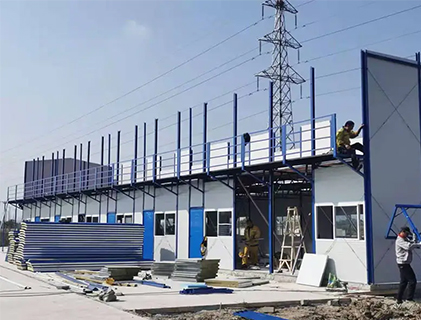
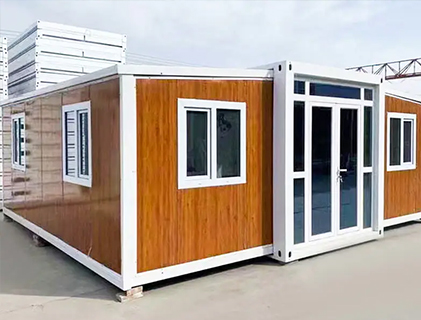
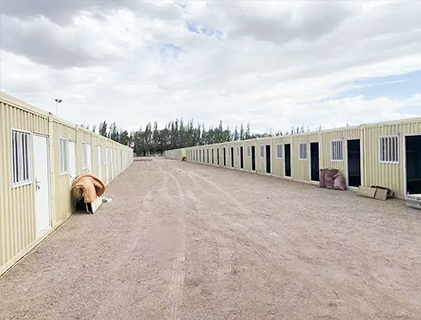
Suzhou Taimao Integrated Housing Co., Ltd. operates across a broad product range that includes container houses, folding container houses, double-wing expandable container houses, K-type prefabricated houses, steel structures, detachable container houses, and portable restroom solutions. This range reflects experience with different forms of prefabricated and modular construction.
The company’s capabilities include design, manufacturing, modular integration, and project support. Its stated focus on quality, safety, operational efficiency, and reduced environmental impact aligns with the needs of customers seeking practical temporary facilities.
Its SIP modular building system demonstrates the ability to coordinate multiple building functions within a factory-produced structure. This integrated approach can support disciplined production methods for smaller products as well, including portable sanitation units that must be prepared for rapid delivery and efficient site use.
For international buyers, direct communication with a manufacturer can also simplify the process of discussing export packaging, shipment quantities, destination requirements, and project-specific documentation. These details are important when the unit will be delivered across borders or deployed at multiple locations.
Recommended Operating Practices
To obtain the best performance from the Single-Person Outdoor Portable Toilet, operators should establish clear procedures before the unit is placed into service. These procedures should cover delivery inspection, site placement, routine cleaning, waste servicing, damage reporting, and removal.
Upon arrival, the unit should be checked for visible transport damage. Doors, handles, hinges, internal fixtures, exterior panels, and base components should be inspected before use. Any concerns should be recorded and communicated promptly to the supplier or responsible project manager.
The facility should be placed on stable ground with sufficient surrounding clearance. The entry should remain accessible, and the unit should not be positioned where falling materials, moving vehicles, standing water, or other hazards could affect users.
Cleaning frequency should be based on actual use. High-traffic locations require more frequent service than low-volume work areas. Maintenance staff should use suitable cleaning products and protective equipment while following local health and safety procedures.
Users should be provided with clear instructions where necessary. In public or shared work environments, simple signage can support correct use, reduce misuse, and help maintain cleanliness. Operators should also provide a contact method for reporting damage or maintenance problems.
Frequently Asked Questions
What is the main purpose of the Single-Person Outdoor Portable Toilet?
It is designed to provide a compact, complete, and movable restroom facility for individual use in temporary or space-limited outdoor environments. It is suitable for construction sites, small events, temporary installations, remote projects, and other locations where a permanent restroom is unavailable or impractical.
How does it differ from an XL or dual-compartment portable toilet?
The single-person model emphasizes space efficiency and targeted use. It occupies less space and is intended for one user at a time, while XL and dual-compartment units provide greater capacity or additional internal sections. The best choice depends on expected usage, available space, and project requirements.
Can the unit be relocated after installation?
Yes. Its portable design allows it to be moved when site conditions, construction phases, or event layouts change. Relocation should be carried out using suitable handling methods and with attention to the manufacturer’s instructions and local safety requirements.
Is the unit suitable for construction sites?
Yes. Its compact footprint, durable construction, and portability make it suitable for many construction environments, especially urban sites, renovation projects, small worksites, and locations where permanent plumbing is not yet available.
Can it be used at outdoor events?
Yes. It can support small events, temporary venues, markets, sports activities, festivals, and similar applications. For larger events, several units or a combination of portable restroom types may be needed to meet peak demand.
Is the product weather-resistant?
The unit is designed with a stable and weather-resistant structure for outdoor use. However, proper placement, routine inspection, and regular maintenance remain necessary to protect the facility from environmental exposure and extend its service life.
Does it include basic restroom facilities?
Yes. It is designed as a fully functional portable restroom that includes the basic facilities required for individual use. Exact components and available configurations should be confirmed with the manufacturer before ordering.
Can the unit be customized?
Project-specific options may be available depending on order quantity, application, and production requirements. Customers should discuss color, accessories, hardware, identification, layout, delivery, and other requirements with the manufacturer during the quotation process.
How should the installation area be prepared?
The unit should be placed on stable, reasonably level ground with sufficient access for users, cleaning personnel, delivery equipment, and eventual removal. The location should avoid flooding, obstruction, heavy vehicle movement, falling objects, and emergency routes.
How often does the portable toilet require maintenance?
Maintenance frequency depends on usage volume, climate, project duration, and local requirements. High-use locations require more frequent cleaning and servicing than low-use sites. Operators should establish a regular inspection and sanitation schedule before the unit begins operation.
What should buyers ask the manufacturer before ordering?
Buyers should ask about product configuration, dimensions, materials, delivery arrangements, placement requirements, available customization, maintenance recommendations, documentation, quality procedures, and compliance with destination-market requirements.
Why consider a manufacturer with modular housing experience?
Modular housing experience often indicates capabilities in factory-controlled production, integrated design, project coordination, logistics planning, and prefabricated assembly. These capabilities can support consistent production and efficient delivery of portable sanitation products.
Conclusion
The Single-Person Outdoor Portable Toilet is a focused sanitation solution for projects that need reliable individual restroom access without the space, cost, and construction demands of a permanent facility. Its compact design makes it suitable for restricted locations, while its portable structure supports quick deployment, relocation, and removal.
Its advantages become especially clear when compared with oversized portable units or improvised field-built facilities. It offers a practical balance of footprint, functionality, durability, mobility, and affordability. For small construction sites, outdoor events, temporary work areas, remote projects, and emergency facilities, this balance can improve both operational efficiency and user convenience.
The product is supported by Suzhou Taimao Integrated Housing Co., Ltd.’s broader experience in modular construction and prefabricated manufacturing. The company’s factory-controlled processes, integrated design capabilities, digital project support, and experience with SIP modular systems provide a strong foundation for producing dependable temporary facilities.
For buyers, the most important step is to match the product to the real conditions of the project. Usage volume, available space, climate, ground conditions, maintenance requirements, local regulations, and delivery access should all be considered. When properly selected, installed, and maintained, the Single-Person Outdoor Portable Toilet can provide a dependable sanitation solution with minimal site disruption and strong long-term practical value.
References
1. Suzhou Taimao Integrated Housing Co., Ltd. Product information for the Single-Person Outdoor Portable Toilet.
2. Suzhou Taimao Integrated Housing Co., Ltd. Company information on modular building systems, prefabricated construction, and integrated manufacturing.
3. General principles of temporary sanitation planning for construction sites, outdoor events, emergency facilities, and remote work areas.
4. General practices for portable restroom placement, cleaning, inspection, waste servicing, and operational safety.
5. General principles of modular construction, factory-controlled production, prefabricated assembly, and project-based deployment.
Product: Single-Person Outdoor Portable Toilet

For exclusive deals and latest offers, sign up by entering your email address below.

-
TEL:+86 18762912902
-
Email:cntaimao@163.com
-
WhatsApp:
-
Add:Group 5, Cao Village, Zhenze Town, Suzhou, Jiangsu, China
Copyright © Suzhou Taimao Integrated Housing Co., Ltd.
All Rights Reserved.
 Wholesale movable homes for sale
custom built modular homes