

 EN
EN
 русский
 Español
 عربى
عربى Français
Single-Person Outdoor Portable Toilet: A Compact, Durable, and Efficient Sanitation Solution
Admin 2026-09-13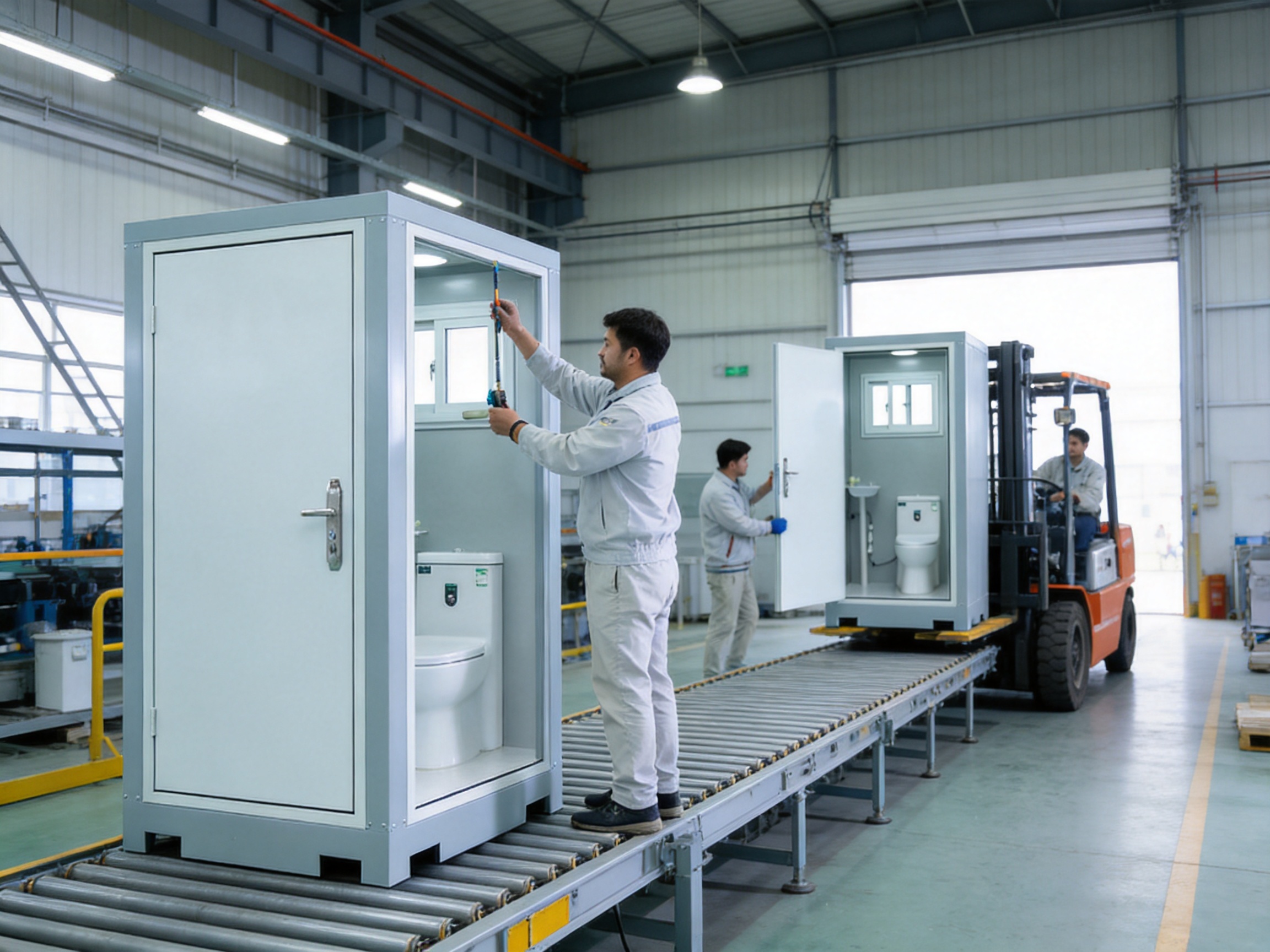
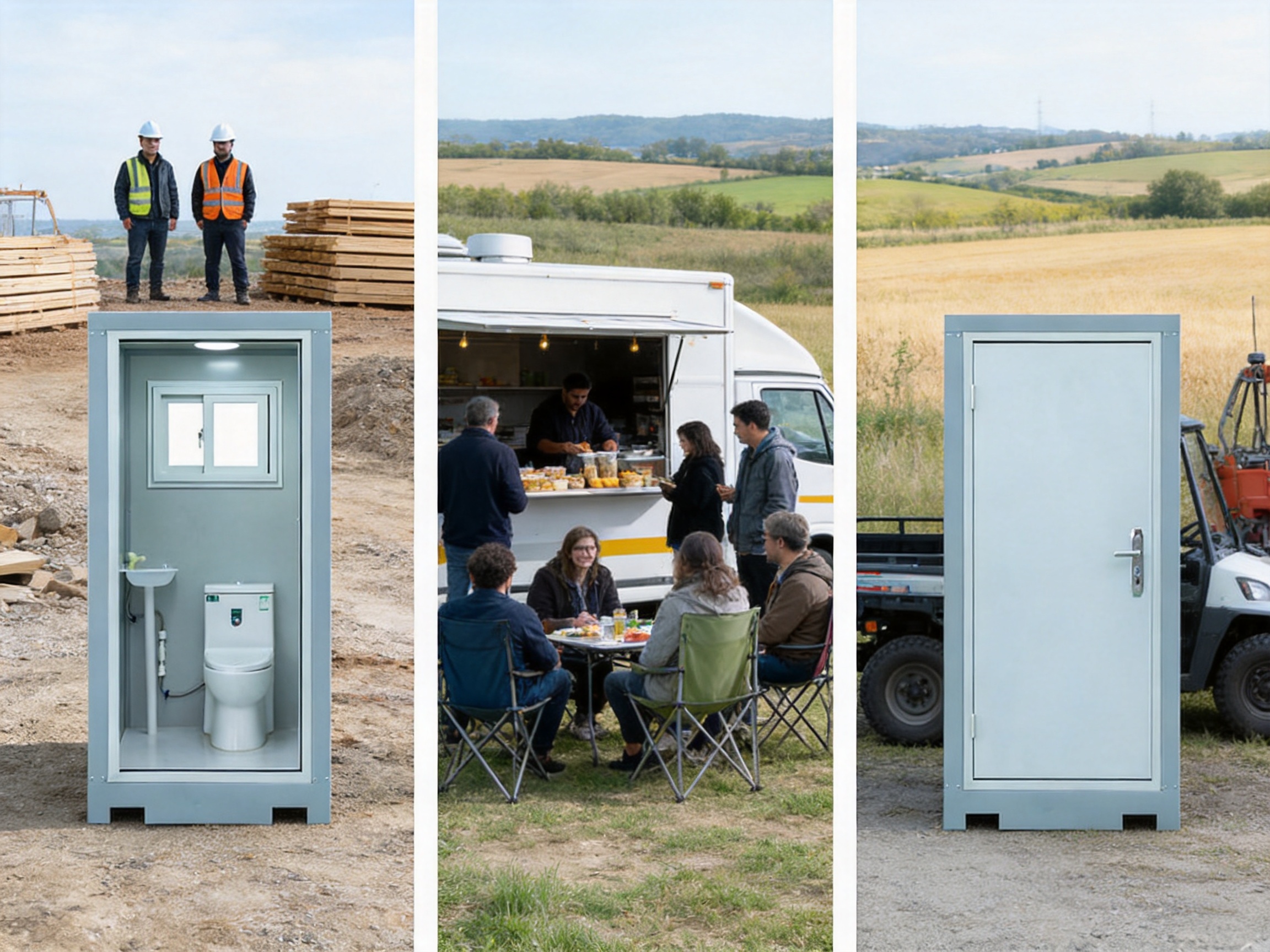
Access to safe, convenient, and hygienic sanitation is essential wherever people work, gather, travel, or stay temporarily. However, providing restroom facilities can be challenging in locations where space is limited, construction schedules are short, permanent infrastructure is unavailable, or mobility is required. The Single-Person Outdoor Portable Toilet addresses these challenges with a compact and practical design that delivers the essential functions of a restroom without requiring a large building footprint or complicated installation process.
Designed for individual use, this portable restroom is suitable for urban construction zones, small event venues, temporary work areas, roadside facilities, rural locations, outdoor activity sites, and other applications where a full-size restroom block would be unnecessary or impractical. Its compact form makes it easier to transport, position, operate, maintain, and relocate than larger portable sanitation units.
Although it is designed for one person at a time, the unit is not a compromise in basic functionality. It is intended to provide a complete and practical sanitation environment in a small, self-contained structure. Its durable construction supports outdoor use, while its portable format allows users and site managers to respond quickly to changing project requirements.
Manufactured by Suzhou Taimao Integrated Housing Co., Ltd., the Single-Person Outdoor Portable Toilet benefits from the company’s experience in modular construction, prefabricated buildings, steel structures, portable facilities, and factory-controlled production. The company applies integrated design and manufacturing methods to create products that can be deployed efficiently while maintaining a focus on quality, safety, durability, and practical use.
Content
- 1 1. The Need for Compact Outdoor Sanitation
- 2 2. Product Overview
- 3 3. Compact Design for Limited Spaces
- 4 4. Essential Functionality in a Small Footprint
- 5 5. Durable Construction for Outdoor Use
- 6 6. Portability and Rapid Relocation
- 7 7. Advantages Over Larger or Less Specialized Alternatives
- 8 8. Applications Across Different Industries
- 9 9. Factory-Controlled Manufacturing
- 10 10. Integrated Design and Engineering Strengths
- 11 11. Sustainable and Efficient Construction Principles
- 12 12. Quality, Safety, and Operational Reliability
- 13 13. Cost-Effectiveness for Temporary Projects
- 14 14. Deployment Planning and Site Management
- 15 15. Cleaning and Maintenance Considerations
- 16 16. Customization and Project Coordination
- 17 17. Why Manufacturer Experience Matters
- 18 18. Ordering and Supplier Evaluation
- 19 19. Product Value in the Future of Temporary Construction
- 20 20. Conclusion
- 21 Questions and Answers
- 21.1 What is the Single-Person Outdoor Portable Toilet?
- 21.2 Where can this portable toilet be used?
- 21.3 What is the main advantage of the single-person design?
- 21.4 Is the product suitable for construction sites?
- 21.5 Can the unit be moved after installation?
- 21.6 How does it compare with a restroom trailer?
- 21.7 How does it compare with a permanent restroom building?
- 21.8 Is the unit weather-resistant?
- 21.9 Does the product require regular servicing?
- 21.10 Who manufactures the product?
- 21.11 What manufacturing strengths does the company offer?
- 21.12 Can customers discuss project-specific requirements?
- 21.13 Is the product economical for small projects?
- 21.14 Can multiple units be used together?
- 21.15 What should be considered before placement?
- 22 References
- 23 Product: Single-Person Outdoor Portable Toilet
1. The Need for Compact Outdoor Sanitation
Many temporary projects require restroom facilities before permanent buildings are completed. A construction site may operate for several months or several years, but it may not justify the expense and time required to construct a permanent sanitation building. Similarly, a small outdoor event, temporary market, roadside service point, or remote work area may need only one compact restroom unit rather than a large multi-stall facility.
Traditional portable toilets can be oversized for these situations. Larger units may require more transportation space, more installation room, more frequent handling, and a larger operating area. They can also be difficult to place in narrow urban sites, compact yards, small event spaces, or locations with limited vehicle access.
The Single-Person Outdoor Portable Toilet is designed around a different principle: provide the necessary restroom functions in the smallest practical arrangement. This space-conscious approach can help users reduce the physical area allocated to sanitation while preserving a dedicated and private facility.
Space efficiency is particularly valuable in urban construction zones. Building sites in cities may be surrounded by roads, neighboring properties, pedestrian paths, utility infrastructure, and active construction operations. Every square meter must be carefully planned. A compact restroom can be positioned in a designated corner without interfering with material storage, machinery movement, worker access, or emergency routes.
The same advantage applies to temporary events. A small venue may not have enough room for a conventional restroom trailer or a large row of portable units. A single-person unit can provide a convenient facility while occupying a limited area. It may be deployed near an event entrance, work area, service station, or designated outdoor zone according to the site plan.
2. Product Overview
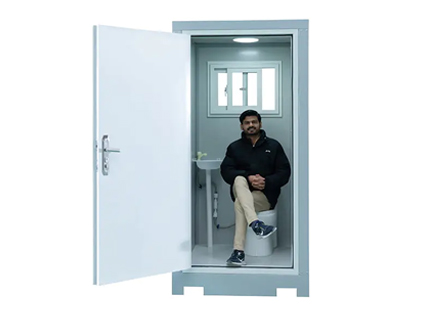
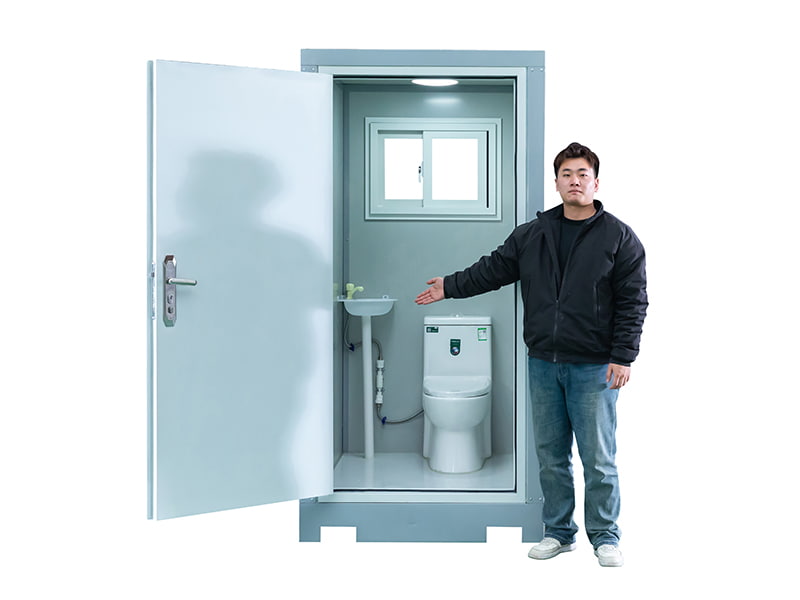
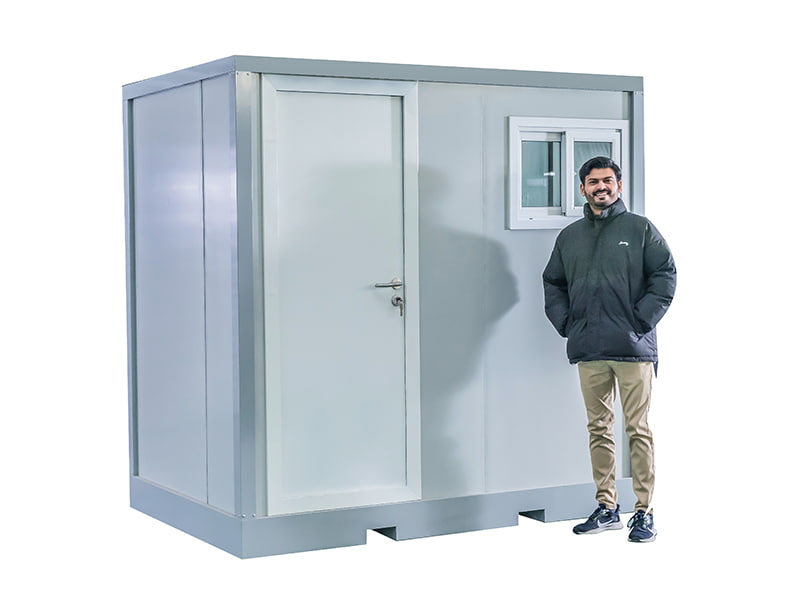
The Single-Person Outdoor Portable Toilet is a compact mobile restroom intended for individual use. It combines a small footprint with essential restroom functions and a structure suitable for temporary or semi-permanent outdoor placement. The unit is designed to be practical rather than unnecessarily complex, helping users obtain a dependable sanitation facility without investing in a large modular building.
Its main value comes from the balance between portability, durability, functionality, and cost. A product that is extremely lightweight but structurally weak may not withstand outdoor exposure. A product that is highly durable but difficult to move may lose the central benefit of portability. A product that is large and over-equipped may be inconvenient for small projects. This unit is positioned between these extremes by focusing on the needs of individual users and space-constrained locations.
The product can be used as a standalone facility and can be incorporated into temporary site planning. Its structure is suitable for deployment in areas where a permanent restroom is unavailable or where a project needs an immediate sanitation solution. Since it is designed as a mobile product, it can be relocated when the work area changes, when an event ends, or when a temporary installation is reorganized.
Its compact design also simplifies planning. Site managers do not need to reserve a large area for a multiple-stall restroom block when individual capacity is sufficient. This can be especially useful for small crews, low-traffic facilities, temporary monitoring stations, outdoor maintenance teams, and limited-scale public or commercial projects.
Core Product Characteristics
| Characteristic | Practical Value |
|---|---|
| Single-person format | Provides privacy and sufficient capacity for individual use while limiting the total footprint. |
| Compact structure | Fits locations where larger portable toilets or restroom trailers may be difficult to install. |
| Outdoor-oriented construction | Supports temporary placement in changing weather and working environments. |
| Portable design | Allows relocation as project layouts, events, or site requirements change. |
| Essential restroom functionality | Offers a practical sanitation solution without unnecessary complexity. |
| Cost-conscious configuration | Can reduce the investment required for small-scale or temporary sanitation needs. |
| Factory-manufactured approach | Promotes consistency, controlled assembly, and repeatable product quality. |
3. Compact Design for Limited Spaces
The most obvious advantage of a single-person portable toilet is its efficient use of space. A compact unit can be positioned in locations that cannot accommodate a larger facility. This enables property owners, contractors, event planners, and municipal teams to provide sanitation without redesigning an entire site.
In a construction environment, space is often consumed by scaffolding, cranes, building materials, temporary offices, access roads, worker pathways, and safety equipment. A larger restroom may force managers to move other resources or create additional circulation problems. A compact toilet unit can be installed in a carefully selected position and later moved as the construction sequence progresses.
Small outdoor venues also benefit from a reduced footprint. Temporary gatherings may take place in courtyards, gardens, parking areas, farms, recreational fields, or community spaces. These sites may not have fixed utility connections or permanent buildings nearby. A dedicated single-person unit can provide basic sanitation while preserving more space for seating, exhibits, equipment, circulation, and emergency access.
Compactness can also simplify transportation. A smaller product generally requires less loading space than a larger restroom system. This may help reduce logistical complexity when several units must be delivered to separate locations. It may also be easier to move the unit through narrow access routes, gates, temporary roads, or constrained work areas.
Space efficiency does not mean that usability should be ignored. The unit is intended to provide a practical interior environment for one user, with the basic facilities required for restroom use. The design objective is to remove unnecessary bulk while retaining the core functions that make a restroom useful, private, and dependable.
4. Essential Functionality in a Small Footprint
A portable toilet must do more than occupy a small area. It must provide an environment in which users can complete basic restroom activities safely and conveniently. The Single-Person Outdoor Portable Toilet is designed to include essential restroom facilities in a compact arrangement.
For individual users, privacy is a central benefit. A dedicated enclosed unit is more appropriate than makeshift temporary arrangements and can help establish a clear sanitation area at a worksite or outdoor venue. The single-user configuration also avoids the complexity of a multi-compartment layout when the expected demand is limited.
The unit is intended to provide practical daily usability. Its function is not limited to emergency use; it can support temporary operations over the duration of a project or event, subject to appropriate cleaning, servicing, and site management. The ability to use one unit repeatedly makes it suitable for work crews, service personnel, event staff, visitors, and other users who require convenient access to sanitation.
Its functional simplicity is also an advantage. Facilities that contain unnecessary systems or complicated components may require additional training, maintenance, and technical support. A straightforward portable restroom is easier for site managers to understand and integrate into an existing operating plan. This can contribute to faster deployment and fewer delays.
At the same time, the product can be evaluated as part of a broader temporary facility strategy. Where demand is higher, multiple single-person units may be distributed across a site or positioned in different zones. This approach can offer flexible coverage instead of concentrating all sanitation facilities in one large block. Where demand is lower, one unit can provide the necessary capacity without excessive investment.
5. Durable Construction for Outdoor Use
Outdoor facilities must tolerate changing conditions. Sunlight, rain, wind, dust, temperature fluctuations, accidental impacts, and repeated handling can all affect a portable structure. The Single-Person Outdoor Portable Toilet is developed with a robust construction approach intended to support reliable use in outdoor environments.
Durability begins with structural stability. A portable unit must remain stable during normal operation and routine movement. It should provide users with confidence when entering, using, and exiting the facility. A stable structure also helps protect the unit from the effects of repeated relocation and regular site activity.
Weather resistance is another important consideration. Temporary sanitation facilities may be positioned outdoors for extended periods, and they cannot always be protected by a permanent roof or enclosure. A weather-conscious structure helps preserve the usability and appearance of the unit while reducing the effect of ordinary outdoor exposure.
Durable construction can also improve total value. A product that remains serviceable for multiple projects may provide greater economic benefit than a lower-cost unit that needs frequent repair or replacement. For contractors and rental operators, durability may support repeated deployment. For businesses and public organizations, it may reduce disruption caused by damaged or unavailable facilities.
Durability should be considered together with maintenance. Even a robust structure performs best when it is cleaned regularly, inspected after transportation, positioned correctly, and serviced according to the operating environment. Product quality and proper management work together to support a longer service life.
6. Portability and Rapid Relocation
Portability is one of the product’s defining advantages. A temporary facility should be capable of moving with the project rather than remaining fixed in one location. Construction sites change as foundations, structures, utilities, roads, and landscaping are completed. A restroom placed correctly during one phase may become inconvenient or inaccessible during another.
The Single-Person Outdoor Portable Toilet can be relocated as site conditions change. This allows managers to keep the facility near active work zones, staff areas, visitor routes, or service points. Relocation can also help maintain safe distances from machinery and construction hazards as the project develops.
For temporary events, portability allows the unit to be delivered before the event and removed afterward. This reduces the need for permanent construction and supports efficient use of the venue. A single product may serve different locations over time, which can improve asset utilization for event companies, contractors, rental providers, and site service businesses.
Portable deployment can be especially helpful in rural and remote areas. In such locations, permanent utilities may not be readily available, and transporting construction materials over long distances can be expensive. A factory-prepared portable unit offers a more direct method of establishing basic sanitation infrastructure.
Relocation should be planned responsibly. The unit should be handled with appropriate equipment and procedures, and the receiving site should be level, accessible, and suitable for safe operation. These practical steps help protect both the product and the people involved in moving it.
Single-Person Outdoor Portable Toilet
7. Advantages Over Larger or Less Specialized Alternatives
The Single-Person Outdoor Portable Toilet has several advantages compared with larger portable restroom systems. Its primary benefit is proportionality. Users receive a facility matched to the scale of their needs rather than paying for capacity, floor area, and transportation requirements that may not be necessary.
A large multi-compartment portable toilet may be appropriate for a major public event, a large construction camp, or a high-traffic worksite. However, it can be excessive for a small crew or low-volume location. Larger units may require more space for delivery and placement, and they may be more difficult to maneuver in narrow locations. The single-person model offers a focused alternative for situations where one-user capacity is adequate.
Compared with a restroom trailer, the compact unit can be simpler to deploy. Trailers may require vehicle access, towing arrangements, a suitable parking area, and additional space for positioning. They may also involve higher transport and operating costs. A smaller portable unit can be a more efficient option when the project does not need multiple stalls, interior circulation areas, or a larger amenity package.
Compared with constructing a permanent restroom building, a portable unit can reduce lead time and avoid many site-development requirements. Permanent facilities may involve foundations, architectural design, permits, utility connections, drainage work, plumbing, electrical installation, and extensive on-site labor. For a temporary need, those investments may not be justified. A prefabricated portable structure can help make sanitation available sooner.
Compared with improvised sanitation arrangements, a purpose-built portable toilet provides a more organized, private, and professional solution. Temporary projects should not rely on unsuitable spaces, unsafe enclosures, or facilities that cannot be cleaned and managed properly. A dedicated product establishes a clear standard for sanitation at the site.
Comparison with Common Alternatives
| Alternative | Potential Limitation | Advantage of the Single-Person Unit |
|---|---|---|
| Large multi-stall portable restroom | May occupy unnecessary space and involve higher transport requirements. | Provides a smaller, more targeted solution for low- to moderate-demand sites. |
| Restroom trailer | May require towing access, a large parking area, and more complex positioning. | Offers a compact format for locations that do not need a trailer-sized facility. |
| Permanent restroom building | Requires construction time, site work, utility connections, and long-term investment. | Can be deployed for temporary use without building a permanent structure. |
| Improvised temporary enclosure | May provide inadequate privacy, durability, hygiene, or user confidence. | Uses a purpose-designed structure intended for restroom applications. |
| Oversized modular sanitation block | May exceed the capacity needs of small teams or limited venues. | Matches facility size more closely to individual-use requirements. |
8. Applications Across Different Industries
Construction Sites
Construction is one of the most important applications for a compact portable restroom. Workers need convenient access to sanitation throughout the working day, but active construction sites rarely have completed permanent facilities at the beginning of a project. A portable unit can be delivered early and used while the main building is still under construction.
The product is appropriate for residential construction, commercial development, infrastructure work, road projects, utility installation, renovation areas, and small-scale civil engineering operations. It can be placed near the active work zone while remaining outside hazardous paths and equipment routes.
As work progresses, the unit can be moved to a new position. This flexibility is useful when a site changes from excavation to structural construction, from structural work to interior finishing, or from construction to landscaping. The facility can follow the operational needs of the project instead of becoming an obstacle.
Small Events and Temporary Venues
Outdoor events often need additional sanitation even when the venue already has a building. Existing restrooms may be too far away, insufficient for the expected number of visitors, or unavailable during a temporary event. The Single-Person Outdoor Portable Toilet can supplement available facilities without requiring a large restroom installation.
Possible applications include community gatherings, outdoor exhibitions, agricultural events, small markets, sports activities, private celebrations, festivals, and temporary entertainment areas. Because the product has a limited footprint, it may be easier to integrate into a carefully organized event layout.
Remote and Rural Locations
Remote sites may lack permanent utilities or nearby public facilities. Agricultural operations, forestry projects, outdoor maintenance work, temporary research areas, and rural construction projects can benefit from a self-contained portable sanitation approach. The unit can be transported to the location and managed as part of the site’s temporary infrastructure.
Commercial and Industrial Facilities
Businesses may need temporary sanitation during renovations, expansions, equipment installation, shutdowns, or changes to existing facilities. A portable toilet can provide continuity while a permanent restroom is inaccessible or under repair. It may also support temporary security posts, loading areas, workshops, and outdoor service zones.
Emergency and Short-Term Deployments
Following severe weather, infrastructure damage, or other disruptions, sanitation may need to be established quickly. Compact portable units can be considered for temporary service areas, relief operations, staging locations, and recovery projects. Their usefulness in these situations depends on transportation, servicing, and local operating arrangements, but their portable format can support rapid site organization.
9. Factory-Controlled Manufacturing
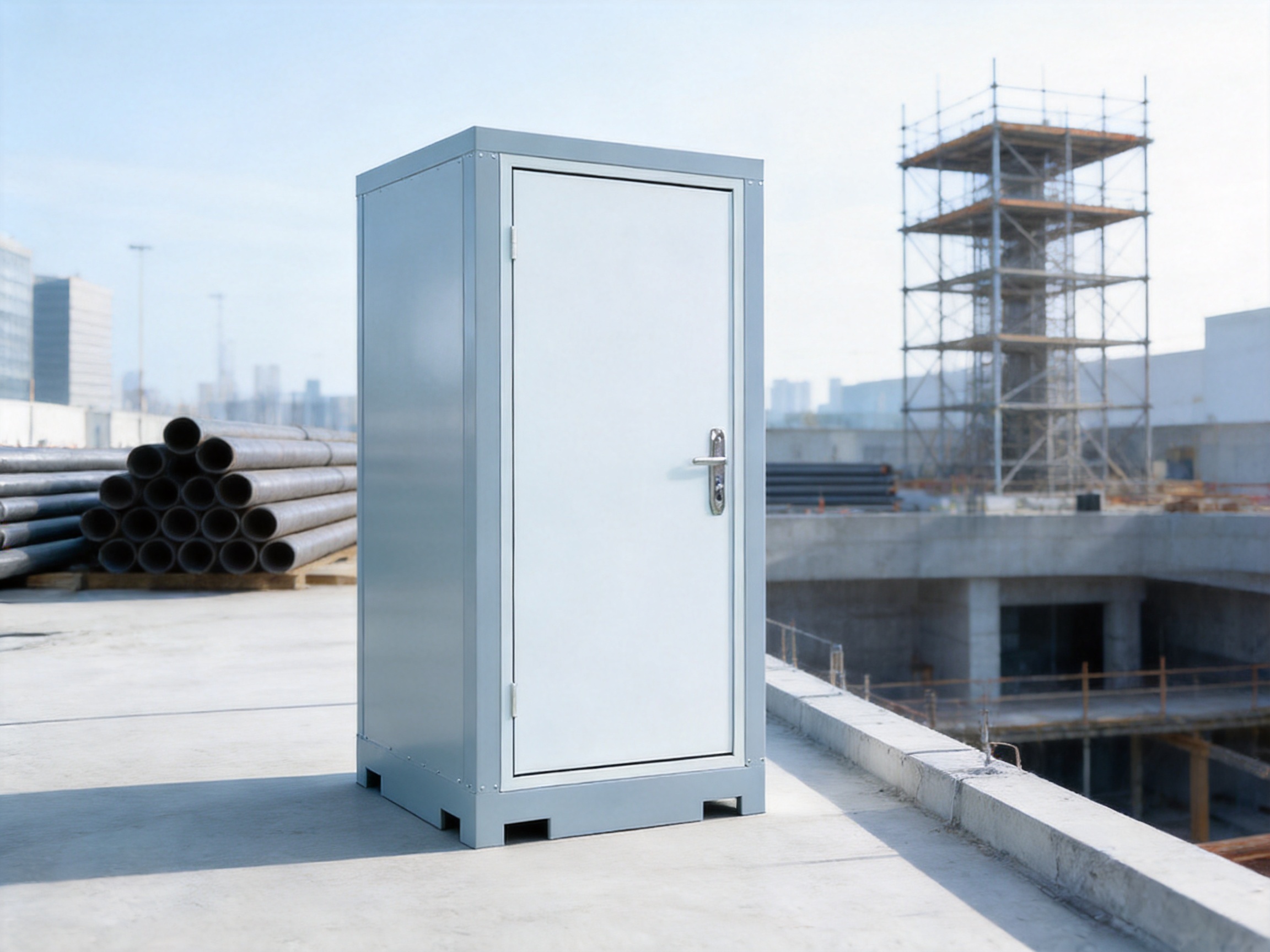
The performance of a prefabricated product depends not only on its design but also on how consistently it is manufactured. Suzhou Taimao Integrated Housing Co., Ltd. applies a factory-based approach to modular buildings and portable facilities. This approach moves important production activities into a controlled environment rather than relying entirely on variable on-site construction conditions.
Factory production can improve repeatability. Components can be prepared according to established processes, workstations can be organized for efficient assembly, and quality checks can be performed at multiple stages. This is particularly valuable for products that may be manufactured in multiple units for different projects.
Controlled production can also reduce exposure to weather-related delays during assembly. Rain, wind, dust, and site congestion can affect traditional outdoor construction. Manufacturing in a planned facility allows workers to complete more of the product under stable conditions before delivery.
Another advantage is production coordination. Structural elements, interior components, insulation systems, mechanical and electrical provisions, and finishing materials can be considered as parts of an integrated product. This reduces the risk that individual trades will work independently without sufficient coordination.
The company’s broader modular building experience supports this integrated manufacturing philosophy. Its SIP modular building system brings structure, insulation, MEP systems, HVAC components, interior finishes, and smart home technologies into a unified design and production process. Although the Single-Person Outdoor Portable Toilet is a more compact product, the same emphasis on integration, prefabrication, controlled assembly, and efficient site installation is relevant to its development.
10. Integrated Design and Engineering Strengths
Integrated design means that the product is considered as a complete facility rather than as a collection of unrelated parts. The structural enclosure, user space, functional equipment, transport requirements, installation needs, and maintenance considerations should work together. This helps avoid problems that can occur when a product is designed only from one perspective.
For a portable restroom, integrated design may influence the unit’s footprint, stability, enclosure performance, access, internal arrangement, service requirements, and movement process. Even a small structure must satisfy several practical objectives at the same time. It must be compact but usable, portable but stable, simple but complete, and durable without being unnecessarily expensive.
Suzhou Taimao Integrated Housing Co., Ltd. specializes in modular design and prefabricated building solutions. This background gives the company experience in developing products that are assembled away from the final site and then delivered for installation or use. Such experience can help improve coordination between design, production, transportation, and deployment.
The company also emphasizes digital software support as part of its broader manufacturing and building-solution capabilities. Digital tools can support design coordination, production planning, component organization, project communication, and quality management. When applied effectively, these tools can help reduce errors and improve the consistency of manufactured units.
For customers, integrated engineering can provide a more direct purchasing experience. Instead of coordinating several separate suppliers for the enclosure, structure, interior, and delivery preparation, customers can work with a manufacturer that understands the product as a complete system. This can simplify communication and make it easier to discuss project-specific requirements.
11. Sustainable and Efficient Construction Principles
Prefabricated construction can contribute to more efficient use of materials and labor. Factory production allows materials to be stored, measured, cut, and assembled in a more organized environment. Better planning may help reduce waste compared with uncontrolled on-site work, although actual environmental performance depends on material selection, transportation, maintenance, and end-of-life management.
The company’s stated mission includes reducing ecological impact while accelerating project timelines and maintaining quality and safety. These goals are relevant to portable sanitation products because temporary facilities should ideally be efficient to manufacture, transport, deploy, service, and relocate.
A compact product can also reduce resource requirements associated with the facility itself. Smaller structures generally require less enclosure material and less occupied land than larger alternatives. When a single-person capacity is sufficient, selecting an appropriately sized unit can help avoid overbuilding.
Reuse is another important consideration. A durable portable toilet that can be moved between projects may serve multiple users and locations over its service life. This can be more efficient than constructing a temporary building for one project and demolishing it after completion. Reusability depends on proper care, cleaning, transportation, and maintenance, but the mobile format supports this possibility.
Efficient construction also reduces project disruption. If a portable restroom arrives substantially prepared for use, there may be less on-site assembly, fewer deliveries, and less construction activity in the area where sanitation is required. This can support faster project organization and reduce interference with other site operations.
12. Quality, Safety, and Operational Reliability
Quality in a portable restroom is experienced through everyday details: structural stability, dependable enclosure performance, practical access, ease of cleaning, resistance to ordinary wear, and reliable operation of the included facilities. These details determine whether the unit remains useful after repeated use and relocation.
Safety should be considered during manufacturing, transportation, placement, use, servicing, and removal. The unit should be installed on an appropriate surface and positioned so that users can reach it safely. Site managers should keep access routes clear and ensure that the facility does not obstruct emergency paths, machinery movement, or material handling operations.
During transportation, suitable lifting and handling methods are important. A portable structure may be compact, but it still needs to be moved in a controlled manner. Inspections after delivery can identify any damage that may have occurred during loading, unloading, or relocation.
Operational reliability also depends on regular servicing. A portable restroom should be cleaned and maintained according to usage levels and local requirements. Consumable supplies, waste management, ventilation, door hardware, surfaces, and general structural condition should be reviewed as part of the site’s facility management plan.
The manufacturer’s factory-controlled process can support quality consistency before the product reaches the customer. Standardized production methods, coordinated assembly, and inspection procedures help create a repeatable product. Customers should still confirm project-specific standards, installation instructions, service arrangements, and applicable local regulations before deployment.
13. Cost-Effectiveness for Temporary Projects
Cost-effectiveness is not simply a matter of the initial purchase price. It includes transportation, installation, site preparation, maintenance, relocation, service life, and the consequences of facility downtime. The Single-Person Outdoor Portable Toilet is designed to offer a practical balance across these areas.
For a small project, choosing a unit that matches actual demand can avoid the unnecessary expense of larger capacity. A compact facility may cost less to transport and may require less space preparation. It may also be easier to relocate without hiring specialized equipment intended for larger structures.
The product can support budget control in projects where sanitation is necessary but permanent construction is not financially appropriate. A contractor may use the unit for the duration of a building project, while an event organizer may rent or purchase it for a defined period. An industrial facility may deploy it during a renovation and remove it when the permanent restroom is available again.
Durability can contribute to cost-effectiveness over time. A robust product that remains operational across several deployments can reduce replacement frequency. The exact economic result depends on usage, climate, maintenance, and handling, but the combination of durable construction and portability creates the potential for extended practical value.
Cost savings should never come from reducing sanitation standards. The objective is to select an appropriately sized, professionally manufactured product that provides the required function without unnecessary features or capacity. This is where the single-person design can be especially attractive.
14. Deployment Planning and Site Management
Successful use begins with proper planning. Before delivery, the customer should identify an accessible location with a stable and reasonably level surface. The location should allow users to approach the unit comfortably and should provide sufficient clearance for delivery, servicing, and future relocation.
Site managers should consider privacy, lighting, drainage, weather exposure, pedestrian flow, and proximity to active equipment. The unit should be visible enough for users to find but positioned in a way that supports user comfort and privacy. At public events, directional signs may help visitors locate the facility without creating congestion.
Construction managers should coordinate placement with the project schedule. A unit that is convenient during foundation work may need to be moved once structural materials or heavy equipment are introduced. Planning for future relocation can prevent the facility from becoming trapped behind temporary barriers or stored materials.
Service access is also important. Cleaning and maintenance personnel need a practical route to the unit. If the product is placed in a narrow or inaccessible area, routine servicing may become difficult. A well-planned location helps maintain hygiene and extends the useful life of the facility.
Where several single-person units are used, distribution may be more effective than concentration. Units can be placed near separate work zones, entrances, staff areas, or high-use sections of a large site. This can shorten walking distances and improve access, provided that servicing and supervision remain manageable.
15. Cleaning and Maintenance Considerations
Regular cleaning is essential for any portable restroom. The frequency of service should reflect the number of users, duration of operation, weather conditions, and applicable health requirements. High-use locations require more frequent attention than low-traffic temporary sites.
Routine maintenance may include cleaning internal surfaces, checking door operation, inspecting structural panels, removing waste according to approved procedures, replenishing supplies, and examining the unit after relocation. Any signs of damage, water intrusion, corrosion, loose fittings, or instability should be addressed promptly.
A maintenance plan should assign responsibility clearly. On a construction site, the contractor or site services provider may manage sanitation. At an event, the organizer may coordinate with a rental and cleaning company. At a remote facility, a designated operations team may be responsible for inspection and service scheduling.
Proper placement supports maintenance. The unit should not be surrounded by mud, standing water, loose materials, or construction debris. Keeping the area around the facility clean improves appearance, access, and user confidence. It also reduces the risk of damage caused by vehicles, equipment, or stored materials.
Although the product is built for practical outdoor use, no portable restroom is maintenance-free. Regular care protects the investment and helps the unit deliver the reliable service expected from a professionally manufactured facility.
16. Customization and Project Coordination
Different projects may have different requirements. Customers may need to discuss quantity, delivery arrangements, site conditions, operating duration, servicing schedules, and other project details with the manufacturer or supplier. Early communication helps ensure that the selected configuration is appropriate for the intended application.
As a manufacturer of modular buildings, portable houses, steel structures, and sanitation products, Suzhou Taimao Integrated Housing Co., Ltd. can support customers who are planning broader temporary facilities. A project may require portable toilets alongside construction site offices, worker accommodation, storage units, guard rooms, or modular buildings. Working with a supplier experienced in several related product categories can simplify coordination.
Project discussions may also address appearance, placement, shipping preparation, internal arrangements, and integration with a temporary site plan. Requirements should be reviewed carefully because the final solution may depend on local regulations, climate, transport conditions, and the intended duration of use.
Customization should be practical and purposeful. The most valuable changes are those that improve usability, serviceability, compatibility with the site, or long-term value. An experienced manufacturer can help customers distinguish between essential requirements and features that may add complexity without meaningful benefit.
17. Why Manufacturer Experience Matters
Portable sanitation products are part of the wider prefabricated building industry. A manufacturer with experience in modular structures understands the importance of material coordination, factory production, transport preparation, assembly procedures, and site deployment. These capabilities are relevant even when the product itself is small.
Suzhou Taimao Integrated Housing Co., Ltd. has developed a business around integrated housing solutions, including container houses, folding container houses, double-wing expandable container houses, K-type prefabricated houses, steel structures, and portable restroom facilities. This broad product experience allows the company to understand the different ways temporary buildings are used in construction, commercial, public, and remote environments.
The company’s focus on globally oriented modular building solutions also reflects an understanding that customers may have different technical expectations, project schedules, and operating conditions. A manufacturer serving international markets must coordinate product communication, production requirements, packaging, transportation, documentation, and customer support across different projects.
Its integrated SIP modular building system demonstrates a broader capability to combine structural elements, insulation, building services, interior finishes, HVAC systems, and smart technologies within a coordinated factory-produced solution. While the Single-Person Outdoor Portable Toilet has a more focused function, the company’s wider technical approach supports the same principle: design and manufacture the product as a complete, usable system.
18. Ordering and Supplier Evaluation
Customers evaluating a portable toilet supplier should consider more than product images or basic price quotations. Important questions include the manufacturer’s production capability, quality management, material selection, delivery experience, product support, and ability to communicate clearly about project requirements.
The supplier should be able to explain the product’s intended use, installation or placement requirements, transportation considerations, maintenance expectations, and available service arrangements. Clear information helps customers avoid selecting a unit that is unsuitable for the site or expected usage level.
Buyers should also confirm the commercial details of an order. These may include quantity, lead time, packaging, shipping terms, payment arrangements, inspection procedures, warranty conditions, spare parts, and after-sales support. Requirements may vary depending on whether the customer is purchasing for private use, construction operations, event rental, public service, or distribution.
For international orders, customers should review import procedures, local compliance requirements, customs documentation, and delivery access. The manufacturer and buyer should communicate early about the destination and intended application so that logistical issues can be addressed before production and shipment.
A reliable supplier relationship is especially valuable when customers require multiple product categories. A company capable of supplying portable restrooms together with modular buildings or temporary site facilities may help reduce the number of separate procurement channels involved in a project.
19. Product Value in the Future of Temporary Construction
Temporary construction is becoming increasingly organized and professional. Contractors, developers, event companies, and public organizations are seeking solutions that can be deployed quickly, reused efficiently, and managed with predictable processes. Portable buildings and modular facilities are well suited to this trend because they can shift many activities from the construction site to the factory.
The Single-Person Outdoor Portable Toilet represents a focused application of this broader movement. It provides a small but essential facility in a format that supports mobility, speed, and space efficiency. Rather than treating sanitation as an afterthought, project managers can incorporate it into the initial design of a temporary site.
Modular manufacturing also supports a more systematic approach to project delivery. Components can be planned, produced, inspected, shipped, and installed according to a coordinated schedule. This can help reduce uncertainty and improve the organization of temporary facilities.
As construction sites become more compact and project timelines become more demanding, small portable products can provide important operational advantages. A facility that is easy to place and relocate can help site managers respond to changing conditions without major redesign or construction work.
20. Conclusion
The Single-Person Outdoor Portable Toilet is a compact, reliable, and practical solution for temporary outdoor sanitation. Its individual-use format makes it suitable for projects and locations where space is limited and large restroom systems would be unnecessary. It provides essential restroom functionality while supporting portability, efficient placement, and straightforward site management.
Its advantages over larger or less specialized alternatives include a smaller footprint, easier relocation, reduced deployment complexity, and a cost-conscious capacity for individual use. It can serve construction sites, small events, rural locations, temporary commercial operations, industrial projects, and other areas where permanent sanitation infrastructure is unavailable or inconvenient.
The product’s value is strengthened by Suzhou Taimao Integrated Housing Co., Ltd.’s experience in modular design, prefabricated construction, steel structures, portable housing, and factory-controlled manufacturing. The company’s integrated approach supports coordinated production and reflects a wider commitment to efficient project delivery, quality, safety, and reduced environmental impact.
For customers seeking a dependable sanitation facility without the space, cost, and installation demands of a larger structure, this product offers a balanced option. When selected according to site conditions and supported by appropriate cleaning, servicing, and handling procedures, it can provide practical sanitation throughout temporary projects and changing outdoor environments.
Questions and Answers
What is the Single-Person Outdoor Portable Toilet?
The Single-Person Outdoor Portable Toilet is a compact mobile restroom designed for individual use. It provides essential restroom functions in a small, durable structure that can be placed outdoors and relocated when required.
Where can this portable toilet be used?
It can be used at construction sites, small outdoor events, rural work areas, temporary installations, industrial facilities, roadside locations, maintenance zones, and other places where permanent restroom infrastructure is unavailable or insufficient.
What is the main advantage of the single-person design?
The main advantage is space efficiency. The unit provides a private restroom for one user while occupying less space than larger multi-stall units or restroom trailers. This makes it suitable for compact sites and projects with limited sanitation demand.
Is the product suitable for construction sites?
Yes. It is designed as a practical temporary sanitation facility for construction environments. It can be positioned near active work areas, subject to safe site planning, and relocated as construction phases and access routes change.
Can the unit be moved after installation?
Yes. Portability is one of its main characteristics. The unit can be relocated when the site layout changes, when an event ends, or when a temporary facility is needed at another location. Appropriate handling equipment and procedures should be used.
How does it compare with a restroom trailer?
A restroom trailer generally provides greater capacity and more interior space, but it may require towing access, a larger placement area, and more complex logistics. The Single-Person Outdoor Portable Toilet is better suited to smaller projects that need a compact individual facility.
How does it compare with a permanent restroom building?
A permanent restroom building requires construction work, site preparation, utility connections, and a longer project schedule. A portable unit can provide sanitation more quickly for temporary or transitional use without requiring a permanent structure.
Is the unit weather-resistant?
The product is designed with a durable and weather-resistant structure for outdoor use. However, appropriate placement, regular inspection, and maintenance remain important for reliable performance in specific climates and environments.
Does the product require regular servicing?
Yes. All portable restroom facilities require regular cleaning, waste management, inspection, and maintenance. Service frequency should be based on the number of users, operating duration, weather conditions, and applicable local requirements.
Who manufactures the product?
The product is manufactured by Suzhou Taimao Integrated Housing Co., Ltd., a China-based company specializing in modular building solutions, portable houses, container houses, prefabricated houses, steel structures, and portable restroom facilities.
What manufacturing strengths does the company offer?
The company emphasizes modular design, factory-controlled production, integrated engineering, digital software support, and coordinated manufacturing. Its broader product capabilities include SIP modular building systems that combine structure, insulation, MEP, HVAC, interior finishes, and smart building technologies.
Can customers discuss project-specific requirements?
Customers should discuss quantity, delivery location, site conditions, usage duration, maintenance arrangements, local requirements, and other project details with the manufacturer or supplier before ordering. Early coordination helps ensure that the selected solution is appropriate.
Is the product economical for small projects?
It can be a cost-effective option because it provides individual-use capacity without the additional space, transportation, and installation requirements associated with larger restroom systems. Total value also depends on service life, maintenance, logistics, and frequency of reuse.
Can multiple units be used together?
Multiple units may be distributed across a larger site when additional coverage is needed. This can allow facilities to be placed near separate work zones or event areas. The final arrangement should consider access, privacy, servicing, safety, and local regulations.
What should be considered before placement?
Users should consider surface stability, accessibility, privacy, lighting, drainage, weather exposure, pedestrian routes, equipment movement, emergency access, and the ability to perform regular cleaning and servicing.
References
1. Suzhou Taimao Integrated Housing Co., Ltd. Product information for the Single-Person Outdoor Portable Toilet.
2. Suzhou Taimao Integrated Housing Co., Ltd. Company information concerning modular building systems and factory manufacturing capabilities.
3. General principles of prefabricated and modular construction, including factory-controlled assembly and off-site production.
4. General guidelines for temporary construction-site sanitation planning, facility placement, cleaning, and maintenance.
5. General practices for outdoor portable facility management, including transportation, inspection, servicing, and safe site operation.
Product: Single-Person Outdoor Portable Toilet

For exclusive deals and latest offers, sign up by entering your email address below.

-
TEL:+86 18762912902
-
Email:cntaimao@163.com
-
WhatsApp:
-
Add:Group 5, Cao Village, Zhenze Town, Suzhou, Jiangsu, China
Copyright © Suzhou Taimao Integrated Housing Co., Ltd.
All Rights Reserved.
 Wholesale movable homes for sale
custom built modular homes
Wholesale movable homes for sale
custom built modular homes