

 EN
EN
 русский
 Español
 عربى
عربى Français
Single-Person XL Outdoor Portable Toilet: A More Comfortable Standard for Mobile Sanitation
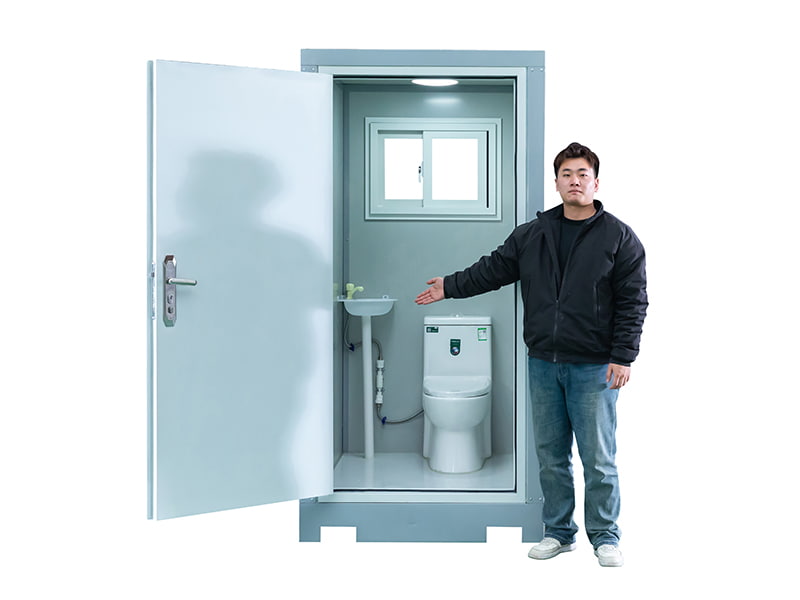
Admin 2026-09-01Outdoor sanitation is often treated as a basic logistical requirement, yet the quality of a restroom facility can directly affect comfort, privacy, hygiene, productivity, and the overall success of a project. At construction sites, temporary accommodation areas, campsites, emergency response locations, public events, and remote work zones, users need a restroom that is dependable, easy to deploy, and suitable for changing conditions. The Single-Person XL Outdoor Portable Toilet is designed to meet these needs with a more spacious and adaptable approach than the standard compact portable toilet.
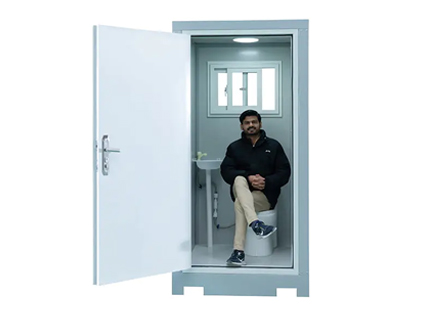
Rather than concentrating on the smallest possible footprint, this unit prioritizes individual comfort and privacy. Its XL interior gives one user additional room to enter, turn, sit, change clothing, or use optional hygiene equipment without feeling confined. The design can also accommodate a washbasin or personal washing facilities, allowing the unit to function as more than a toilet enclosure. It can become a compact sanitation station for locations where a separate washing room is unavailable or impractical.
Manufactured by Suzhou Taimao Integrated Housing Co., Ltd., the product reflects the company’s broader experience in modular buildings, portable structures, prefabricated houses, steel structures, and temporary facilities. The manufacturer combines modular design, controlled factory production, integrated building systems, and digital support to create products that can be prepared efficiently and deployed rapidly. This approach is particularly valuable for portable sanitation products, where consistent quality, easy transportation, quick installation, and reliable outdoor performance are essential.
Content
- 1 Why Outdoor Portable Restrooms Need a More Practical Design
- 2 Core Product Advantages
- 3 How the XL Design Compares with Standard Portable Toilets
- 4 Applications in Construction and Temporary Worksites
- 5 Use in Camping, Outdoor Hospitality, and Events
- 6 Emergency Relief and Remote Sanitation
- 7 Manufacturing Strengths Behind the Product
- 8 Material, Structural, and Functional Considerations
- 9 Hygiene and Maintenance Benefits
- 10 Customization for Different Project Requirements
- 11 Why Choose an Experienced Modular Manufacturer
- 12 Purchasing and Deployment Planning
- 13 Operational Best Practices
- 14 Environmental and Resource Efficiency Considerations
- 15 Quality, Safety, and Supplier Communication
- 16 Value Beyond the Initial Purchase Price
- 17 Frequently Asked Questions
- 17.1 What is the Single-Person XL Outdoor Portable Toilet?
- 17.2 How is it different from a standard portable toilet?
- 17.3 Can the unit include a washbasin?
- 17.4 Where can this portable toilet be used?
- 17.5 Is the product suitable for repeated relocation?
- 17.6 Can customers request customized configurations?
- 17.7 Does the product require a permanent foundation?
- 17.8 How should the unit be maintained?
- 17.9 Can it be used in emergency relief projects?
- 17.10 Who manufactures the product?
- 17.11 What should buyers confirm before placing an order?
- 18 Conclusion
- 19 References
- 20 Product: Single-Person XL Outdoor Portable Toilet
Why Outdoor Portable Restrooms Need a More Practical Design
Traditional outdoor toilet solutions are often designed around minimum dimensions and basic use. This can make them inexpensive and easy to place, but compact construction may create several problems. A narrow interior can be uncomfortable for larger users, difficult to clean, and unsuitable for individuals who need additional movement space. It may also be impossible to add a washbasin, handwashing equipment, personal hygiene accessories, or accessibility-related features.
In many temporary facilities, the restroom is not used only for a brief visit. Construction workers may rely on site sanitation facilities throughout an entire working day. Campers may use them for several days or weeks. Emergency relief teams may need to provide private sanitation for displaced families, medical staff, or field workers. Event organizers may need facilities that can serve visitors while maintaining a clean, orderly, and respectful environment.
The Single-Person XL Outdoor Portable Toilet responds to these practical conditions by offering a dedicated private compartment with more usable interior space. The design does not attempt to replace every type of public restroom. Instead, it provides a focused solution for one user at a time, emphasizing privacy, flexible configuration, and a more comfortable experience.
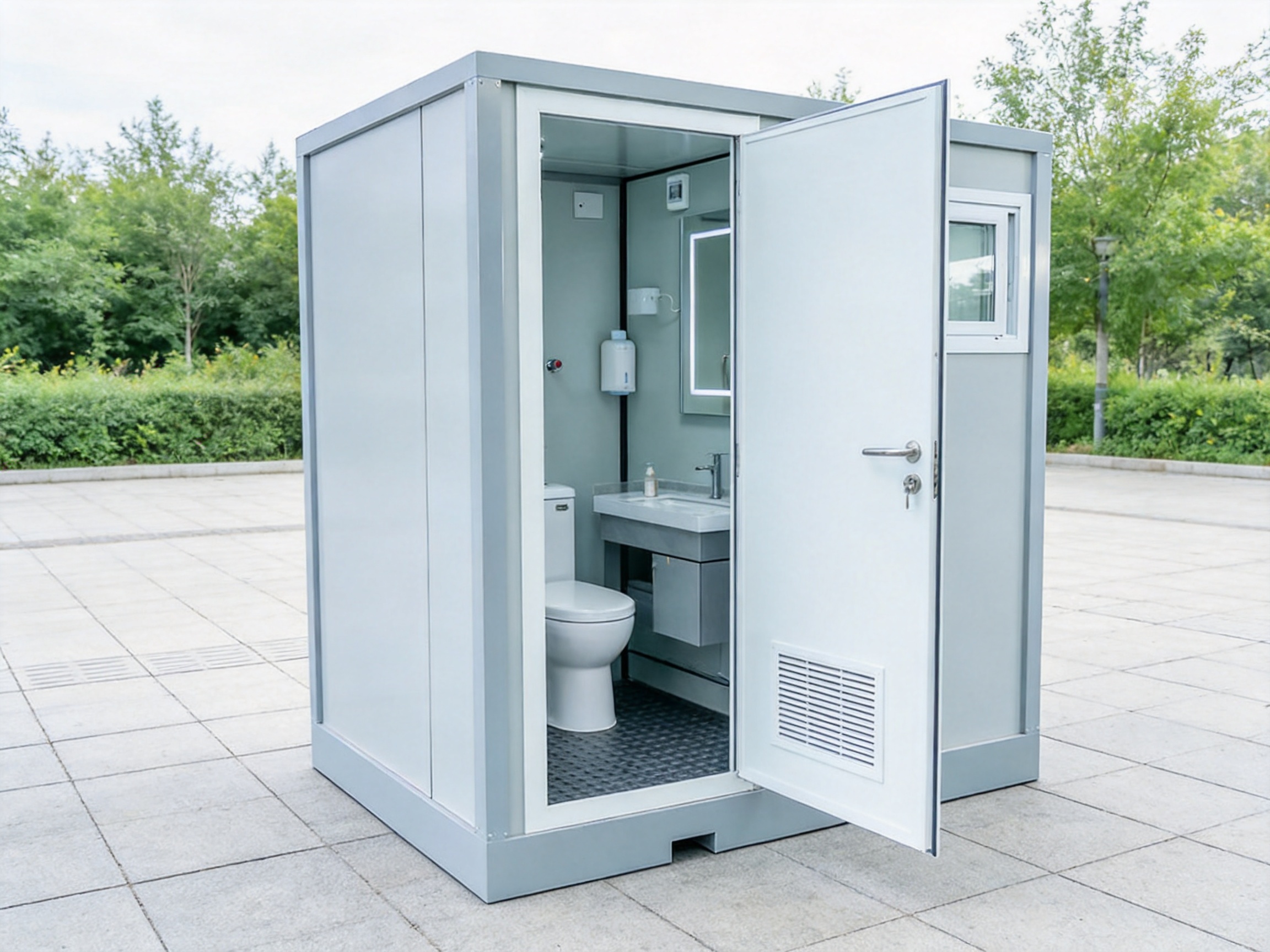
The larger interior is especially useful when the unit is equipped with a washbasin or hygiene station. A standard compact portable toilet may provide only enough room for the toilet itself. An XL model can be planned around a more complete sanitation experience, with room for handwashing, personal care, cleaning supplies, or other optional equipment. This creates greater functional value without requiring the construction of a permanent building.
Core Product Advantages
XL Private Space for Improved Comfort
The most important advantage of this product is its spacious single-user interior. The user does not have to share the compartment, and the additional space reduces the cramped feeling commonly associated with compact portable toilets. A larger room can make entry and exit easier, improve movement inside the unit, and create a more comfortable experience for users of different body sizes.
Additional interior space also supports more practical daily operation. Cleaning staff can work inside the room more easily than they can in a narrow enclosure. Maintenance personnel have improved access to fixtures and fittings. If the unit is configured with a washbasin, there is greater flexibility when arranging the toilet, sink, mirror, dispenser, or other hygiene components.
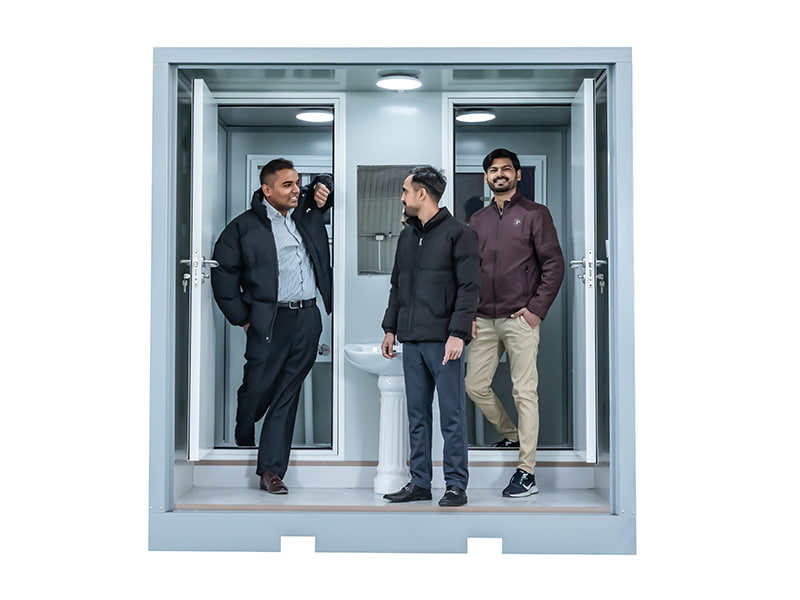
Privacy is another important part of comfort. The unit is intended for one person, which creates a clear and private environment. This is valuable at public events, temporary accommodation areas, construction sites, and emergency facilities where users may be reluctant to use shared or poorly separated sanitation spaces. A private room can also help improve the perceived quality of the entire site.
Optional Washbasin and Hygiene Facilities
The Single-Person XL Outdoor Portable Toilet can be equipped with a washbasin or personal hygiene setup. This optional configuration makes the product more versatile than a basic toilet enclosure. It can support handwashing, personal cleaning, and sanitation routines in locations where water and hygiene facilities may be limited.
A washbasin can be paired with a water storage tank, drainage system, soap dispenser, paper towel holder, hand dryer, mirror, or other accessories, depending on project requirements. The exact configuration can be selected according to the intended use, available utilities, transportation method, and local operating conditions. Because the unit is based on a modular concept, customers can discuss the desired internal arrangement before production.
For emergency response, a hygiene-equipped unit may support better disease-prevention practices. For construction projects, it can improve worker convenience. For outdoor hospitality and camping, it can provide a more complete user experience. For remote facilities, a combined toilet and washing station can reduce the need to transport and maintain several separate structures.
Durable and Stable Outdoor Structure
Portable does not mean temporary in the sense of weak or unreliable. A portable restroom must tolerate handling, relocation, outdoor exposure, routine cleaning, and repeated use. Its structure must remain stable after transportation and installation, while the enclosure should provide a dependable barrier against weather and environmental conditions.
The product is designed for frequent relocation and outdoor deployment. Its robust construction supports use in construction zones, campsites, event spaces, emergency sites, and other changing environments. Stable structural design is important not only for durability but also for user confidence. A restroom that feels secure, level, and properly assembled is more likely to be accepted and used correctly.
Outdoor conditions can vary widely. A unit may experience sunlight, rain, dust, wind, temperature changes, and contact with cleaning chemicals. The selection of structural materials, wall systems, doors, flooring, hardware, and fixtures must therefore be considered as part of a complete product solution. Factory-based manufacturing helps ensure that these components are assembled consistently before delivery.
Quick Deployment and Immediate Usability
Temporary projects often operate under strict schedules. A construction site may need facilities before work begins. An event organizer may have only a short setup window. Emergency response teams may need to establish sanitation services rapidly. In these circumstances, a product that can be prepared, transported, and installed efficiently provides a significant advantage.
The Single-Person XL Outdoor Portable Toilet is designed for quick deployment. Once delivered and properly positioned, it can be prepared for use without the lengthy construction process associated with a permanent restroom building. This reduces disruption to the site and allows sanitation services to become operational quickly.
Rapid deployment also makes the unit suitable for phased projects. A customer may begin with a small number of units and add more as the workforce or visitor population grows. Units can be moved as construction zones change or relocated to another project after the original site is completed. This flexibility improves the long-term value of the investment.
Flexible Use Across Different Locations
The product is suitable for a broad range of applications. It can serve as a private restroom at outdoor events, a sanitation facility at a construction site, a toilet and washing station at a campsite, or a temporary facility in an emergency relief area. Its flexible design allows customers to adapt the product to different environments rather than purchasing a highly specialized structure for every project.
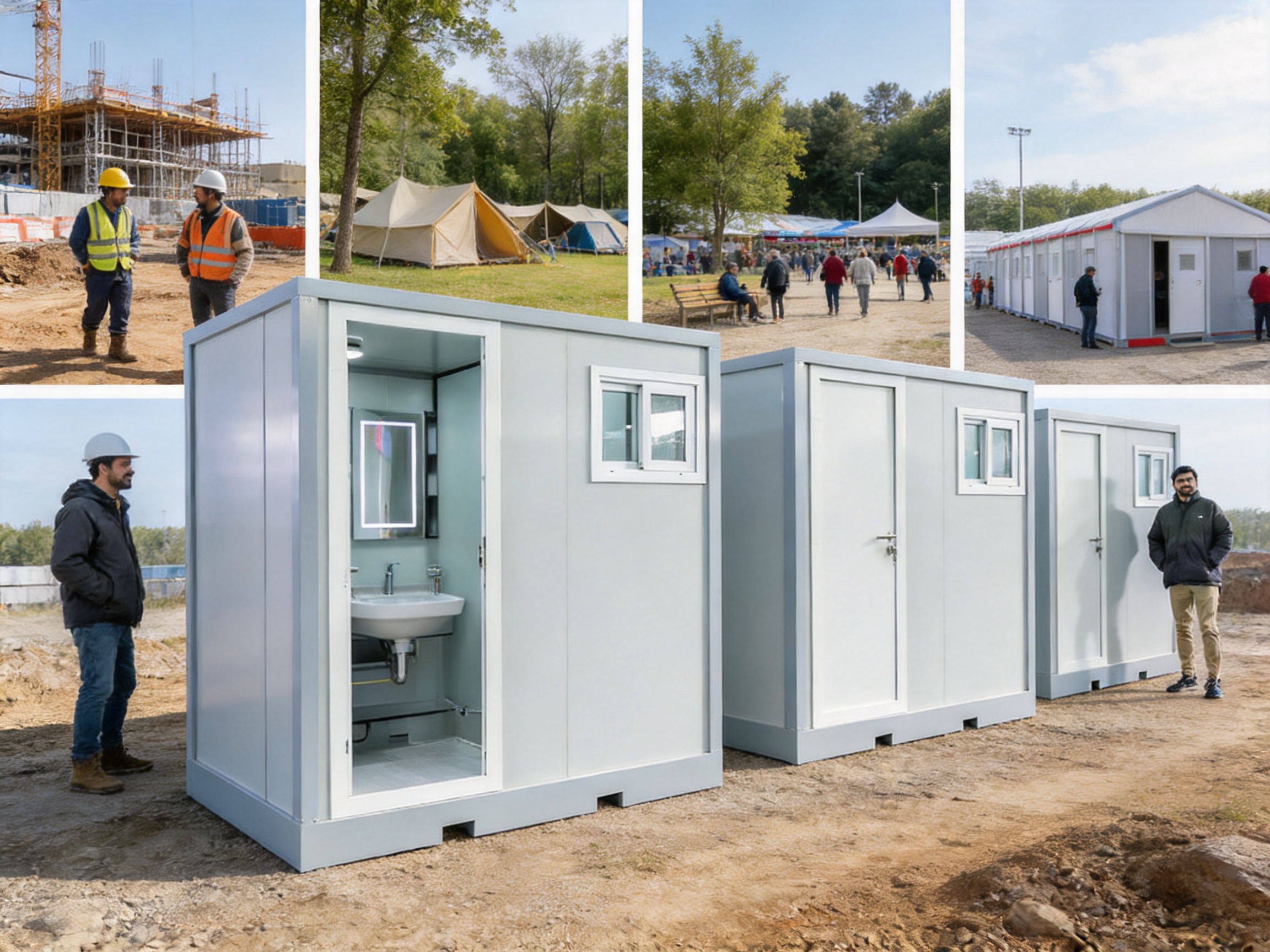
At construction sites, the XL compartment can provide workers with a more dignified and convenient facility near active work zones. At campsites, it can increase privacy and support personal hygiene. At festivals and outdoor gatherings, it can complement larger restroom systems by providing a more comfortable option for individual use. In emergency situations, the unit can be positioned where permanent infrastructure is damaged, unavailable, or overwhelmed.
The product may also be useful for rural projects, temporary accommodation areas, agricultural operations, roadwork, mining support facilities, and remote service locations. Its value is greatest where a permanent building is not practical but users still require reliable, private sanitation.
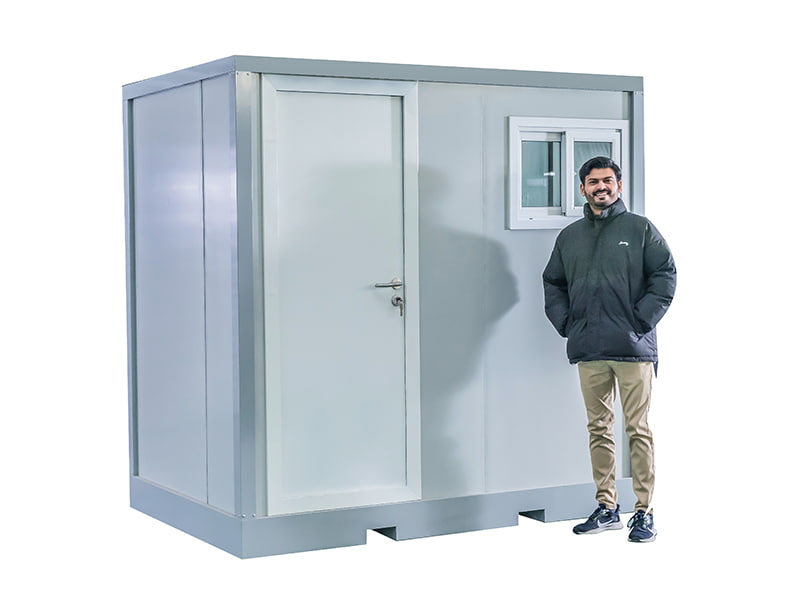
Single-Person XL Outdoor Portable Toilet
How the XL Design Compares with Standard Portable Toilets
Standard portable toilets remain useful for high-volume, short-duration applications. Their compact size may be suitable where transportation capacity, placement area, and budget are the primary considerations. However, a compact unit is not always the best choice when comfort, hygiene, and longer-term use matter.
The XL model offers several differences that can make it more suitable for demanding conditions. The following comparison is intended as a general design-level overview. Exact specifications depend on the final configuration, optional fittings, local requirements, and customer preferences.
| Evaluation Area | Standard Compact Portable Toilet | Single-Person XL Outdoor Portable Toilet |
|---|---|---|
| Interior space | Focused on basic toilet use with limited movement area | Expanded single-user space for improved movement and comfort |
| Privacy | Usually provides a basic individual compartment | Provides a more spacious private environment |
| Washbasin integration | May be difficult because of limited interior room | Can be equipped with a washbasin or personal hygiene facilities |
| Cleaning access | Restricted in a compact enclosure | More practical access for routine cleaning and maintenance |
| Typical deployment | Short visits and high-density temporary use | Construction, camping, emergency, event, and longer-duration temporary use |
| User experience | Functional and space-efficient | More comfortable, private, and adaptable |
| Configuration flexibility | Often limited to basic toilet functions | Can be customized with hygiene-related interior equipment |
The comparison demonstrates that the XL product is not simply a larger version of a basic portable toilet. It is a more adaptable sanitation module. It is intended for customers who want to balance mobility with user comfort and who may need a combination of toilet and washing functions in one unit.
Applications in Construction and Temporary Worksites
Construction projects frequently change shape as work progresses. Workers may move from excavation areas to structural zones, finishing areas, utility corridors, and external landscaping locations. Permanent restrooms may not be available near every work area, and building a temporary masonry facility can consume time and resources that are better directed toward the main project.
A portable XL restroom can be positioned close to the workforce while maintaining a clear separation from active construction operations. Its private design helps improve site welfare and can contribute to a more organized working environment. Where workers remain on the project for extended periods, the additional space and optional washbasin can provide a noticeable improvement over minimal sanitation arrangements.
For contractors, deployment flexibility is a major advantage. A unit can be delivered with other temporary facilities, installed during site mobilization, and relocated when the construction sequence changes. At the end of the project, it can be removed and used at another location. This supports a reusable asset model instead of a single-purpose temporary installation.
The product can also complement portable offices, guard rooms, storage units, worker accommodation, and prefabricated site buildings. Suzhou Taimao Integrated Housing Co., Ltd. supplies a wider range of modular and temporary building solutions, allowing customers to coordinate different site facilities through one experienced manufacturer.
Use in Camping, Outdoor Hospitality, and Events
Camping and outdoor hospitality increasingly require better sanitation standards. Guests may accept a natural setting, but they still expect privacy, cleanliness, and basic personal hygiene. A small, uncomfortable toilet can negatively affect the overall impression of a campsite, outdoor resort, festival, or recreational venue.
The Single-Person XL Outdoor Portable Toilet provides a more private option for locations where permanent sanitary buildings are not available. It can be placed near tent areas, cabins, activity zones, picnic facilities, or temporary accommodation. If equipped with a washbasin, it can support handwashing and basic personal care without forcing users to travel to a separate facility.
Event organizers can use the product as part of a broader restroom plan. High-volume events may require multiple standard units, but selected XL units can serve visitors who value additional space or need a more complete washing arrangement. These units may also be helpful for staff, performers, vendors, or VIP areas where privacy and comfort are especially important.
Because the unit is designed for outdoor conditions and rapid setup, it can support seasonal operations. It may be installed for a summer event, moved to a winter recreation site, or stored and redeployed for another occasion. This flexibility can reduce the need to construct permanent facilities for activities that are temporary or subject to seasonal demand.
Emergency Relief and Remote Sanitation
In emergency relief operations, sanitation must be established quickly. Floods, storms, earthquakes, infrastructure failures, displacement events, and public health emergencies can interrupt normal water and wastewater services. A portable restroom can provide an immediate sanitation point while permanent systems are repaired or expanded.
The XL format has particular value when privacy and personal hygiene are important. Emergency conditions can place considerable stress on individuals and families. A larger private room can offer a more dignified experience than a narrow, purely functional enclosure. Optional washing facilities can further support hygiene routines in shelters, field hospitals, distribution centers, and temporary settlements.
Relief organizations may also need facilities that can be moved between locations. A portable structure can be transported to a remote site, deployed near a temporary camp, and later reassigned as population needs change. The product’s flexible design makes it possible to consider different configurations for different relief environments, subject to available water, drainage, and service arrangements.
For emergency use, planning should include more than the unit itself. Operators should establish procedures for water supply, wastewater collection, cleaning, disinfection, consumable replenishment, ventilation, accessibility, and regular inspection. The manufacturer can support customers in selecting a configuration that matches the intended field conditions.
Manufacturing Strengths Behind the Product
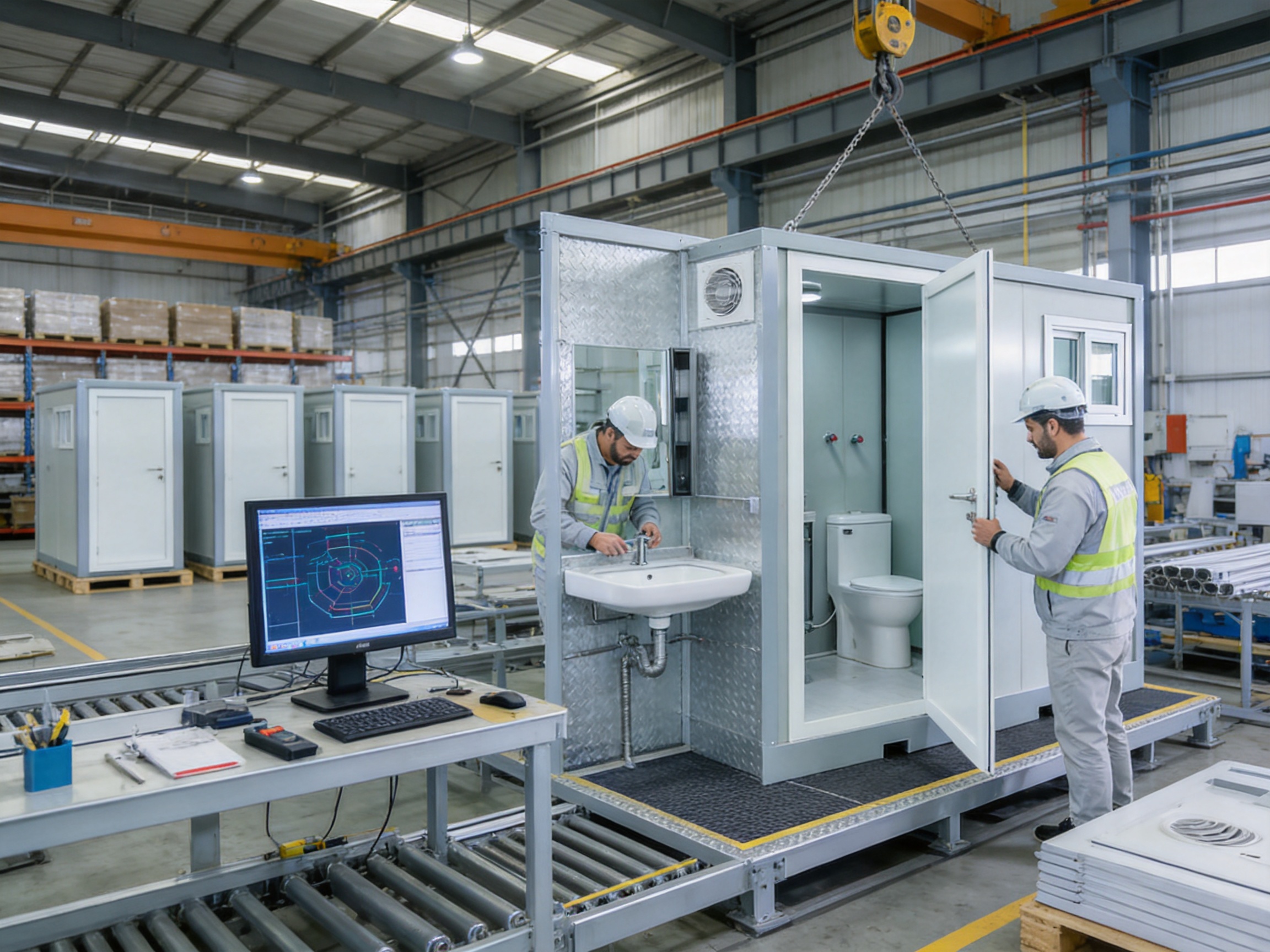
The performance of a portable restroom begins with its manufacturing process. A product may appear simple from the outside, but its quality depends on material selection, dimensional accuracy, structural assembly, sealing, fixture installation, surface treatment, inspection, and packaging. When these processes are controlled in a factory environment, the manufacturer can achieve greater consistency than is usually possible with entirely improvised site construction.
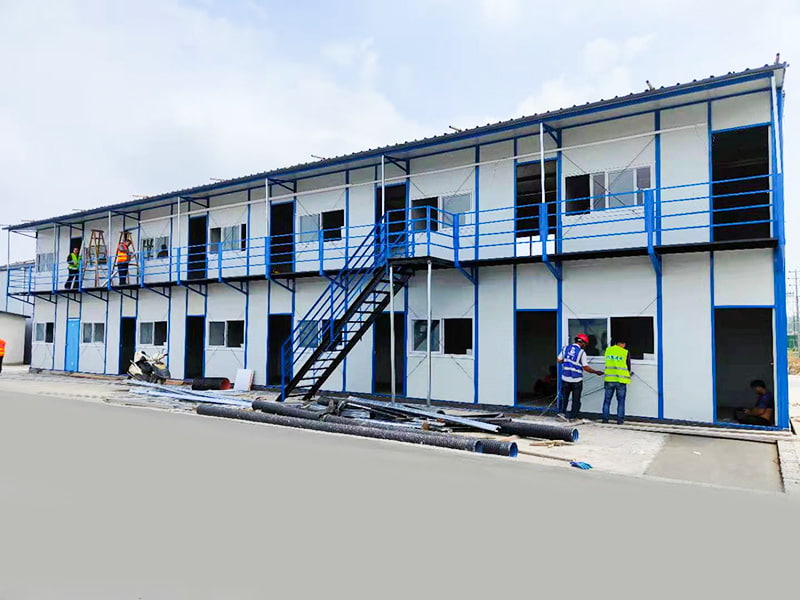
Suzhou Taimao Integrated Housing Co., Ltd. specializes in modular building solutions and prefabricated structures. Its product range includes container houses, folding container houses, double-wing expandable container houses, portable restrooms, K-type prefabricated houses, and steel structures. This product diversity gives the company experience in designing and manufacturing compact structures that must be transported, assembled, and used in different environments.
Integrated Modular Design
The company’s approach is based on integrated modular design. Instead of treating each component as an isolated part, the structure, enclosure, interior finishes, services, and optional equipment can be planned as one coordinated system. For a portable restroom, this means the floor, walls, roof, door, drainage provisions, ventilation, lighting, sanitary fixtures, and washbasin options can be considered together.
Integrated design helps reduce conflicts between components. For example, the location of a washbasin must be compatible with available interior space, water connections, drainage routes, door swing, ventilation, and maintenance access. Factory planning makes it possible to resolve these relationships before the unit reaches the customer’s site.
Modular design also simplifies customization. Customers may require different interior layouts, colors, fixtures, utility arrangements, or exterior finishes. A standardized structural platform can support these variations while preserving an efficient production process. This balance between repeatability and customization is important for commercial buyers managing multiple projects.
Factory-Controlled Production
Factory production provides a controlled environment for fabrication and assembly. Materials can be received, checked, stored, cut, formed, fitted, and installed according to defined procedures. Workers can operate with appropriate tools and workstations rather than dealing with unstable weather or limited site conditions.
Controlled production can improve dimensional consistency, joint quality, alignment, and finish. It also allows the manufacturer to inspect the unit at several stages rather than waiting until final installation. Problems can be identified earlier, when corrections are more efficient and less costly.
For a portable toilet, factory assembly is particularly valuable because many details affect long-term performance. Door alignment, hardware installation, floor joints, drainage connections, wall sealing, and fixture anchoring all need to be completed carefully. A standardized production process helps reduce variation between units and supports more predictable field deployment.
Prefabricated Building Technology
The company’s broader modular building technology includes the use of prefabricated components and integrated systems. Its flagship SIP modular building system combines structural elements, insulation, mechanical, electrical, and plumbing systems, heating, ventilation and air conditioning, interior finishes, and smart home technologies into a unified solution.
Although the Single-Person XL Outdoor Portable Toilet is a smaller product, the same principles are relevant. Components can be prepared in advance, services can be organized before delivery, and much of the work can be completed under controlled factory conditions. This reduces the amount of cutting, fitting, and finishing required at the final site.
Prefabrication can help accelerate project schedules. Once a unit is completed and inspected, it can be shipped to the deployment location for positioning and connection. Customers do not need to construct a complete restroom enclosure from raw materials at the site. This is particularly beneficial when labor, tools, weather, or access conditions are challenging.
Digital Support and Project Coordination
Modern modular manufacturing benefits from digital planning and coordination. Digital tools can support design review, component scheduling, production tracking, configuration management, and communication between the manufacturer and customer. These capabilities are useful when a project includes multiple units or when each unit has different options.
Digital coordination can help document the selected layout, accessory package, utility requirements, shipping arrangement, and installation sequence. Clear information reduces misunderstandings and makes it easier for customers to prepare the destination site. In larger modular projects, the same digital approach can support the relationship between portable sanitation facilities and other temporary buildings.
For international buyers, structured communication is particularly important. A project may involve different standards, languages, transport conditions, climate requirements, and local site practices. A manufacturer with end-to-end digital support can help organize the technical details before production begins.
Material, Structural, and Functional Considerations
A portable restroom must be designed as a complete outdoor product rather than merely a room containing a toilet. Its enclosure should protect the interior from normal weather exposure, while its floor and drainage arrangements should support regular cleaning. Its door and hardware should withstand repeated opening and closing. Its interior surfaces should be selected with hygiene and maintenance in mind.
Structural stability is another priority. The unit should be placed on a suitable level surface and secured according to the conditions of the site. In windy areas or exposed locations, customers should evaluate anchoring requirements and local safety practices. The manufacturer can provide guidance based on the intended application and configuration.
Ventilation contributes to comfort and odor management. Lighting improves usability during low-light conditions. Drainage and waste management must be planned according to whether the unit uses a holding tank, external connection, or another approved system. Water supply for a washbasin may come from a fixed connection or a separate tank, depending on site infrastructure.
These details should be determined during the ordering process. Customers should not assume that every optional feature is automatically included in the base product. A clear technical discussion helps identify the required fixtures, utility connections, installation accessories, and operating procedures.
Hygiene and Maintenance Benefits
Good sanitation depends on regular maintenance as much as on product design. A restroom that is easy to access, clean, inspect, and restock is more likely to remain hygienic during continuous use. The XL interior can help maintenance personnel move inside the unit and reach surfaces, corners, fixtures, and service points more effectively.
The availability of a washbasin can also promote better hand hygiene. Depending on the selected configuration, users may have access to water, soap, paper towels, or hand-drying equipment. These facilities should be maintained regularly so that users can rely on them throughout the operating period.
Cleaning schedules should be adapted to usage volume. A unit at a busy event may need repeated service during the day, while a low-use remote site may follow a different schedule. Operators should inspect the floor, toilet fixture, door, ventilation openings, washbasin, water supply, drainage, and waste storage system at appropriate intervals.
Owners should also protect the unit during relocation. Before moving it, all removable items should be secured, tanks should be managed safely, utility connections should be disconnected, and the structure should be handled using suitable lifting or transportation equipment. Correct handling helps preserve the unit’s condition and reduces the risk of damage.
Customization for Different Project Requirements
One of the strengths of working with a modular manufacturer is the ability to discuss configuration requirements before production. The Single-Person XL Outdoor Portable Toilet can be considered for different project conditions, including the installation environment, expected usage, water availability, drainage method, transportation plan, and desired interior equipment.
Customers may discuss the addition of a washbasin, hygiene station, lighting, ventilation, signage, storage accessories, or other practical features. Exterior appearance may also be coordinated with a project’s visual requirements. For event venues, a particular color or finish may be preferred. For construction sites, visibility and easy identification may be more important. For emergency facilities, clear signage and straightforward operation may be priorities.
Customization should always be balanced with transport and deployment requirements. Additional fixtures may increase weight or affect the interior arrangement. A larger configuration may require more placement space or a different handling plan. By reviewing these factors with the manufacturer in advance, customers can select useful features without creating avoidable logistical difficulties.
For projects involving several portable structures, the restroom can be coordinated with other modular products. A construction site may combine portable toilets with accommodation units, offices, storage containers, and security rooms. A relief project may combine sanitation units with temporary shelters, medical facilities, and service buildings. A unified supplier can help simplify communication and procurement.
Why Choose an Experienced Modular Manufacturer
Choosing a portable restroom supplier involves more than comparing the visible appearance or initial price of one unit. Buyers should consider the manufacturer’s design capability, production equipment, quality control, customization experience, packaging, delivery support, and ability to provide related products.
Suzhou Taimao Integrated Housing Co., Ltd. has positioned itself as a supplier of modular construction solutions for international and domestic applications. Its experience includes temporary housing, mobile homes, small and large modular buildings, container structures, prefabricated houses, and steel construction. This broader capability can be valuable for customers whose projects require more than one type of facility.
The company’s stated mission is to accelerate project timelines, improve operational efficiency, reduce ecological impact, and maintain high standards of quality and safety. These goals are consistent with the needs of portable sanitation projects. Faster production and installation reduce schedule pressure. Efficient factory work can reduce unnecessary site labor. Reusable modular structures can support repeated deployment. Controlled manufacturing can improve consistency and safety.
The company also emphasizes globally certified modular building solutions. For international customers, certification and documentation should be reviewed according to the destination country, application, and local authority requirements. Product compliance may depend on electrical systems, plumbing, structural conditions, fire safety, wastewater arrangements, and other factors. A professional manufacturer can help customers identify the relevant documentation before shipment.
Purchasing and Deployment Planning
Before ordering the Single-Person XL Outdoor Portable Toilet, buyers should define the intended use. Important questions include the number of expected users, operating duration, location, climate, surface conditions, water supply, waste disposal method, cleaning frequency, and transportation route.
Buyers should also decide whether the unit will be used as a toilet only or as a combined toilet and washing station. If a washbasin is required, the project should specify the preferred water source and drainage arrangement. If the unit will operate in a cold climate, freeze protection and winterization should be considered. If it will be used at night, lighting requirements should be reviewed.
Site preparation may include a level base, access for delivery vehicles, adequate clearance around the unit, utility connections, anchoring provisions, and a service area for cleaning or waste removal. A well-prepared site makes installation faster and helps the unit remain stable during operation.
Transportation planning is equally important. Customers should confirm the packed dimensions, loading method, unloading equipment, delivery route, and final placement procedure with the supplier. For multiple units, shipment planning can affect the total project cost and schedule. Factory packaging should protect the unit during transit while allowing efficient handling at the destination.
| Planning Item | Questions to Confirm |
|---|---|
| Intended application | Will the unit serve a construction site, campsite, event, emergency area, or remote facility? |
| Interior configuration | Is a basic toilet sufficient, or is a washbasin and hygiene setup required? |
| Utilities | How will water, drainage, lighting, and ventilation be provided? |
| Site conditions | Is the placement area level, accessible, stable, and suitable for outdoor use? |
| Maintenance | Who will clean, inspect, restock, and service the unit? |
| Transportation | What vehicle, lifting equipment, delivery route, and installation access are available? |
| Compliance | What local sanitation, electrical, plumbing, accessibility, and safety requirements apply? |
Operational Best Practices
After installation, operators should inspect the structure and confirm that the door, ventilation, lighting, toilet fixture, drainage system, and optional washbasin are functioning correctly. Any protective packaging should be removed, and all service connections should be checked before the unit is opened for use.
Clear instructions can improve user behavior. Signs may explain handwashing procedures, waste disposal rules, capacity limits, or emergency contact information. At public events and temporary accommodation sites, signs can help users locate the facility and understand how to use optional hygiene equipment.
Cleaning should include high-contact surfaces such as the door handle, latch, toilet seat, flush control, washbasin fittings, and dispenser surfaces. Floors and wall areas should be cleaned using products compatible with the selected materials. Strong chemicals should not be used without checking their suitability, because inappropriate cleaning agents can damage finishes or seals.
Regular inspection should identify leaks, loose hardware, damaged seals, blocked ventilation, insufficient water, full waste tanks, or other problems before they affect users. A maintenance log can help operators track service intervals and identify recurring issues.
Environmental and Resource Efficiency Considerations
Modular portable facilities can contribute to more efficient construction and site management when they are designed for repeated use. A unit that can be relocated and redeployed may reduce the need to build and demolish multiple temporary restroom structures. Factory production can also help organize material use and reduce the amount of waste generated at the final site.
The company’s broader modular manufacturing philosophy emphasizes minimizing ecological impact. Prefabrication can move much of the cutting and assembly work into a controlled environment, where material handling and waste collection may be easier to manage. Shorter on-site installation periods can reduce disturbance to the surrounding area and limit the duration of construction activity.
Environmental performance also depends on operation. Water-saving fixtures, responsible wastewater handling, durable finishes, efficient lighting, and proper maintenance can all reduce resource consumption. Customers should evaluate these options according to local regulations and the actual conditions of use.
Because the product is portable and flexible, it can support temporary projects without requiring a permanent building footprint. This does not eliminate the need for responsible planning, but it can help organizations provide necessary sanitation while preserving the ability to adapt the site later.
Quality, Safety, and Supplier Communication
Quality assurance should cover the entire process, from design confirmation to final delivery. Customers should receive clear information about the selected configuration, materials, optional equipment, utility requirements, and installation method. Any changes should be documented before production begins.
Safety considerations include structural stability, electrical protection where applicable, slip resistance, ventilation, secure door operation, safe lifting, and correct wastewater management. The final requirements may differ by country and application. Buyers should work with local professionals when permits, public access, electrical connections, or special accessibility provisions are involved.
Supplier communication is particularly important for customized products. A customer may describe a need in general terms, such as “a larger portable toilet with washing facilities.” The manufacturer should translate this request into a specific layout and equipment list. Drawings, product data, photographs, and written confirmation can help ensure that the final unit matches expectations.
Suzhou Taimao Integrated Housing Co., Ltd. can be contacted for product consultation, project discussions, customization, and modular facility planning. Its location in Suzhou, Jiangsu, China, places production within one of the country’s established manufacturing regions. International buyers can discuss shipment arrangements, product configurations, technical documentation, and application requirements directly with the company.
Value Beyond the Initial Purchase Price
The lowest initial purchase price is not always the lowest total cost. A compact product that is uncomfortable, difficult to clean, or unsuitable for optional hygiene facilities may create higher operating costs over time. It may require more frequent replacement, additional separate washing equipment, or more labor for maintenance.
The Single-Person XL Outdoor Portable Toilet should be evaluated through its total practical value. The larger interior can improve user satisfaction. The optional washbasin can combine functions in one facility. The portable structure can be reused at different locations. Factory production can reduce site installation work. The manufacturer’s wider modular product range can simplify procurement for larger temporary building projects.
For organizations that manage recurring construction, event, relief, or outdoor hospitality activities, reusable portable sanitation equipment may provide long-term advantages. The unit can become part of an operational fleet rather than a one-time project expense. Proper storage, cleaning, inspection, and transportation can help preserve its usefulness for future deployments.
Frequently Asked Questions
What is the Single-Person XL Outdoor Portable Toilet?
It is a spacious, private, and mobile restroom unit designed for one user at a time. It is intended for outdoor sites, camping areas, emergency relief locations, construction projects, temporary facilities, and other situations where permanent sanitation buildings are unavailable or impractical.
How is it different from a standard portable toilet?
The main difference is the expanded interior space. The XL design gives users more room for movement and comfort and can support the addition of a washbasin or personal hygiene equipment. It is intended to provide a more complete and comfortable sanitation experience than a basic compact unit.
Can the unit include a washbasin?
Yes. The product can be equipped with a washbasin or a personal hygiene setup. The exact equipment, water source, drainage arrangement, and accessories should be confirmed during the product consultation and design process.
Where can this portable toilet be used?
Typical applications include construction sites, campsites, outdoor events, temporary accommodation areas, emergency relief operations, remote work zones, agricultural projects, roadwork areas, and other locations requiring mobile sanitation.
Is the product suitable for repeated relocation?
Yes. It is designed as a portable and flexible structure suitable for relocation. Before moving the unit, operators should follow proper procedures for disconnecting utilities, managing tanks, securing components, and using suitable transportation or lifting equipment.
Can customers request customized configurations?
Customers can discuss optional interior facilities, hygiene equipment, finishes, utility arrangements, and other project-related requirements with the manufacturer. Customization should be reviewed in relation to transportation, installation, local regulations, and operating conditions.
Does the product require a permanent foundation?
The unit is intended for temporary and portable deployment, but it still needs a stable, level, and suitable placement surface. Depending on site conditions, anchoring or other stabilization measures may be necessary. The installation method should be confirmed for the specific project.
How should the unit be maintained?
Maintenance should include regular cleaning, disinfection, waste management, inspection of fixtures and door hardware, checking of water and drainage systems, replenishment of hygiene supplies, and inspection for damage or leaks. The service schedule should reflect the number of users and operating conditions.
Can it be used in emergency relief projects?
Yes. Its rapid deployment, private interior, and optional washing facilities make it suitable for emergency sanitation support. Relief organizations should plan water supply, wastewater handling, cleaning, transportation, and local compliance before deployment.
Who manufactures the product?
The Single-Person XL Outdoor Portable Toilet is manufactured by Suzhou Taimao Integrated Housing Co., Ltd., a supplier specializing in modular building solutions, prefabricated structures, portable facilities, container houses, steel structures, and related temporary buildings.
What should buyers confirm before placing an order?
Buyers should confirm the intended application, interior layout, optional equipment, dimensions, materials, water and drainage requirements, electrical needs, transportation method, installation conditions, maintenance plan, delivery schedule, and applicable local standards.
Conclusion
The Single-Person XL Outdoor Portable Toilet offers a practical response to the limitations of compact outdoor sanitation. Its spacious private compartment improves comfort and usability, while the option to add a washbasin or personal hygiene setup expands its function beyond a basic toilet. Its portable format supports fast deployment, relocation, and reuse across construction projects, campsites, emergency areas, events, and remote facilities.
The product’s advantages are strengthened by the manufacturing capabilities of Suzhou Taimao Integrated Housing Co., Ltd. Through modular design, prefabricated construction, factory-controlled production, integrated building systems, and digital project support, the company can provide a more coordinated approach to portable facility manufacturing. Its broader experience with container houses, temporary buildings, steel structures, and modular housing also supports customers managing complete site facility requirements.
For buyers seeking a mobile restroom that combines privacy, interior space, flexibility, and outdoor durability, the XL design provides a strong alternative to minimal compact units. With the correct configuration, site preparation, maintenance plan, and deployment strategy, it can deliver reliable sanitation while improving the experience of the people who depend on temporary facilities every day.
References
1. Suzhou Taimao Integrated Housing Co., Ltd. Product information for the Single-Person XL Outdoor Portable Toilet.
2. Suzhou Taimao Integrated Housing Co., Ltd. Company information on modular building systems, prefabricated construction, and integrated manufacturing.
3. General principles of temporary sanitation facility planning, operation, cleaning, and maintenance.
4. General practices for modular construction, factory prefabrication, portable structures, and temporary site facilities.
5. General considerations for outdoor restroom deployment in construction, camping, event, remote-site, and emergency-response applications.
Product: Single-Person XL Outdoor Portable Toilet

For exclusive deals and latest offers, sign up by entering your email address below.

-
TEL:+86 18762912902
-
Email:cntaimao@163.com
-
WhatsApp:
-
Add:Group 5, Cao Village, Zhenze Town, Suzhou, Jiangsu, China
Copyright © Suzhou Taimao Integrated Housing Co., Ltd.
All Rights Reserved.
 Wholesale movable homes for sale
custom built modular homes
Wholesale movable homes for sale
custom built modular homes