

 EN
EN
 русский
 Español
 عربى
عربى Français
Two-Person Outdoor Portable Toilet: A Practical, Hygienic, and Rapid-Deployment Sanitation Solution
Admin 2026-08-22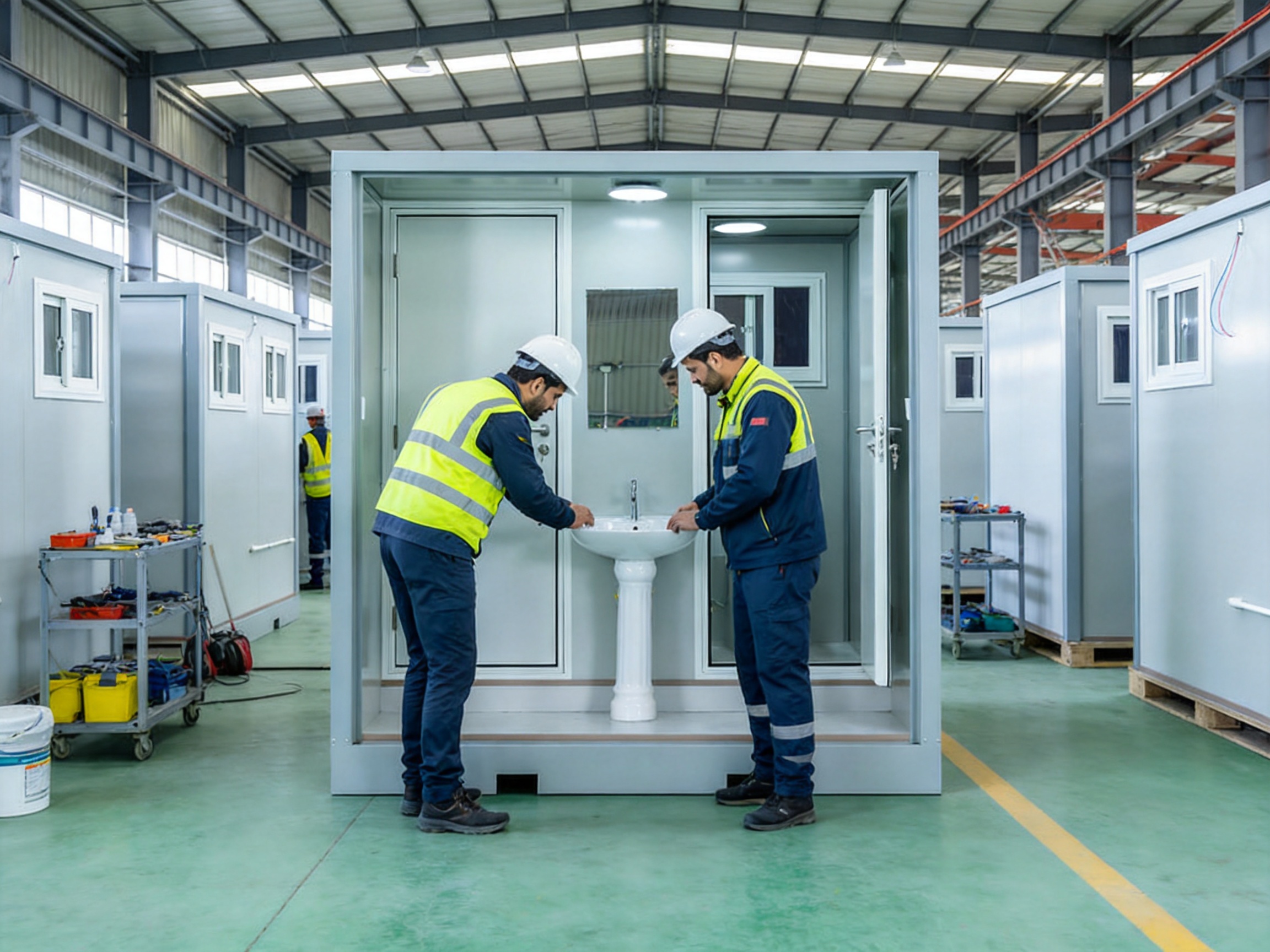
Access to clean, private, and reliable sanitation is essential wherever people gather, work, travel, or respond to emergencies. Construction sites, outdoor festivals, camping grounds, temporary settlements, public works projects, and disaster-relief operations often require restroom facilities long before permanent infrastructure can be completed. In these situations, a conventional building may be too slow, expensive, or difficult to install, while a basic single portable toilet may not provide sufficient capacity, comfort, privacy, or hygiene.
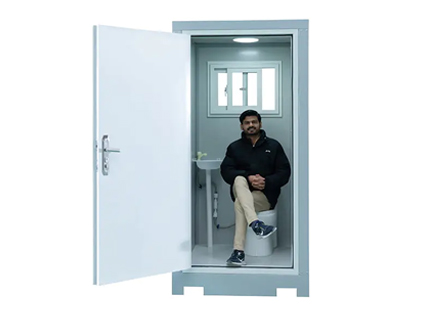
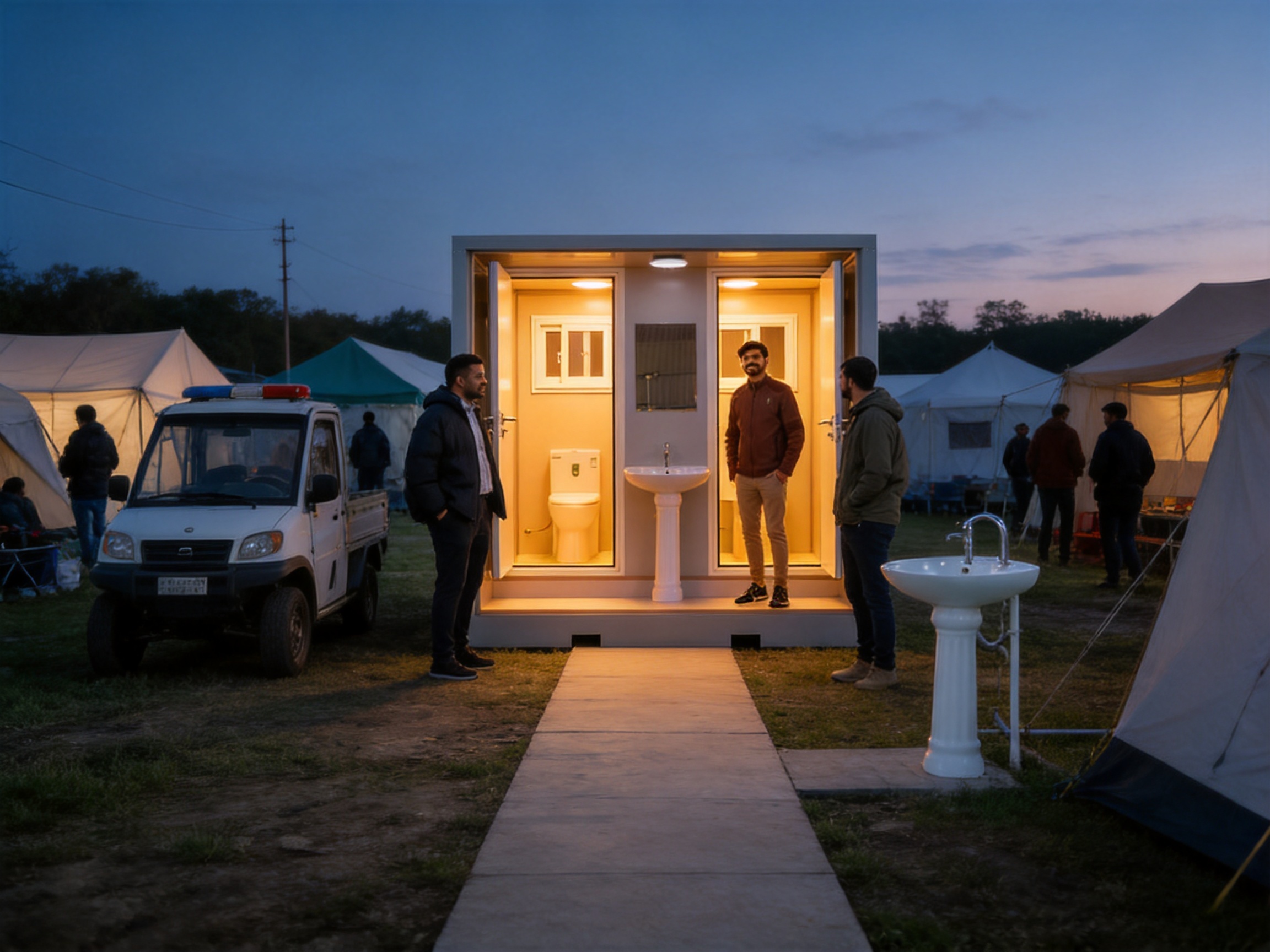
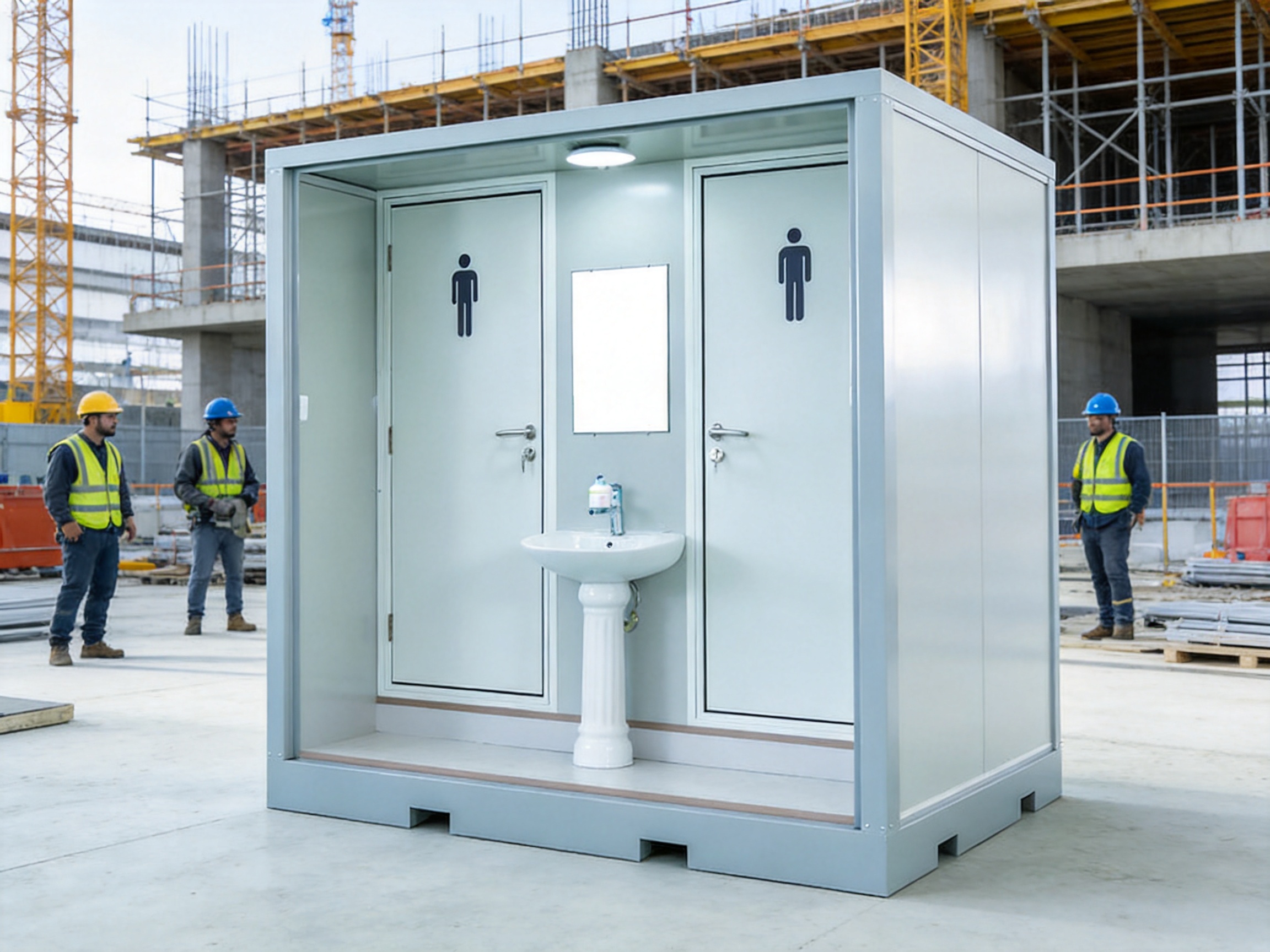
The Two-Person Outdoor Portable Toilet is designed to address these practical challenges with a compact, mobile, and ready-to-use restroom solution. It combines separate male and female compartments, an external handwashing sink, built-in lighting, and a robust structure in one prefabricated unit. Instead of requiring extensive site construction, the unit can be delivered, positioned, connected, and prepared for use within a short period of time.
Although the product belongs to the portable restroom category rather than the modular housing category, it benefits from the same principles that guide high-quality prefabricated construction: controlled production, efficient assembly, reliable components, transportability, and simplified installation. Its purpose is focused and practical. It provides essential sanitation in locations where permanent restrooms are unavailable, overloaded, under construction, or temporarily inaccessible.
Manufactured by Suzhou Taimao Integrated Housing Co., Ltd., the unit reflects the company’s broader experience in integrated building systems, modular production, prefabricated structures, and factory-controlled manufacturing. The company also develops container houses, folding container houses, double-wing expandable container houses, K-type prefabricated houses, and steel structures. This wider product background supports a systematic approach to structural design, enclosure performance, transport, assembly, and project delivery.
For buyers seeking more than a basic temporary toilet, the Two-Person Outdoor Portable Toilet offers a balanced combination of privacy, sanitation, mobility, quick deployment, and durable outdoor performance.
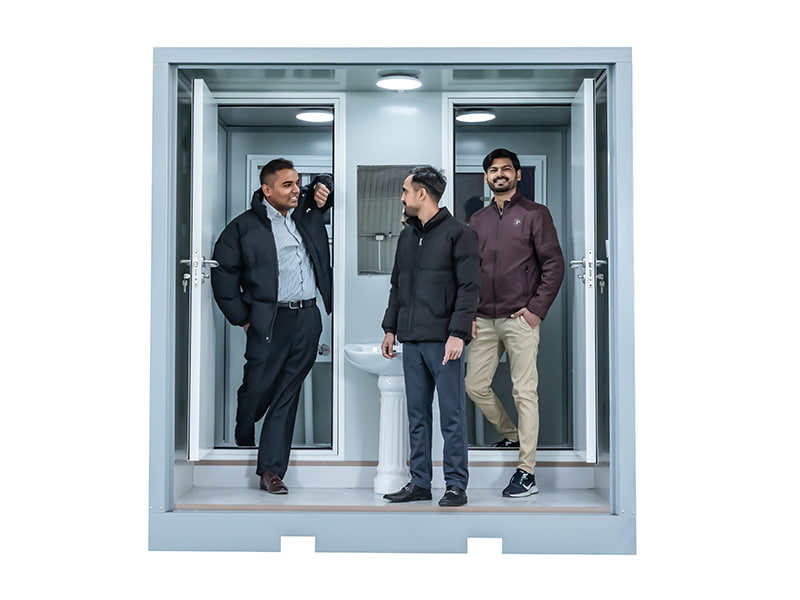
Two-Person Outdoor Portable Toilet
Content
- 1 1. Why Temporary Sanitation Requires a Better Approach
- 2 2. Product Overview
- 3 3. Advantages Over Basic Portable Restroom Alternatives
- 4 4. Suitable Applications
- 5 5. Product Benefits at a Glance
- 6 6. Factory-Controlled Prefabrication and Manufacturing Strengths
- 7 7. Installation, Deployment, and Relocation
- 8 8. Hygiene and Maintenance Considerations
- 9 9. Outdoor Performance and User Comfort
- 10 10. Environmental and Operational Efficiency
- 11 11. Customization and Project Planning
- 12 12. Why Choose an Experienced Integrated Housing Manufacturer
- 13 13. Comparison with Common Alternatives
- 14 14. Procurement Guidance for International Buyers
- 15 15. Operating Cost and Long-Term Value
- 16 16. Safety and Responsible Use
- 17 17. Frequently Asked Questions
- 17.1 Q1: What is the Two-Person Outdoor Portable Toilet?
- 17.2 Q2: Can two people use the facility at the same time?
- 17.3 Q3: Is the unit supplied ready for immediate use?
- 17.4 Q4: Does the product include handwashing equipment?
- 17.5 Q5: Can it be used at night?
- 17.6 Q6: Where can the portable toilet be installed?
- 17.7 Q7: Is it suitable for emergency relief?
- 17.8 Q8: How does it compare with a single portable toilet?
- 17.9 Q9: Can the unit be relocated?
- 17.10 Q10: Can buyers request customization?
- 17.11 Q11: Does the standard unit meet every accessibility requirement?
- 17.12 Q12: What should be considered before ordering?
- 17.13 Q13: Who manufactures the product?
- 17.14 Q14: How can international buyers communicate with the supplier?
- 18 18. Conclusion
- 19 References
- 20 Product: Two-Person Outdoor Portable Toilet
1. Why Temporary Sanitation Requires a Better Approach
Temporary sanitation is often treated as a secondary consideration during project planning. In practice, it can directly influence safety, public satisfaction, worker productivity, event quality, and regulatory compliance. A construction project may have hundreds of workers before its permanent welfare facilities are completed. An outdoor event may receive thousands of visitors in a single day. A temporary camp or emergency shelter may need immediate access to separate, hygienic restrooms.
Portable sanitation facilities must therefore perform under demanding conditions. They may be moved between locations, exposed to rain and sunlight, used repeatedly throughout the day, and installed on surfaces that are not perfectly level. They also need to provide a reasonable user experience despite their temporary nature. Privacy, ventilation, lighting, handwashing access, cleanliness, and ease of maintenance all contribute to the practical value of the facility.
A low-cost unit that lacks lighting or handwashing facilities may create inconvenience and hygiene concerns. A facility with insufficient capacity can result in long queues and poor user satisfaction. A structure that is difficult to transport or relocate may increase logistics expenses. A product that requires extensive on-site assembly can delay operations and raise labor costs.
The Two-Person Outdoor Portable Toilet addresses these issues through an integrated design. The dual-compartment layout supports simultaneous use by two people while maintaining separation between male and female users. The external sink encourages hand hygiene immediately after restroom use. Built-in lighting helps users navigate and operate the facility in the evening or in low-light environments. The stable enclosure is intended for repeated outdoor use and relocation.
These features make the unit suitable for projects that need a dependable sanitation solution rather than a temporary enclosure with minimal functionality.
2. Product Overview
The Two-Person Outdoor Portable Toilet is a compact mobile restroom facility with two independent compartments. Each compartment is designed to provide privacy and practical access for individual users. The separation of male and female areas makes the facility suitable for mixed-use locations where privacy management is important.
The unit is pre-assembled or prepared for rapid assembly, reducing the amount of construction required at the destination. Once it arrives at the site, the installation team can position it, complete the necessary service connections or operating preparations, and place it into service. This approach is particularly useful for temporary projects with tight schedules.
The design includes an external handwashing sink. This feature is important because restroom access alone does not guarantee good hygiene. Users need a convenient place to wash their hands, particularly at food events, work camps, public gatherings, schools, temporary offices, and emergency sites. By placing the sink outside the compartments, the product creates a visible and accessible hygiene station for all users.
Integrated lighting improves usability after sunset and in enclosed or shaded locations. It helps users identify entrances, move safely inside, and use the facility without depending entirely on temporary lamps or handheld devices. Lighting also helps facility managers maintain a more orderly and welcoming environment.
The structure is designed to be robust and stable while remaining portable. Its mobility allows the unit to be transported to a new site when a project phase ends or when sanitation demand changes. This flexibility can reduce the need to purchase separate facilities for every temporary location.
Core Product Functions
The main functions of the product can be summarized as follows:
Separate male and female compartments provide improved privacy and allow two users to access the facility at the same time.
An external handwashing sink supports better personal hygiene and can be supplied according to the operating conditions of the project.
Built-in lighting supports use during evening hours, at night, or in areas where natural light is limited.
A stable outdoor-ready structure is intended to withstand frequent use, relocation, and normal outdoor exposure.
A prefabricated configuration reduces on-site labor and enables faster deployment than conventional permanent construction.
A compact footprint allows the unit to be used in locations where space is limited, including construction compounds, event grounds, roadside work areas, camps, and temporary public facilities.
3. Advantages Over Basic Portable Restroom Alternatives
The portable sanitation market includes several types of products, ranging from single-unit chemical toilets to trailer-mounted restroom facilities and permanent modular washroom buildings. Each type has a suitable application. The Two-Person Outdoor Portable Toilet is especially valuable for users who need more functionality than a basic single cubicle but do not require a large restroom trailer or a permanent building.
3.1 Separate Compartments and Better Privacy
Many entry-level portable toilets provide only one compartment. A single compartment can be suitable for small work crews or isolated locations, but it may be insufficient for public events, mixed-gender workforces, or facilities serving several users at once. The dual-compartment arrangement of this product gives the site operator a more organized and privacy-conscious option.
Separate male and female spaces can simplify facility management and make the unit more acceptable in public-facing environments. The arrangement also supports simultaneous use, which can reduce waiting times during peak periods. Compared with placing several unrelated single toilets around a site, an integrated dual-compartment unit can create a more coherent sanitation area.
3.2 Greater Hygiene Convenience
A major limitation of many basic temporary toilets is the lack of a nearby handwashing station. Users may need to walk to another part of the site to wash their hands, or they may rely on sanitizer that is not always available. The external sink included with the Two-Person Outdoor Portable Toilet makes handwashing part of the restroom experience.
This feature is especially useful in food service areas, markets, school activities, construction projects, agricultural operations, and emergency shelters. It helps project managers communicate a clear hygiene standard and gives users immediate access to a basic sanitation facility.
3.3 Improved Night-Time Usability
Portable toilets without lighting may become difficult or uncomfortable to use after dark. Temporary lighting placed nearby may cast shadows, fail during bad weather, or leave the interior inadequately illuminated. Built-in lighting offers a more integrated solution and supports safer access in low-light conditions.
Lighting is also valuable for facilities used early in the morning, during winter, in covered construction areas, or in locations surrounded by temporary fencing and equipment. It contributes to convenience without requiring every user to bring a flashlight or depend on a mobile phone.
3.4 More Efficient Deployment Than Permanent Construction
A permanent restroom requires foundation work, architectural planning, utility installation, drainage arrangements, interior finishing, and a longer construction schedule. Those steps may be appropriate for a long-term facility but are often excessive for a temporary project.
The portable restroom is designed for a shorter deployment cycle. Its prefabricated nature transfers much of the production work to a controlled manufacturing environment. At the destination, the project team can focus on placement, service preparation, and operational checks instead of building the entire structure from the ground up.
3.5 Greater Flexibility Than Fixed Temporary Buildings
A temporary building may provide more interior space, but it can also require a larger site footprint and more extensive installation. The Two-Person Outdoor Portable Toilet offers a focused solution for sanitation without occupying space that may be needed for storage, work areas, accommodation, or public circulation.
Because the unit is portable, it can be relocated as the project develops. For example, a construction site may move the facility closer to a new work zone, an event organizer may reposition it near a high-traffic area, or an emergency-response team may transfer it to another temporary settlement.
4. Suitable Applications
4.1 Construction Sites
Construction workers need convenient restroom access throughout the workday. At the early stages of a project, the permanent building may not yet have plumbing, electricity, interior finishes, or safe access. The portable unit can serve as an interim facility while construction continues.
It can also support large projects where the permanent welfare facilities are too far from active work zones. By placing a compact restroom near the work area, site managers can reduce unnecessary walking time and improve the overall working environment.
The structure can be used on residential developments, commercial construction sites, infrastructure projects, industrial installations, roadworks, bridge projects, and utility construction sites. Its dual compartments make it suitable for sites with mixed-gender teams or multiple subcontractors.
4.2 Outdoor Events and Festivals
Concerts, exhibitions, fairs, sporting events, community celebrations, and temporary markets often require sanitation facilities for a limited period. Organizers need products that can be delivered before the event, positioned without major civil works, and removed after the site is cleared.
The separate compartments support an orderly arrangement for visitors, while the handwashing sink provides an important amenity in public areas. The lighting system is useful for evening concerts, night markets, outdoor celebrations, and events held in parks or open grounds.
Event planners can also use the unit as part of a broader sanitation plan that includes additional handwashing stations, accessible facilities, service areas, and waste-management arrangements. The product is not intended to replace a complete event sanitation strategy, but it can form a reliable part of one.
4.3 Camping Areas and Outdoor Recreation
Camping grounds and recreational areas may have seasonal or fluctuating demand. Building permanent restroom blocks for every location can be expensive, especially where visitor numbers vary throughout the year. A portable dual-compartment facility can help operators expand sanitation capacity during peak seasons or special activities.
The unit may be used at campgrounds, temporary outdoor education programs, hiking bases, fishing areas, glamping sites, recreational vehicle areas, and remote activity centers. Its compact form helps preserve the surrounding landscape while providing a more organized sanitation point.
4.4 Emergency and Disaster Relief
After floods, earthquakes, storms, industrial incidents, or other emergencies, sanitation infrastructure may be damaged or unavailable. Restrooms are an immediate requirement for shelters, temporary medical points, distribution centers, and displaced communities.
The Two-Person Outdoor Portable Toilet can support rapid deployment because it is prefabricated and mobile. It can be transported to a relief location, positioned near temporary shelters, and incorporated into a broader emergency sanitation plan. The separate compartments provide basic privacy, while the sink and lighting address essential hygiene and usability requirements.
Emergency planners should evaluate the local water supply, wastewater disposal method, power availability, accessibility requirements, cleaning schedule, and expected user volume before deployment. The product provides the physical facility, while safe operation depends on appropriate site planning and management.
4.5 Temporary Work Camps and Remote Projects
Mining exploration, agricultural operations, forestry work, utility maintenance, and remote infrastructure projects may take place far from permanent public facilities. In these settings, a portable restroom can be transported with other temporary equipment and relocated as the project moves.
The unit is particularly useful when the project needs a dedicated restroom but does not justify a full modular building. Its compact footprint and integrated functions can simplify logistics for remote crews.
5. Product Benefits at a Glance
| Feature | Practical Benefit | Typical Value to the User |
| Two independent compartments | Supports separate male and female use | Improved privacy, organization, and simultaneous access |
| External handwashing sink | Provides a convenient hygiene point | Better handwashing compliance and user convenience |
| Built-in lighting | Supports use in darkness and low-light conditions | Greater usability and safer movement after sunset |
| Portable structure | Allows transport and relocation | Flexible deployment for changing project needs |
| Prefabricated production | Reduces on-site construction work | Faster installation and more predictable project scheduling |
| Outdoor-ready design | Supports regular use in outdoor environments | Practical operation at events, sites, camps, and emergency locations |
6. Factory-Controlled Prefabrication and Manufacturing Strengths
The quality of a portable restroom depends not only on its visible design but also on how consistently it is produced. Factory-controlled manufacturing can provide advantages over improvised site construction or loosely assembled temporary facilities. Components can be prepared according to defined production procedures, checked before shipment, and integrated in a more organized sequence.
Suzhou Taimao Integrated Housing Co., Ltd. specializes in integrated housing and modular building solutions. Its product range includes container-based buildings, expandable houses, folding structures, K-type prefabricated houses, steel structures, and portable sanitation facilities. This experience gives the company a broad understanding of structural frames, enclosure systems, modular coordination, transportation, and rapid site assembly.
The company’s stated manufacturing philosophy emphasizes modular design, proprietary manufacturing technologies, digital software support, project efficiency, environmental responsibility, quality, and safety. Although a portable restroom has a different function from a residence or office, the same manufacturing disciplines are valuable. The structure must be dimensionally coordinated, components must fit together reliably, and the finished unit must be practical to transport and install.
6.1 Integrated Design Thinking
An integrated product is designed as a coordinated system rather than as a collection of unrelated parts. The restroom compartments, doors, lighting, sink, structural enclosure, service access, and transport requirements must work together. This helps reduce installation complexity and supports a cleaner final appearance.
Integrated design can also simplify communication between the buyer, manufacturer, transport provider, and installation team. Instead of managing multiple suppliers for a shelter, lighting system, and washing station, the purchaser can source a coordinated facility from one manufacturer.
6.2 Factory Production for Consistency
Factory production offers a more controlled environment than open-site construction. Materials can be stored, cut, assembled, and checked under planned conditions. Repeated production also allows the manufacturer to refine work sequences and identify common quality issues before products leave the facility.
For buyers ordering several units, production consistency is particularly important. Units deployed across different parts of a site or across multiple projects should offer comparable appearance, operating features, and maintenance requirements.
6.3 Modular Manufacturing Experience
The company’s experience with modular buildings supports the use of standardized dimensions, prefabricated elements, and transport-conscious planning. Modular manufacturing is valuable when the product must be completed in a factory, shipped efficiently, and made operational quickly at the destination.
The same knowledge can also support customized orders. Depending on project needs, buyers may discuss layout preferences, color requirements, signage, utility arrangements, lighting specifications, branding restrictions, accessibility considerations, and regional compliance requirements with the manufacturer.
6.4 SIP and Integrated Building Technology Background
Suzhou Taimao Integrated Housing Co., Ltd. identifies its SIP modular building system as a flagship technology. The system integrates structure, insulation, mechanical, electrical, and plumbing services, heating, ventilation, air conditioning, interior finishes, and smart-home technologies into a unified prefabricated solution.
The Two-Person Outdoor Portable Toilet is a sanitation product rather than a residential SIP module. However, the company’s background in integrated building systems demonstrates experience in combining multiple building functions within a controlled prefabricated process. This is relevant to portable restroom production because the unit also needs coordinated structural, lighting, sanitation, and enclosure elements.
Factory-based integration can reduce the amount of specialized work needed at the project site. It can also make the delivery process easier to organize, particularly when the buyer needs several temporary facilities within a short schedule.
7. Installation, Deployment, and Relocation
One of the strongest advantages of the portable toilet is its deployment flexibility. A typical project begins with a site assessment. The operator should identify a firm and reasonably level location with adequate access for delivery, cleaning, servicing, and removal. The unit should not obstruct emergency routes, pedestrian circulation, vehicle movement, drainage paths, or other critical site functions.
After the unit is delivered, it should be positioned according to the manufacturer’s instructions. The site team should confirm stability and ensure that doors, compartments, the sink, and lighting can be used properly. Depending on the selected operating configuration, water supply, wastewater handling, and electrical connections may need to be arranged by qualified personnel.
A pre-deployment checklist can include the following items:
Confirm that the delivery route can accommodate the unit and any handling equipment.
Prepare a stable placement area that is clear of loose debris, deep standing water, and unnecessary obstructions.
Check that the unit is level and stable before opening it to the public or workforce.
Verify lighting operation and confirm that the power source is appropriate for the equipment.
Prepare the handwashing sink, water supply, drainage, and consumables according to the operating plan.
Establish a cleaning, inspection, waste-removal, and replenishment schedule.
Display any required operating instructions, safety notices, or emergency contact information.
When the project changes, the unit can be relocated. Relocation should be planned rather than improvised. The facility should be closed, cleaned, disconnected from services where applicable, secured for transport, and inspected again after it reaches the new site.
8. Hygiene and Maintenance Considerations
A well-designed restroom remains effective only when it is properly maintained. The Two-Person Outdoor Portable Toilet provides the physical features needed for convenient sanitation, but cleanliness depends on regular management by the operator.
Cleaning frequency should be based on the number of users, the duration of operation, weather conditions, and the type of project. A busy festival may require multiple inspections each day, while a small construction crew may follow a less frequent but still consistent schedule. High-use locations should have a clear process for responding to spills, supply shortages, blocked fixtures, lighting failures, or damage.
The external sink should be checked regularly for water availability, drainage performance, soap, and drying materials. If the sink is connected to a temporary water system, the operator should protect the supply from contamination and freezing where relevant. Wastewater should be handled according to local regulations and the project’s environmental management plan.
Cleaning teams should inspect doors, locks, floors, walls, lighting fixtures, ventilation openings, and service access points. Any damage should be reported promptly. Early maintenance can prevent small problems from becoming operational interruptions.
For long-term temporary use, the operator should maintain a service record. The record may include cleaning times, waste servicing, consumable replacement, repairs, inspections, and relocation dates. This simple administrative practice helps maintain consistent standards across multiple units or project locations.
9. Outdoor Performance and User Comfort
Outdoor facilities face conditions that do not affect indoor restrooms to the same extent. Rain, wind, dust, sunlight, temperature changes, mud, and uneven ground can all influence performance. A portable restroom must therefore be planned for the environment in which it will operate.
The robust and stable structure of the product is intended for outdoor use and frequent relocation. Nevertheless, site selection remains important. The unit should be placed where surface water can drain away and where it will not be exposed to avoidable impact from construction vehicles or heavy equipment.
User comfort is influenced by more than the size of the compartments. Privacy, cleanliness, lighting, convenient handwashing, orderly access, and a stable floor all contribute to the perception of quality. In public or customer-facing environments, these details can affect the reputation of the event or project operator.
Where the facility will be used in extreme climates, buyers should discuss local requirements with the manufacturer before ordering. Topics may include insulation, ventilation, cold-weather protection, heat management, electrical standards, drainage, anchoring, and accessibility. Customization should be evaluated according to the intended site rather than assumed to be identical for every region.
10. Environmental and Operational Efficiency
Prefabricated construction can support more efficient use of materials and labor by moving much of the work into a controlled factory environment. Accurate planning may reduce unnecessary site waste, repeated transportation, and rework. A portable facility can also be reused at different locations, extending its service value beyond one project.
The environmental performance of any temporary restroom depends on its full operating system. Water consumption, wastewater management, cleaning chemicals, transport distance, power use, and service frequency all matter. Operators can improve efficiency by selecting an appropriate placement, scheduling maintenance carefully, preventing leaks, using responsible cleaning products, and coordinating transportation with other project deliveries.
Lighting should be managed responsibly. Efficient lighting equipment and automatic controls may help reduce energy consumption where suitable. If the unit is deployed in a location without reliable grid electricity, the project team can discuss an appropriate power arrangement with the supplier and local technicians.
Reusability is another important benefit. A permanent restroom built for a temporary project may become underused after the project ends. A mobile unit can be moved to a new site, allowing the original investment to support multiple applications over time.
11. Customization and Project Planning
Every project has different operating conditions. A construction site may prioritize durability and easy cleaning. An outdoor event may emphasize appearance, visitor flow, signage, and lighting. An emergency-relief project may prioritize transport speed, water access, and deployment in difficult locations.
Before placing an order, buyers should define the intended application, expected user volume, operating duration, service location, transport conditions, and local requirements. They should also clarify whether the facility will be used by workers, visitors, campers, students, emergency occupants, or a combination of groups.
Potential discussion points with the manufacturer may include exterior finish, color, signage, compartment arrangement, lighting configuration, sink arrangement, service access, power requirements, water and wastewater connections, packaging, shipping, installation support, and spare parts.
Accessibility should be considered at the planning stage. The standard Two-Person Outdoor Portable Toilet is designed around separate male and female compartments, but a project may also require a dedicated accessible restroom solution. Buyers should not assume that the standard configuration meets every accessibility regulation. Instead, they should request a suitable design or add complementary accessible units where required.
For large projects, a complete site layout can improve performance. The plan should show restroom locations, handwashing points, service vehicle access, pedestrian paths, waste collection areas, lighting coverage, and emergency routes. Proper placement can be as important as the product itself.
12. Why Choose an Experienced Integrated Housing Manufacturer
Purchasing a portable restroom from an experienced integrated housing manufacturer can offer advantages beyond the individual unit. A company familiar with modular construction is more likely to understand the importance of transport dimensions, structural coordination, rapid assembly, repeatable production, and project-level communication.
Suzhou Taimao Integrated Housing Co., Ltd. combines product manufacturing with broader capabilities in container houses, mobile homes, temporary housing, modular buildings, steel structures, and prefabricated construction. This enables the company to support customers who need more than one type of temporary facility.
For example, a construction project may require portable toilets together with worker accommodation, site offices, guard rooms, storage buildings, or dining facilities. An event operator may require sanitation facilities together with temporary offices, ticket booths, storage rooms, or service buildings. A relief organization may need toilets, shelter units, medical rooms, and distribution spaces.
A supplier with a broad modular product portfolio may help coordinate these facilities as part of a more complete temporary infrastructure plan. This can simplify procurement, communication, delivery planning, and after-sales support.
12.1 Digital Support and Project Coordination
The company states that it provides end-to-end digital software support as part of its modular building approach. Digital coordination can help organize product information, design revisions, production planning, delivery schedules, and project documentation.
For buyers managing multiple units or international projects, clear documentation is valuable. Drawings, technical specifications, packing information, installation instructions, maintenance guidance, and service contacts can reduce confusion between the factory and the destination site.
12.2 Quality and Safety Orientation
The company’s stated mission includes maintaining high standards of quality and safety. In the context of portable sanitation, this means that buyers should expect attention to structural stability, component integration, electrical safety, user privacy, service access, and practical maintenance.
As with any manufactured product, project-specific standards should be confirmed before purchase. Local building, electrical, sanitation, accessibility, fire, environmental, and transportation requirements may differ by country and application. The manufacturer and buyer should work together to identify which specifications apply.
13. Comparison with Common Alternatives
The best sanitation solution depends on the project. The following comparison explains where the Two-Person Outdoor Portable Toilet fits among common alternatives.
| Solution Type | Main Strength | Potential Limitation | Best-Fit Application |
| Single basic portable toilet | Low space requirement and simple deployment | Limited capacity and may lack handwashing or lighting | Small crews and low-traffic locations |
| Two-person portable toilet | Separate compartments, sink, lighting, and mobility | Requires planned cleaning and service access | Construction sites, events, camps, and emergency use |
| Large restroom trailer | Higher capacity and more interior amenities | Higher transport, setup, and operating costs | Large events and premium temporary facilities |
| Permanent restroom building | Long-term infrastructure and full utility integration | Long construction schedule and higher initial investment | Permanent developments and established sites |
| Improvised temporary enclosure | Quick low-cost shelter | Limited durability, privacy, hygiene, and user comfort | Only very short-term or highly restricted situations |
The two-person configuration occupies a useful middle position. It offers more capacity and functionality than a basic single unit while avoiding the complexity and cost associated with a large trailer or permanent building.
14. Procurement Guidance for International Buyers
International buyers should evaluate the product as both a physical facility and a logistics project. The delivery destination, local regulations, import requirements, installation conditions, and service resources all influence the final outcome.
Before requesting a quotation, buyers should provide the intended quantity, delivery location, preferred shipping method, project duration, expected daily users, power conditions, water availability, wastewater arrangements, and any required customization. Photographs or drawings of the proposed site can help the manufacturer understand access and placement conditions.
Buyers should also ask for the product dimensions, weight, packing method, loading plan, technical specifications, utility requirements, installation instructions, maintenance recommendations, and warranty terms. If the units will be used in a regulated public environment, the buyer should confirm which documents are available for local review.
For a multi-unit order, it may be useful to request a production schedule and inspection plan. A pre-shipment inspection can confirm the quantity, general appearance, compartment arrangement, lighting, sink, doors, and included accessories. The exact inspection process should be agreed upon by the buyer and supplier before production.
Clear communication is especially important when the destination country uses different electrical standards, plumbing practices, measurement systems, or sanitation rules. Custom requirements should be documented in writing to reduce misunderstandings during production.
15. Operating Cost and Long-Term Value
The purchase price is only one part of the total cost of a temporary restroom. Buyers should also consider transport, placement, water supply, wastewater servicing, cleaning labor, consumables, electricity, repairs, relocation, and eventual storage. A product that is inexpensive to purchase but difficult to maintain may become costly over its service life.
The Two-Person Outdoor Portable Toilet can create long-term value through reuse. When a construction phase ends, the unit can be transferred to another project. When an event season changes, it can be stored or redeployed. When an emergency response operation moves, the facility can follow the demand.
The dual-compartment design may also reduce the number of separate single units required for a project. Fewer units can simplify delivery, site layout, servicing, and supervision, provided that the expected user volume is appropriate for the capacity.
Buyers should calculate the required number of facilities based on local regulations, event attendance, workforce size, operating hours, access to other restrooms, and the intensity of use. The manufacturer can help discuss product quantities, but the final sanitation plan should reflect the requirements of the local authority or project manager.
16. Safety and Responsible Use
Portable sanitation facilities should be placed and managed responsibly. The unit must remain stable, accessible, and clear of hazards. It should not be located where floodwater, falling materials, vehicle impact, or excessive ground movement could create a risk.
Electrical connections for built-in lighting must be completed safely and in accordance with local requirements. Where temporary power is used, the system should be protected from moisture and accidental damage. Only qualified personnel should modify electrical or plumbing components.
Cleaning chemicals should be stored and used according to their instructions. Wastewater and toilet waste must be managed through approved procedures. The operator is responsible for ensuring that the facility is serviced in a way that protects users, workers, nearby residents, soil, surface water, and groundwater.
At public events, signs can help direct visitors, explain handwashing procedures, and identify nearby accessible facilities. At construction sites, the facility should be included in the site safety plan and communicated during worker orientation.
17. Frequently Asked Questions
Q1: What is the Two-Person Outdoor Portable Toilet?
It is a compact mobile restroom facility with separate male and female compartments, built-in lighting, and an external handwashing sink. It is designed for temporary or movable use at outdoor events, construction sites, camping areas, emergency locations, and other projects without sufficient permanent sanitation infrastructure.
Q2: Can two people use the facility at the same time?
Yes. The unit has two independent compartments, allowing simultaneous use while maintaining separation between the male and female areas.
Q3: Is the unit supplied ready for immediate use?
The product is pre-assembled or prepared for rapid deployment. The exact installation requirements depend on the selected configuration and destination. Site positioning, utility connections, water supply, wastewater handling, and electrical preparation may still be required.
Q4: Does the product include handwashing equipment?
Yes. An external handwashing sink is included as one of the principal product features. Buyers should confirm the water supply, drainage method, soap, and drying materials required for their specific project.
Q5: Can it be used at night?
Yes. The unit includes a built-in lighting system designed to support use in low-light conditions and after sunset. The project team must provide and maintain a suitable power arrangement where required.
Q6: Where can the portable toilet be installed?
It can be installed at construction sites, festivals, outdoor events, camping areas, temporary work camps, emergency shelters, remote projects, and other locations where portable sanitation is needed. The site should be stable, accessible for servicing, and suitable for water, wastewater, and power arrangements.
Q7: Is it suitable for emergency relief?
Yes. Its portable and rapidly deployable design makes it suitable for disaster-relief sites, temporary settlements, medical points, and distribution centers. Emergency planners must still establish safe waste disposal, water supply, cleaning, power, and accessibility procedures.
Q8: How does it compare with a single portable toilet?
The two-person unit offers separate male and female compartments, simultaneous access, external handwashing, and lighting. These features can provide better organization and user convenience than a basic single unit, particularly in mixed-use or higher-traffic locations.
Q9: Can the unit be relocated?
Yes. Its portable structure is intended to support transport and relocation. The unit should be cleaned, disconnected from services where necessary, secured, moved using appropriate equipment, and inspected after placement at the new location.
Q10: Can buyers request customization?
Project-specific customization may be discussed with the manufacturer. Possible topics include appearance, signage, color, service arrangements, electrical requirements, regional standards, and additional accessories. Buyers should provide detailed requirements before production begins.
Q11: Does the standard unit meet every accessibility requirement?
Not necessarily. Accessibility regulations vary by location, and the standard dual-compartment configuration may not replace a dedicated accessible restroom. Buyers should review local requirements and request an appropriate accessible solution when needed.
Q12: What should be considered before ordering?
Important factors include expected users, project duration, site conditions, delivery access, available power, water supply, wastewater management, cleaning frequency, local regulations, customization requirements, and the number of units required.
Q13: Who manufactures the product?
The product is manufactured by Suzhou Taimao Integrated Housing Co., Ltd., a Chinese supplier specializing in modular building solutions, portable houses, container houses, prefabricated structures, steel structures, and portable sanitation products.
Q14: How can international buyers communicate with the supplier?
Buyers can contact the company through its sales phone number, email, or WhatsApp channel to discuss specifications, quantities, customization, shipping, and project requirements. Clear technical information should be prepared before requesting a quotation.
18. Conclusion
The Two-Person Outdoor Portable Toilet is designed for situations in which sanitation must be available quickly, remain practical outdoors, and adapt to changing project requirements. Its separate male and female compartments provide privacy and simultaneous access. The external handwashing sink supports hygiene. Built-in lighting improves usability in the evening and in low-light areas. Its portable and robust structure allows deployment at construction sites, outdoor events, camping grounds, emergency locations, remote projects, and temporary work camps.
Compared with a basic single portable toilet, the unit provides a more complete and organized sanitation experience. Compared with a permanent restroom, it requires less time and construction work. Compared with a large restroom trailer, it offers a compact and focused option for projects with moderate capacity requirements.
The product also benefits from the manufacturing background of Suzhou Taimao Integrated Housing Co., Ltd. The company’s experience in modular design, prefabricated construction, steel structures, container houses, SIP systems, and integrated building solutions supports a factory-oriented approach to production and project delivery.
For the best result, buyers should plan more than the product itself. Site access, placement, utility connections, cleaning, waste handling, power, accessibility, and local regulations should all be considered before deployment. With proper planning and maintenance, the Two-Person Outdoor Portable Toilet can provide a reliable, hygienic, and reusable sanitation facility wherever permanent infrastructure is unavailable or temporarily insufficient.
References
1. Suzhou Taimao Integrated Housing Co., Ltd. Product information for the Two-Person Outdoor Portable Toilet.
2. Suzhou Taimao Integrated Housing Co., Ltd. Company information regarding modular design, prefabricated construction, SIP systems, and integrated building technologies.
3. General principles of temporary sanitation planning for construction sites, public events, outdoor recreation, and emergency-response facilities.
4. General occupational health and safety practices for temporary worksite welfare facilities.
5. General hygiene management principles for public and temporary restroom operations.
Product: Two-Person Outdoor Portable Toilet

For exclusive deals and latest offers, sign up by entering your email address below.

-
TEL:+86 18762912902
-
Email:cntaimao@163.com
-
WhatsApp:
-
Add:Group 5, Cao Village, Zhenze Town, Suzhou, Jiangsu, China
Copyright © Suzhou Taimao Integrated Housing Co., Ltd.
All Rights Reserved.
 Wholesale movable homes for sale
custom built modular homes
Wholesale movable homes for sale
custom built modular homes