

 EN
 русский
 Español
 عربى
 Français
Two-Person Outdoor Portable Toilet: A Practical Mobile Sanitation Solution for Demanding Environments
Admin 2026-10-13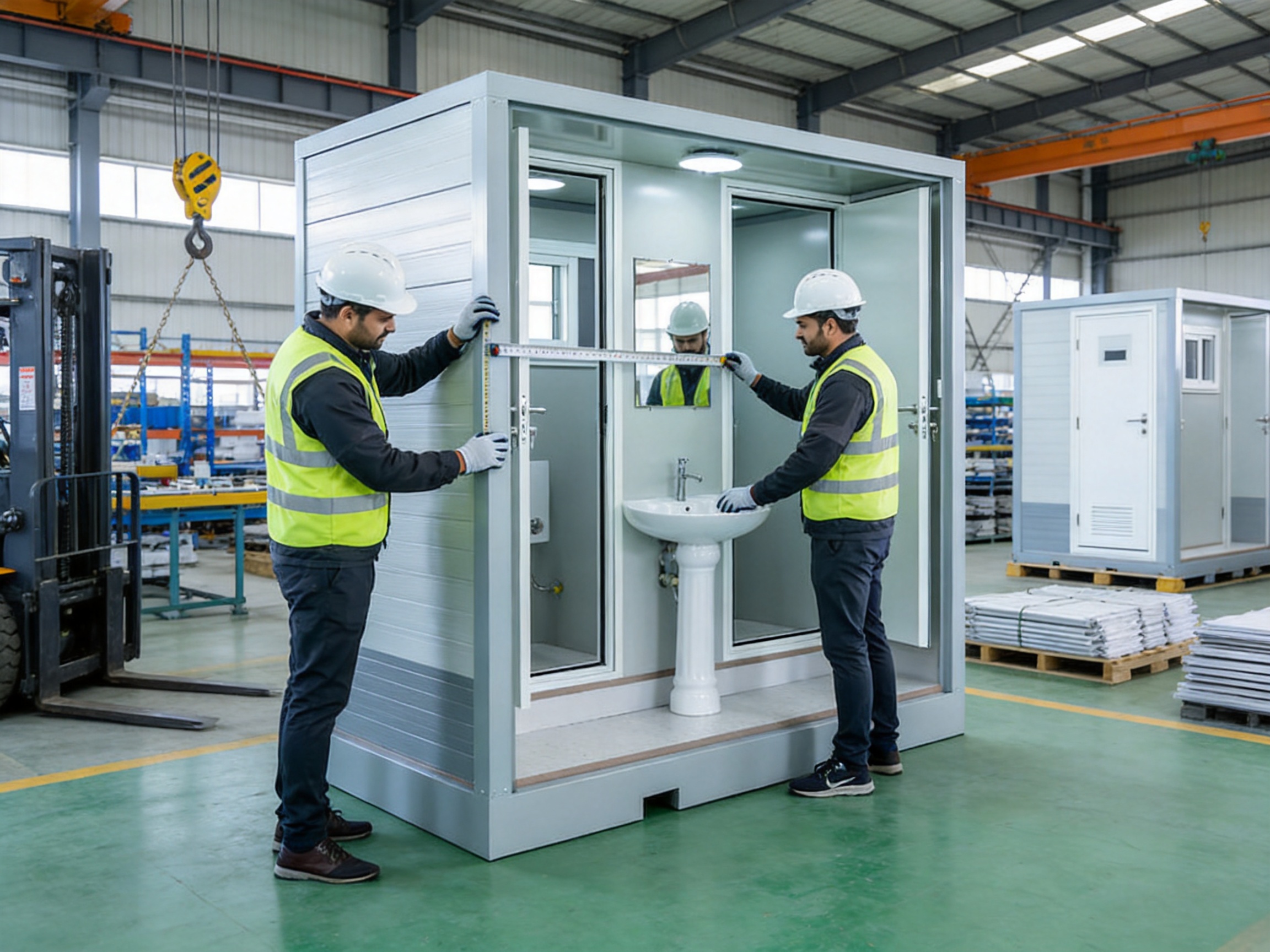
Reliable sanitation is an essential part of any outdoor project, event, emergency response operation, and temporary worksite. When permanent restroom infrastructure is unavailable or cannot be built quickly, a portable toilet must provide more than basic shelter. It must offer privacy, hygiene, stability, weather resistance, convenient relocation, and immediate usability. The Two-Person Outdoor Portable Toilet is designed to meet these requirements in a compact, efficient, and dependable format.
This portable restroom is intended for outdoor events, construction sites, camping areas, temporary accommodation projects, disaster relief operations, public gatherings, agricultural locations, and other situations where sanitation facilities are needed for a limited or changing period. Its dual-compartment configuration provides separate male and female restroom spaces, while the external handwashing sink and built-in lighting system improve hygiene, safety, and user convenience.
Unlike a conventional single-unit portable toilet, this design functions as a small, organized sanitation station. It supports two separate users’ needs while maintaining privacy and reducing the logistical burden associated with multiple independent units. The structure is pre-assembled or prepared for rapid deployment, helping operators place a functional restroom facility into service with minimal site work.
Manufactured by Suzhou Taimao Integrated Housing Co., Ltd., the unit benefits from the company’s broader experience in modular construction, prefabricated building systems, structural integration, and factory-controlled production. Although the product is more compact than a modular house or container building, it follows the same fundamental principle: complete as much work as possible in a controlled manufacturing environment before the product reaches the installation site.
Content
- 1 What Is a Two-Person Outdoor Portable Toilet?
- 2 Core Product Configuration
- 3 Why Portable Sanitation Matters
- 4 Advantages Over Basic Portable Toilets
- 5 Advantages Over Permanent Construction
- 6 Applications and Suitable Use Environments
- 7 Rapid Deployment and Site Preparation
- 8 Manufacturing Approach and Quality Advantages
- 9 Materials, Durability, and Outdoor Performance
- 10 Hygiene, Cleaning, and Maintenance
- 11 Comfort, Privacy, and User Experience
- 12 Customization and Project-Specific Requirements
- 13 Transportation and Relocation Benefits
- 14 Comparison with Alternative Sanitation Solutions
- 15 Environmental and Operational Considerations
- 16 How the Product Supports Different Buyers
- 17 Purchasing Checklist
- 18 Installation and Commissioning Recommendations
- 19 Safety and Compliance
- 20 Company Manufacturing Strengths
- 21 Frequently Asked Questions
- 21.1 What is the main purpose of the Two-Person Outdoor Portable Toilet?
- 21.2 Does the unit include separate male and female spaces?
- 21.3 Does it include a handwashing facility?
- 21.4 Can the restroom be used at night?
- 21.5 Is the unit suitable for construction sites?
- 21.6 Can the unit be relocated?
- 21.7 Is the product pre-assembled?
- 21.8 Does the product require a permanent foundation?
- 21.9 How should wastewater be managed?
- 21.10 Can the unit be customized?
- 21.11 What makes this product different from a single portable toilet?
- 21.12 What makes it different from a restroom trailer?
- 21.13 Who manufactures the product?
- 21.14 What information should buyers provide when requesting a quotation?
- 21.15 Is the unit suitable for disaster relief?
- 22 Conclusion
- 23 References
- 24 Product: Two-Person Outdoor Portable Toilet
What Is a Two-Person Outdoor Portable Toilet?
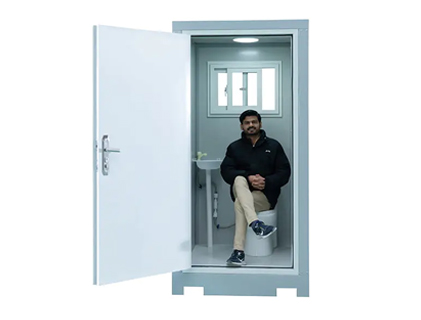
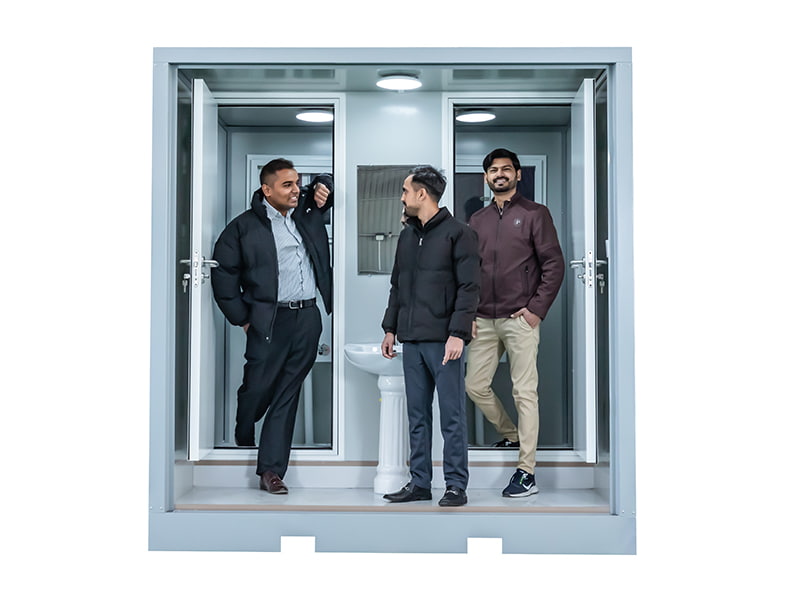
The Two-Person Outdoor Portable Toilet is a mobile restroom unit containing separate male and female compartments in one compact structure. It is designed to provide a more organized and comfortable sanitation experience than basic standalone portable toilets, especially where users require privacy and where site operators need a facility that can be moved or redeployed.
The unit combines several important functions in one product. It includes independent restroom compartments, integrated lighting, an external handwashing sink, and a robust structure suitable for outdoor conditions. The complete arrangement helps create a practical sanitation point without requiring the construction of a permanent building.
The product is particularly appropriate for locations where restroom demand is temporary, seasonal, remote, or unpredictable. Examples include music festivals, sporting events, outdoor exhibitions, construction compounds, military or civil defense sites, rural work areas, temporary camps, roadside projects, and emergency response zones.
Its compact footprint also makes it useful when available land is limited. Instead of placing separate male and female units at different locations, the operator can establish one clearly managed restroom point. This can simplify cleaning schedules, inspection routines, supply replenishment, and transportation planning.
Core Product Configuration
The product is designed around four core functions: separated sanitation spaces, user privacy, hygiene support, and portable deployment. Each function contributes to a more complete solution for outdoor use.
Separate Male and Female Compartments
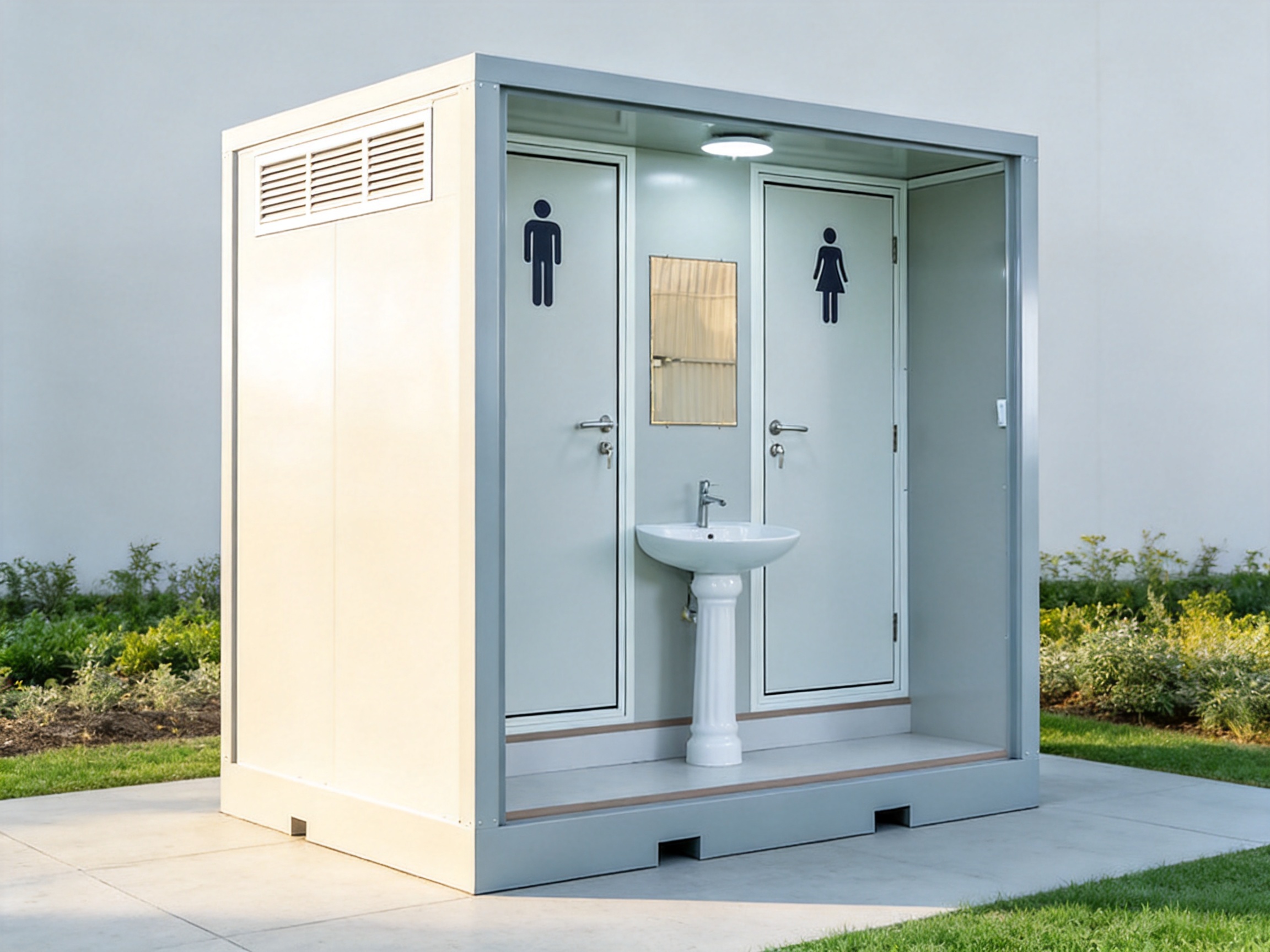
The dual-compartment configuration is one of the product’s main advantages. Separate male and female restrooms help users feel more comfortable and provide a clearer, more orderly arrangement than a single shared space. This feature is valuable at public events, work locations, and temporary facilities serving mixed groups of users.
Separate compartments can also help facility managers organize cleaning and maintenance tasks. Each restroom can be inspected individually, and operators can respond to high-use conditions without necessarily taking the entire facility out of service. The arrangement is especially useful where privacy expectations are higher than those provided by basic open-access portable sanitation equipment.
Built-In Lighting
Outdoor sanitation facilities are often used early in the morning, at night, or in locations with limited electrical infrastructure. The integrated lighting system helps improve visibility in low-light conditions and supports safer movement around the unit. Lighting can also make the restroom easier to identify within a larger event or worksite.
By incorporating lighting into the restroom design, the unit reduces reliance on improvised lamps or temporary wiring. This can make deployment more organized and reduce the number of separate accessories required at the installation site. The exact power arrangement and electrical specifications should be confirmed according to the purchaser’s project requirements, local standards, and intended operating environment.
External Handwashing Sink
Hand hygiene is a critical part of any sanitation facility. The external handwashing sink allows users to clean their hands immediately after using the restroom, helping create a more hygienic and self-contained arrangement. It also provides a visible reminder that handwashing is part of the intended user process.
Placing the sink outside the compartments can help preserve interior space and allow more than one user to access the washing area without entering a restroom compartment. It may also simplify the replenishment of water and cleaning supplies. As with any mobile restroom, water supply, drainage, waste handling, soap, paper products, and local sanitation requirements should be planned in advance.
Stable and Weather-Resistant Structure
A portable restroom must withstand frequent handling, transportation, outdoor exposure, and repeated daily use. The Two-Person Outdoor Portable Toilet is designed with a robust structure intended to remain stable during operation and relocation. Its outdoor-ready construction helps it serve in environments where wind, rain, dust, changing temperatures, and heavy use may be present.
Structural stability is especially important for public facilities. A restroom that shifts, flexes, or becomes difficult to access can create safety concerns and reduce user confidence. A properly prepared foundation or level installation area remains important, but the unit’s durable construction provides a dependable base for temporary sanitation use.
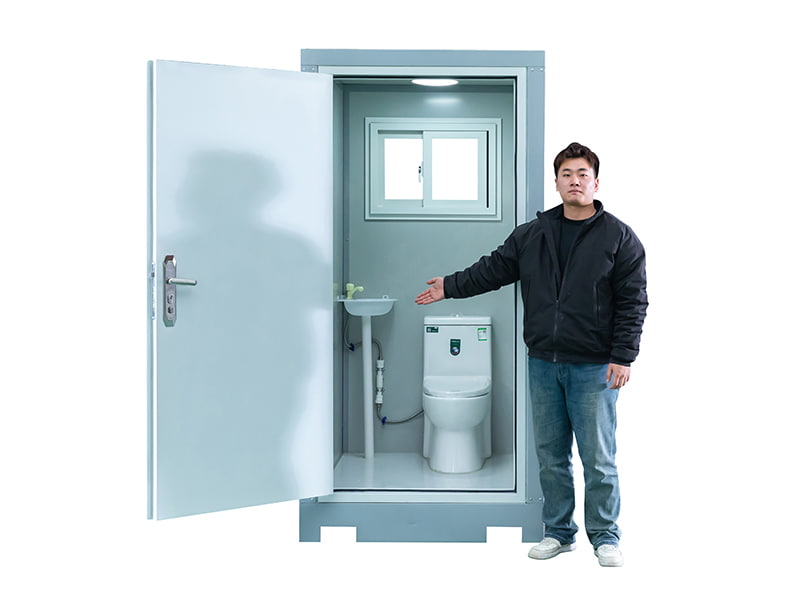
Two-Person Outdoor Portable Toilet
Why Portable Sanitation Matters
Permanent restroom construction is not always practical. It may require permits, excavation, utility connections, drainage systems, architectural design, long construction periods, and significant investment. In contrast, a portable restroom can be delivered to a site and placed into operation much faster.
Portable sanitation is also important because many projects change over time. Construction teams move from one work zone to another. Outdoor festivals operate for a few days. Emergency shelters may need facilities immediately but only temporarily. Seasonal farms and remote recreational sites may require sanitation during specific periods rather than throughout the year.
A mobile facility allows operators to respond to these changing requirements. It can be transported to the location where demand is highest, removed when the project is complete, and reused at another site. This flexibility can improve asset utilization and reduce the need to construct multiple permanent facilities that may later become unnecessary.
For event organizers, sanitation quality can influence the overall visitor experience. Clean, private, well-lit, and convenient restrooms contribute to a more professional environment. For construction managers, suitable restrooms support worker welfare and help maintain an orderly worksite. For emergency agencies, rapid deployment can be essential to protecting public health.
Advantages Over Basic Portable Toilets
The market includes many portable sanitation products, from simple single-compartment units to large restroom trailers. The Two-Person Outdoor Portable Toilet occupies a useful position between these categories. It offers more organization and functionality than a basic single unit while remaining more compact and easier to deploy than a large restroom trailer or permanent modular building.
Improved Privacy and Organization
A single shared portable toilet may be adequate for very limited use, but it does not provide the same level of organization as separate male and female compartments. The dual layout creates a clearer user experience and can be better suited to public events, mixed workforces, and community facilities.
More Efficient Use of Space
Combining two restroom compartments into one portable structure can reduce the space required for installation. Instead of arranging several separate units, an operator can use one consolidated sanitation point. This can simplify site planning and improve the appearance of the location.
Better Nighttime Usability
Many basic portable toilets do not include integrated lighting. Users may need to rely on nearby floodlights, handheld devices, or temporary fixtures. The built-in lighting system of this product provides a more complete user environment and helps support safer operation during low-light periods.
Integrated Handwashing
A separate sink is not always available beside a standard portable toilet. When users must walk to another location to wash their hands, hygiene compliance may be reduced. The external handwashing sink places this function directly beside the restroom, helping create a more convenient sanitation process.
Greater Reusability
A durable, relocatable structure can be used across multiple projects. Event companies, construction contractors, local authorities, relief organizations, and rental operators may be able to move the unit between sites as demand changes. This reuse potential can improve the long-term value of the investment.
Advantages Over Permanent Construction
Permanent restroom buildings remain appropriate for long-term facilities, high-capacity public infrastructure, and locations with established utilities. However, they are not always the most efficient choice for temporary or rapidly changing needs.
A permanent facility commonly requires land preparation, architectural planning, structural construction, plumbing installation, electrical work, ventilation, interior finishing, and inspection. The process may take weeks or months, depending on the project. A portable unit avoids much of this on-site work because the main structure is prepared before delivery.
The Two-Person Outdoor Portable Toilet can therefore reduce the time between procurement and operation. It is particularly useful when a project cannot wait for conventional construction or when the expected period of use does not justify the cost of a permanent building.
Portable deployment also provides a degree of risk management. If the project location changes, the restroom can be relocated rather than abandoned. If an event expands to another area, the unit may be moved or additional units may be added according to demand.
It is important to recognize that a portable restroom still requires responsible site planning. Waste handling, drainage, electrical safety, access routes, anchoring, cleaning, and regulatory compliance must be addressed. Portability does not eliminate these responsibilities; it simply makes the physical facility more adaptable.
Applications and Suitable Use Environments
Outdoor Events
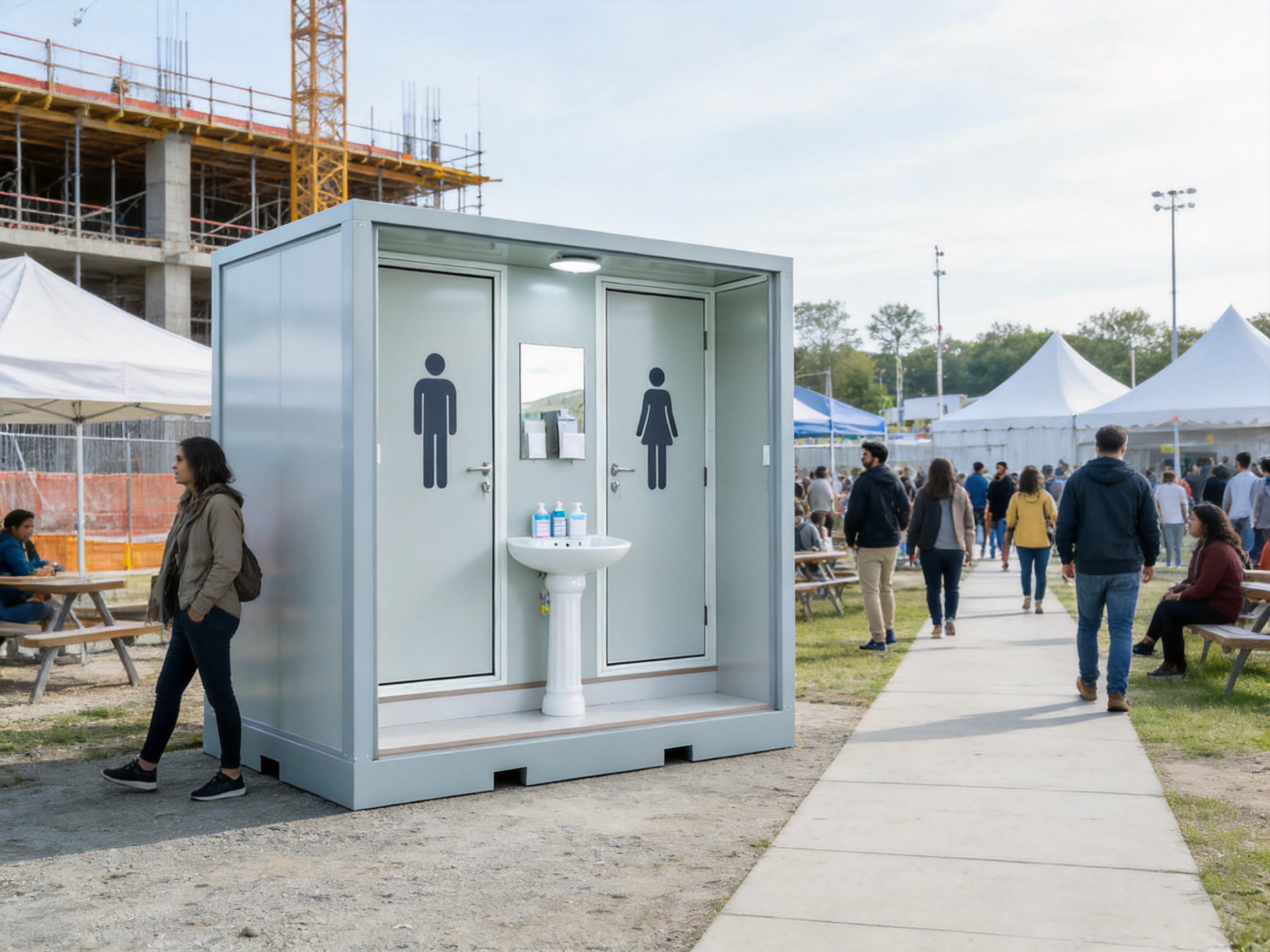
Festivals, fairs, concerts, markets, exhibitions, weddings, sporting events, and public celebrations often need temporary restrooms that can be installed without constructing permanent facilities. The two-compartment design helps support mixed groups of visitors, while lighting and handwashing improve convenience.
Event organizers can place the unit near activity areas, parking zones, temporary seating, food service locations, or backstage areas. The final position should be selected with attention to pedestrian flow, service access, drainage, accessibility, and local public health requirements.
Construction Sites
Construction workers need convenient sanitation facilities throughout a project. A portable restroom can be placed near site offices, worker rest areas, or active construction zones. When the project advances, the unit can be relocated to reduce walking distances and improve daily site efficiency.
For larger workforces, several units may be required. The Two-Person Outdoor Portable Toilet can serve as one element within a broader site sanitation plan. Its separate compartments may be especially useful on mixed-gender worksites or projects with administrative staff, visitors, and field workers.
Camping and Recreational Areas
Campgrounds, temporary outdoor resorts, hunting areas, adventure parks, and rural recreation sites may not have access to permanent plumbing. A mobile restroom can provide an organized alternative for visitors and staff without requiring a full building project.
In these settings, the external handwashing station is particularly valuable. Users may arrive from outdoor activities, and the ability to wash hands at the restroom supports better hygiene. Lighting also helps campers and visitors navigate the facility after sunset.
Emergency and Disaster Relief
After floods, storms, earthquakes, infrastructure failures, and other emergencies, sanitation may become an immediate public health concern. Portable restrooms can be delivered to temporary shelters, distribution centers, field hospitals, and recovery work areas.
The product’s rapid deployment concept is suitable for situations in which permanent infrastructure is damaged or unavailable. Its usefulness depends on coordinated logistics, waste servicing, water availability, power arrangements, and compliance with emergency sanitation procedures.
Temporary Housing and Remote Projects
Remote industrial projects, mining support areas, agricultural operations, road construction, and temporary labor camps may require facilities that can operate away from established urban infrastructure. A portable restroom can complement modular dormitories, site offices, container houses, and temporary utility buildings.
In a larger temporary compound, the unit can be positioned near sleeping areas, dining facilities, work zones, or reception points. Its compact form allows sanitation infrastructure to be added without taking up excessive space that may be needed for vehicles, storage, or worker facilities.
Rapid Deployment and Site Preparation
One of the product’s strongest practical benefits is its readiness for fast installation. The unit is pre-assembled or prepared for immediate deployment, allowing operators to place it into service much faster than a conventional restroom building.
Before delivery, the purchaser should prepare a level, stable, and accessible installation area. The site should allow service vehicles to approach the unit and should provide sufficient clearance for doors, users, maintenance staff, and emergency access. The installation location should also be evaluated for rainwater accumulation, surface drainage, wind exposure, and ground conditions.
Utility planning is equally important. The operator should confirm how lighting will be powered, how water will reach the handwashing sink, and how wastewater or waste tanks will be collected and serviced. In some projects, a self-contained configuration may be preferred; in others, connection to approved temporary utility systems may be possible.
Once the site has been prepared, the unit can be positioned, leveled, checked, and commissioned. Operators should inspect doors, locks, lighting, sink fittings, ventilation, floor stability, and waste-handling components before opening the facility to users.
| Project Requirement | How the Product Responds | Planning Consideration |
|---|---|---|
| Separate user groups | Independent male and female compartments | Confirm signage, access control, and local requirements |
| Nighttime use | Built-in lighting system | Verify power supply, protection, and operating schedule |
| Hand hygiene | External handwashing sink | Arrange water, soap, drainage, and replenishment |
| Temporary installation | Portable and relocatable structure | Prepare a level surface and suitable transport route |
| Outdoor exposure | Robust, weather-resistant construction | Evaluate anchoring, drainage, and local climate |
| Fast commissioning | Pre-assembled or ready-to-deploy format | Complete inspection and sanitation setup before use |
Manufacturing Approach and Quality Advantages
The quality of a portable restroom depends not only on its visible design but also on how it is engineered, assembled, inspected, and prepared for delivery. Factory-controlled manufacturing can provide important advantages over improvised on-site construction.
Suzhou Taimao Integrated Housing Co., Ltd. specializes in modular building solutions and prefabricated construction systems. Its experience includes modular design, integrated manufacturing technologies, and digital software support. These capabilities create a strong foundation for producing compact sanitation units that require consistent structure, reliable assembly, and coordinated integration of multiple functions.
Factory-Controlled Production
Manufacturing in a controlled factory environment allows the production team to manage materials, tools, assembly procedures, and inspections more consistently than is often possible at an outdoor project site. Weather interruptions, site congestion, and uncontrolled working conditions can affect field construction. Factory production reduces many of these variables.
Components can be cut, assembled, sealed, finished, and checked before shipment. Repeated production also allows the manufacturer to refine work procedures and identify common quality risks. This approach supports better consistency across units and can help reduce installation time after delivery.
Integrated Design Thinking
A portable restroom must coordinate structural, architectural, electrical, plumbing, lighting, ventilation, and sanitation requirements within a limited space. The company’s modular building experience supports an integrated design process in which these elements are considered together rather than treated as unrelated additions.
Integrated design can help reduce conflicts between components. For example, the position of the sink, lighting, doors, partitions, service access, and structural members should be evaluated as one system. This improves usability and can make maintenance more straightforward.
Digital Support and Project Coordination
The company provides end-to-end digital software support as part of its broader modular building operations. Digital coordination can assist with design review, production planning, component tracking, quality documentation, and communication between engineering and manufacturing teams.
For customized projects, digital tools may also help customers review layouts, confirm quantities, and coordinate delivery requirements. The exact software workflow depends on the project scope, but the underlying advantage is improved information management from design through production and installation.
Experience with Integrated Building Systems
The company’s flagship SIP modular building system integrates structural components, insulation, mechanical, electrical, and plumbing systems, HVAC, interior finishes, and smart-home technologies into a unified solution. A portable restroom is a smaller and more specialized product, but the same integrated manufacturing philosophy is relevant.
Sanitation units require multiple systems to work together reliably. Structural durability must coexist with plumbing access. Lighting must be installed safely without compromising the enclosure. Interior surfaces must be suitable for cleaning. Doors and partitions must provide privacy while allowing service and inspection. Experience with integrated modular construction supports this type of coordinated product development.
Materials, Durability, and Outdoor Performance
Outdoor sanitation equipment is exposed to conditions that indoor facilities do not face. Rain, humidity, ultraviolet radiation, dust, wind, temperature changes, and repeated handling can affect the lifespan of a structure. For this reason, material selection and protective finishing are important parts of portable restroom manufacturing.
A robust enclosure should maintain its shape during transportation and normal use. Panels, joints, doors, floors, partitions, and roof components must work together to limit water entry and protect users from the external environment. The unit should also be designed so that surfaces can be cleaned efficiently and inspected without excessive effort.
Weather resistance does not mean that maintenance can be ignored. Operators should keep the roof, drainage paths, door seals, exterior panels, and base area in good condition. Prompt repair of damage helps prevent minor problems from becoming structural or hygiene-related issues.
In areas with strong winds, the unit may require anchoring or additional stabilization. In cold climates, water systems may need freeze protection. In hot climates, ventilation and heat management should be evaluated. Coastal locations may require special attention to corrosion protection. Customers should discuss local environmental conditions with the manufacturer before finalizing specifications.
Hygiene, Cleaning, and Maintenance
A well-designed restroom is only effective when it is cleaned and maintained regularly. The Two-Person Outdoor Portable Toilet provides a practical structure for sanitation, but its performance depends on an appropriate service plan.
Daily Inspection
For high-use locations, staff should inspect the facility at least daily and more frequently during large events. The inspection should cover toilet cleanliness, floor condition, odors, lighting, door locks, sink supplies, soap, paper products, water availability, and visible damage.
High-traffic events may require several inspections per day. A written checklist can help staff record service times, identify recurring problems, and demonstrate that the facility is being managed responsibly.
Cleaning Procedures
Cleaning products should be compatible with the unit’s interior materials, fixtures, seals, and plumbing components. Staff should clean contact surfaces, partitions, doors, handles, sink areas, and floors according to a documented procedure. Harsh chemicals should not be used unless their compatibility has been confirmed.
The cleaning process should also include odor management and appropriate waste servicing. A portable restroom that appears clean but has poor waste management will not provide a satisfactory user experience. Operators should follow applicable health, safety, and environmental regulations.
Handwashing Supplies
The external sink should be supplied with clean water or an approved alternative, soap, and a method for drying hands. The supply arrangement should be checked regularly, especially during events or in locations with heavy usage.
Where water availability is limited, the operator should establish a replenishment schedule and keep backup supplies available. Wastewater must be handled in accordance with local rules and should not be discharged onto the ground without authorization.
Lighting and Electrical Checks
The lighting system should be checked before evening use and after relocation. Cables, connections, protective devices, switches, and fixtures should be inspected by qualified personnel where required. Any electrical modification should comply with applicable safety standards.
Lighting maintenance is also a security and accessibility issue. A dark or poorly illuminated restroom may increase the risk of slips, trips, and unauthorized activity. Keeping the system operational contributes to a more reliable facility.
Comfort, Privacy, and User Experience
Portable sanitation is often judged by its user experience. Privacy, cleanliness, lighting, ventilation, accessibility, and ease of entry all influence whether people feel comfortable using a facility.
The two-compartment arrangement creates a more familiar and organized environment. Clear identification of the male and female compartments can reduce confusion, particularly at busy events. Doors should close securely, locks should be easy to operate, and internal space should remain free from unnecessary obstructions.
Ventilation is another important consideration. Portable facilities should provide appropriate airflow while preserving privacy and limiting the entry of rain or dust. The precise ventilation arrangement may vary by model and local specification, so it should be confirmed during the ordering process.
Floor surfaces should support safe movement and regular cleaning. Where the unit will serve elderly users, children, or people with disabilities, the purchaser should discuss accessibility requirements with the manufacturer. A standard two-compartment unit may need modification or supplementation to meet specific accessibility regulations.
User comfort also depends on the location. Even a high-quality restroom will perform poorly if it is placed on unstable ground, far from the main activity area, beside standing water, or in a location that service vehicles cannot reach. Product quality and site planning must therefore be considered together.
Customization and Project-Specific Requirements
Different projects have different operating conditions. A small private worksite may need a simple configuration, while a major public event may require branding, upgraded lighting, additional ventilation, special flooring, accessibility features, or enhanced service capacity.
As a modular building manufacturer, Suzhou Taimao Integrated Housing Co., Ltd. can support customized project discussions. Customers can provide information about the intended application, climate, transport conditions, expected number of users, operating period, power availability, water supply, waste-handling method, and local regulations.
Potential customization topics may include exterior colors, signage, interior materials, fixture arrangements, electrical systems, sink configuration, ventilation, insulation, floor treatment, access ramps, and service openings. All proposed modifications should be evaluated for structural safety, hygiene, maintenance, and transportation requirements.
Customization should not be limited to appearance. A successful portable restroom project is one in which the product is adapted to the actual operating environment. For example, a remote site may prioritize self-contained water and waste systems, while an urban event may prioritize compact positioning, appearance, and fast servicing.
Transportation and Relocation Benefits
Portability is valuable only when transportation and relocation are considered from the beginning. The unit should be compatible with the customer’s available lifting, loading, and delivery resources. Route limitations, vehicle dimensions, unloading space, and final positioning must be reviewed before shipment.
A relocatable restroom can support projects that move in stages. On a construction site, it may begin near the entrance and later move closer to newly developed work areas. At a festival, it may be installed for the event and then transported to another venue. During emergency response, it may be moved as temporary shelters change location.
Relocation should be performed using suitable equipment and trained personnel. Doors and fixtures should be secured before movement, and the unit should be inspected after being placed at its new position. Plumbing, power, leveling, and anchoring should be rechecked before the facility is reopened.
The ability to reuse the same unit across multiple locations can support a more flexible asset strategy. Rather than treating a restroom as a disposable temporary structure, organizations can manage it as a durable facility that serves successive projects.
Comparison with Alternative Sanitation Solutions
| Solution | Main Strength | Typical Limitation | Where the Two-Person Unit Fits |
|---|---|---|---|
| Single portable toilet | Low initial space requirement and simple placement | Limited privacy arrangement and fewer integrated features | Provides two organized compartments, lighting, and handwashing in one structure |
| Multiple independent portable toilets | Flexible quantity and distributed placement | More units to transport, clean, identify, and service | Consolidates male and female facilities into one manageable unit |
| Restroom trailer | Higher capacity and enhanced interior amenities | Higher cost, larger transport requirements, and more complex setup | Offers a compact option for smaller or medium temporary needs |
| Permanent restroom building | Long-term infrastructure and utility integration | Long construction period and limited relocation flexibility | Provides rapid sanitation without permanent construction |
| Improvised temporary shelter | Very low planning threshold | Limited durability, privacy, hygiene, and safety | Provides a professionally manufactured and more complete facility |
The best solution depends on user volume, project duration, available space, budget, utility access, local regulations, and service requirements. The Two-Person Outdoor Portable Toilet is not intended to replace every sanitation format. Its advantage is the balanced combination of capacity, privacy, portability, and integrated features.
Environmental and Operational Considerations
Prefabricated and portable construction can reduce the amount of on-site work required. By completing much of the assembly in a factory, the project may reduce site disturbance, construction waste, and the need for temporary labor at the installation location. Relocating and reusing the unit can also help extend the useful life of the product.
Environmental performance depends on the full operating system. Waste must be collected and treated responsibly. Water use should be managed efficiently. Cleaning products should be selected with consideration for downstream treatment systems. Damaged components should be repaired or replaced rather than discarded whenever practical.
The company’s broader mission includes accelerating project timelines, improving operational efficiency, minimizing ecological impact, and maintaining high quality and safety standards. These principles are relevant to portable sanitation because efficient factory production and responsible lifecycle management can reduce unnecessary resource use.
Customers seeking environmentally responsible deployment should consider the complete lifecycle of the facility, including material selection, manufacturing, packaging, transport distance, energy use, water supply, waste processing, maintenance, relocation, and eventual recycling or disposal.
How the Product Supports Different Buyers
Event Organizers
Event organizers require facilities that can be delivered quickly, placed neatly, and serviced efficiently. The dual-compartment design provides a clear arrangement for visitors, while lighting and the external sink help improve the perceived quality of the event environment.
For event applications, organizers should estimate peak usage rather than average attendance. They should also plan accessible facilities, handwashing supplies, cleaning intervals, signage, lighting around the unit, and service access during event hours.
Construction Contractors
Contractors need sanitation facilities that can remain functional as the worksite develops. The portable format allows the restroom to move with the project and reduces dependence on permanent utilities during early construction stages.
Contractors may also appreciate the predictable nature of factory-manufactured equipment. A prepared unit can reduce the number of separate subcontractors and on-site construction activities required to create a temporary restroom.
Rental and Facility-Service Companies
Rental operators can use durable, reusable units across multiple customer locations. A standardized product may simplify transport planning, cleaning procedures, spare-part management, and staff training. Custom options can help rental companies serve different market segments while maintaining a common product platform.
Government and Emergency Agencies
Public authorities and relief agencies often need facilities that can be deployed rapidly and managed consistently. The product may support temporary shelters, public works projects, emergency distribution points, and community recovery operations.
Before purchasing for emergency use, agencies should establish transportation, storage, water, waste, power, inspection, and maintenance procedures. A portable restroom is most effective when it forms part of a complete emergency sanitation plan.
Purchasing Checklist
Buyers should evaluate the product against the exact conditions in which it will operate. The following questions can help clarify project requirements.
What is the expected number of users per day and during peak periods?
How long will the unit remain at the site?
Will it be used during daylight hours, at night, or continuously?
What power supply is available for the lighting system?
How will clean water reach the handwashing sink?
How will wastewater and toilet waste be collected, removed, and treated?
What surface will support the unit, and is additional leveling or anchoring required?
What transport equipment is available for delivery and relocation?
Are accessibility features required by local law or by the project owner?
What climate conditions will the unit face, including heat, cold, wind, rain, snow, humidity, or coastal exposure?
Are there special requirements for finishes, colors, signage, ventilation, insulation, or security?
What cleaning frequency and maintenance staffing will be available?
Answering these questions before ordering can reduce delays and help the manufacturer recommend an appropriate configuration.
Installation and Commissioning Recommendations
After delivery, the unit should be inspected before being placed into public use. The inspection should confirm that no transport damage has affected the frame, walls, roof, doors, partitions, sink, lighting, or floor.
The unit should be positioned on a stable and reasonably level surface. If the ground is soft, uneven, or prone to flooding, the operator should prepare an appropriate platform or foundation. The exact foundation approach depends on local conditions and the product specification.
Doors should open and close without obstruction. Locks should function correctly. Compartments should be clearly identified. Lighting should be tested during both normal and low-light conditions. The sink should be connected to an approved water source and drainage or collection system.
The operator should place soap, paper products, waste containers, cleaning supplies, and safety notices before opening the unit. A service schedule should be established based on the expected use level. These commissioning steps help ensure that the product’s advantages are realized in actual operation.
Safety and Compliance
Portable restroom installations must comply with applicable building, electrical, sanitation, environmental, workplace, accessibility, and public health requirements. Regulations differ by country, region, municipality, and application.
Customers should confirm whether permits are required, whether the facility must be anchored, what electrical protection is necessary, how waste must be handled, and whether accessibility standards apply. For public events and construction sites, additional workplace or crowd-management requirements may also apply.
The manufacturer can provide product information and discuss configuration options, but the purchaser and site operator remain responsible for obtaining approvals and implementing safe operating procedures in the destination jurisdiction.
Company Manufacturing Strengths
Suzhou Taimao Integrated Housing Co., Ltd. is based in Suzhou, Jiangsu, China, and specializes in modular building solutions. Its product range includes assembled container houses, folding container houses, double-wing expandable container houses, K-type prefabricated houses, steel structures, detachable container houses, and portable outdoor restrooms.
This range demonstrates experience across several forms of prefabricated and relocatable construction. The Two-Person Outdoor Portable Toilet benefits from being developed within a company familiar with compact space planning, transportable structures, factory assembly, and rapid site installation.
The company emphasizes globally certified modular building solutions, proprietary manufacturing technologies, modular design, and end-to-end digital support. These capabilities can be valuable to international buyers who require communication across design, production, delivery, and installation stages.
Its SIP modular building system integrates structure, insulation, MEP systems, HVAC, interior finishes, and smart technologies into a unified factory-produced solution. While the portable restroom serves a different function, this system-level experience supports the company’s ability to coordinate multiple technical disciplines within prefabricated products.
The company’s stated mission is to accelerate project timelines, improve operational efficiency, reduce ecological impact, and maintain high standards of quality and safety. These strengths align closely with the needs of temporary sanitation projects, where speed, reliability, and simplified site work are especially important.
Frequently Asked Questions
What is the main purpose of the Two-Person Outdoor Portable Toilet?
It provides a compact and relocatable sanitation facility for outdoor events, construction sites, camping areas, emergency situations, temporary projects, and other locations without convenient permanent restroom infrastructure.
Does the unit include separate male and female spaces?
Yes. The product is designed with independent male and female restroom compartments to improve privacy, organization, and user comfort.
Does it include a handwashing facility?
Yes. An external handwashing sink is included to support hygiene and provide users with convenient access to handwashing after restroom use.
Can the restroom be used at night?
Yes. The unit includes a built-in lighting system designed to improve visibility during nighttime or low-light use. The purchaser should confirm the required power supply and electrical configuration for the project.
Is the unit suitable for construction sites?
Yes. Its portable and durable format makes it suitable for construction sites, especially where workers need sanitation before permanent facilities are completed or where the work area changes during the project.
Can the unit be relocated?
Yes. It is designed as a portable facility that can be transported and repositioned. Relocation should be performed with suitable equipment, followed by checks of leveling, anchoring, plumbing, lighting, and overall condition.
Is the product pre-assembled?
The unit is prepared for rapid deployment and is described as pre-assembled or ready for immediate use after the required installation and utility connections. The exact delivery condition should be confirmed for each order.
Does the product require a permanent foundation?
It generally requires a stable and level installation surface, but the exact foundation or platform requirement depends on ground conditions, local regulations, wind exposure, and the final product configuration.
How should wastewater be managed?
Wastewater and toilet waste should be managed through an approved collection, storage, removal, and treatment method. The correct arrangement depends on the location, local regulations, and whether the unit uses self-contained or connected systems.
Can the unit be customized?
Project-specific customization may be possible. Customers can discuss requirements such as exterior finishes, signage, electrical systems, sink arrangements, ventilation, flooring, accessibility, and climate-related adaptations with the manufacturer.
What makes this product different from a single portable toilet?
It combines separate male and female compartments, integrated lighting, an external handwashing sink, and a robust portable structure in one facility. This provides a more organized and complete sanitation point than a basic single-compartment unit.
What makes it different from a restroom trailer?
The two-person unit is generally more compact and simpler to deploy than a large restroom trailer. It is suitable for projects requiring basic but organized sanitation without the larger transport, space, and operational requirements of a high-capacity trailer.
Who manufactures the product?
The product is manufactured by Suzhou Taimao Integrated Housing Co., Ltd., a Chinese modular building company specializing in prefabricated and integrated construction solutions.
What information should buyers provide when requesting a quotation?
Buyers should provide the intended application, quantity, destination, expected user volume, operating duration, climate, transport conditions, power supply, water and waste arrangements, accessibility requirements, and any desired customization.
Is the unit suitable for disaster relief?
Yes. Its rapid-deployment and portable characteristics make it suitable for emergency shelters, disaster recovery sites, temporary medical areas, and relief distribution centers, provided that water, power, waste servicing, transport, and local emergency requirements are properly arranged.
Conclusion
The Two-Person Outdoor Portable Toilet is a practical solution for organizations that need reliable sanitation without the time, cost, and immobility of permanent construction. Its separate male and female compartments provide privacy and organization, while the built-in lighting system supports nighttime use and the external handwashing sink promotes better hygiene.
Its strongest competitive advantage is the balance between functionality and portability. Compared with a basic single portable toilet, it offers a more complete and orderly user experience. Compared with a restroom trailer or permanent building, it requires less space and can be deployed and relocated more easily.
The product is supported by Suzhou Taimao Integrated Housing Co., Ltd.’s experience in modular design, factory-controlled manufacturing, integrated building systems, proprietary production technologies, and digital project coordination. These capabilities help the company address not only the physical structure but also the coordination of utilities, finishes, transport, and project-specific requirements.
For event organizers, contractors, emergency agencies, rental companies, recreational operators, and temporary facility managers, this portable restroom can provide a dependable sanitation foundation. With proper site preparation, utility planning, cleaning, waste management, and maintenance, it can serve as a flexible facility across a wide range of outdoor environments.
References
1. International Organization for Standardization. Guidance on Quality Management Principles and Manufacturing Process Control.
2. World Health Organization. Guidelines for Sanitation and Health.
3. International Labour Organization. Occupational Safety and Health Guidance for Construction Worksites.
4. United Nations Children’s Fund. Technical Guidance on Hand Hygiene and Temporary Sanitation Facilities.
5. International Code Council. Principles of Safe Building, Temporary Structures, and Public Facility Access.
6. World Health Organization. Water, Sanitation, Hygiene, and Waste Management in Emergency Settings.
7. Prefabricated Building Research and Modular Construction Engineering Practices.
8. Manufacturer-provided product information for the Two-Person Outdoor Portable Toilet and integrated modular building systems.
Product: Two-Person Outdoor Portable Toilet

For exclusive deals and latest offers, sign up by entering your email address below.

-
TEL:+86 18762912902
-
Email:cntaimao@163.com
-
WhatsApp:
-
Add:Group 5, Cao Village, Zhenze Town, Suzhou, Jiangsu, China
Copyright © Suzhou Taimao Integrated Housing Co., Ltd.
All Rights Reserved.
 Wholesale movable homes for sale
custom built modular homes