

 EN
 русский
 Español
 عربى
 Français
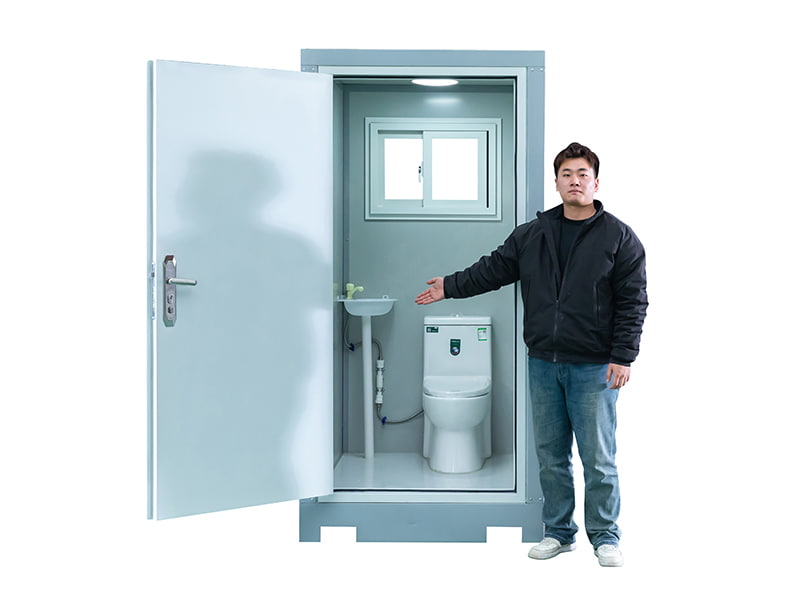
Single-Person XL Outdoor Portable Toilet: A More Comfortable Standard for Mobile Sanitation
Admin 2026-09-17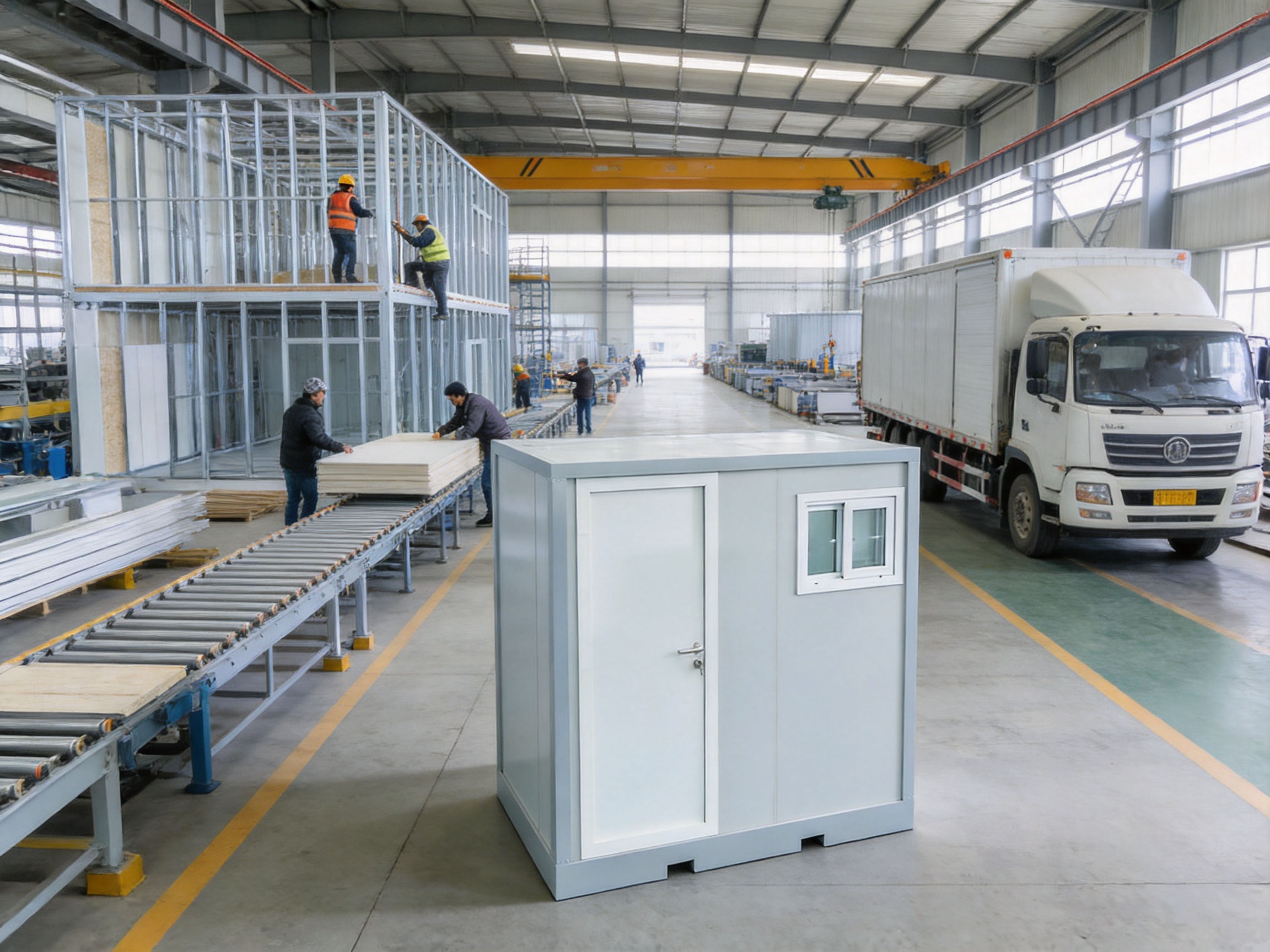
Outdoor sanitation is often treated as a basic logistical requirement, but the quality of a restroom can directly influence comfort, health, safety, productivity, and the overall success of a project. At construction sites, campsites, emergency relief areas, public events, remote work locations, and temporary accommodation projects, sanitation facilities must be easy to transport, fast to install, durable in changing weather, and comfortable enough for regular use. The Single-Person XL Outdoor Portable Toilet addresses these requirements through a spacious individual interior, a weather-resistant structure, flexible equipment options, and a manufacturing approach designed for reliable deployment.
Unlike many conventional portable toilets that prioritize compact dimensions above all else, this XL model places greater emphasis on personal space and usability. It is designed for one user at a time, providing a private room with more room to move, turn, enter, exit, and use optional hygiene equipment. The result is a portable restroom that is not limited to basic toilet functions. With the addition of a washbasin or other personal hygiene facilities, it can operate as a compact washing and sanitation station for temporary or remote environments.
The product is supplied by Suzhou Taimao Integrated Housing Co., Ltd., a Chinese manufacturer specializing in modular buildings, container houses, prefabricated structures, temporary housing, and integrated construction solutions. The company combines factory-based production with modular design, structural engineering, insulation systems, mechanical and electrical integration, interior finishing, and digital support. This broader manufacturing background is important because a portable toilet is not simply a standalone box. It is a small prefabricated building that must perform as a complete, functional, transportable space.
This article examines the design value, practical advantages, manufacturing strengths, possible applications, maintenance considerations, and selection factors associated with the Single-Person XL Outdoor Portable Toilet. It also explains why a larger single-user configuration can offer meaningful advantages over standard compact portable toilets and how an experienced modular building manufacturer can support customized sanitation projects.
Content
- 1 1. The Changing Requirements for Portable Outdoor Sanitation
- 2 2. Product Overview
- 3 3. XL Interior Space and Improved User Comfort
- 4 4. Optional Washbasin and Hygiene Facilities
- 5 5. Privacy as a Core Design Requirement
- 6 6. Durability for Outdoor and Temporary Conditions
- 7 7. Quick Deployment and Flexible Relocation
- 8 8. Advantages Over Standard Compact Portable Toilets
- 9 9. Applications Across Different Industries
- 10 10. Manufacturing Strengths Behind the Product
- 11 11. Materials, Finishes, and Configuration Planning
- 12 12. Installation and Site Preparation
- 13 13. Cleaning, Maintenance, and Long-Term Value
- 14 14. Sustainability and Resource Efficiency
- 15 15. Customization for Different Projects
- 16 16. Why Choose an Integrated Modular Manufacturer
- 17 17. Selecting the Right Configuration
- 18 18. Questions and Answers
- 18.1 What is the main difference between the XL portable toilet and a standard portable toilet?
- 18.2 Can the unit include a washbasin?
- 18.3 Is the portable toilet suitable for construction sites?
- 18.4 Can the unit be used in emergency relief projects?
- 18.5 Can it be relocated after installation?
- 18.6 Is the unit suitable for long-term temporary use?
- 18.7 Does the unit require a permanent foundation?
- 18.8 Can the unit be customized?
- 18.9 Can it be supplied together with other modular buildings?
- 18.10 What information should be provided when requesting a quotation?
- 19 19. Practical Evaluation Checklist
- 20 20. Conclusion
- 21 References
- 22 Product: Single-Person XL Outdoor Portable Toilet
1. The Changing Requirements for Portable Outdoor Sanitation
Portable sanitation has developed from a temporary convenience into an essential part of modern project planning. Construction contractors need restrooms near active work areas. Event organizers require hygienic facilities where permanent buildings are unavailable. Emergency response teams need rapidly deployable sanitation units. Campsites, resorts, agricultural sites, mining locations, and remote infrastructure projects all require facilities that can be delivered and repositioned efficiently.
In each of these situations, the restroom must satisfy several needs simultaneously. It should provide privacy, protect users from the weather, remain stable during repeated use, and allow cleaning and servicing without excessive difficulty. It may also need to accommodate users carrying equipment, people wearing protective clothing, or individuals who need additional room for mobility. A small interior that is acceptable for a brief visit may become uncomfortable when the facility is used frequently or for an extended project period.
Traditional compact portable toilets are often designed around transport efficiency. Their smaller footprint makes them easy to place in large numbers, but it may leave little space for movement. A user may have difficulty changing position, handling personal belongings, or using sanitation accessories. In addition, conventional units may provide only a toilet compartment, with no practical space for a washbasin or hand-washing arrangement inside.
The Single-Person XL Outdoor Portable Toilet responds to this limitation by treating comfort and hygiene as central design objectives. It remains a single-user mobile facility, but its enlarged interior creates a more usable environment. This design philosophy is especially valuable in locations where users may spend more time inside the unit, where privacy is important, or where the facility must perform more than one sanitation function.
2. Product Overview
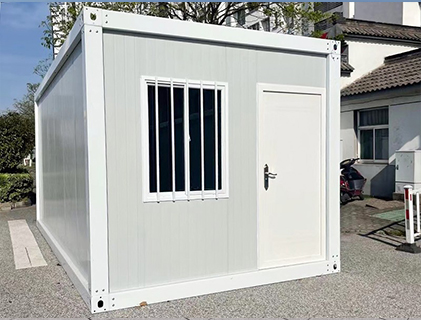
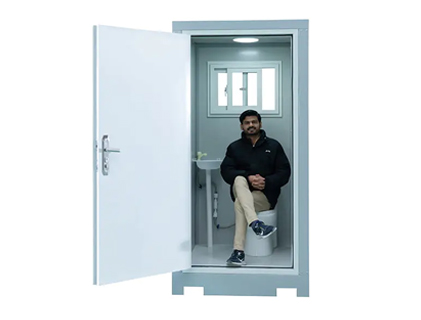
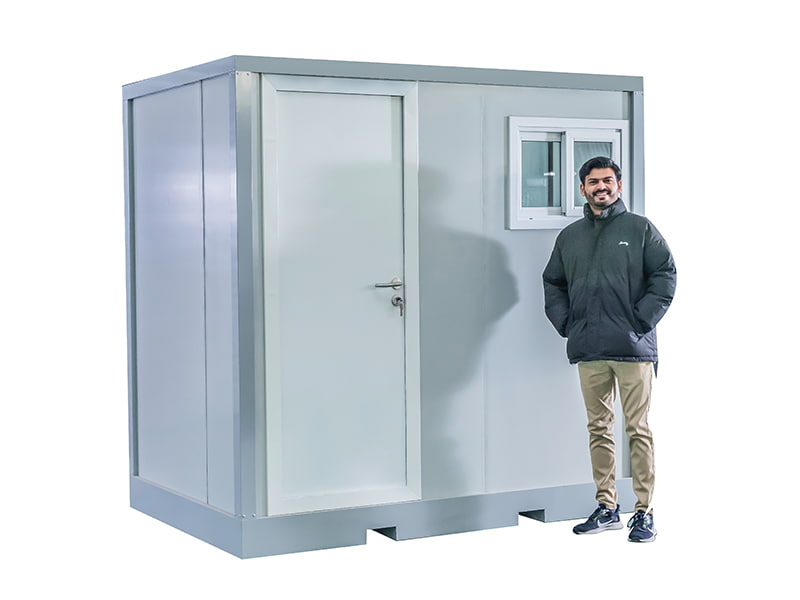
The Single-Person XL Outdoor Portable Toilet is a spacious, private, and mobile restroom solution for outdoor and temporary applications. It is intended for individual use and can be deployed in locations where a permanent restroom building is impractical, too slow to construct, or too expensive for the expected duration of the project.
The unit is characterized by five primary qualities: an XL private space, optional interior facilities, a durable and stable structure, quick deployment, and flexible portability. These features work together rather than functioning as isolated benefits. The larger room improves usability, optional facilities expand its purpose, structural durability supports repeated relocation, and rapid setup reduces project delays.
Its applications may include construction sites, outdoor events, camping areas, emergency relief locations, temporary accommodation zones, remote industrial projects, public works, agricultural operations, and short-term community facilities. The unit may also be used as part of a larger modular building arrangement, where several sanitation units are positioned near temporary offices, worker accommodations, classrooms, medical stations, or event facilities.
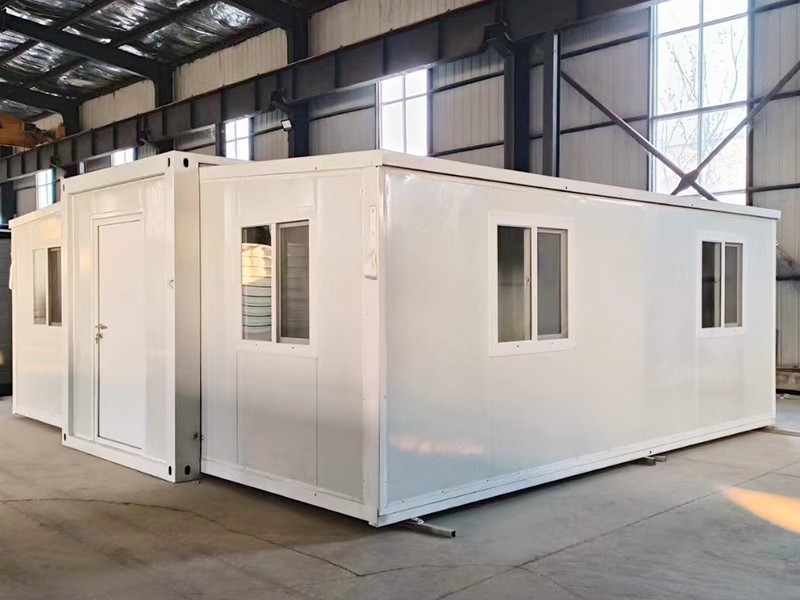
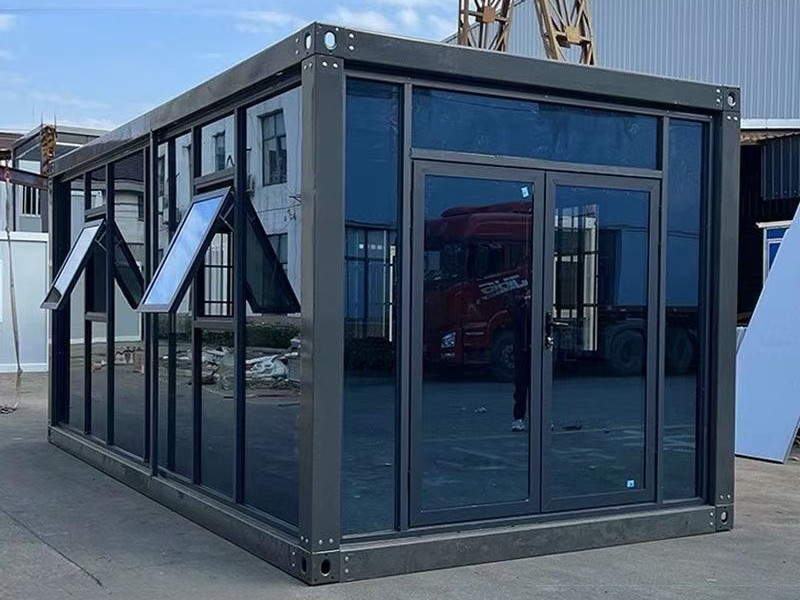
Because the product is manufactured by a company experienced in integrated housing, the unit can be considered within a wider modular construction program. Customers may require not only an individual toilet but also a coordinated package containing container houses, folding accommodation units, expandable buildings, portable shower rooms, worker facilities, or complete temporary site infrastructure. A manufacturer with experience across these categories can help coordinate appearance, layout, materials, transportation, installation, and future expansion.
Single-Person XL Outdoor Portable Toilet
3. XL Interior Space and Improved User Comfort
The central advantage of this portable toilet is its larger single-user interior. Conventional portable restrooms commonly provide only the minimum space needed for entry, use, and exit. While this compact approach can be suitable for short-term event use, it may not provide the level of comfort expected at construction camps, outdoor accommodation areas, or emergency facilities.
An XL interior gives users greater freedom of movement. This may make it easier to enter and close the door, turn around, organize clothing, carry personal items, or use the facility while wearing outdoor or protective equipment. For workers at industrial and construction sites, the additional room can be particularly useful because users may arrive wearing helmets, safety clothing, boots, or tools.
The larger space also supports a more dignified user experience. Privacy is not only a matter of having a lockable door. It also depends on whether the user feels confined, exposed, or rushed. A room with more internal space can feel less restrictive and more similar to a permanent restroom, even though it remains portable and temporary.
For project owners, improved comfort can produce practical operational benefits. Users are more likely to accept and properly use a facility that is clean, accessible, and comfortable. This can support better hygiene behavior and reduce pressure on nearby permanent buildings. At a busy site, a restroom that is more pleasant to use may also improve worker satisfaction and reduce unnecessary travel away from the work area.
The single-user configuration offers another advantage: it avoids the complexity of a dual-compartment arrangement. Instead of dividing a limited footprint into multiple small cubicles, the XL model dedicates the available space to one user. This creates a more open interior and allows the floor plan to support additional functions, such as a washbasin or hygiene station, without making the room feel excessively crowded.
Benefits for Different User Groups
Construction workers and maintenance crews may benefit from the additional room when using the restroom in workwear. Event staff may appreciate a more comfortable facility during long operating hours. Campers may prefer a private unit that provides a more substantial experience than a basic compact toilet. Emergency relief organizations may find the XL interior useful when serving displaced people who require more privacy and space.
The larger design may also be considered when planning facilities for users with different mobility needs. Suitability for a specific accessibility requirement depends on the final configuration, entrance width, floor layout, support equipment, and applicable local standards. However, a larger starting footprint gives designers more flexibility than a highly compact unit. Customers should discuss accessibility requirements with the manufacturer before ordering.
4. Optional Washbasin and Hygiene Facilities
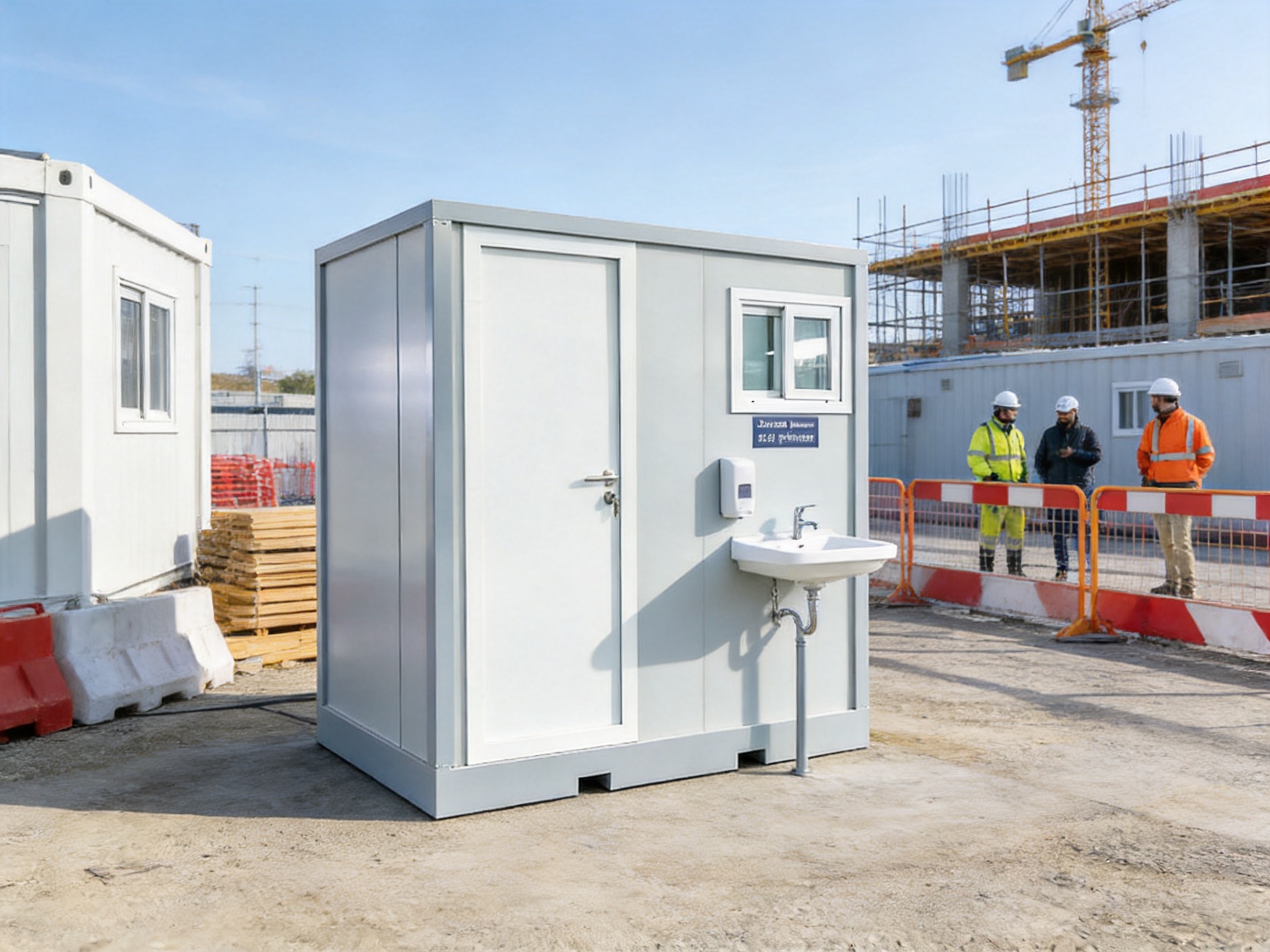
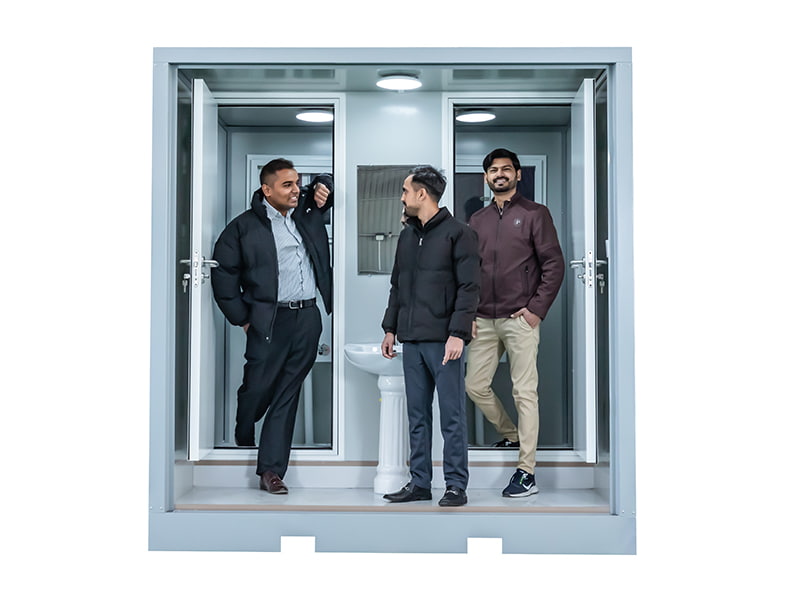
A major functional advantage of the Single-Person XL Outdoor Portable Toilet is the possibility of adding a washbasin or personal hygiene setup inside. This transforms the unit from a basic restroom into a more complete sanitation station.
Hand hygiene is one of the most important factors in outdoor and temporary facilities. A restroom without convenient hand-washing facilities may require users to walk to a separate station, which can be inconvenient during bad weather, at night, or in large work areas. Integrating a washbasin within the restroom creates a more complete user journey: entry, toilet use, hand washing, and exit can all occur in one private space.
An interior washbasin can be useful at construction sites, temporary camps, emergency response areas, agricultural locations, and outdoor events. In certain settings, the unit may also be configured to support personal washing or basic hygiene activities. The exact arrangement depends on the customer’s requirements, the available water supply, drainage strategy, local regulations, and the selected equipment package.
Optional equipment can be evaluated during the design stage. Customers may discuss the inclusion of a basin, water connections, drainage components, mirrors, shelves, dispensers, lighting, ventilation, or other hygiene-related accessories. A factory-based manufacturer can coordinate these components more effectively when they are integrated before delivery rather than added through improvised field modifications.
It is important to distinguish between a portable toilet and a full shower or bathroom module. The XL unit can support hygiene facilities, but the final function depends on its specifications and optional configuration. Customers requiring showers, hot water, specialized drainage, or high-volume commercial use should request a detailed technical proposal and confirm all performance requirements before production.
5. Privacy as a Core Design Requirement
Privacy is a fundamental part of restroom quality. In temporary environments, users may already be dealing with noise, dust, crowds, unfamiliar surroundings, or difficult weather. A private and spacious individual room provides a sense of personal security and dignity.
The single-person layout naturally supports privacy by limiting occupancy to one user. It is suitable for situations where individuals prefer a more private environment than a shared or dual-compartment arrangement can provide. This can be particularly important in emergency relief, temporary accommodation, worker camps, outdoor hospitality, and community support projects.
Privacy also has an organizational dimension. Facilities that are visibly separate and clearly intended for individual use can be placed strategically around a site. A project manager can position units near work zones, sleeping areas, dining facilities, medical points, or event spaces while reducing the need for users to cross busy or hazardous areas.
The unit’s privacy value is further supported by its enclosed structure and independent deployment. It can function as a standalone facility without requiring a permanent building around it. This allows site planners to create practical restroom locations without waiting for a complete construction project.
6. Durability for Outdoor and Temporary Conditions
Portable sanitation facilities are exposed to demanding conditions. They may encounter rain, wind, dust, intense sunlight, temperature changes, frequent cleaning, repeated relocation, and continuous daily use. A unit intended for outdoor deployment must therefore be more than lightweight. It must have sufficient structural stability and weather resistance for its intended application.
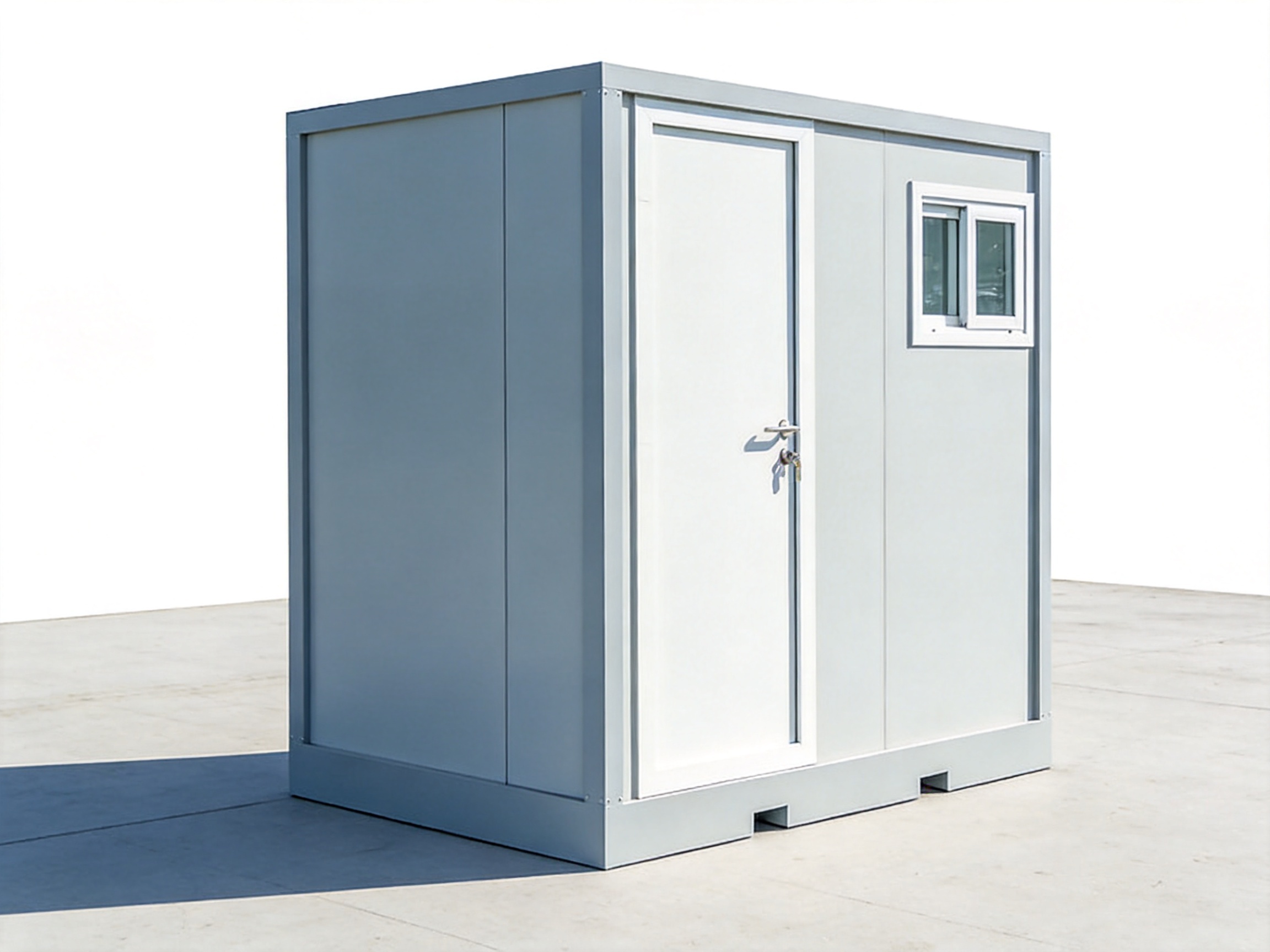
The Single-Person XL Outdoor Portable Toilet is designed as a durable and stable structure suitable for outdoor conditions and frequent relocation. Its construction approach is consistent with the principles used in prefabricated and modular buildings: components are prepared in a controlled factory environment, assembled according to defined processes, and delivered for rapid site deployment.
Weather resistance involves more than the external shell. Doors, joints, roof interfaces, flooring, ventilation, drainage, and internal finishes all influence how a portable restroom performs outdoors. A properly designed unit should help limit water intrusion, protect interior surfaces, and remain suitable for regular cleaning. The final level of weather resistance depends on the selected materials, local climate, installation method, and maintenance program.
Structural stability is equally important. The unit should be placed on a suitable surface and secured according to site conditions. Customers may need to consider ground slope, wind exposure, drainage, vehicle traffic, and access for servicing. Where the unit will remain in position for a longer period, site preparation can improve stability and extend service life.
Durability creates value in two ways. First, it reduces the risk of premature replacement. Second, it allows the facility to be reused across multiple projects. A portable toilet that can be cleaned, transported, and redeployed efficiently may deliver a lower total cost over its service life than a cheaper unit that is difficult to maintain or cannot withstand repeated movement.
7. Quick Deployment and Flexible Relocation
Speed is a defining requirement in temporary construction and emergency response. A facility that arrives late can delay the opening of a worksite, event, camp, or relief center. The Single-Person XL Outdoor Portable Toilet is designed for quick deployment, allowing it to be put into service promptly after delivery and setup.
Factory production helps support this objective. When major components, finishes, and optional systems are prepared before shipment, field work can focus on positioning, connection, inspection, and commissioning. This is generally faster and more predictable than building a restroom from raw materials at the project site.
Rapid deployment is especially valuable in emergency situations. Relief teams may need sanitation units following floods, earthquakes, storms, fires, population displacement, or infrastructure failures. In such cases, a mobile restroom can be delivered alongside temporary shelters, medical spaces, kitchens, and administrative modules. Its individual design allows it to serve as an independent unit even when larger site systems are still being organized.
Relocation is another important feature. Construction sites change as projects progress. A restroom positioned near excavation work may later need to move closer to a new building zone. Event facilities may be reused at different venues. Agricultural and industrial operators may move temporary teams between locations. A portable unit designed for mobility can follow these changing requirements.
Relocation should be planned responsibly. The unit must be emptied or serviced as required, disconnected from utilities where applicable, lifted or transported using suitable equipment, and reinstalled on a stable surface. Following the manufacturer’s handling guidance helps protect the structure and reduce the risk of damage.
8. Advantages Over Standard Compact Portable Toilets
The most obvious difference between the XL single-person unit and a standard compact portable toilet is the balance between portability and interior comfort. Standard units often focus on minimal size, low initial cost, and the ability to place many units in a small area. Those characteristics remain useful for certain high-volume events and short-duration applications, but they are not ideal for every project.
The XL model offers several potential advantages:
First, it provides more usable interior space. This can improve comfort for users wearing work clothing or carrying personal items.
Second, it offers greater flexibility for optional internal equipment. A washbasin or hygiene setup can be considered without forcing the interior into an excessively tight arrangement.
Third, it can create a more dignified user experience. The unit is designed not merely as an emergency box but as a compact private room.
Fourth, it may be better suited to long-term temporary use. Facilities serving a construction camp, remote project, or seasonal accommodation area may be used every day for weeks or months. In such cases, comfort and maintainability become more important than the smallest possible footprint.
Fifth, the larger space can support more flexible site planning. It may be used as a standalone toilet, a toilet with washing facilities, or part of a coordinated modular sanitation area.
| Evaluation Factor | Standard Compact Portable Toilet | Single-Person XL Outdoor Portable Toilet |
|---|---|---|
| Interior space | Usually designed around minimum functional dimensions | Spacious single-user area intended for improved movement and comfort |
| Privacy experience | Basic individual privacy | Enhanced personal space and a less confined interior environment |
| Optional washbasin | May be difficult to integrate because of limited room | Can be considered as part of the interior configuration |
| Typical use period | Often suitable for short-term or high-volume use | Suitable for short-term, seasonal, emergency, and extended temporary applications |
| Mobility | Portable and generally easy to reposition | Portable, with a durable structure intended for repeated relocation |
| Best value proposition | Maximum quantity and minimum footprint | Higher comfort, broader function, and improved long-term usability |
The right choice depends on the project. A crowded one-day event may prioritize the number of available units and the smallest installation area. A remote worker camp, emergency shelter area, or premium outdoor accommodation project may place greater value on comfort, hygiene, and a more substantial interior. The XL model is particularly appropriate when user experience and flexible function are important selection criteria.
9. Applications Across Different Industries
Construction Sites
Construction projects often operate before permanent buildings are completed. Workers may be spread across large areas, and traveling to distant permanent restrooms can waste time and create unnecessary movement through hazardous zones. A portable toilet positioned near active work areas provides direct access to essential sanitation.
The XL interior is useful for workers wearing protective equipment and heavy clothing. Optional hand-washing facilities can support better hygiene after restroom use and before returning to work. The unit can be moved as construction phases change, making it suitable for large developments, roads, bridges, industrial plants, and infrastructure projects.
Emergency Relief and Disaster Response
Following a natural disaster or major infrastructure failure, sanitation may become an immediate public health concern. Permanent restrooms can be damaged, inaccessible, or overwhelmed. A rapidly deployable portable facility can support temporary shelters, aid distribution centers, medical posts, and community gathering areas.
Privacy is especially important in relief environments, where people may already be experiencing stress and uncertainty. A spacious single-user unit can provide a more secure and dignified option than an improvised facility. If equipped with a washbasin or hygiene accessories, it can support broader sanitation needs.
Camping and Outdoor Recreation
Campsites and outdoor recreation facilities increasingly seek better amenities for visitors. A clean, private, and comfortable portable toilet can be placed near cabins, tent areas, parking zones, trails, or seasonal activity spaces. The XL design may be particularly attractive for family-oriented campsites, remote resorts, and temporary outdoor accommodation.
Because the unit can be relocated, operators can adjust restroom positions according to seasonal occupancy, event schedules, or changes in site layout. Its larger interior can also help create a higher-quality guest experience compared with basic compact facilities.
Events and Temporary Public Facilities
Outdoor concerts, sporting events, exhibitions, fairs, markets, and festivals often require temporary restrooms. The Single-Person XL Outdoor Portable Toilet can serve as an individual premium facility, a staff restroom, a hygiene station, or part of a broader temporary sanitation plan.
Event organizers should assess expected attendance, peak demand, servicing intervals, placement, lighting, accessibility, and local regulations. The XL unit may not replace all high-volume compact toilets at a very large event, but it can complement them by providing more comfortable facilities for staff, guests, performers, families, or special-purpose areas.
Remote Industrial and Agricultural Locations
Mining, energy, forestry, agriculture, and infrastructure operations may take place far from permanent buildings. Portable facilities reduce the need to construct fixed restrooms for temporary or changing work locations. The XL unit can be transported to a remote site and repositioned as operations develop.
In these environments, durability, ease of cleaning, stable placement, and service access are particularly important. Customers should provide details about climate, transport routes, frequency of use, utility availability, and expected project duration so the manufacturer can recommend an appropriate configuration.
Temporary Accommodation and Community Projects
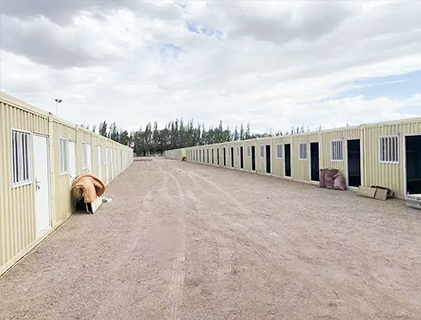
Portable restrooms can support temporary housing areas, worker accommodation, community buildings, schools under renovation, clinics, and field offices. When paired with modular homes, container houses, or prefabricated accommodation units, they can form part of a complete temporary infrastructure system.
The ability to coordinate these facilities through one manufacturer can simplify procurement. Exterior finishes, colors, doors, roofs, electrical systems, and service arrangements may be planned as part of a unified site concept.
10. Manufacturing Strengths Behind the Product
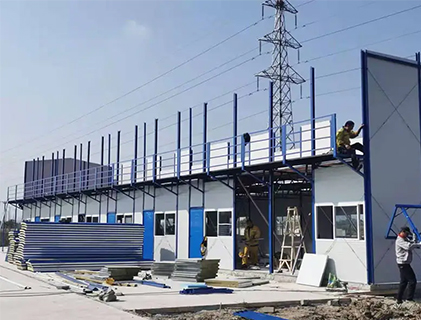
The performance of a portable restroom depends heavily on how it is designed and manufactured. Suzhou Taimao Integrated Housing Co., Ltd. specializes in modular building solutions and offers capabilities that extend beyond the production of isolated portable units. Its broader expertise includes modular design, prefabricated manufacturing, container houses, temporary housing, mobile homes, folding structures, expandable buildings, K-type prefabricated houses, and steel structures.
This product range gives the company experience with different structural systems, transportation requirements, interior layouts, and installation conditions. A portable toilet may be smaller than a modular home, but it still requires coordination between the building envelope, internal space, service systems, finishes, and transport method.
The company describes its mission as accelerating project timelines, improving operational efficiency, reducing ecological impact, and maintaining high standards of quality and safety. These objectives are relevant to portable sanitation because customers often need reliable facilities delivered within strict project schedules.
Factory-Controlled Production
Factory production allows many processes to take place in a controlled environment rather than under variable outdoor site conditions. Materials can be measured, cut, assembled, inspected, and finished according to repeatable procedures. This can improve consistency and reduce the amount of work required after delivery.
Factory manufacturing also helps protect components from rain, dust, and uncontrolled site conditions during assembly. Electrical and internal finishing work can be organized before shipment, which supports faster installation and reduces dependence on local labor availability.
For customers ordering multiple units, controlled production can help maintain consistency between units. This is useful for large construction projects, campsite developments, emergency programs, and recurring rental or deployment operations.
Integrated Design and Engineering
An integrated manufacturer considers the unit as a complete system rather than a collection of unrelated parts. Structural design, insulation, ventilation, electrical work, doors, flooring, drainage, interior equipment, and transportation requirements should be evaluated together.
This approach is particularly useful when customers request optional washbasins or hygiene equipment. The layout must allow the equipment to function without obstructing movement. Water supply, drainage, maintenance access, and cleaning procedures should be addressed before fabrication.
Integrated engineering also supports customization. A customer may need a particular external appearance, interior finish, utility connection, branding area, ventilation arrangement, or deployment method. The exact possibilities depend on the project, but an experienced modular manufacturer is generally better positioned to evaluate these requests than a supplier focused only on standard plastic units.
SIP and Modular Building Expertise
The company’s flagship Structural Insulated Panel, or SIP, modular building system integrates structure, insulation, mechanical and electrical services, heating, ventilation and air-conditioning systems, interior finishes, and smart home technologies into a unified solution. While not every portable toilet configuration requires the full range of these systems, this expertise demonstrates a broader understanding of prefabricated building integration.
SIP and modular construction methods can help improve thermal performance, reduce on-site work, and accelerate project completion. For sanitation units intended for demanding climates or longer temporary use, insulation and controlled interior conditions may be relevant considerations. Customers can discuss whether enhanced insulation, ventilation, lighting, or other building-system features are appropriate for their application.
Digital Support and Project Coordination
Digital software support can improve communication between the customer, design team, production department, and installation team. Drawings, layouts, revisions, equipment selections, and project schedules can be coordinated before manufacturing begins.
Clear digital documentation is valuable for customized portable facilities. It helps confirm the location of doors, washbasins, service points, ventilation openings, lifting features, and other details. Early confirmation can reduce misunderstandings and limit expensive changes after production has started.
11. Materials, Finishes, and Configuration Planning
Customers should evaluate more than the external appearance of a portable toilet. Materials and finishes influence cleaning, durability, comfort, maintenance, and service life. The appropriate specification depends on how often the unit will be used, the climate, the intended project duration, and the available maintenance resources.
Interior surfaces should be selected with hygiene in mind. Smooth, durable, and cleanable finishes are generally preferable for restroom environments. Flooring should support safe movement and regular cleaning. Door hardware should be suitable for repeated use and outdoor exposure. Ventilation should help control odors and internal moisture, while lighting should provide sufficient visibility for safe use.
Exterior materials should be evaluated according to local weather conditions. Projects in hot, humid, rainy, coastal, snowy, or dusty areas may require different material and protective-coating considerations. The manufacturer should be informed of the deployment climate so that the proposed configuration can be matched to the environment.
Color and appearance may also matter. Construction companies, event operators, resorts, municipalities, and corporate customers may prefer units that coordinate with their existing facilities. A consistent exterior appearance can improve site organization and create a more professional presentation.
For projects requiring several units, the layout should consider spacing, pedestrian routes, service access, drainage, lighting, and emergency access. The portable toilet should be easy for users to find but positioned away from food preparation, sleeping areas, and high-risk vehicle routes where possible.
12. Installation and Site Preparation
Although the unit is designed for quick deployment, site preparation remains important. A suitable installation area should be reasonably level, stable, accessible, and capable of supporting the unit under expected conditions. Poor placement can lead to instability, water accumulation, difficult access, or service problems.
Before delivery, the project team should confirm the route from the unloading point to the final position. Narrow roads, overhead cables, soft ground, steep slopes, gates, and construction equipment may affect transportation and placement. If lifting equipment is required, the customer should coordinate safe access and operating space.
Where the unit includes a washbasin or other plumbing equipment, utility planning is essential. The customer should determine whether the unit will connect to a water supply, a temporary tank, a drainage system, or another approved arrangement. Local regulations may govern wastewater handling, sanitation, and temporary utility connections.
Electrical requirements should also be reviewed if the unit includes lighting, ventilation, heating, pumps, or other powered equipment. Electrical installation must be completed according to applicable local codes and by qualified personnel where required.
After placement, the unit should be inspected before use. The inspection may include checking the door, lock, floor stability, ventilation, lighting, water connections, drainage, interior equipment, and external condition. A simple commissioning checklist can help identify issues before the facility is opened to users.
13. Cleaning, Maintenance, and Long-Term Value
Regular cleaning is essential for any portable restroom, regardless of its size or construction method. The cleaning schedule should reflect the number of users, project duration, climate, and type of service. High-use locations may require daily or multiple daily servicing, while lower-use sites may follow a less frequent schedule.
The larger interior of the XL unit can make cleaning more convenient because service personnel have more room to move and reach surfaces. A washbasin or hygiene area should receive special attention, including the basin, taps, dispensers, splash zones, and drainage points.
Operators should inspect floors, walls, doors, hinges, locks, ventilation openings, lighting, and utility connections. Early detection of leaks, damage, corrosion, or loose hardware can prevent more significant repairs. If the unit is relocated, it should be checked again after transportation and reinstallation.
Cleaning products should be compatible with the interior materials. Harsh chemicals or abrasive tools may damage finishes if used incorrectly. The manufacturer’s maintenance recommendations should be followed, especially for specialized coatings, seals, fittings, and optional equipment.
Long-term value depends on the total cost of ownership rather than only the purchase price. A unit that is durable, reusable, easy to clean, and adaptable to different projects may be more economical over time than a low-cost unit intended for limited use. Customers should consider transportation, servicing, replacement parts, cleaning labor, utility connections, and expected reuse when comparing options.
14. Sustainability and Resource Efficiency
Temporary buildings can support sustainability when they are designed for reuse rather than disposal. A portable toilet that can be transported between projects may reduce the need to construct multiple short-lived permanent facilities. Reusability can also help customers respond to changing site requirements without purchasing entirely new structures for every project.
Factory production may reduce material waste by using planned cutting, standardized components, and controlled assembly processes. It can also reduce the amount of finishing work carried out at the project site. The environmental benefits of any specific project depend on material choices, transportation distance, energy use, maintenance, and end-of-life handling.
Water management is another important consideration. A washbasin or hygiene system should be designed with responsible water use and appropriate wastewater handling in mind. Customers may discuss low-flow fixtures, water tanks, drainage solutions, and other resource-conscious options with the manufacturer.
Energy-efficient lighting and ventilation may be considered when the unit requires electrical service. In remote or emergency applications, low-energy equipment can reduce the size of power systems or improve the practicality of solar and battery-supported operation. The suitability of these options depends on the final technical configuration.
15. Customization for Different Projects
Not every customer needs the same portable restroom. A construction contractor may prioritize durability and easy relocation. A resort operator may focus on appearance and guest comfort. An emergency organization may require rapid production and simple field deployment. An industrial customer may need enhanced weather resistance and integration with a temporary utility network.
Customization may involve interior equipment, exterior colors, ventilation, lighting, insulation, flooring, door arrangements, drainage, lifting features, and coordinated delivery. The XL design provides a useful base for these discussions because it offers more interior capacity than a minimum-size compact unit.
Customers should provide as much project information as possible during the quotation stage. Useful details include the destination country, climate, expected number of users, project duration, delivery schedule, site accessibility, required quantity, utility availability, preferred interior facilities, and local compliance requirements.
Technical drawings and approval documents should be reviewed before production. Any changes to the layout or equipment should be confirmed in writing. This process helps ensure that the delivered unit matches the customer’s operational expectations.
16. Why Choose an Integrated Modular Manufacturer
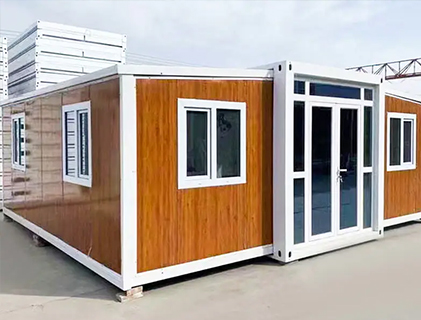
A specialized portable toilet supplier may offer standard units efficiently, but an integrated modular building manufacturer can provide additional value when the project involves customization or multiple building types. Suzhou Taimao Integrated Housing Co., Ltd. works across several categories, including container houses, tiny modular homes, temporary housing, mobile homes, construction site buildings, folding container houses, double-wing expandable container houses, K-type prefabricated houses, and steel structures.
This wider capability can simplify procurement for customers developing a complete temporary site. Instead of coordinating unrelated suppliers for housing, offices, sanitation facilities, storage rooms, and service modules, a customer may be able to discuss multiple requirements with one manufacturing partner.
Integrated procurement can improve visual consistency and technical coordination. Exterior colors, roof details, floor heights, utility routes, transport dimensions, and installation sequences can be planned across the project. It may also reduce communication gaps between suppliers.
The company’s stated focus on modular design, proprietary manufacturing technologies, digital software support, quality, safety, speed, and ecological responsibility aligns with the needs of customers seeking more than a basic portable toilet. The product can be treated as part of a scalable building system rather than an isolated temporary accessory.
17. Selecting the Right Configuration
Before ordering, buyers should define the intended function of the unit. Will it be used only as a toilet, or should it include a washbasin and personal hygiene facilities? Will it serve a few workers or a large rotating population? Will it remain in one position for months, or will it be relocated frequently? Will it operate in a hot, cold, wet, windy, or dusty environment?
The answers affect the recommended layout, materials, optional equipment, servicing plan, and transport method. Buyers should also determine whether the unit must coordinate with existing temporary buildings or whether it will be installed as an independent facility.
Quantity planning is important. A single XL unit may be suitable for a small site, a staff area, a remote work point, or a premium facility. Larger projects may combine XL units with other restroom types to balance comfort, capacity, and cost. The supplier can help develop a deployment plan based on expected usage and site conditions.
Delivery planning should begin early, particularly for international projects. Production time, customization, shipping, customs clearance, local transport, installation equipment, and utility connections can all affect the schedule. Early technical communication reduces the risk of delays.
18. Questions and Answers
What is the main difference between the XL portable toilet and a standard portable toilet?
The main difference is the larger single-user interior. The XL design provides more room for movement, improved personal comfort, and greater flexibility for adding a washbasin or hygiene facilities. A standard compact unit may be better for maximizing the number of toilets in a small area, while the XL model is intended for users who value space and functionality.
Can the unit include a washbasin?
Yes. The unit can be equipped with a washbasin or personal hygiene setup as an optional configuration. The final arrangement depends on the customer’s requirements, water supply, drainage method, local regulations, and selected equipment.
Is the portable toilet suitable for construction sites?
Yes. Its private single-user layout, durable structure, portability, and optional hygiene facilities make it suitable for construction sites and other temporary work areas. The larger interior can be helpful for workers wearing protective clothing or carrying equipment.
Can the unit be used in emergency relief projects?
Yes. It is designed for rapid deployment and can serve temporary shelters, relief centers, medical support areas, and community facilities. Its individual enclosed space supports privacy and dignity in situations where permanent sanitation infrastructure is unavailable.
Can it be relocated after installation?
Yes. The product is intended to be portable and flexible, including use at locations where facilities may need to move as project conditions change. Relocation should follow appropriate handling, servicing, lifting, transportation, and reinstallation procedures.
Is the unit suitable for long-term temporary use?
It can be suitable for extended temporary applications such as construction camps, seasonal accommodation, remote work locations, and infrastructure projects. The correct materials, service schedule, utility configuration, and maintenance plan should be selected according to the expected duration and usage level.
Does the unit require a permanent foundation?
Not necessarily. It is designed as a portable facility, but it still requires a stable and suitable installation surface. Site conditions, local regulations, wind exposure, drainage, and the selected configuration determine whether additional supports or preparation are needed.
Can the unit be customized?
Customization may be available for interior facilities, finishes, colors, ventilation, lighting, insulation, drainage, and other project requirements. Customers should discuss their needs with the manufacturer before production so that the design can be reviewed and confirmed.
Can it be supplied together with other modular buildings?
Yes. The manufacturer also works with container houses, modular homes, temporary accommodation, folding structures, expandable buildings, K-type prefabricated houses, and steel structures. This can support coordinated procurement for complete temporary sites.
What information should be provided when requesting a quotation?
Customers should provide the quantity, destination, project application, desired delivery date, climate, expected usage, optional equipment, utility conditions, site access, preferred appearance, and any local technical or regulatory requirements. Detailed information helps the manufacturer prepare a more accurate proposal.
19. Practical Evaluation Checklist
Before selecting a portable restroom, project managers should evaluate the following points:
Space: Confirm whether the interior is large enough for the expected users, work clothing, personal belongings, and optional equipment.
Privacy: Check the single-user arrangement, door operation, lock, ventilation, and overall sense of security.
Hygiene: Determine whether a washbasin, hand-washing system, dispenser, or other personal hygiene equipment is needed.
Durability: Review the materials and construction approach in relation to the local climate and expected service intensity.
Mobility: Confirm how the unit will be delivered, lifted, transported, repositioned, and serviced.
Utilities: Plan water, drainage, electricity, lighting, ventilation, and waste handling before installation.
Maintenance: Establish a cleaning and inspection schedule based on usage and project duration.
Compliance: Verify applicable local requirements for sanitation, accessibility, electrical work, wastewater, transportation, and temporary structures.
Scalability: Consider whether the unit may later be paired with additional restrooms, showers, modular homes, offices, or accommodation buildings.
Total cost: Compare purchase, delivery, installation, servicing, relocation, maintenance, and reuse value rather than looking only at the initial price.
20. Conclusion
The Single-Person XL Outdoor Portable Toilet offers a more comfortable and flexible approach to temporary sanitation. Its spacious private interior addresses one of the main weaknesses of conventional compact portable toilets: insufficient room for movement and limited functional flexibility. The option to add a washbasin or personal hygiene setup further expands its role, allowing it to operate as a more complete sanitation and washing station.
Its durability, quick deployment, and portability make it suitable for construction sites, outdoor events, campsites, emergency relief, remote industrial locations, agricultural projects, temporary accommodation, and community facilities. The larger interior is particularly valuable when users will wear protective clothing, when privacy is a priority, or when the unit will serve a project for an extended period.
The product also benefits from the capabilities of Suzhou Taimao Integrated Housing Co., Ltd., a manufacturer with experience in modular buildings, prefabricated structures, container houses, mobile homes, steel structures, and integrated construction systems. Its factory-controlled production, modular design expertise, SIP technology, digital support, and broad product range provide a strong foundation for customized and coordinated temporary facility projects.
For customers seeking more than a minimal portable toilet, the XL model represents a practical balance between mobility, privacy, comfort, hygiene, and long-term usability. By treating sanitation as an important part of the built environment rather than an afterthought, it can help create safer, more efficient, and more dignified temporary spaces.
References
1. Suzhou Taimao Integrated Housing Co., Ltd. Product information for the Single-Person XL Outdoor Portable Toilet.
2. Suzhou Taimao Integrated Housing Co., Ltd. Company information on modular building design, prefabricated manufacturing, SIP systems, and integrated construction solutions.
3. General principles of temporary building planning, portable sanitation management, and modular construction practice.
4. General guidance on outdoor facility maintenance, hygiene planning, site preparation, and temporary utility coordination.
Product: Single-Person XL Outdoor Portable Toilet

For exclusive deals and latest offers, sign up by entering your email address below.

-
TEL:+86 18762912902
-
Email:cntaimao@163.com
-
WhatsApp:
-
Add:Group 5, Cao Village, Zhenze Town, Suzhou, Jiangsu, China
Copyright © Suzhou Taimao Integrated Housing Co., Ltd.
All Rights Reserved.
 Wholesale movable homes for sale
custom built modular homes