

 EN
EN
 русский
 Español
 عربى
عربى Français
Single-Person XL Outdoor Portable Toilet: A More Comfortable Standard for Mobile Sanitation
Admin 2026-08-10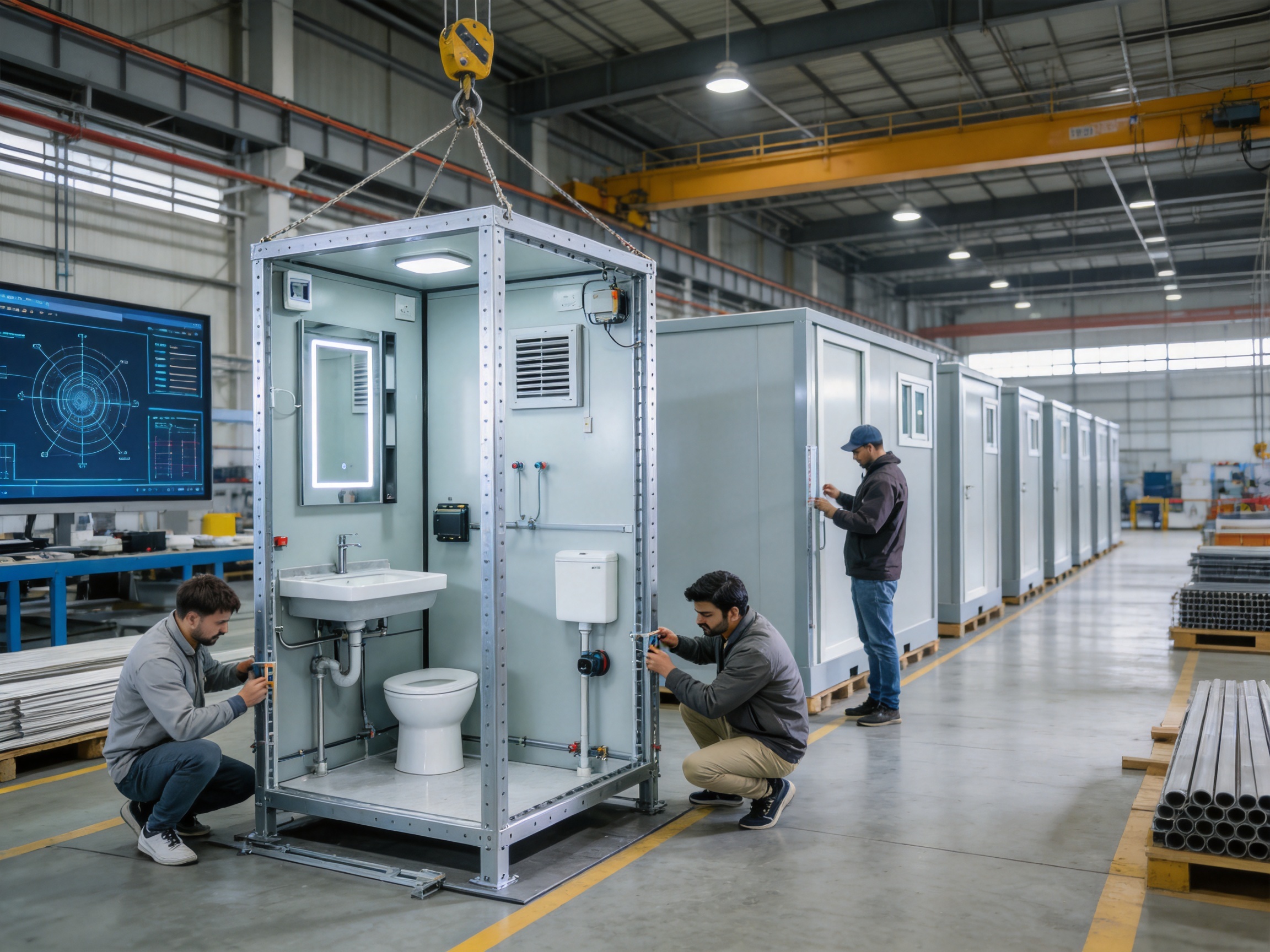
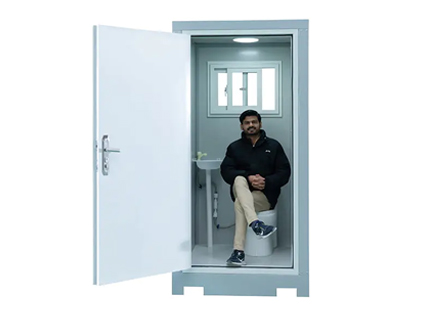
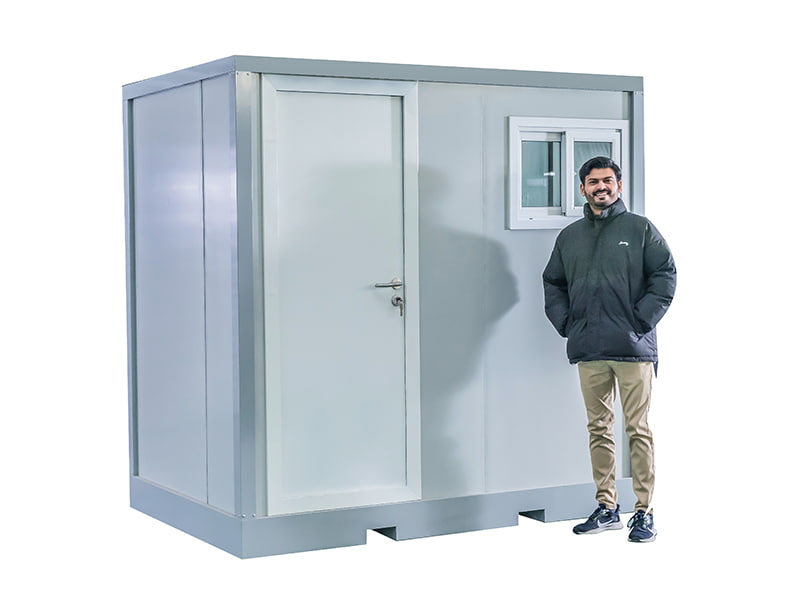
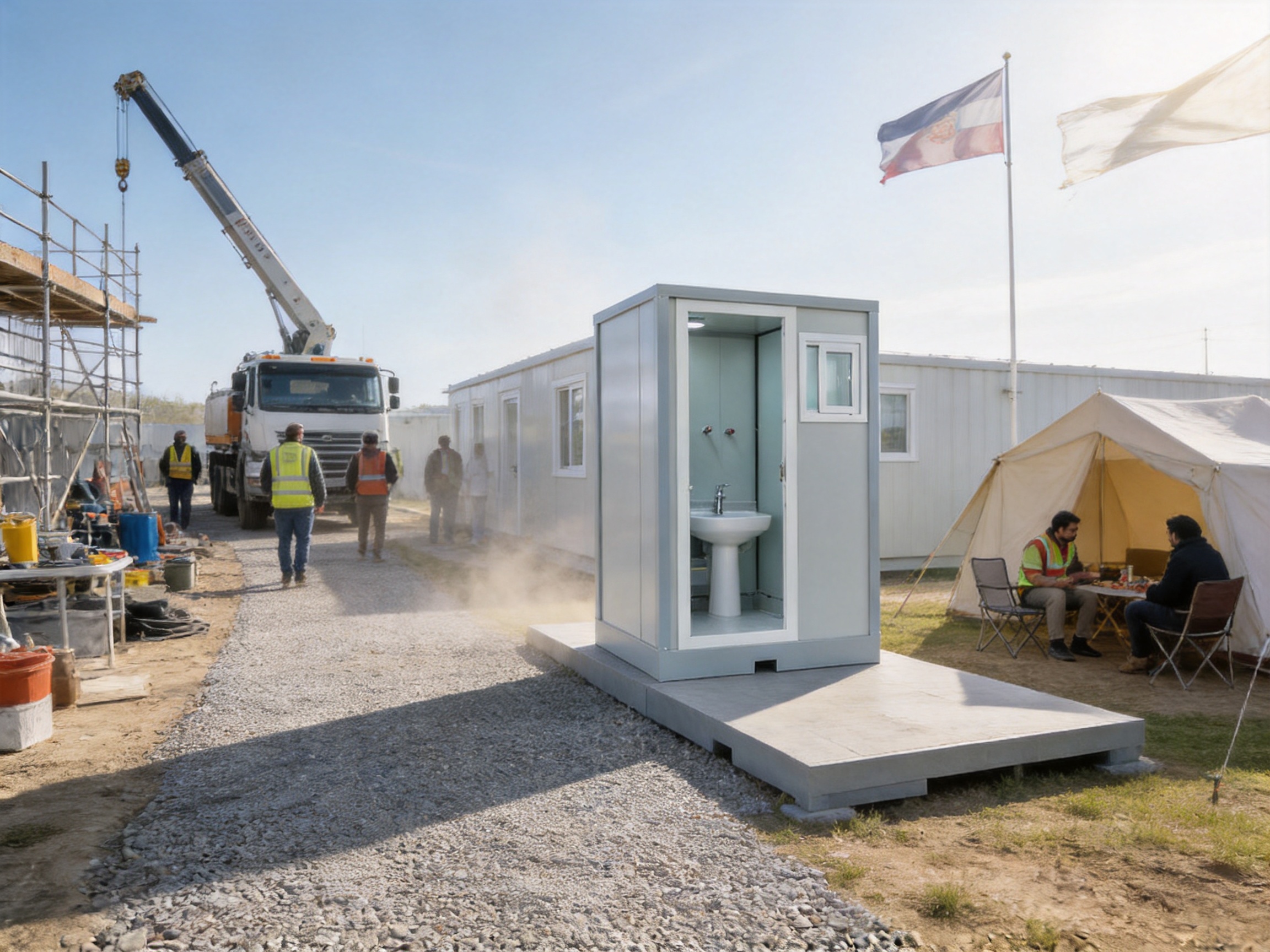
Outdoor sanitation is often treated as a basic necessity, but the quality of a restroom can strongly influence comfort, health, privacy, and the overall success of a temporary project. At construction sites, campsites, emergency response locations, public events, remote work areas, and temporary accommodation projects, a restroom must be easy to transport, quick to install, durable in changing weather, and comfortable enough for regular use. The Single-Person XL Outdoor Portable Toilet is designed to meet these requirements while providing a more spacious and adaptable experience than many conventional compact portable toilets.
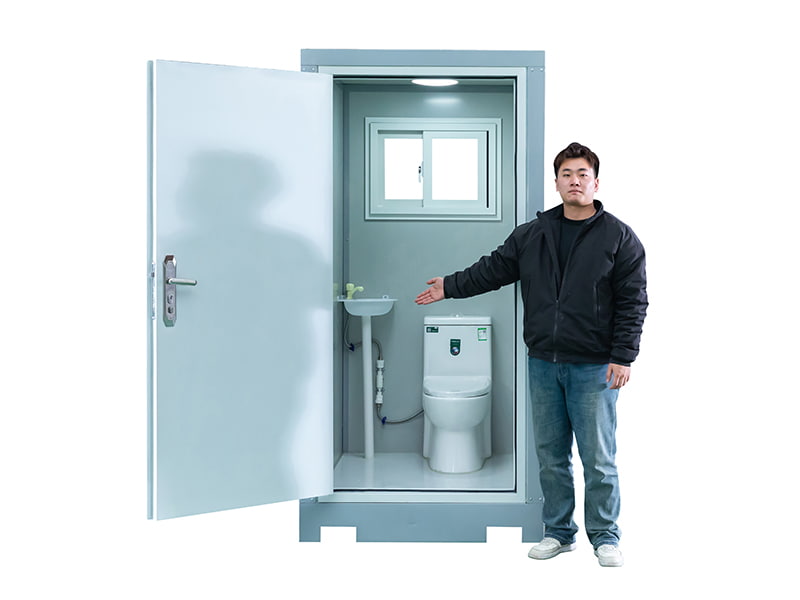
This product is a single-user mobile restroom that emphasizes personal space, privacy, flexible configuration, and convenient deployment. Rather than dividing a limited structure into multiple cramped compartments, it provides one larger interior area for individual use. The expanded internal space can also accommodate a washbasin or personal hygiene facilities, allowing the unit to function as more than a basic toilet cubicle. It can become a personal sanitation and washing station for locations where permanent plumbing or building infrastructure is unavailable.
Manufactured and supplied by Suzhou Taimao Integrated Housing Co., Ltd., the Single-Person XL Outdoor Portable Toilet reflects the company’s broader experience in modular construction, prefabricated buildings, portable facilities, steel structures, and integrated building systems. The company combines factory-controlled production with modular design and project-oriented customization, supporting customers who require dependable temporary facilities or larger prefabricated housing solutions.
For buyers comparing ordinary portable toilets, temporary washrooms, site facilities, and modular sanitation units, the XL single-person model offers a balance of mobility and comfort. Its value is not limited to its physical size. The product is also intended to simplify logistics, reduce installation time, support repeated relocation, and provide a more dignified experience in challenging outdoor environments.
Single-Person XL Outdoor Portable Toilet
Content
- 1 Why Outdoor Restroom Design Matters
- 2 Product Overview
- 3 Key Features and User Benefits
- 4 Advantages Over Conventional Compact Portable Toilets
- 5 Application Scenarios
- 6 Manufacturing Strengths Behind the Product
- 7 Advanced Prefabrication and Digital Support
- 8 Quality, Safety, and Compliance Considerations
- 9 Installation and Site Planning
- 10 Maintenance and Hygiene Management
- 11 Customization Possibilities
- 12 Comparison of Common Temporary Restroom Options
- 13 Economic and Operational Value
- 14 Environmental Considerations
- 15 Why Choose an Experienced Modular Manufacturer?
- 16 Recommended Purchasing Process
- 17 Frequently Asked Questions
- 17.1 What is the Single-Person XL Outdoor Portable Toilet?
- 17.2 Where can this portable toilet be used?
- 17.3 How is it different from a standard portable toilet?
- 17.4 Can a washbasin be installed inside?
- 17.5 Is the unit suitable for frequent relocation?
- 17.6 Does the unit require permanent foundations?
- 17.7 Can it be used in emergency relief projects?
- 17.8 How quickly can it be used after delivery?
- 17.9 Is the product customizable?
- 17.10 What maintenance does the unit require?
- 17.11 Can the restroom be used together with other modular buildings?
- 17.12 What should buyers ask before placing an order?
- 18 Conclusion
- 19 References
- 20 Product: Single-Person XL Outdoor Portable Toilet
Why Outdoor Restroom Design Matters
A portable restroom may appear simple, but its design affects the daily experience of every user. A unit that is too narrow can make movement difficult, especially for taller users, older adults, people carrying personal items, or individuals who need additional room for changing clothes or cleaning themselves. Limited interior space can also make the environment feel uncomfortable and less private, even when the structure is technically functional.
Outdoor projects frequently operate under conditions that are different from those of permanent buildings. The restroom may need to be moved between work zones, delivered to a remote location, installed on uneven ground, or used during a period when normal utilities are not available. It may also experience sunlight, rain, wind, dust, temperature variation, and frequent cleaning. These factors require more than a basic enclosure. They require a product designed as a complete, practical, and durable facility.
The Single-Person XL Outdoor Portable Toilet addresses this need by giving one user a larger private space. The concept is particularly suitable where privacy and personal comfort are important. It can support construction crews, outdoor workers, campers, event visitors, emergency teams, temporary residents, and remote-site personnel. Where a small standard unit may be adequate for occasional short-term use, the XL model is better suited to situations in which people need a more usable and less restrictive interior.
The product can also be configured with a washbasin or other hygiene facilities. This option is important for remote sites because a toilet and handwashing point are often needed together. Combining these functions in one mobile unit can reduce the need for separate structures, simplify site planning, and make the sanitation arrangement easier to manage.
Product Overview
The Single-Person XL Outdoor Portable Toilet is a spacious, private, and flexible mobile restroom designed for outdoor deployment. It is intended for one user at a time and offers a larger interior than many conventional portable toilet models. The unit can be prepared for use after setup, making it suitable for projects that need sanitation facilities without a long construction period.
Its main characteristics include a private single-user compartment, an XL interior, a weather-resistant structure, optional washbasin or hygiene equipment, and a format suitable for frequent relocation. The design can be used independently or as part of a broader temporary facility plan that includes portable houses, modular accommodation, site offices, storage units, or other prefabricated structures.
The product is not limited to one specific type of customer. Different users may prioritize different functions. A construction company may need a mobile restroom for workers on a changing jobsite. An event organizer may require additional facilities for visitors. An emergency relief agency may need units that can be rapidly deployed to a temporary settlement. A campsite operator may value privacy and cleanliness as part of the guest experience. A remote project manager may need an integrated sanitation point where permanent utilities cannot be installed.
Because the interior can be adapted with optional hygiene facilities, the product can be considered a modular sanitation solution rather than only a standard portable toilet. Its final configuration can be discussed according to intended application, site conditions, transportation needs, cleaning requirements, and expected frequency of use.
Key Features and User Benefits
XL Private Interior Space
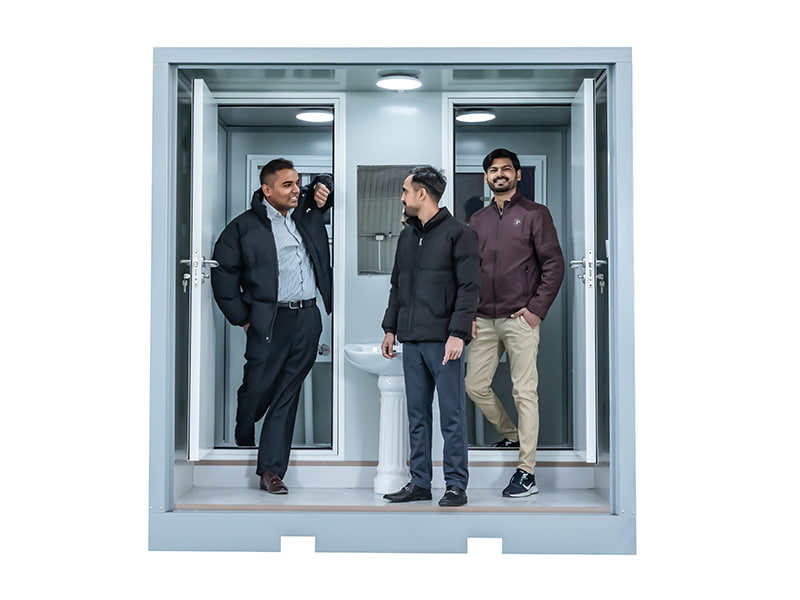
The most distinctive feature is the larger single-user interior. Instead of attempting to place several small compartments into one restricted structure, this model focuses on the comfort of one individual. The result is a more open environment with improved freedom of movement.
Additional interior space can make a meaningful difference in daily use. Users have more room to enter, turn, sit, stand, and organize personal items. The increased space can also be helpful for people who may feel uncomfortable in narrow enclosures. When the unit includes a washbasin, the extra room supports a more practical arrangement of the toilet and handwashing area.
In temporary facilities, comfort is often linked to user acceptance. Workers are more likely to use and maintain a facility properly when it is clean, private, and reasonably comfortable. Event visitors and campsite guests also judge the quality of an outdoor location by the condition and usability of its sanitation facilities. A larger interior can therefore contribute to better satisfaction and a more positive perception of the entire project.
Enhanced Privacy
Privacy is a central requirement for any restroom. The single-person configuration provides a dedicated private area rather than a shared or exposed arrangement. This makes the product suitable for work locations, camps, relief centers, temporary housing sites, and other situations in which users require a secure personal space.
Privacy also has a practical role in hygiene. Users are more likely to spend sufficient time washing their hands, cleaning personal items, or managing hygiene needs when they do not feel rushed or observed. The spacious private interior can therefore support both dignity and better sanitation behavior.
Optional Washbasin and Hygiene Facilities
The unit can be equipped with a washbasin or a personal hygiene setup. This option increases its usefulness in remote and temporary environments. A toilet without a nearby handwashing point may create an incomplete sanitation arrangement, especially at construction sites, camps, public events, and emergency locations.
An integrated washbasin may reduce the need to install a separate handwashing station. Depending on the project requirements, the internal arrangement may be discussed with the supplier before production. Buyers can consider the required water supply, wastewater handling, cleaning process, fixtures, storage, and user capacity when selecting the configuration.
The washbasin option also allows the unit to support uses beyond ordinary restroom functions. It may serve as a personal washing station, a hygiene room for a remote workforce, or a sanitation facility near temporary sleeping areas. This flexibility is valuable when site space is limited or when several independent facilities would be difficult to transport and install.
Durable and Stable Construction
Outdoor portable facilities must withstand repeated handling and variable weather conditions. A unit that is only suitable for one installation may not provide good value for contractors, rental companies, event operators, or emergency organizations. The Single-Person XL Outdoor Portable Toilet is designed for durability and stability during outdoor use and relocation.
Its construction is intended to support frequent movement between locations. This is especially relevant to construction projects, infrastructure work, temporary camps, seasonal events, and emergency operations. A portable unit should be sufficiently robust for transport, setup, use, cleaning, and possible redeployment.
Weather-resistant construction is also important. Rain, sunlight, wind, dust, and temperature changes can affect outdoor facilities over time. A durable structure helps protect the interior and supports reliable operation in changing conditions. Final material selections, surface treatments, fixtures, and optional features can be evaluated according to the climate and use environment.
Quick Deployment
The restroom is designed to be ready for use soon after setup. This makes it appropriate for projects that cannot wait for conventional building work. Temporary sanitation can be established without excavating foundations, constructing a permanent building, or completing a lengthy interior installation process.
Quick deployment is especially valuable in emergency relief and rapidly changing work environments. Following a natural disaster, temporary relocation, or sudden increase in site activity, sanitation facilities may be required immediately. A portable unit can help project managers establish essential services while a permanent solution is being planned or constructed.
Fast setup also benefits event organizers and contractors. It can reduce labor requirements at the site and limit disruption to other operations. When the restroom arrives as a prepared modular unit, the site team can focus on positioning, connection, inspection, and commissioning rather than building the facility from raw materials.
Portable and Flexible Application
Portability is one of the product’s primary advantages. The unit can be moved to locations where a permanent restroom is unavailable, impractical, or too expensive. It can serve one site today and another site later, helping customers use the same asset across multiple projects.
This flexibility is valuable for companies managing multiple construction sites. Instead of building a small permanent restroom at every temporary work area, a contractor can deploy portable units according to the current phase of work. The same principle applies to event operators, rental providers, agricultural projects, roadwork, mining support areas, and seasonal facilities.
Portability also supports phased development. A project may begin with temporary sanitation units and later add modular offices, accommodation, kitchens, or larger prefabricated buildings. The restroom can form part of an integrated site solution as project requirements evolve.
Advantages Over Conventional Compact Portable Toilets
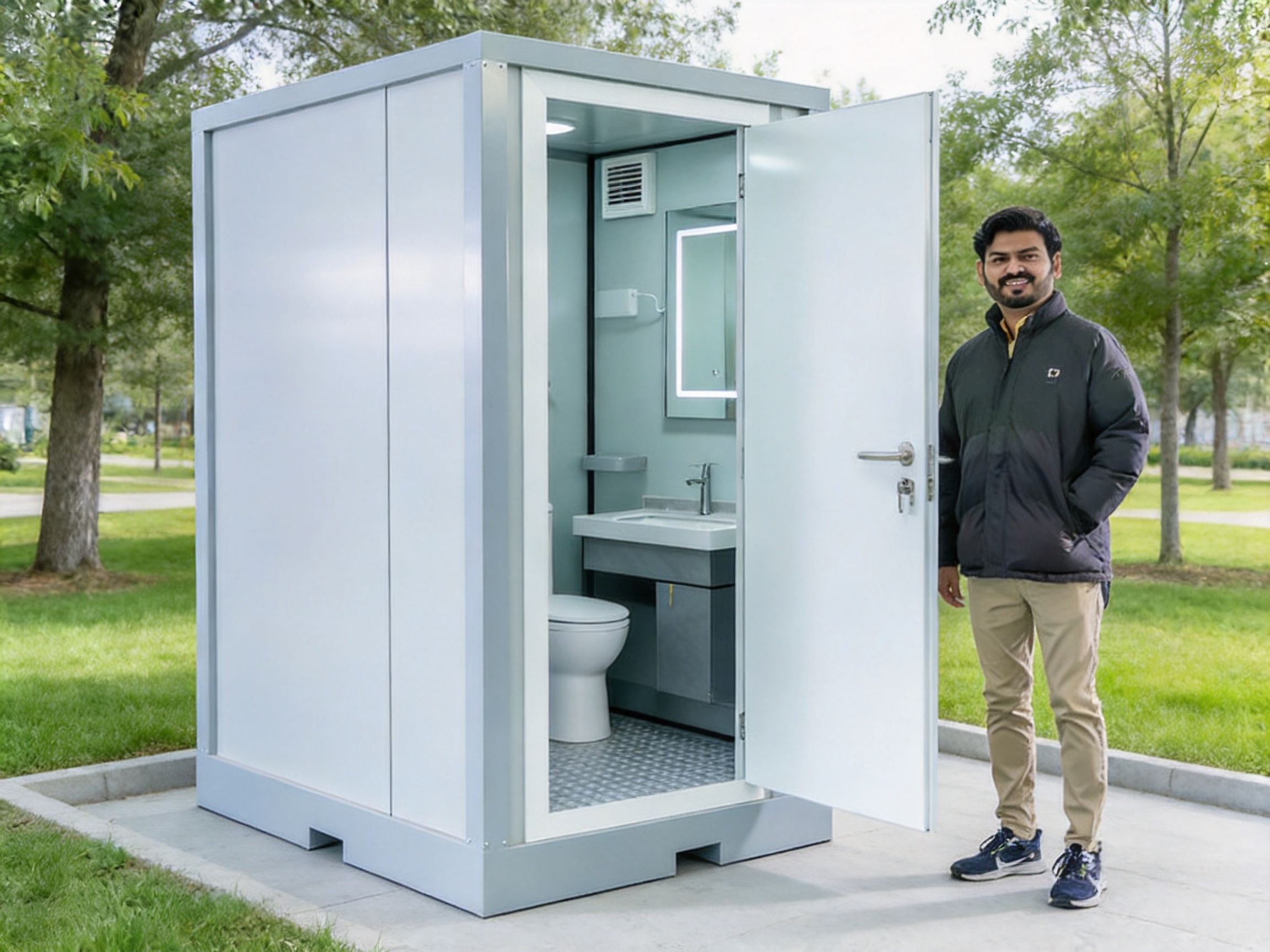
Many standard portable toilets are designed primarily for minimum footprint and basic function. This approach can reduce transport volume, but it may also produce a narrow interior and limited flexibility. The Single-Person XL Outdoor Portable Toilet takes a different approach by prioritizing personal space, privacy, and optional hygiene functions.
More Usable Space
A larger interior is one of the clearest differences between the XL single-person model and many compact units. Conventional small units may provide only enough room for essential use. The XL configuration is intended to provide a more comfortable experience, especially for users who need extra room to move or manage personal hygiene.
The additional space can also simplify cleaning and maintenance. A cramped structure may be more difficult to inspect or clean thoroughly. A more accessible interior can make routine servicing more manageable, provided that the operator follows an appropriate cleaning and maintenance plan.
Better Support for Hygiene
Many compact portable toilets do not include an internal washbasin because their floor area is limited. The XL unit can be equipped with a washbasin or personal hygiene facilities, giving buyers more choices when planning a complete sanitation point.
This feature can reduce the separation between restroom use and handwashing. It may also improve the user experience in locations where an independent handwashing station would take up additional space or require separate logistics. For emergency and remote applications, this integrated approach can be particularly practical.
Greater Dignity for Users
Portable facilities are sometimes associated with temporary inconvenience. However, a well-designed unit can provide privacy, cleanliness, and comfort even when it is deployed in a temporary setting. The larger single-person arrangement helps create a more respectful experience for workers, visitors, residents, and relief recipients.
This benefit is not merely cosmetic. Sanitation facilities influence worker morale, visitor satisfaction, public health, and the perceived professionalism of a project. A more comfortable restroom can demonstrate that the operator has considered the needs of the people using the site.
Flexible Use Across Different Environments
A compact unit may be designed for a narrow range of uses, while a larger configurable model can serve multiple purposes. The Single-Person XL Outdoor Portable Toilet can be used as a standard toilet, a washroom with a basin, a personal hygiene station, or part of a temporary accommodation arrangement.
Its broad application range can help buyers reduce the number of specialized facility types they need to purchase. A project can select the appropriate internal configuration while retaining the benefits of a portable outer structure.
Application Scenarios
Construction Sites
Construction sites often change as work progresses. Workers may be concentrated in different areas during excavation, structural work, finishing, infrastructure installation, and landscaping. Permanent restrooms may not be available at every stage, and a fixed temporary building may become inconvenient when the site layout changes.
The portable toilet can be positioned near active work areas and relocated as necessary. Its larger private compartment supports regular daily use, while the optional washbasin can improve hand hygiene. Contractors may deploy several units across a large site or use one unit at a smaller project.
For construction companies, the unit can complement portable offices, worker accommodation, storage units, and modular site facilities. A coordinated prefabricated site plan may improve organization, reduce installation time, and create a more professional working environment.
Camping and Outdoor Recreation
Campsites and outdoor recreation areas need sanitation facilities that are practical without damaging the surrounding environment. The XL portable toilet can provide a private restroom in locations where permanent buildings are not available.
The larger interior can make the facility more attractive to families, longer-stay campers, and users who value comfort. A washbasin option can support handwashing and basic personal hygiene, helping campsite operators provide a more complete service package.
Because the product is portable, operators can adjust the number and location of facilities according to seasonal demand, campsite expansion, or special outdoor programs. This flexibility can be useful for temporary camping areas, festivals, sports events, and nature-based tourism sites.
Emergency Relief and Temporary Settlements
Following floods, earthquakes, storms, fires, or other emergencies, sanitation must be established quickly. Damaged infrastructure may leave communities without working toilets or water facilities. Portable units can be delivered to temporary shelters, relief distribution points, medical support areas, and field operations.
The single-person private format is suitable for locations where dignity and personal security are important. The optional washbasin can support essential hygiene, while the portable design allows relief coordinators to adjust the facility layout as the situation changes.
Emergency organizations should evaluate transportation access, ground conditions, water availability, wastewater management, cleaning schedules, and accessibility requirements before deployment. The product’s modular nature allows the final arrangement to be planned around the operational conditions of the relief site.
Outdoor Events
Concerts, exhibitions, sporting events, markets, weddings, festivals, and temporary public gatherings all require adequate restroom capacity. Permanent facilities may not be sufficient for large crowds, and temporary buildings may not be practical for a short event.
The portable toilet can be installed before the event and removed afterward. Its private single-user format provides an alternative to smaller standard units, especially for premium events, family zones, staff areas, backstage locations, or special-purpose sanitation points.
Event organizers can place the units strategically to reduce walking distances and distribute usage across the venue. The XL design may also be selected for staff, performers, service providers, or areas where a more comfortable facility is expected.
Remote Work and Industrial Locations
Mining, forestry, agriculture, energy, telecommunications, infrastructure, and environmental survey projects may operate far from permanent buildings. Workers in these locations need dependable sanitation even when the worksite is temporary or difficult to access.
The portable toilet can be delivered with other site equipment and installed near the operational area. Its durable structure and relocation capability are useful when crews move between work zones. A washbasin configuration may further support hygiene in dusty, remote, or industrial environments.
Temporary Accommodation Projects
When temporary housing is established quickly, sanitation facilities must be planned alongside sleeping, dining, medical, and administrative areas. The Single-Person XL Outdoor Portable Toilet can serve as an independent restroom near portable accommodation or modular housing.
It may also be useful during the early stage of a housing project, before larger bathroom modules or permanent utility systems are completed. In this role, it helps bridge the gap between site preparation and final occupancy.
Manufacturing Strengths Behind the Product
The quality of a portable restroom depends not only on its visible design but also on the manufacturing system used to produce it. Consistent dimensions, reliable assembly, durable materials, correct fixture installation, and controlled quality inspection all contribute to long-term performance.
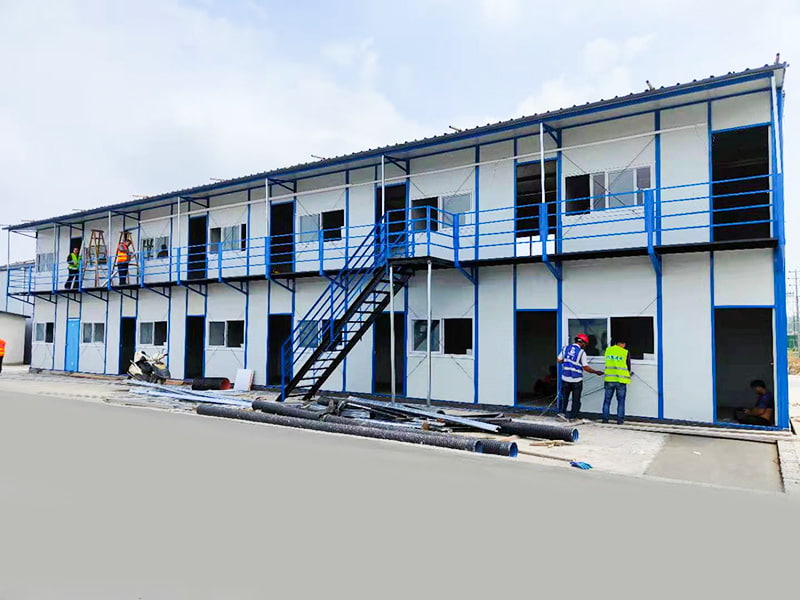
Suzhou Taimao Integrated Housing Co., Ltd. specializes in modular building solutions and prefabricated construction. Its product portfolio includes container houses, folding container houses, double-wing expandable container houses, portable restrooms, K-type prefabricated houses, and steel structures. This broader manufacturing background is relevant because portable sanitation units share many principles with modular buildings: factory production, structural stability, transport planning, rapid assembly, and adaptation to site conditions.
Factory-Controlled Production
Producing components in a controlled factory environment offers several advantages over constructing every element directly at an outdoor site. Materials can be processed using standardized procedures, assembly steps can be repeated consistently, and quality checks can be performed before shipment.
Factory production also reduces the amount of weather-dependent work carried out at the project location. Rain, dust, limited tools, and crowded site conditions can affect conventional field construction. By completing much of the work before delivery, the supplier can help shorten installation time and improve predictability.
Integrated Modular Design
Modular design means that the facility is planned as a coordinated unit rather than as unrelated parts. The structure, interior space, fixtures, openings, and service connections must work together. This approach supports transportation, installation, maintenance, and future modification.
For the XL portable toilet, modular planning can help ensure that the larger interior remains functional while allowing space for optional hygiene facilities. It also supports the integration of doors, ventilation, lighting, drainage, and other practical elements according to project requirements.
Structural and Material Coordination
Portable facilities must balance lightness with stability. Excessive weight can increase transportation difficulty, while insufficient structural strength can reduce durability. A modular manufacturer with experience in steel structures and prefabricated buildings is positioned to evaluate this balance during product development and customization.
Material selection may consider resistance to moisture, corrosion, impact, cleaning chemicals, ultraviolet exposure, and temperature changes. The appropriate choices depend on the intended environment. A coastal installation, a cold-weather worksite, and a dry inland construction project may have different material priorities.
Integrated Building Technology
The company’s broader modular building systems integrate structural elements, insulation, mechanical, electrical, plumbing, heating, ventilation, air conditioning, interior finishes, and smart home technologies into coordinated factory-produced modules. Although a portable toilet is a smaller and more specialized product, the same philosophy of integration can support its development.
When services are considered during the design stage, the finished unit can be easier to install and operate. Water supply, wastewater discharge, lighting, ventilation, and hygiene equipment can be planned as part of one system rather than added without coordination after the structure is complete.
Advanced Prefabrication and Digital Support
Modern modular construction is increasingly supported by digital design, production planning, and project coordination software. Digital tools can help manufacturers review dimensions, identify conflicts, prepare production information, and coordinate the relationship between the unit and the installation site.
Suzhou Taimao Integrated Housing Co., Ltd. provides end-to-end digital software support as part of its modular building approach. This capability can be valuable for customers requiring more than a standard off-the-shelf product. Digital coordination may help define the unit’s internal layout, optional washbasin position, utility connections, transport considerations, and relationship to other modular facilities.
For larger orders, digital planning can help maintain consistency across multiple units. It may also support the creation of a coordinated temporary campus containing restrooms, offices, dormitories, kitchens, storage buildings, and service areas. Such planning can improve circulation, utility organization, and future relocation.
Digital design does not replace physical quality inspection, but it can reduce preventable errors before production begins. When a product is manufactured repeatedly, clear digital documentation can also help maintain standardized dimensions and assembly procedures.
Quality, Safety, and Compliance Considerations
Portable sanitation units should be evaluated for structural safety, user safety, hygiene, transport safety, and operational reliability. Customers should discuss the required standards, certifications, local regulations, and project specifications with the supplier before ordering.
Key considerations may include door security, ventilation, lighting, slip resistance, drainage, stability on the ground, electrical protection, water supply, wastewater handling, and cleaning access. If the unit is intended for public use, buyers should also review accessibility requirements and local sanitation rules.
For emergency or international projects, compliance requirements may vary by country and region. Export packaging, shipping dimensions, customs documentation, electrical standards, plumbing connections, and installation procedures should be clarified in advance.
A responsible manufacturing process should include checks at multiple stages. These may include incoming material inspection, dimensional verification, structural assembly inspection, fixture installation checks, surface and finish review, functional testing, and final pre-shipment inspection. The exact inspection plan can be adapted to the order and destination requirements.
Installation and Site Planning
Although the unit is designed for quick deployment, proper site preparation remains important. The selected location should provide adequate access for delivery, sufficient clearance around the door, stable ground, and appropriate drainage or waste management arrangements.
Before installation, the buyer should confirm how the unit will be transported from the delivery vehicle to its final position. Depending on the project, equipment such as a forklift, crane, lifting frame, or other handling system may be required. The supplier should provide relevant handling guidance for the ordered configuration.
The ground should be reasonably level and capable of supporting the unit during use. In areas with soft soil, heavy rainfall, flooding risk, or uneven terrain, a suitable platform or foundation arrangement may be necessary. The installation plan should also account for wind exposure and the possibility of anchoring or stabilizing the structure.
If a washbasin is included, the site team must plan water supply and wastewater discharge. Some installations may use a connected water system, while others may require a tank-based arrangement. Wastewater handling should comply with local regulations and should be designed to prevent leakage, odors, contamination, or environmental damage.
Lighting and ventilation are important for user comfort and safe operation. The buyer should determine whether the unit will use natural ventilation, mechanical ventilation, grid electricity, batteries, solar power, or another system. These choices can be discussed during customization.
Maintenance and Hygiene Management
Even a durable portable restroom requires regular maintenance. A clear servicing program helps protect the product, maintain hygiene, and extend its service life. The frequency of cleaning depends on the number of users, climate, application, and waste management system.
Routine maintenance may include cleaning the toilet area, disinfecting frequently touched surfaces, checking the door and lock, inspecting the floor, removing waste, checking water and drainage connections, and confirming that ventilation remains effective. If a washbasin is installed, the basin, faucet, drain, water tank, and related components should be inspected regularly.
Operators should use cleaning products that are compatible with the interior surfaces, seals, fixtures, and drainage components. Harsh chemicals or unsuitable tools may damage finishes or reduce the life of certain parts. The supplier’s maintenance recommendations should be followed for the specific configuration.
Odor control depends on several factors, including ventilation, cleaning, waste treatment, drainage design, and usage levels. A good maintenance schedule is generally more effective than relying on fragrance products alone. Any leaks, cracks, loose fittings, damaged doors, or unstable conditions should be corrected promptly.
Customization Possibilities
Customers may have different requirements based on climate, transport conditions, site duration, user group, and available utilities. The basic XL concept can therefore be discussed as a configurable solution rather than a fixed product for every application.
Potential areas for discussion may include interior layout, washbasin installation, hygiene equipment, ventilation, lighting, water storage, wastewater connections, exterior finishes, signage, access arrangements, and integration with other temporary buildings. Buyers should identify essential functions first and then evaluate optional features according to budget and operational needs.
For a short event, a basic quick-deployment configuration may be sufficient. For a long-term construction camp, the customer may require more durable finishes, improved ventilation, dedicated water tanks, enhanced lighting, and a structured maintenance plan. For emergency relief, rapid delivery, simple operation, and easy cleaning may be the highest priorities.
Customization should not compromise transportability or structural performance. Every additional fixture or system affects weight, internal space, maintenance, and installation. A professional manufacturer can help balance these factors during the design stage.
Comparison of Common Temporary Restroom Options
The following table provides a general comparison. Actual performance depends on product configuration, site conditions, maintenance, and local regulations.
| Feature | Compact Standard Portable Toilet | Single-Person XL Outdoor Portable Toilet | Permanent Restroom Building |
|---|---|---|---|
| Deployment speed | Fast | Fast after delivery and setup | Usually slow because of construction work |
| Interior comfort | Basic and space-limited | More spacious and easier to use | Potentially high, depending on design |
| Privacy | Private but compact | Private with a larger personal area | Private, subject to building layout |
| Washbasin integration | Often limited | Optional according to configuration | Normally available through plumbing design |
| Relocation capability | High | High and suitable for repeated deployment | Very limited |
| Infrastructure requirement | Low to moderate | Low to moderate, depending on options | Usually high |
| Suitability for temporary projects | Good | Very good where comfort is important | Limited unless the project is long term |
| Potential for customization | Often limited | More flexible through modular configuration | High but usually more expensive and time-consuming |
Economic and Operational Value
The purchase price is only one part of the total cost of a temporary restroom. Buyers should also consider transport, site preparation, installation labor, utility connections, cleaning, relocation, storage, and eventual reuse. A unit that can be used across several projects may provide stronger long-term value than a facility designed for one location only.
The XL portable toilet can support asset reuse because it is designed for mobility. Contractors, rental businesses, event suppliers, and emergency organizations may be able to redeploy the same unit as project requirements change. This can reduce the need to purchase separate facilities for every temporary site.
Quick installation can also reduce indirect costs. When sanitation is available earlier, work can begin sooner, staff can avoid long walks to distant facilities, and project managers can reduce the need for temporary improvised arrangements. The value of these benefits depends on the individual project, but they are important in schedule-sensitive environments.
The optional washbasin may also improve cost efficiency by combining two functions in one structure. Instead of transporting and maintaining separate toilet and handwashing units, an integrated design may simplify facility management. Buyers should compare the initial configuration cost with the expected operating and logistics benefits.
Environmental Considerations
Temporary facilities should be planned with attention to environmental protection. Proper wastewater management, leak prevention, responsible cleaning, durable materials, and repeated use can all contribute to a lower environmental impact.
A reusable portable unit may reduce the need for repeated construction and demolition at short-term sites. Factory production can also help control material use and reduce waste compared with highly improvised field construction. When a unit is relocated rather than discarded after one project, its embodied resources can be used over a longer service period.
The company’s broader mission includes minimizing ecological impact through efficient modular construction. Its integrated building approach aims to move much of the construction and finishing work into controlled factory environments. For customers planning larger temporary or permanent modular developments, this philosophy can support more organized material management and reduced on-site disruption.
Environmental performance still depends on operation. The unit must be cleaned responsibly, wastewater must be handled legally, and damaged components should be repaired or replaced rather than allowing leaks or contamination. Buyers should include these responsibilities in their facility management plan.
Why Choose an Experienced Modular Manufacturer?
A portable restroom is a specialized product, but its success depends on many of the same capabilities required for modular buildings. The manufacturer must understand structural design, factory assembly, transportation, site installation, service integration, quality control, and customer communication.
Suzhou Taimao Integrated Housing Co., Ltd. brings experience from multiple categories of integrated housing and prefabricated construction. Its portfolio includes container-based buildings, expandable structures, folding units, K-type prefabricated houses, steel structures, and outdoor restrooms. This product range indicates an ability to work with different scales, materials, layouts, and deployment models.
The company provides customized construction site portable houses, temporary housing, mobile homes, and small or large modular homes for sale. Customers looking for a portable restroom may therefore also have access to coordinated solutions for offices, dormitories, kitchens, storage, and other site requirements.
Its modular building system integrates SIP structural insulated panels, structure, insulation, MEP systems, HVAC, interior finishes, and smart home technologies into a unified solution. This demonstrates a focus on system coordination rather than isolated component supply. For projects involving several types of prefabricated facilities, this integrated capability can simplify communication and procurement.
Recommended Purchasing Process
Define the Application
Begin by identifying where the restroom will be used, how long it will remain at the site, how many people will use it, and whether it will be moved regularly. The answers will influence the required structure, sanitation system, interior equipment, and maintenance schedule.
Confirm Utility Conditions
Determine whether the site has access to water, electricity, drainage, sewage treatment, or wastewater storage. If utilities are unavailable, discuss tank-based, self-contained, or alternative arrangements with the manufacturer.
Select Interior Options
Decide whether the unit should include a washbasin, personal hygiene facilities, lighting, ventilation, storage, accessibility features, or other equipment. The internal layout should preserve comfortable movement and allow convenient cleaning.
Review Transport and Installation
Confirm the unit’s delivery dimensions, weight, lifting points, packaging, unloading requirements, site access, and installation method. These details should be reviewed before the order is finalized.
Establish a Maintenance Plan
Plan who will clean, inspect, service, and relocate the unit. A clear maintenance responsibility is particularly important for high-use sites, public events, and emergency deployments.
Check Documentation and Compliance
Request the relevant product information, installation instructions, technical specifications, inspection documents, and export or compliance documentation required for the destination market.
Frequently Asked Questions
What is the Single-Person XL Outdoor Portable Toilet?
It is a spacious mobile restroom designed for one user at a time. It provides more interior room than many compact portable toilets and can be equipped with a washbasin or personal hygiene facilities.
Where can this portable toilet be used?
It is suitable for construction sites, campsites, outdoor events, emergency relief operations, remote industrial locations, temporary accommodation areas, agricultural projects, infrastructure work, and other locations without convenient permanent restroom facilities.
How is it different from a standard portable toilet?
The main difference is its XL single-person interior. The design emphasizes personal comfort, privacy, and freedom of movement. It can also support an optional washbasin or hygiene arrangement, providing greater functional flexibility.
Can a washbasin be installed inside?
Yes. The unit can be equipped with a washbasin or personal hygiene setup according to the customer’s requirements. Water supply, drainage, storage, and maintenance arrangements should be confirmed during the design and ordering process.
Is the unit suitable for frequent relocation?
Yes. It is designed as a portable and flexible facility suitable for relocation between outdoor sites. Handling and transportation should follow the supplier’s instructions, and the receiving site should provide stable ground and suitable access.
Does the unit require permanent foundations?
It is designed for temporary deployment, so a conventional permanent building foundation is generally not the main requirement. However, the site must still provide a stable, level, and properly prepared base. In difficult soil, high-wind, flood-prone, or uneven locations, additional support or anchoring may be required.
Can it be used in emergency relief projects?
Yes. Its private single-user design, quick deployment, portability, and optional hygiene facilities make it suitable for emergency shelters, field operations, temporary settlements, and relief distribution areas. Project planners should evaluate water, wastewater, access, cleaning, and local health requirements.
How quickly can it be used after delivery?
The product is designed for quick deployment and can be ready for use after proper setup and connection. The actual time depends on transportation, site preparation, utility connections, optional equipment, inspection, and local operating requirements.
Is the product customizable?
Customization can be discussed according to the intended use. Possible topics include interior layout, washbasin installation, hygiene equipment, ventilation, lighting, utility connections, finishes, and site integration. The final configuration should be confirmed with the manufacturer.
What maintenance does the unit require?
Regular cleaning, disinfection, waste removal, inspection of doors and fixtures, ventilation checks, drainage inspection, and repair of damaged components are recommended. If a washbasin is included, its water supply, faucet, drain, and storage system should also be checked.
Can the restroom be used together with other modular buildings?
Yes. It can complement portable offices, container houses, folding houses, expandable houses, K-type prefabricated buildings, worker accommodation, storage units, and other temporary structures. A coordinated modular site plan can improve organization and facility management.
What should buyers ask before placing an order?
Buyers should ask about dimensions, weight, materials, utility requirements, washbasin options, transport, lifting, installation, drainage, cleaning, weather suitability, customization, inspection, warranty, spare parts, and documentation for the destination market.
Conclusion
The Single-Person XL Outdoor Portable Toilet provides a practical response to the limitations of many compact temporary restrooms. Its larger private interior creates a more comfortable user experience, while the optional washbasin or hygiene setup allows it to function as a more complete sanitation station. Its portability, quick deployment, durable construction, and flexible application make it suitable for construction, camping, emergency relief, events, remote industry, and temporary accommodation projects.
Its strongest advantage is the combination of mobility and comfort. Buyers do not have to choose between a facility that is easy to move and one that offers a more usable interior. The XL design is intended to provide both, while modular manufacturing allows the configuration to be adapted to different site conditions.
The product also benefits from the broader capabilities of Suzhou Taimao Integrated Housing Co., Ltd. As a supplier of modular housing, container buildings, prefabricated structures, steel systems, and portable sanitation facilities, the company supports factory-controlled production, integrated design, customization, and project-oriented delivery. Its experience with SIP modular systems and coordinated building services further strengthens its ability to provide complete prefabricated solutions.
For customers seeking a reliable outdoor restroom with additional space, privacy, and hygiene flexibility, this product offers a strong alternative to basic compact units. By defining the application carefully, confirming utilities, planning installation, and maintaining the facility properly, organizations can use the Single-Person XL Outdoor Portable Toilet as a dependable part of a modern temporary infrastructure system.
References
1. International Organization for Standardization. Principles of Modular and Prefabricated Construction.
2. World Health Organization. Guidelines for Sanitation and Health.
3. International Labour Organization. Safety and Welfare Facilities on Construction and Remote Worksites.
4. United Nations Human Settlements Programme. Temporary Housing and Emergency Settlement Planning.
5. International Code Council. General Principles for Building Safety, Accessibility, and Temporary Structures.
6. Suzhou Taimao Integrated Housing Co., Ltd. Product and Company Information for Modular Housing and Portable Sanitation Solutions.
Product: Single-Person XL Outdoor Portable Toilet
For exclusive deals and latest offers, sign up by entering your email address below.

-
TEL:+86 18762912902
-
Email:cntaimao@163.com
-
WhatsApp:
-
Add:Group 5, Cao Village, Zhenze Town, Suzhou, Jiangsu, China
Copyright © Suzhou Taimao Integrated Housing Co., Ltd.
All Rights Reserved.
 Wholesale movable homes for sale
custom built modular homes
Wholesale movable homes for sale
custom built modular homes