

 EN
EN
 русский
 Español
 عربى
عربى Français
Single-Person Outdoor Portable Toilet: A Compact, Durable, and Efficient Sanitation Solution
Admin 2026-08-12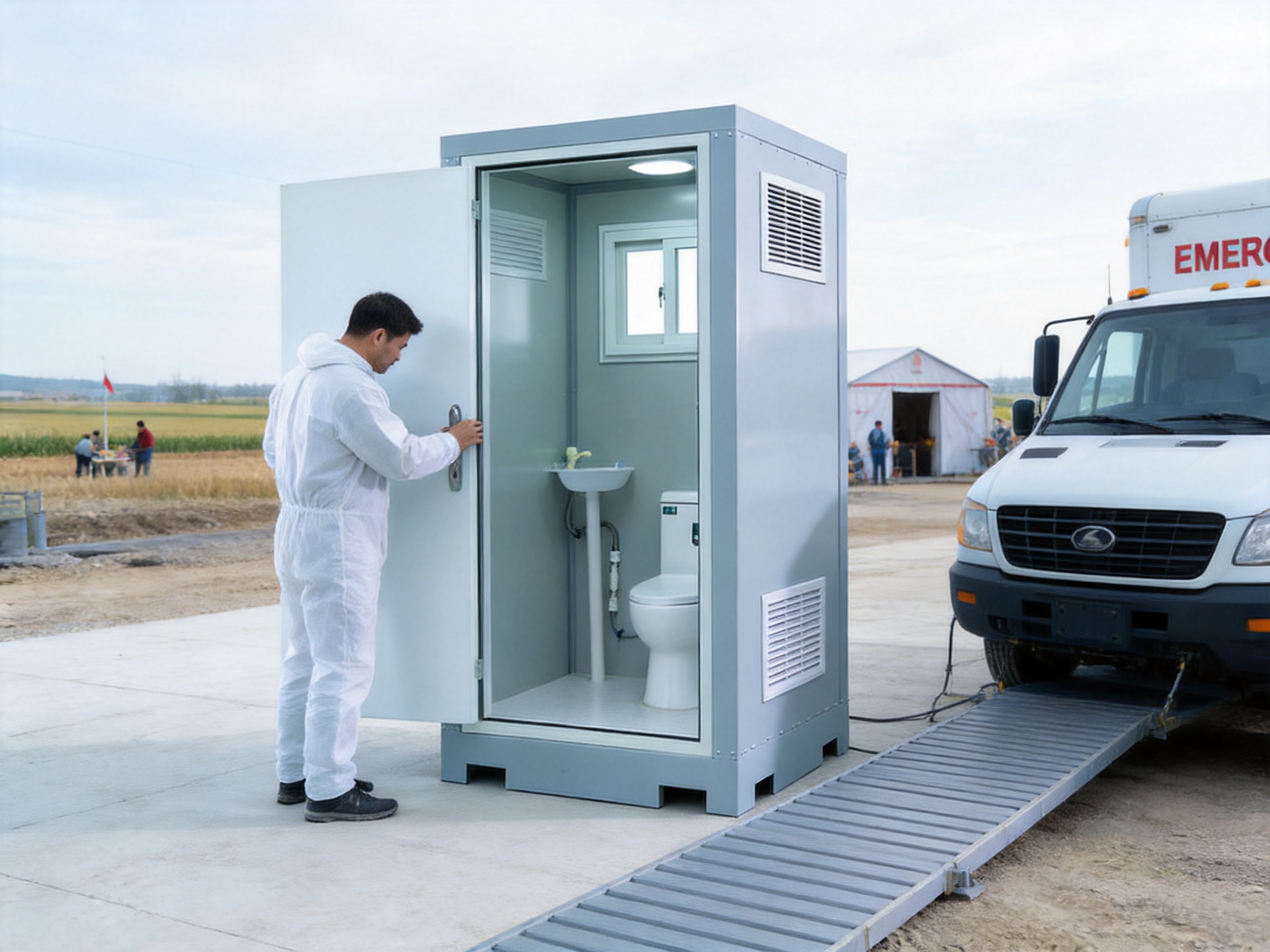
Reliable sanitation is essential wherever people work, gather, travel, or temporarily live. Construction sites, outdoor events, emergency response locations, parks, roadside facilities, agricultural operations, and remote work areas often require toilets that can be installed quickly without the cost and complexity of permanent construction. In these situations, a compact single-person outdoor portable toilet can provide a practical answer.
The Single-Person Outdoor Portable Toilet is designed for locations where space efficiency, mobility, durability, and affordability are equally important. It offers the basic functions of a private restroom in a compact structure that can be deployed and relocated as project conditions change. Unlike larger portable restroom systems, XL units, or dual-compartment models, this product focuses on individual use and a reduced footprint without removing the essential elements required for convenient sanitation.
Manufactured by Suzhou Taimao Integrated Housing Co., Ltd., the unit reflects the company’s experience in modular building solutions, portable structures, prefabricated facilities, and integrated manufacturing. Its design philosophy is straightforward: create a restroom that is easy to transport, quick to position, simple to operate, and durable enough for demanding outdoor environments.
Content
- 1 Why Compact Portable Sanitation Matters
- 2 Product Overview
- 3 Key Advantages of the Single-Person Design
- 4 Comparison with Alternative Portable Restroom Solutions
- 5 Manufacturing Strengths Behind the Product
- 6 Materials, Structure, and Outdoor Performance
- 7 Applications Across Different Industries
- 8 Installation and Deployment Considerations
- 9 Maintenance and Long-Term Value
- 10 Environmental and Resource Considerations
- 11 Why Choose a Specialized Modular Manufacturer?
- 12 Customization and Project Coordination
- 13 Procurement Guide for Buyers
- 14 Q&A: Frequently Asked Questions
- 14.1 What is a single-person outdoor portable toilet?
- 14.2 How is it different from an XL portable toilet?
- 14.3 Is the unit suitable for construction sites?
- 14.4 Can it be used at outdoor events?
- 14.5 Can the portable toilet be relocated?
- 14.6 Is the structure weather-resistant?
- 14.7 Does the product require permanent construction?
- 14.8 Can the product be customized?
- 14.9 What should be prepared before delivery?
- 14.10 How often does the unit need cleaning?
- 14.11 Can the unit be used for multiple projects?
- 14.12 Why work with a modular building manufacturer?
- 15 Conclusion
- 16 References
- 17 Product: Single-Person Outdoor Portable Toilet
Why Compact Portable Sanitation Matters
Many temporary facilities fail not because they lack basic functions, but because they occupy too much space, require excessive installation work, or are difficult to relocate. A single-person outdoor toilet addresses these limitations by concentrating essential restroom functions within a compact and manageable enclosure.
Urban construction sites are a good example. Available land may already be occupied by machinery, building materials, safety barriers, temporary offices, and worker access routes. Installing a large sanitation block can reduce operational space and interfere with site logistics. A single-person unit can be positioned in a designated corner while preserving valuable working area.
Small event venues face similar challenges. A community fair, outdoor exhibition, sports gathering, wedding, market, or private celebration may need additional restroom capacity, but the organizer may not have enough room for a long row of large units. A compact individual toilet can be placed near the activity area without dominating the site layout.
Temporary projects also change over time. A toilet that is suitable for one phase of a construction project may need to be moved as the building footprint expands. Portability allows the facility to follow the users rather than forcing the project to adapt around a fixed structure.
In emergency and relief situations, deployment speed is often more important than architectural complexity. A compact portable restroom can be transported with other temporary facilities and installed where sanitation is urgently needed. Its simple configuration supports fast planning and reduces the number of logistical steps required before use.
Product Overview
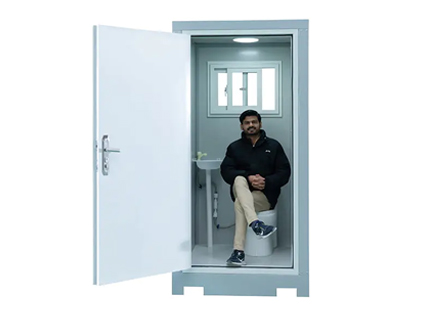
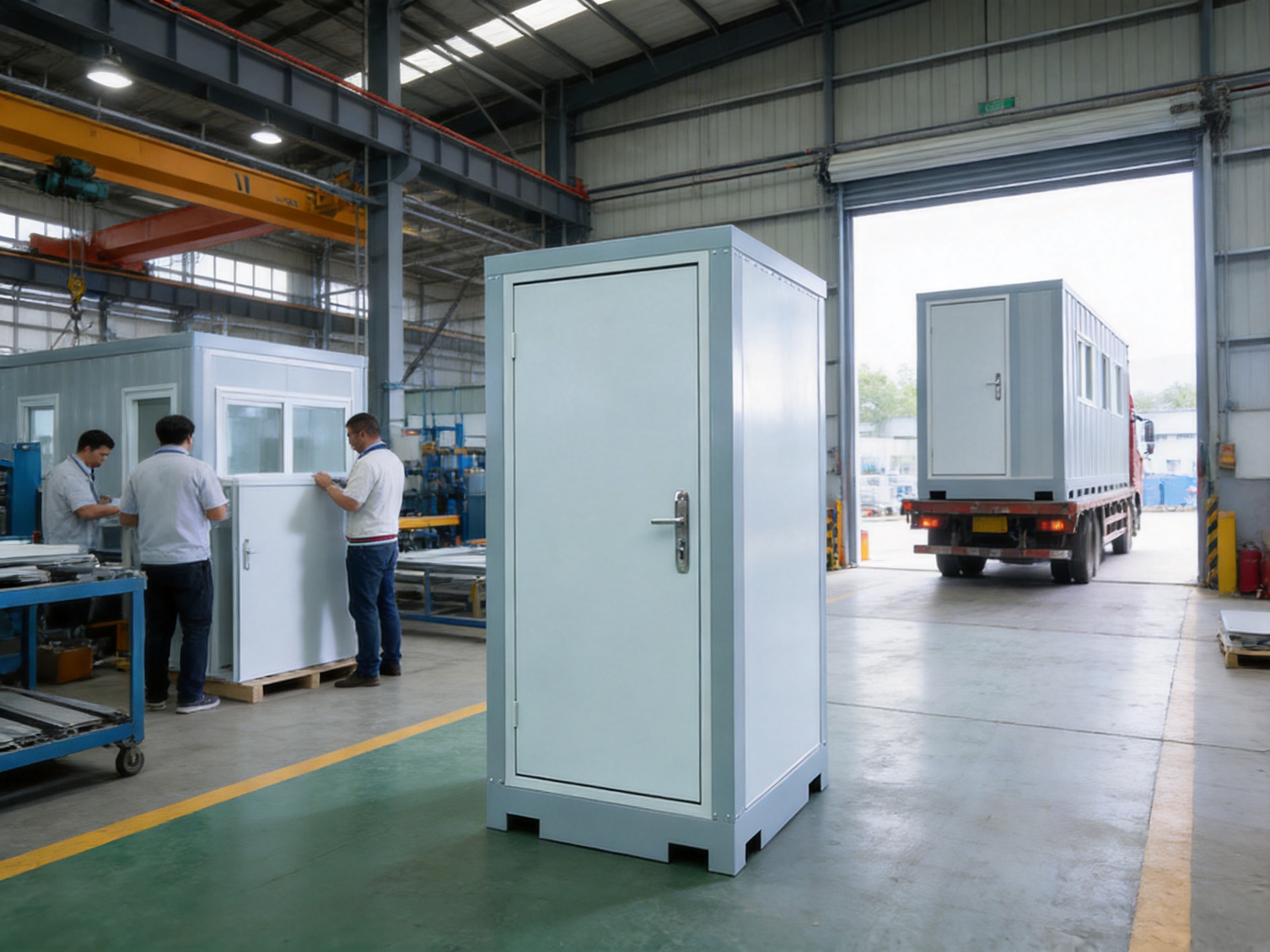
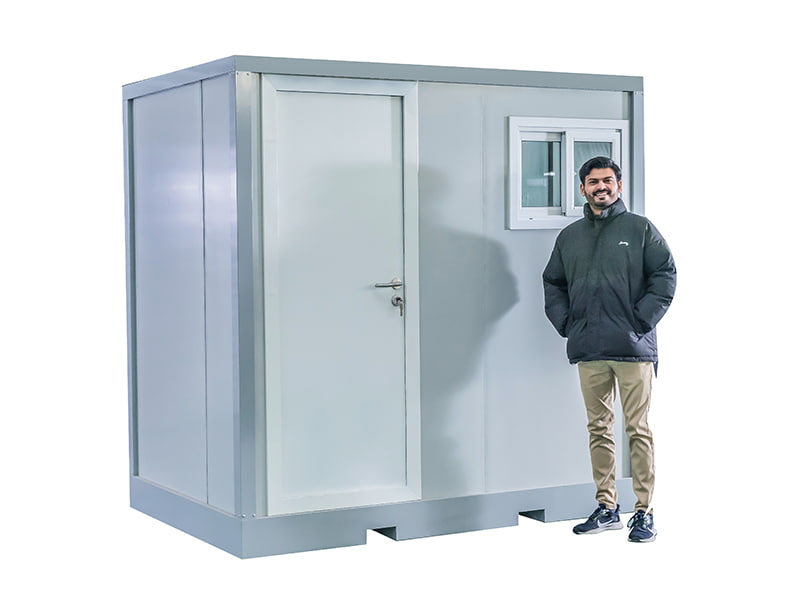
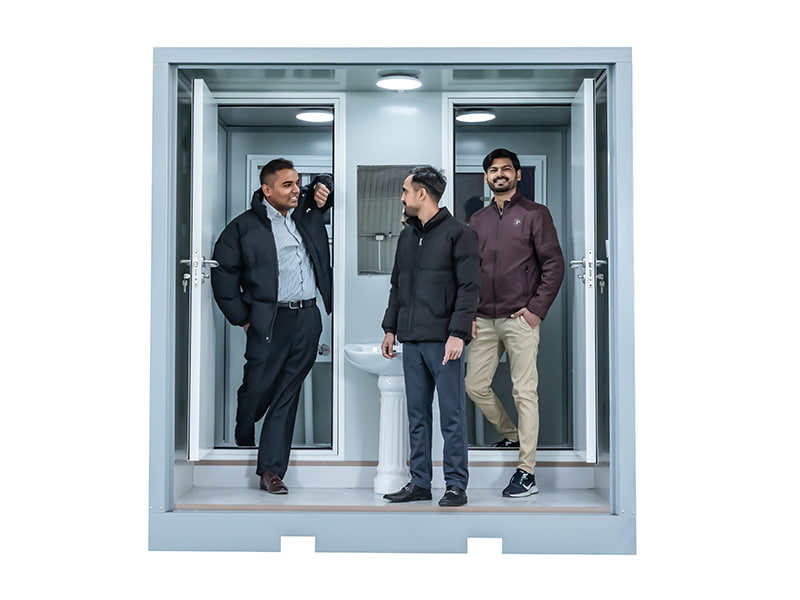
The Single-Person Outdoor Portable Toilet is a standalone mobile restroom designed for individual use. It combines a weather-resistant enclosure with the basic facilities expected in an outdoor toilet. Its compact structure supports privacy while reducing the amount of land, material, and transport capacity required compared with larger multi-user systems.
The unit is intended for temporary or semi-permanent use. It can serve a project for a short period, remain in place throughout a construction schedule, or be relocated to another site when the original need has ended. This flexibility makes it suitable for businesses and organizations that manage multiple sites or frequently changing operational requirements.
Although the unit is compact, compactness does not mean that functionality has been eliminated. The design is focused on essential restroom use, practical access, basic user comfort, and straightforward maintenance. The result is a sanitation facility that prioritizes utility rather than unnecessary complexity.
The product is especially appropriate for customers seeking a cost-effective alternative to permanent masonry restrooms or oversized portable toilet blocks. It can reduce the need for extensive ground preparation, complicated plumbing work, and long construction periods. Depending on the selected sanitation configuration and local site conditions, it can be incorporated into a broader temporary facility plan with limited disruption.
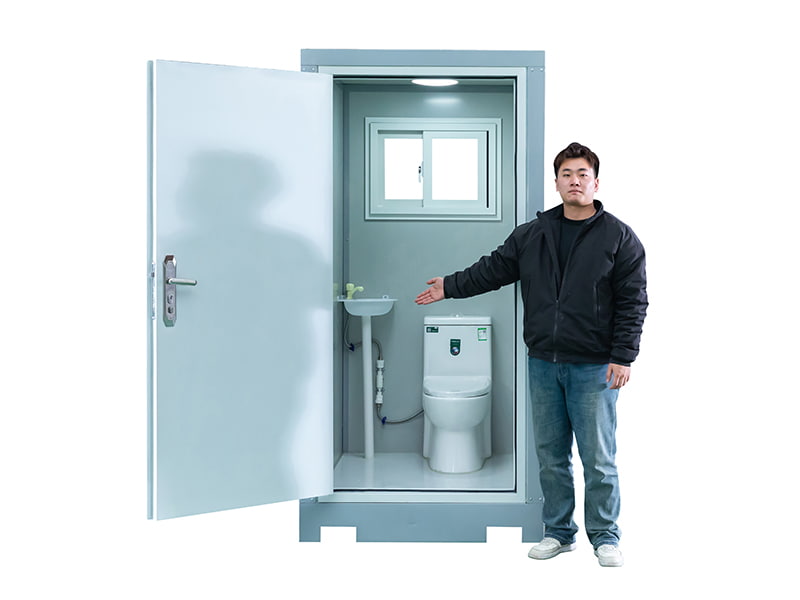
Single-Person Outdoor Portable Toilet
Key Advantages of the Single-Person Design
Compact and Space-Saving Configuration
The most obvious advantage is the unit’s small footprint. When land is limited, every square meter matters. A single-person toilet requires less placement area than a multi-stall restroom, helping site managers preserve room for equipment, storage, pedestrian movement, emergency access, and work operations.
The compact form is also valuable in crowded urban environments. Construction sites in cities frequently operate between existing buildings, roads, sidewalks, and property boundaries. A large sanitation facility may be impractical, while a smaller unit can be integrated into a carefully planned site layout.
Space efficiency can also improve the appearance and organization of a temporary site. Instead of building a large improvised restroom structure, the operator can install a purpose-designed enclosure in a controlled location. This supports better separation between sanitation areas, work zones, public access areas, and material storage.
Private Individual Use
A single-person enclosure offers a clear level of privacy. Only one user occupies the facility at a time, which can be important at public events, work areas, temporary accommodation sites, and locations serving users with different personal needs.
Privacy also improves the perceived quality of a temporary facility. Users are more likely to accept and properly use a restroom when the structure feels secure, separate, and purpose-built. A private enclosure can contribute to a more orderly and respectful environment, particularly where permanent indoor restrooms are unavailable.
Portable and Easy to Relocate
Mobility is a central product advantage. The unit can be positioned where it is needed and moved when the site layout changes. This is particularly useful for construction contractors, event companies, municipalities, rental providers, agricultural operators, and emergency management teams.
Relocation can extend the product’s useful life because the same unit may support multiple projects. Rather than purchasing a separate restroom for every temporary location, an organization can manage a fleet of portable units and distribute them according to demand.
A mobile facility can also support phased construction. During the foundation phase, it may be placed near the initial workforce area. As the structure rises and work teams move, the unit can be repositioned to maintain convenient access without requiring a completely new sanitation installation.
Durable Outdoor Construction
Outdoor facilities are exposed to changing weather, dust, moisture, sunlight, temperature variations, and frequent handling. The Single-Person Outdoor Portable Toilet is built around a robust structure intended to provide stability and weather resistance during regular outdoor use.
Durability is more than a question of service life. A stable enclosure helps protect user privacy and safety. It also reduces the likelihood of repeated repairs, unplanned downtime, and replacement expenses. For commercial operators, this can translate into improved asset utilization and lower total ownership costs.
Material selection, structural assembly, surface treatment, panel integration, and quality inspection all influence outdoor performance. A reliable manufacturing process helps ensure that these elements work together rather than depending solely on manual adjustment at the installation site.
Fast Deployment
Temporary sanitation is often required on short notice. A product that arrives ready for efficient placement can help reduce the time between delivery and use. This matters for urgent construction schedules, seasonal events, emergency projects, and rapidly changing site conditions.
Compared with constructing a permanent restroom, a portable unit can significantly reduce preparation and installation requirements. There may be no need for masonry walls, long excavation work, extensive interior finishing, or a lengthy building schedule. The precise installation process depends on the selected configuration and local regulations, but the overall concept is designed around speed and simplicity.
Cost-Effective Operation
The compact size can reduce material consumption, transport requirements, installation labor, and site preparation. These savings make the unit attractive to buyers who need practical sanitation without investing in a large permanent structure.
Cost-effectiveness should be evaluated across the entire product life cycle rather than only by purchase price. A durable and movable unit can provide value through repeated use, lower relocation costs, reduced maintenance requirements, and easier inventory management. This makes it suitable for organizations that need reliable temporary infrastructure over several years.
Comparison with Alternative Portable Restroom Solutions
Portable sanitation products vary widely in size, construction quality, intended use, and maintenance requirements. The Single-Person Outdoor Portable Toilet occupies a useful middle position between improvised facilities and larger, more complex restroom systems.
| Solution Type | Primary Strength | Typical Limitation | Where the Single-Person Unit Has an Advantage |
|---|---|---|---|
| Single-person portable toilet | Compact private sanitation | Serves one user at a time | Efficient where land, budget, and transport capacity are limited |
| XL portable restroom | More interior space | Requires more placement area and transport capacity | More suitable when a small footprint is a priority |
| Dual-compartment restroom | Multiple users or separate compartments | Higher cost and larger installation area | More practical for small or low-volume sites |
| Permanent masonry restroom | Long-term fixed installation | Slow construction and high site investment | Faster and more flexible for temporary applications |
| Improvised temporary enclosure | Low initial complexity | Uncertain durability, appearance, and sanitation performance | Provides a purpose-designed and more consistent facility |
| Indoor restroom in an existing building | Full building services | May be unavailable or too far from the work area | Places sanitation directly at remote or outdoor locations |
Compared with an XL or dual-compartment portable toilet, the single-person model is not intended to maximize capacity. Its advantage is targeted efficiency. It avoids paying for unused volume when the site only needs an individual restroom. This can be particularly important for small teams, limited-duration projects, remote work areas, and locations where several small units are more practical than one large block.
Compared with a permanent restroom, the unit provides speed and flexibility. Permanent construction may require design approval, excavation, drainage connections, utility installation, foundation work, interior finishing, and inspections. A portable facility can often meet a temporary need without committing the owner to a permanent building project.
Compared with improvised structures, the product offers a more controlled and professional solution. A purpose-designed unit is more likely to provide consistent privacy, structural stability, weather protection, and maintainability. It also supports a clearer procurement and management process for companies operating multiple sites.
Manufacturing Strengths Behind the Product
The performance of a portable restroom depends heavily on how it is designed and manufactured. A unit may look simple from the outside, but its usability is determined by the accuracy of its structure, the quality of its panels, the fit of its components, and the consistency of its assembly.
Suzhou Taimao Integrated Housing Co., Ltd. specializes in integrated housing and modular building solutions. This background is important because portable sanitation products share many manufacturing principles with modular buildings: prefabricated components, controlled assembly, efficient transportation, repeatable quality, and rapid on-site deployment.
Integrated Design Approach
An integrated design approach considers the enclosure, internal facilities, structural connections, access points, ventilation requirements, surface finishes, and transportation needs as one system. This helps prevent common problems caused by treating each component separately.
For example, a restroom structure must balance compact dimensions with user access. It must be stable enough for outdoor placement while remaining manageable for movement. Its exterior should withstand environmental exposure, while its interior should support cleaning and routine maintenance. These requirements are interconnected, and coordinated design helps achieve a more dependable result.
Factory-Controlled Production
Factory production provides a more consistent environment than fully improvised field construction. Materials can be received, stored, processed, assembled, and inspected through organized procedures. Workers can use repeatable production methods, dedicated tools, and standardized quality checkpoints.
Controlled manufacturing can improve dimensional accuracy and component compatibility. It can also reduce weather-related interruptions, site waste, and inconsistent workmanship. Once the unit reaches the customer, much of the complicated production work has already been completed in the factory.
This is a major advantage over facilities assembled entirely on-site. On-site construction quality may vary according to local labor, weather, available equipment, and schedule pressure. Factory prefabrication helps transfer more of the work into a controlled production environment where processes can be monitored and repeated.
Modular Manufacturing Experience
The company’s broader modular building capabilities support the production of compact portable facilities. Modular manufacturing requires careful attention to structural interfaces, panel alignment, interior integration, shipping dimensions, and assembly sequence. These skills are directly relevant to portable toilets and other temporary site facilities.
Modular experience also encourages practical design for transportation and installation. A product must not only function after assembly; it must be packaged, handled, delivered, placed, and maintained efficiently. Considering the full logistics chain helps reduce avoidable delays and damage.
Integrated Structural and Building Components
Suzhou Taimao’s company information describes a SIP-based modular building system that integrates structure, insulation, mechanical, electrical, plumbing, heating, ventilation, air conditioning, interior finishes, and smart home technologies into a unified solution. Although the Single-Person Outdoor Portable Toilet is a more compact product, the same integrated manufacturing mindset is valuable.
Instead of viewing the restroom as an empty shell, the manufacturer can consider its structural enclosure, interior usability, sanitation equipment, service access, and external durability together. This creates a more coherent product and supports efficient production.
Quality and Safety Focus
Temporary does not mean unimportant. A portable restroom must be stable, usable, hygienic, and appropriate for its operating environment. Quality control should therefore cover incoming materials, component processing, assembly, finishing, functional checks, and final inspection.
The company emphasizes quality and safety as part of its modular building mission. For customers, this indicates a focus on repeatable products rather than one-off site fabrication. A consistent production process is especially valuable when buyers order multiple units or require the same design across several locations.
Materials, Structure, and Outdoor Performance
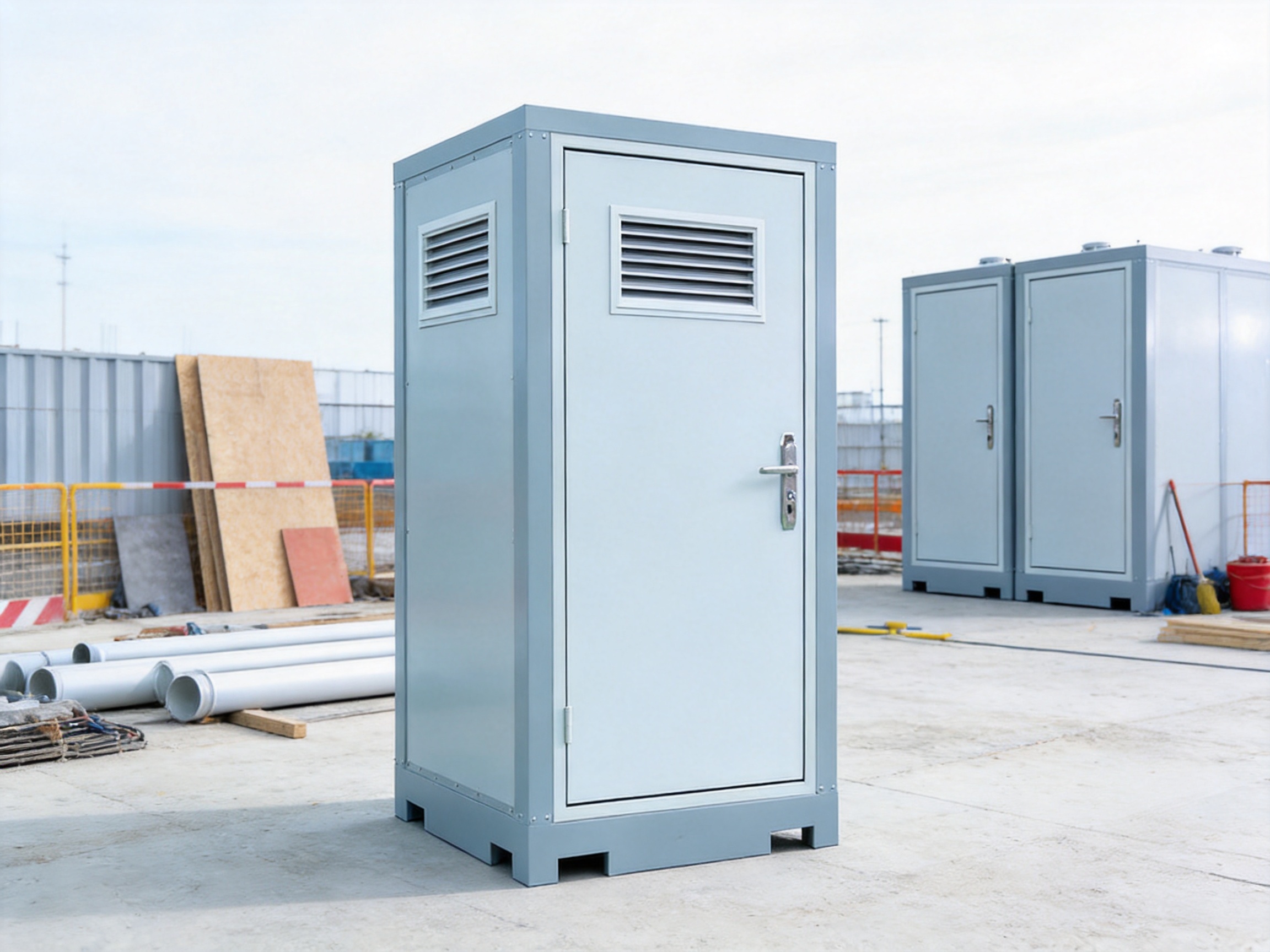
The external structure must protect the interior from ordinary outdoor conditions. A weather-resistant design helps the facility remain usable during changing seasons and in different geographic environments. The appropriate material selection depends on the customer’s requirements, local climate, transportation method, and intended service period.
Structural stability is also essential. The unit should be placed on a suitable surface and secured according to site conditions and installation guidance. A stable base helps reduce movement, uneven loading, door misalignment, and unnecessary stress on the enclosure.
Interior surfaces should support routine cleaning and inspection. A portable restroom is exposed to moisture and frequent contact, so smooth, durable, and practical finishes can contribute to better hygiene management. Customers should confirm the precise finish, sanitary equipment, drainage arrangement, and ventilation configuration during the quotation and technical review process.
Weather resistance does not eliminate the need for maintenance. Regular checks of doors, hinges, seals, fasteners, ventilation openings, floor areas, and sanitation components remain important. A simple preventive maintenance schedule can preserve performance and identify minor issues before they become expensive repairs.
Applications Across Different Industries
Construction and Infrastructure Projects
Construction workers need convenient access to sanitation throughout a project. The Single-Person Outdoor Portable Toilet can support small crews, isolated work zones, renovation projects, road construction, bridge work, utility installation, and building sites with limited available land.
Its mobility is particularly useful when the active work area changes. Contractors can reposition the unit as workers move between excavation, structural, finishing, and landscaping phases. This reduces unnecessary walking time and helps maintain a better-organized worksite.
Outdoor Events
Event organizers must consider visitor comfort, public health, site appearance, and crowd movement. A compact private toilet can provide supplementary capacity at small events, private gatherings, temporary exhibitions, sports activities, and outdoor celebrations.
Because it occupies less room than a larger restroom block, it may be easier to place near entrances, activity areas, staff zones, or remote sections of a venue. Event operators can also distribute several individual units around a site rather than concentrating all facilities in one location.
Emergency and Disaster Response
Floods, storms, earthquakes, fires, and other emergencies can damage permanent sanitation infrastructure. Temporary facilities may be required for shelters, relief distribution points, medical support areas, and temporary worker camps.
A portable individual toilet can be included in a broader emergency logistics plan. Its compact format can simplify transport and allow sanitation services to be established in places where permanent utilities are unavailable or damaged. Local authorities and response organizations must still evaluate waste management, cleaning, accessibility, and public health requirements before deployment.
Agricultural and Rural Operations
Farms, nurseries, orchards, greenhouses, and remote agricultural facilities often have workers operating far from permanent buildings. A mobile toilet can improve convenience and reduce the need for workers to travel long distances during the workday.
Seasonal agricultural operations can benefit from a unit that is deployed during planting or harvesting periods and relocated or stored after the season. Its practical design can support temporary labor arrangements without requiring permanent construction at every work area.
Remote Commercial and Industrial Sites
Mining support areas, warehouses under construction, outdoor maintenance yards, solar farms, wind energy projects, and remote industrial operations may need basic sanitation before permanent buildings are completed. A portable unit can bridge this gap and remain useful throughout the project lifecycle.
Public and Community Facilities
Municipalities and community organizations may use compact outdoor toilets in parks, recreation areas, temporary markets, roadside locations, and public improvement projects. A professional prefabricated unit can offer a more organized solution than temporary makeshift facilities.
Installation and Deployment Considerations
Successful deployment begins with site planning. The location should be accessible to users and service personnel while remaining clear of heavy equipment routes, flood-prone areas, unstable ground, and unsafe edges. The surface should be sufficiently level and capable of supporting the unit under expected conditions.
Access routes should be considered before delivery. Customers should evaluate vehicle entry, turning space, unloading requirements, and the final movement path from the delivery point to the installation position. Planning these details in advance can reduce handling time and prevent unnecessary relocation work.
Where applicable, the sanitation system should be coordinated with local waste collection, drainage, water supply, or treatment arrangements. Requirements vary according to the product configuration, local regulations, site conditions, and intended period of use. A technical review with the supplier is recommended before confirming an order.
The unit should be positioned so that users can enter and leave safely. Adequate clearance around the door supports privacy, maintenance, and emergency access. If several units are installed, spacing and orientation should be planned to prevent congestion and support efficient servicing.
For long-term temporary projects, operators should establish a maintenance routine. Cleaning frequency depends on usage, climate, event duration, and sanitation configuration. High-use locations require more frequent servicing than small private work areas.
Maintenance and Long-Term Value
One of the benefits of a compact portable restroom is its relatively straightforward maintenance profile. Regular care can help preserve the exterior, interior, hardware, and sanitation equipment.
Cleaning should follow a planned schedule based on user volume. Interior surfaces, floor areas, door handles, ventilation components, and frequently touched points should be checked regularly. Waste collection or treatment should be performed according to the selected sanitation system and applicable health requirements.
Doors and hardware should be inspected for smooth operation. Hinges, locks, handles, seals, and fasteners may require adjustment or replacement after repeated use or transportation. Early attention to small issues helps protect privacy and prevent larger structural problems.
Exterior panels should be checked after severe weather or relocation. Operators should look for impact damage, loose connections, water entry, corrosion, or signs of movement. If the unit is transferred between sites, inspection before and after transport is a sensible management practice.
When properly maintained, a portable restroom can become a reusable asset rather than a single-project purchase. A construction company may use the same unit across several contracts. An event supplier may maintain a fleet for seasonal deployment. A municipality may move units between parks and public projects according to demand.
This reusable character is an important advantage over disposable or improvised alternatives. It supports more predictable budgeting and may reduce the environmental and financial cost associated with repeatedly constructing temporary facilities.
Environmental and Resource Considerations
Temporary construction can generate significant material waste when facilities are built quickly and demolished after a short period. A reusable portable restroom offers a more efficient alternative by allowing the same structure to serve multiple sites and projects.
Factory production can also support better material control. Components are processed in a planned environment, which may reduce offcuts, unnecessary packaging, and uncontrolled site waste. Efficient transportation and compact design can further support lower logistical demand, although the actual environmental impact depends on shipping distance, vehicle type, materials, maintenance, and end-of-life handling.
The company’s broader modular building mission includes reducing ecological impact through prefabrication and controlled manufacturing. The SIP modular system described in the company information is designed to move a large portion of construction and finishing work into factory conditions. This approach can shorten on-site work, reduce disruption, and improve production efficiency.
For customers selecting a portable toilet, environmental performance should be considered alongside durability and reuse. A product that lasts longer, can be repaired, and can be moved between projects may provide better resource efficiency than a lower-quality unit that requires frequent replacement.
Why Choose a Specialized Modular Manufacturer?
A specialized modular manufacturer can provide more than a standard catalog product. The supplier understands how structures are designed for transport, factory assembly, rapid installation, and repeated use. This knowledge can help customers select a configuration suited to their actual project rather than purchasing an oversized or unsuitable facility.
Suzhou Taimao Integrated Housing Co., Ltd. operates in the broader field of integrated housing, portable buildings, prefabricated structures, and steel construction. Its product categories include assembled container houses, folding container houses, double-wing expandable container houses, portable restrooms, K-type prefabricated houses, and steel structures.
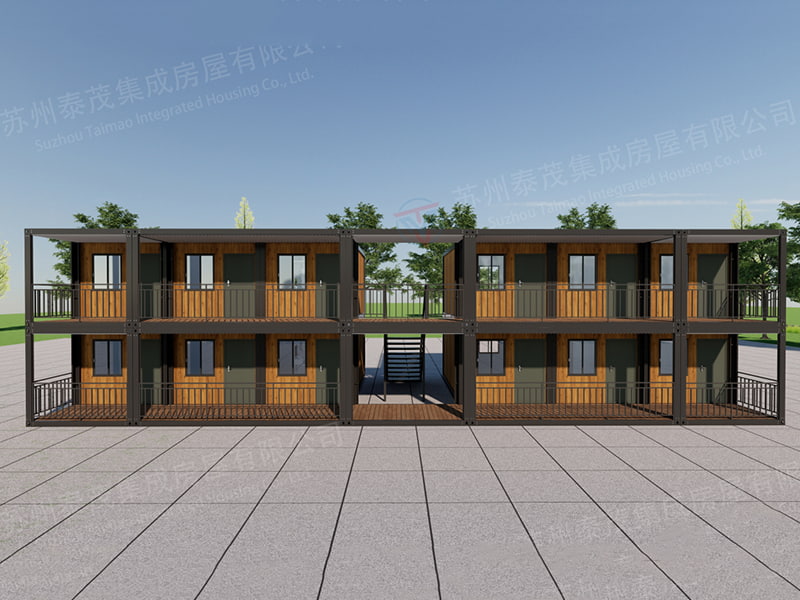
This range indicates experience with different forms of temporary and modular infrastructure. Customers requiring more than a single toilet may be able to coordinate sanitation facilities with portable offices, worker accommodation, site storage, guard rooms, temporary classrooms, or other modular buildings.
The company also describes end-to-end digital software support and proprietary manufacturing technologies as part of its service capabilities. Digital coordination can help improve design communication, production planning, documentation, and project tracking. For buyers managing a larger temporary facility project, these capabilities may simplify communication between the supplier, contractor, logistics team, and installation personnel.
Customization and Project Coordination
Although the standard product is designed for practical individual use, project requirements can vary. Customers may need specific external finishes, sanitation equipment, ventilation arrangements, internal accessories, access solutions, or branding restrictions. Customization should be discussed during the technical inquiry stage.
The best customization process begins with a clear understanding of the application. Important considerations may include the number of users, expected daily traffic, climate, project duration, transportation route, available placement area, cleaning method, local regulations, and whether the unit will be relocated frequently.
Customers should also clarify the delivery scope. Questions may include whether the product is supplied fully assembled, which sanitation components are included, what site preparation is required, how unloading is handled, and which maintenance items are recommended. Clear documentation reduces uncertainty and helps the buyer prepare the site correctly.
For projects involving several products, coordinated planning can improve delivery efficiency. Portable toilets may be shipped together with container offices, accommodation units, or other prefabricated facilities. A modular manufacturer with a wider product portfolio may be able to organize compatible delivery and project support.
Procurement Guide for Buyers
Before placing an order, buyers should define the purpose of the unit. A toilet for a small construction crew may have different requirements from a public event facility or an emergency shelter installation. Defining the use case helps determine the appropriate sanitation configuration and service plan.
Next, evaluate the site. Measure the available placement area, identify access restrictions, confirm the ground condition, and determine whether the unit will remain in one position or move regularly. These details influence transportation, installation, and long-term operation.
Consider the expected service period. A unit used for several weeks may be evaluated primarily for fast deployment and economical rental or purchase. A unit intended for repeated use over several years should be assessed more carefully for durability, maintainability, replacement parts, and lifecycle cost.
Review the complete product specification with the supplier. The available information identifies the product as a compact, durable, fully functional, portable, and cost-effective outdoor restroom, but exact dimensions, materials, internal equipment, waste system, and optional features should be confirmed for each order.
Finally, confirm logistics and after-sales support. Buyers should ask about packaging, loading, transportation, unloading, installation guidance, spare parts, maintenance recommendations, and technical communication. A reliable supplier relationship can be as important as the initial product selection, especially for commercial users managing multiple units.
Q&A: Frequently Asked Questions
What is a single-person outdoor portable toilet?
It is a compact standalone restroom designed for individual use in outdoor, temporary, or remote locations. It provides essential restroom functions inside a private enclosure and can be moved when project or site requirements change.
How is it different from an XL portable toilet?
The single-person model focuses on a smaller footprint and efficient individual use. An XL unit generally provides more interior space but requires more room for placement and may involve greater transport and installation requirements.
Is the unit suitable for construction sites?
Yes. Its compact structure and portability make it suitable for construction zones, renovation projects, infrastructure work, and other temporary work areas. The final placement should be selected according to safety, access, ground, and sanitation requirements.
Can it be used at outdoor events?
Yes. It can provide private restroom capacity at small events, outdoor gatherings, markets, exhibitions, sports activities, and temporary venues. Event organizers should plan cleaning and servicing according to expected user volume.
Can the portable toilet be relocated?
Yes. Portability is one of its principal advantages. Relocation should be performed with suitable handling equipment and according to the supplier’s transportation and placement guidance.
Is the structure weather-resistant?
The product is designed with a durable and weather-resistant structure for outdoor use. However, weather resistance does not remove the need for correct placement, anchoring where required, routine inspection, and maintenance after severe weather.
Does the product require permanent construction?
No. It is designed as a portable temporary sanitation solution and does not require the same level of permanent building work as a masonry restroom. Site-specific utility, drainage, waste management, and regulatory requirements must still be reviewed.
Can the product be customized?
Customization may be available depending on the project and order requirements. Buyers should discuss dimensions, internal equipment, materials, finishes, ventilation, access features, and delivery scope with the manufacturer before ordering.
What should be prepared before delivery?
The buyer should prepare a safe and reasonably level placement area, confirm vehicle access, plan unloading and movement routes, and coordinate any required sanitation, drainage, waste collection, or utility arrangements.
How often does the unit need cleaning?
Cleaning frequency depends on usage volume, climate, project duration, and the sanitation system. High-traffic event locations require more frequent service than low-use private work areas. Operators should establish a schedule before the unit enters service.
Can the unit be used for multiple projects?
Yes. Its movable design supports reuse across construction sites, events, seasonal operations, public spaces, and emergency projects. Proper cleaning, inspection, transport, and storage practices help preserve its long-term value.
Why work with a modular building manufacturer?
A modular manufacturer understands prefabrication, factory-controlled production, transportation, rapid deployment, and integrated building components. This experience can support more consistent quality and may simplify the procurement of related temporary buildings.
Conclusion
The Single-Person Outdoor Portable Toilet is a focused solution for customers who need reliable sanitation without the space, expense, and construction time associated with a larger or permanent facility. Its compact footprint makes it suitable for limited sites, while its private individual configuration supports practical use in construction, events, rural operations, emergency response, and public facilities.
Its main competitive advantages are space efficiency, portability, durable outdoor construction, fast deployment, simple project integration, and cost-effective long-term use. Rather than providing unnecessary capacity, it delivers the essential functions needed by one user in a manageable and reusable structure.
The product also benefits from the manufacturing strengths of Suzhou Taimao Integrated Housing Co., Ltd. The company’s experience in modular housing, prefabricated structures, steel construction, integrated building systems, factory production, and digital project support provides a strong foundation for producing dependable temporary facilities.
For buyers, the best results come from matching the unit to the site, usage level, sanitation system, climate, delivery route, and maintenance plan. With appropriate planning and regular care, this portable restroom can serve as a durable sanitation asset for one project or many. It represents a practical step toward faster, more organized, and more flexible temporary infrastructure.
References
1. Product information supplied for the Single-Person Outdoor Portable Toilet.
2. Company information supplied by Suzhou Taimao Integrated Housing Co., Ltd.
3. General principles of modular and prefabricated construction, including factory-controlled assembly and rapid site deployment.
4. General guidelines for temporary sanitation planning, outdoor facility maintenance, site access, and waste management.
5. General practices for portable building logistics, preventive maintenance, reusable temporary infrastructure, and construction-site facility planning.
Product: Single-Person Outdoor Portable Toilet
For exclusive deals and latest offers, sign up by entering your email address below.

-
TEL:+86 18762912902
-
Email:cntaimao@163.com
-
WhatsApp:
-
Add:Group 5, Cao Village, Zhenze Town, Suzhou, Jiangsu, China
Copyright © Suzhou Taimao Integrated Housing Co., Ltd.
All Rights Reserved.
 Wholesale movable homes for sale
custom built modular homes
Wholesale movable homes for sale
custom built modular homes