

 EN
EN
 русский
 Español
 عربى
عربى Français
Single-Person Outdoor Portable Toilet: Compact Sanitation for Modern Temporary Sites
Admin 2026-07-29Reliable sanitation is essential wherever people work, gather, travel, or live temporarily. Construction projects, outdoor events, emergency response operations, parks, agricultural locations, roadside facilities, and remote work areas all require restroom solutions that can be deployed quickly and operated safely. However, not every location has enough space for a large restroom block or a multi-compartment portable toilet. In many cases, a single, compact, fully functional restroom is the most efficient answer.
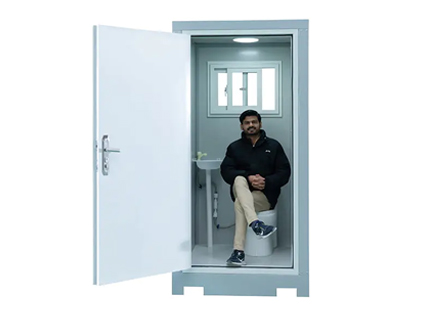
The Single-Person Outdoor Portable Toilet is designed specifically for this requirement. It provides a practical balance between compact dimensions, durability, portability, and everyday usability. Its small footprint allows it to fit into restricted sites while still offering the essential facilities expected from a temporary restroom. Unlike larger XL units or dual-compartment portable toilets, it concentrates on efficient individual use, easy movement, and economical deployment.
This product is manufactured by Suzhou Taimao Integrated Housing Co., Ltd., a Chinese supplier specializing in modular building systems, portable houses, container houses, prefabricated buildings, and integrated temporary facilities. The company combines modular design, factory-based manufacturing, structural engineering, insulation technology, integrated mechanical and electrical services, and digital production support to create practical products for changing project conditions.
For customers seeking a dependable outdoor restroom without the cost, footprint, and installation complexity of a permanent building, this compact unit offers a highly adaptable solution. It can support short-term construction work, temporary public facilities, event operations, and longer-term site use when regular maintenance and suitable placement are provided.
Single-Person Outdoor Portable Toilet
Content
- 1 Why Compact Outdoor Sanitation Matters
- 2 Product Overview
- 3 Advantages Compared with Conventional Temporary Restrooms
- 4 Applications Across Different Industries
- 5 Manufacturing Strengths Behind the Product
- 6 Advanced Modular Building Technology
- 7 Customization and Project Coordination
- 8 Installation, Operation, and Maintenance
- 9 Safety, Privacy, and User Experience
- 10 Why Choose an Experienced Modular Manufacturer
- 11 Purchasing Considerations
- 12 Long-Term Value of a Compact Portable Restroom
- 13 Q&A: Single-Person Outdoor Portable Toilet
- 13.1 Q1: What is the main purpose of this portable toilet?
- 13.2 Q2: Where can the unit be used?
- 13.3 Q3: How is it different from a large portable restroom?
- 13.4 Q4: Is the unit suitable for a construction site?
- 13.5 Q5: Can the restroom be relocated?
- 13.6 Q6: Does the product require permanent construction?
- 13.7 Q7: Can the product be customized?
- 13.8 Q8: How should the unit be maintained?
- 13.9 Q9: Is it appropriate for public events?
- 13.10 Q10: What should buyers confirm before ordering?
- 13.11 Q11: Can several units be used together?
- 13.12 Q12: Why work with a modular building manufacturer?
- 14 Conclusion
- 15 References
- 16 Product: Single-Person Outdoor Portable Toilet
Why Compact Outdoor Sanitation Matters
Space is one of the most important considerations when installing a temporary restroom. A construction site may have limited room between buildings, equipment, fencing, and material storage areas. An event organizer may need to add sanitation facilities without sacrificing valuable visitor space. A small roadside operation, farm, or remote work camp may require only one restroom rather than a large bank of units.
In these situations, selecting a larger portable toilet than necessary can create avoidable difficulties. A large unit may require more transportation capacity, more clearance during placement, a larger operating area, and greater cleaning and servicing requirements. It may also be difficult to position in narrow access zones. A single-person unit reduces these challenges by concentrating the necessary functions within a smaller structure.
The Single-Person Outdoor Portable Toilet is particularly suitable for locations where sanitation demand is limited or where the facility is intended for individual, private use. Its compact design can help project managers make better use of the available site area while maintaining a basic standard of comfort and hygiene.
Compact does not mean incomplete. The unit is designed to include the fundamental restroom functions required for practical daily use. It is intended to provide a dedicated space for personal sanitation rather than merely acting as an emergency enclosure. This distinction is important for organizations that need a facility capable of supporting workers, visitors, contractors, and event personnel throughout the operating period.
Product Overview
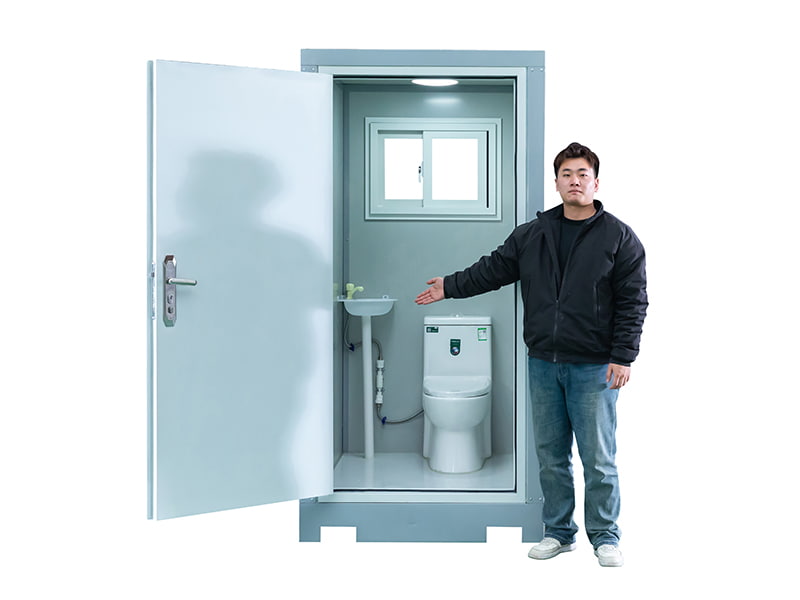
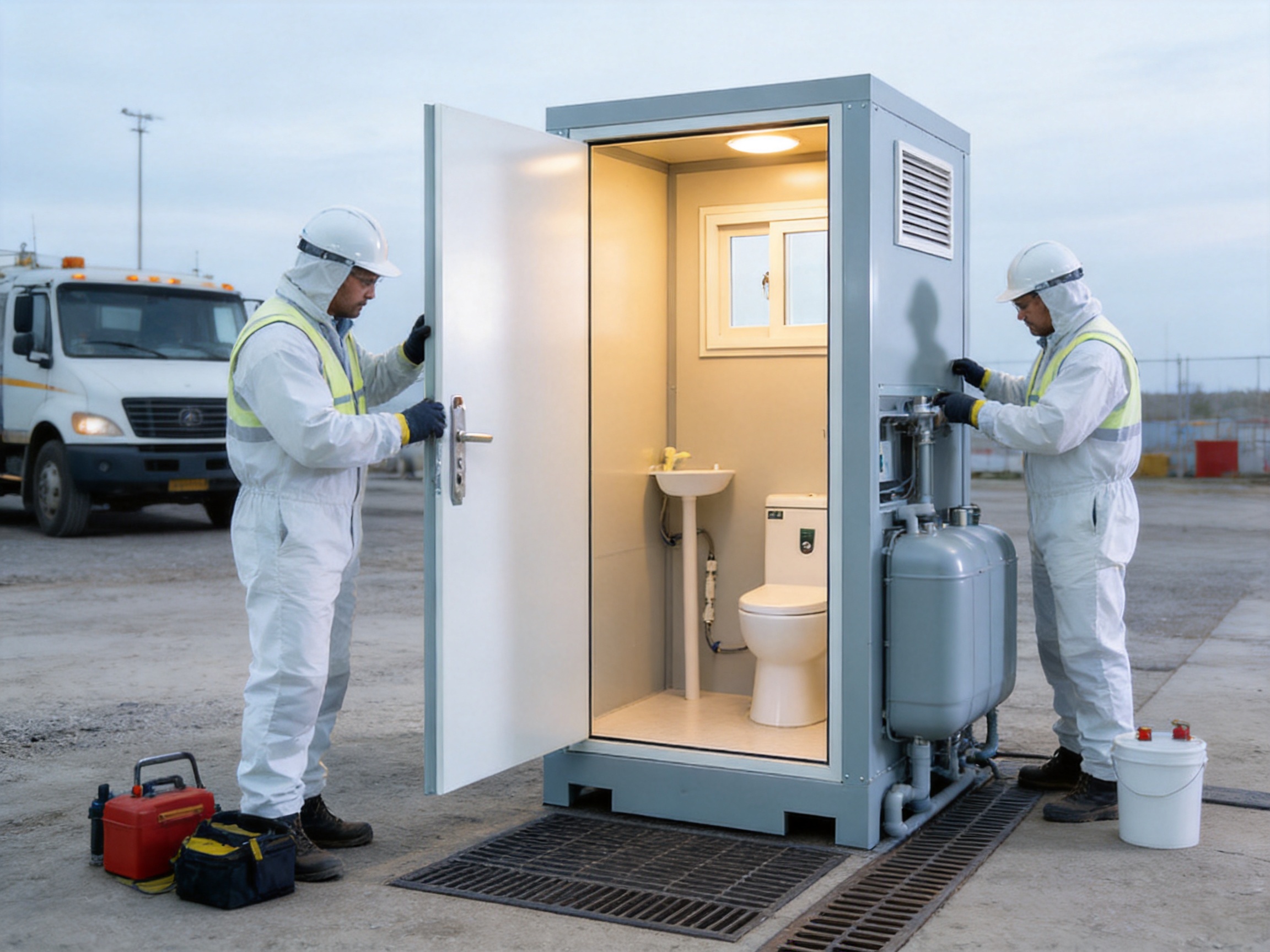
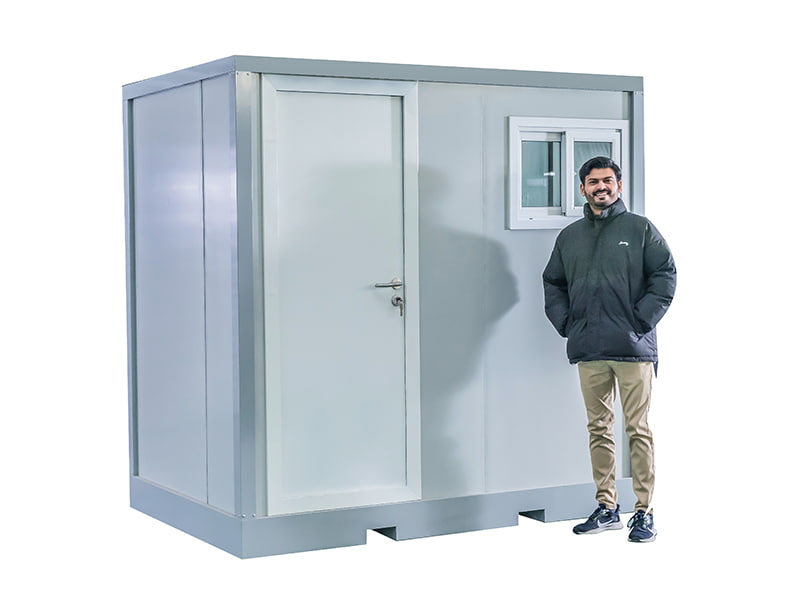
The Single-Person Outdoor Portable Toilet is a mobile restroom structure designed for temporary or semi-permanent outdoor applications. It has a small footprint, a stable enclosure, and a straightforward configuration that allows it to be delivered and positioned with minimal preparation. The product is suited to sites where a fixed masonry restroom would be too slow or expensive to construct.
Its primary purpose is to provide an independent sanitation point in areas without convenient access to a permanent building. Depending on the project arrangement, the unit may be positioned at a construction site, public gathering area, temporary workplace, garden, farm, campground, roadside location, or emergency support area.
The product emphasizes five core characteristics:
Compact dimensions for restricted locations.
Durable construction for outdoor exposure.
Complete basic restroom functionality.
Portability for rapid deployment and relocation.
Practical cost efficiency for temporary sanitation requirements.
These characteristics make the unit different from improvised temporary solutions that may provide shelter but lack the stability, privacy, or functional organization needed for regular use. It also offers an alternative to oversized portable restroom products when the site requires only a single-user facility.
Compact and Space-Saving Design
The most visible advantage of the product is its efficient use of space. The unit is designed around individual occupancy, eliminating the unnecessary volume associated with multiple stalls or large shared restroom blocks. This allows it to serve locations where every square meter matters.
A compact restroom can be placed close to a work area while still maintaining an appropriate separation from machinery, material storage, public circulation paths, and site offices. It can also be useful in locations where access routes are narrow or where the available ground area has an irregular shape.
For event operators, a smaller unit may help create a more flexible layout. For construction managers, it may allow sanitation facilities to follow work progress as the project moves from one area to another. For property owners, it can provide temporary service during renovations without requiring major changes to an existing building.
Durable Outdoor Structure
Outdoor sanitation equipment must tolerate changing weather conditions, repeated use, transportation, and routine cleaning. A restroom that is difficult to stabilize or maintain can quickly become a liability. The Single-Person Outdoor Portable Toilet is built around a robust structure intended to provide dependable service in temporary outdoor environments.
Durability involves more than the strength of individual panels. It also depends on how the enclosure is assembled, how components are joined, how the structure resists movement, and how the interior is organized for repeated use. Factory-controlled production helps ensure that the main components are manufactured and assembled according to consistent procedures.
The product’s weather-resistant design supports use in outdoor settings where exposure to wind, rain, sunlight, dust, and temperature changes may occur. Site operators should still select a level installation area, provide appropriate anchoring where necessary, and follow local safety requirements. Proper placement and routine care are important to achieving long service life from any outdoor facility.
Fully Functional Individual Restroom
A portable restroom must be practical, not merely portable. The Single-Person Outdoor Portable Toilet is intended to provide the basic facilities needed for individual use in a compact enclosure. Its configuration supports privacy and routine sanitation while avoiding unnecessary complexity.
Individual occupancy offers several practical benefits. It creates a private environment, reduces congestion, and makes the unit suitable for locations where a single facility is sufficient. It can also serve as an additional restroom near a particular work zone or as a dedicated facility for staff, visitors, or site personnel.
Because the unit is focused on essential functions, customers can avoid paying for capacity that their project does not require. This makes it a useful option for smaller sites and temporary applications with moderate sanitation demand.
Portable and Easy to Relocate
Temporary projects rarely remain unchanged. Construction areas shift as foundations, structures, roads, and landscaping progress. Events may operate at different locations. Emergency operations may need facilities moved as personnel and equipment are redeployed. A restroom that can be relocated provides more value than one that is fixed to a single position.
The Single-Person Outdoor Portable Toilet is designed for convenient deployment and movement. Its portable format helps reduce the time between delivery and use. When the work area changes, the unit can be transferred to a new suitable location rather than abandoned or rebuilt.
Relocation should be performed with appropriate equipment and by trained personnel. The unit should be emptied, disconnected from any applicable services, secured, and transported according to its design and local regulations. These procedures help protect the structure and maintain safe handling conditions.
Advantages Compared with Conventional Temporary Restrooms
Customers evaluating portable sanitation products often compare compact single-user units with larger portable toilets, temporary restroom trailers, site-built facilities, and improvised arrangements. Each option has a suitable application, but the compact unit offers distinct benefits when space, speed, and budget are important.
| Evaluation Factor | Single-Person Outdoor Portable Toilet | Large Multi-Compartment Unit | Permanent Site-Built Restroom |
|---|---|---|---|
| Space requirement | Low and suitable for restricted areas | Higher due to multiple compartments | High because of the building and service area |
| Deployment speed | Fast delivery and placement | Fast, but may require more access clearance | Slow due to construction and installation work |
| Initial project cost | Practical for limited demand | Higher when capacity is not fully needed | High because of civil, utility, and finishing work |
| Relocation flexibility | Designed for movement | Movable but usually more demanding | Generally fixed |
| Best application | Individual use and compact sites | High-volume events and busy work areas | Long-term or permanent facilities |
| Site disruption | Limited preparation required | Moderate preparation and access needs | Considerable excavation and construction activity |
| Capacity focus | Efficient individual sanitation | Multiple users at the same time | Full permanent building capacity |
Compared with a large multi-compartment portable toilet, the single-person unit is more efficient when the expected number of simultaneous users is low. A large unit may be appropriate for major events, but it can be excessive for a small construction team, a remote work station, or a temporary property renovation.
Compared with a restroom trailer, the compact unit requires less space and generally involves less deployment complexity. Restroom trailers may provide more amenities and a higher-end interior, but they also require suitable vehicle access, greater placement space, and a larger budget. The single-person unit focuses on essential sanitation rather than premium event presentation.
Compared with a permanent site-built restroom, the portable unit can be installed much faster and with substantially less disruption. It does not require the same level of excavation, foundation work, utility construction, architectural design, or finishing. This makes it especially valuable when the need is temporary, the site is still changing, or a permanent facility is not economically justified.
Compared with improvised structures, the product provides a more organized and dependable solution. Factory-produced components are designed to work together as a complete unit, helping improve consistency, privacy, stability, and appearance.
Applications Across Different Industries
Construction Sites
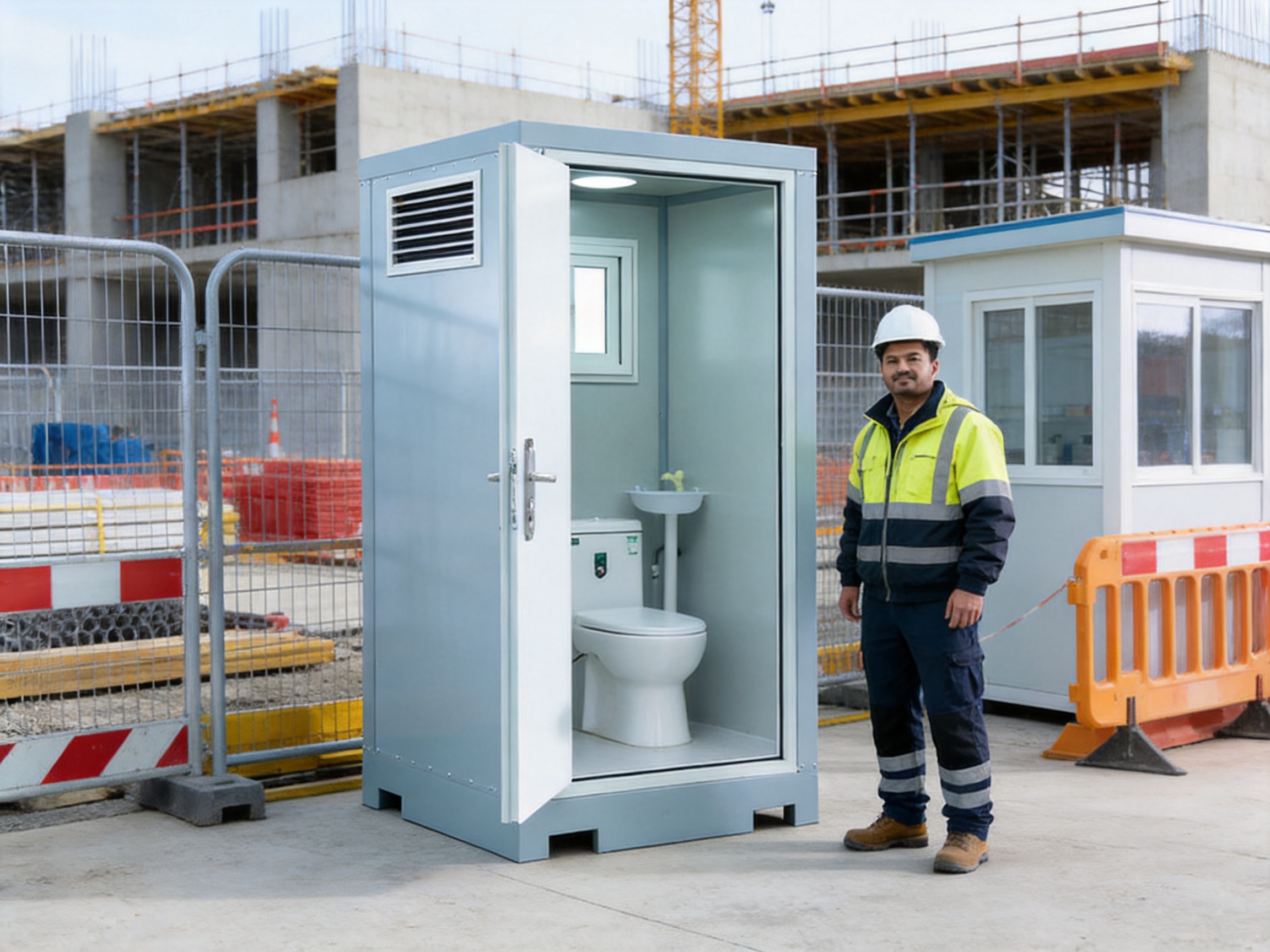
Construction projects are among the most common applications for portable sanitation. Workers may be operating far from existing buildings, and the project location may change over time. Providing an accessible restroom helps reduce unnecessary travel away from the work area and supports better site organization.
The single-person unit is suitable for small and medium-sized construction sites, renovation projects, infrastructure work, landscaping operations, and specialized installation projects. It may be placed near a site office, work zone, storage area, or temporary accommodation area, provided that safe separation and local environmental requirements are observed.
For larger projects, multiple single-person units may be positioned at different work areas. This approach can be more flexible than installing one large facility in a central location, especially when the project covers a wide area or includes several independent work zones.
Outdoor Events
Community events, sports activities, markets, festivals, exhibitions, and private outdoor gatherings may require additional restroom capacity for a limited period. A compact single-person restroom can supplement existing facilities or serve a small event where a large restroom installation would not be practical.
Event organizers can use the unit to support staff, vendors, security personnel, performers, or visitors. Because it occupies less space, it can be integrated into an event layout without taking up as much room for seating, booths, access lanes, or equipment.
Organizers should plan cleaning, servicing, access control, lighting, and user guidance according to the expected attendance and event duration. For high-volume events, several units or larger facilities may be needed. The advantage of the single-person model is its modular flexibility: capacity can be increased by adding units rather than replacing one unit with an unnecessarily large structure.
Remote and Rural Locations
Farms, orchards, forestry sites, rural work areas, campsites, and remote maintenance locations may have limited access to permanent plumbing and buildings. Transporting a compact portable restroom to such a location can provide a practical sanitation point without a major construction project.
The unit is particularly useful when work is seasonal or when the site does not justify a permanent structure. Agricultural operators may use it during planting, harvesting, irrigation, or maintenance periods. Outdoor recreation operators may deploy it near temporary activity areas or seasonal facilities.
Remote installations require careful planning for servicing, waste management, ground stability, and weather exposure. The product provides the physical restroom structure, while the site operator must arrange compliant sanitation management and maintenance procedures.
Emergency and Temporary Relief Operations
After storms, floods, earthquakes, fires, or other disruptive events, communities may temporarily lose access to normal restroom facilities. Portable units can help restore basic sanitation while permanent infrastructure is repaired.
A compact model may be transported to relief centers, temporary camps, field offices, distribution points, or medical support areas. Its small size can be advantageous when roads, staging areas, and available land are restricted.
Emergency planners may also keep portable sanitation units as part of a broader temporary infrastructure strategy. The unit can be combined with portable housing, modular offices, storage structures, and temporary washing facilities to support organized relief operations.
Renovation and Property Maintenance
Hotels, schools, factories, commercial buildings, residential properties, and public facilities may need temporary restroom arrangements during renovation. A portable unit can maintain access to basic sanitation while the permanent restroom is closed.
This approach can reduce project interruption and help contractors continue work without allowing construction traffic to enter occupied areas. In commercial locations, the unit can be placed in an outdoor service area while internal plumbing, flooring, partitions, or fixtures are being replaced.
Manufacturing Strengths Behind the Product
The performance of a portable restroom depends not only on its final appearance but also on the production system used to make it. Suzhou Taimao Integrated Housing Co., Ltd. applies experience from modular buildings, prefabricated construction, container houses, steel structures, and portable facilities to the development and production of integrated products.
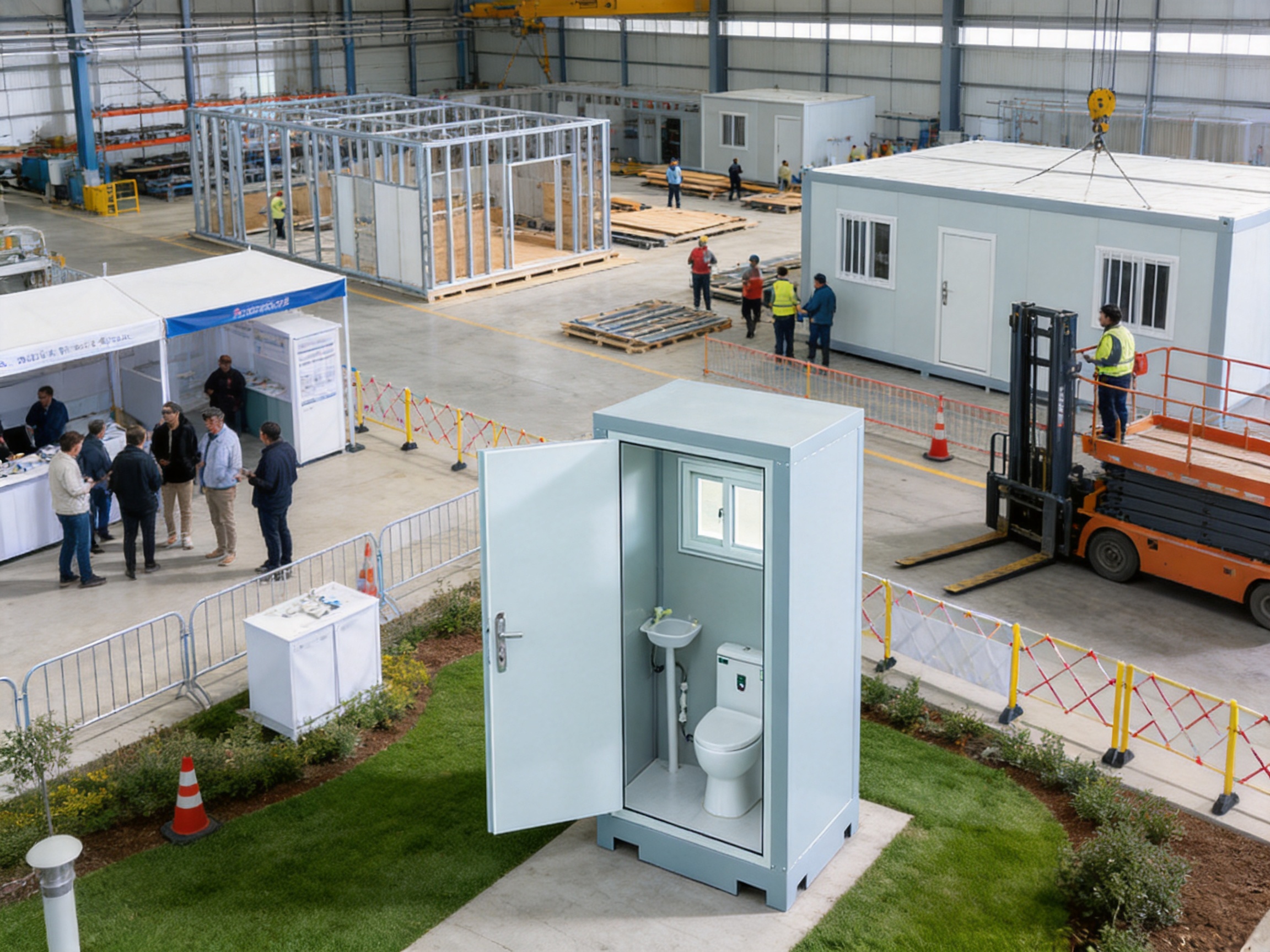
The company’s manufacturing approach emphasizes controlled production rather than relying entirely on open-site assembly. Factory manufacturing allows materials, components, dimensions, and assembly procedures to be managed in a more consistent environment. This can help reduce weather-related production interruptions, improve repeatability, and support more predictable delivery schedules.
Modular Design Principles
Modular design divides a building or facility into coordinated components. Instead of treating every project as a completely unique construction task, the manufacturer can develop standardized structural and functional elements that are configured according to the application.
For a portable restroom, modular thinking supports efficient production, simplified transportation, repeatable assembly, and easier quality inspection. It also makes it possible to adapt selected details for different markets, site conditions, or customer requirements without redesigning the entire product from the beginning.
Modular design is also useful when a customer needs several units. Consistent dimensions and component organization make it easier to plan placement, transportation, servicing, and future replacement. If the project expands, additional units can be introduced using a compatible product approach.
Integrated Manufacturing Capability
The company specializes in integrated housing solutions that bring multiple building functions together. Its product range includes assemble container houses, folding container houses, double-wing expandable container houses, K-type prefabricated houses, steel structures, portable houses, and modular buildings.
This broader manufacturing background is valuable for a compact restroom product. Structural framing, panel systems, weather-resistant envelopes, interior organization, doors, windows, service provisions, and transportation considerations must all work together. Experience across several categories helps the manufacturer understand how these elements interact in real projects.
Integrated production can also support customers who need more than a single restroom. A project may require portable offices, worker accommodation, storage rooms, kitchens, shower rooms, security cabins, and sanitation units. Working with a supplier capable of providing several modular building types can simplify procurement and coordination.
Factory-Controlled Assembly
Factory-controlled assembly allows workers and supervisors to inspect the product at different stages. Structural components can be checked before enclosure panels are installed. Openings, joints, interior fittings, and service routes can be reviewed before the unit is closed and prepared for shipment.
This staged inspection approach is more difficult to achieve when a structure is assembled entirely under changing field conditions. At a factory, production tools, workstations, material storage, and quality procedures can be organized for repeatable operations.
Factory work also reduces the amount of finishing and installation required at the customer’s site. The customer receives a product that is prepared for deployment rather than a collection of unrelated materials requiring extensive field fabrication.
Structural and Material Coordination
A portable restroom must balance strength with transport efficiency. Excessive weight can increase shipping and handling costs, while insufficient structural performance can affect stability and service life. The manufacturer’s experience with steel structures and prefabricated housing supports the coordination of load-bearing elements, enclosure materials, and connection details.
Material selection should take into account outdoor exposure, cleaning routines, moisture, impact, transport, and local climate. Different projects may require different material combinations depending on temperature, humidity, wind, sunlight, and expected usage. Customers can discuss these conditions with the supplier before confirming the final configuration.
Good material coordination also supports maintenance. Surfaces that are easier to clean, components that can be accessed for inspection, and replaceable fittings can reduce the difficulty of long-term operation.
Advanced Modular Building Technology
Suzhou Taimao Integrated Housing Co., Ltd. describes its manufacturing capabilities as including modular design, proprietary manufacturing technologies, and digital software support. These capabilities are not limited to one portable restroom model. They form part of a broader strategy for delivering prefabricated buildings more efficiently.
The company’s flagship SIP modular building system integrates structure, insulation, mechanical and electrical services, heating, ventilation and air conditioning, interior finishes, and smart home technologies into a unified solution. Although a compact portable restroom has a simpler functional scope than a complete residential module, the same integrated manufacturing philosophy can improve coordination and reduce unnecessary site work.
When building functions are planned together, the manufacturer can consider structural openings, service routes, panel dimensions, interior finishes, and transportation requirements at the same time. This reduces the risk of treating each element as an isolated task.
Structural Insulated Panel Experience
Structural Insulated Panels, commonly known as SIPs, combine structural and insulation functions within a panelized system. The company’s experience with SIP-based modular buildings demonstrates its ability to coordinate building envelope performance with factory assembly and rapid site installation.
For portable restroom applications, insulation may be relevant when the unit is used in colder or hotter climates, when user comfort is important, or when the facility forms part of a larger temporary accommodation system. The exact insulation configuration should be selected according to the intended climate, occupancy pattern, and local requirements.
The company’s wider SIP expertise also reflects an understanding of how prefabricated components can be manufactured accurately and assembled efficiently. This is important for customers who may later need related modular products beyond the restroom itself.
Digital Production Support
Digital software support can improve the connection between design, manufacturing, purchasing, production planning, and project delivery. Digital information helps teams coordinate dimensions, component quantities, layouts, and customization requirements before production begins.
For customers, this can make the ordering process clearer. A project can be reviewed in terms of intended use, site conditions, placement, quantity, and optional requirements. Potential conflicts may be identified before the product is manufactured, helping reduce changes during delivery or installation.
Digital coordination is particularly useful for larger orders containing several units or multiple types of modular structures. Consistent product information can support shipping plans, site layouts, installation sequences, and future expansion.
Customization and Project Coordination
Although the Single-Person Outdoor Portable Toilet is based on a compact standard concept, customers may have different requirements. Climate, regulations, transport conditions, user groups, servicing methods, and site layout can influence the appropriate configuration.
Potential customization discussions may include exterior color, internal arrangement, door orientation, ventilation provisions, flooring, lighting, signage, accessibility considerations, service connections, and packaging. Availability depends on the project and production plan, so requirements should be confirmed before order placement.
Customization should always preserve the unit’s structural integrity and practical function. Adding features without considering weight, drainage, ventilation, maintenance access, or transportation can create avoidable problems. A professional supplier should evaluate requested changes as part of the complete product system.
Site Assessment
Before purchasing, the customer should evaluate the installation location. Important considerations include available space, access for delivery, ground conditions, slope, drainage, nearby structures, pedestrian movement, vehicle traffic, lighting, privacy, and servicing access.
A level and stable base is generally preferred. The installation area should not create a risk of water accumulation or uncontrolled movement. In areas exposed to strong wind, additional anchoring or protective measures may be required. Local authorities may also specify requirements for placement, waste handling, accessibility, and public use.
Providing site information to the supplier can improve product selection and delivery planning. Photographs, measurements, access dimensions, expected usage, and climate information may help the manufacturer recommend a suitable arrangement.
Transportation Planning
Portability is valuable only when transportation is planned correctly. Customers should confirm the packed dimensions, unit weight, lifting points, delivery vehicle requirements, and unloading method. Narrow entrances, low overhead clearance, soft ground, and limited turning space may affect the delivery process.
For projects involving several units, transportation can be organized in batches. Factory production and coordinated packing may help reduce handling time and simplify delivery scheduling. The supplier can provide shipping information for customers arranging international or domestic transportation.
Because the company is located in Suzhou, Jiangsu, China, it can serve international buyers through export-oriented project coordination. Customers should verify shipping terms, import responsibilities, local taxes, customs documentation, and destination-country requirements as part of the purchasing process.
Installation, Operation, and Maintenance
A portable restroom is easiest to manage when installation and maintenance are planned from the beginning. The unit should be placed on an appropriate foundation or prepared surface, checked for stability, and connected to any required services according to the selected design.
Installation procedures may vary depending on whether the unit uses a self-contained sanitation system, an external tank, a sewer connection, a water supply, electrical lighting, or other optional services. Customers should follow the supplier’s technical instructions and use qualified personnel where plumbing, electrical, lifting, or anchoring work is involved.
Routine Cleaning
Regular cleaning is essential for hygiene, appearance, odor control, and user acceptance. Cleaning frequency should reflect the number of users, operating hours, climate, and sanitation system. High-use facilities may require daily or more frequent servicing, while lightly used units may follow a less intensive schedule.
Cleaning procedures should cover the floor, interior surfaces, door handles, ventilation areas, fixtures, and frequently touched points. Suitable cleaning agents should be selected to avoid damaging finishes or seals. Harsh chemicals should not be used unless they are confirmed to be compatible with the product materials.
Inspection and Preventive Care
Routine inspections can identify small problems before they become major repairs. Operators should check the door, hinges, locks, ventilation, floor condition, structural connections, lighting, plumbing, tank levels, and visible signs of leakage or corrosion.
Any loose hardware should be tightened appropriately. Damaged seals, fittings, or fixtures should be repaired or replaced promptly. If the unit is moved, it should be inspected again after relocation to confirm that the structure and service connections remain secure.
Waste and Environmental Management
Portable sanitation systems must be operated in accordance with local environmental and public health regulations. Waste should be collected, transported, treated, and disposed of by approved methods. The portable structure does not eliminate the need for responsible sanitation management.
Responsible operation helps protect soil, groundwater, nearby waterways, workers, users, and surrounding communities. Customers should establish a servicing arrangement before the unit is placed into use, especially at remote sites where professional maintenance may require advance scheduling.
The company’s broader modular building mission includes minimizing ecological impact and improving operational efficiency. In practice, customers can support these goals by selecting an appropriately sized unit, avoiding overbuilding, maintaining it properly, and using compliant waste management procedures.
Safety, Privacy, and User Experience
A restroom should provide more than a basic enclosure. Users need privacy, stability, cleanable surfaces, and a sense that the facility is safe to enter and use. The Single-Person Outdoor Portable Toilet supports privacy through individual occupancy and a dedicated enclosed space.
Placement contributes significantly to user experience. The unit should be positioned where users can reach it safely without crossing active vehicle routes or hazardous work areas. At public events, clear signs and suitable lighting can improve access. At construction sites, the unit should be located away from falling-object risks, unstable excavations, and areas with uncontrolled equipment movement.
Accessibility requirements should be reviewed for each project. A standard single-person model may not be sufficient for every user group or every public application. Customers should communicate accessibility needs during the design stage so that an appropriate model or configuration can be considered.
Privacy also depends on the door, lock, ventilation, lighting, and surrounding layout. The unit should not be placed directly beside high-traffic areas unless visual screening or an alternative orientation is provided. Thoughtful site planning can make a compact restroom feel more comfortable and respectful.
Why Choose an Experienced Modular Manufacturer
Purchasing a portable restroom from an experienced modular manufacturer offers advantages beyond the individual product. A specialist supplier can evaluate the unit as part of a broader temporary building system, helping customers coordinate sanitation with accommodation, offices, storage, and other facilities.
Suzhou Taimao Integrated Housing Co., Ltd. has a product portfolio that includes container-based buildings, expandable houses, folding structures, K-type prefabricated houses, steel structures, and modular homes. This range indicates experience with different structural formats, transport requirements, assembly methods, and temporary or permanent project applications.
The company’s focus on factory production can support repeatable quality, coordinated procurement, and efficient delivery. Its modular design expertise allows products to be adapted for different site conditions while preserving the advantages of prefabrication.
The company also presents its solutions as globally oriented and certified. Buyers should request the specific certificates, test reports, technical drawings, and compliance documents applicable to their destination market and project. Requirements can vary according to country, usage, building classification, sanitation system, and installation method.
End-to-End Project Support
Modular building projects may involve design confirmation, production, quality inspection, packaging, transportation, site preparation, installation, and after-sales communication. A supplier capable of supporting these stages can reduce the number of separate parties involved in the project.
Customers should expect clear communication regarding product specifications, drawings, lead times, packaging, delivery conditions, installation guidance, warranty terms, spare parts, and service responsibilities. Early clarification is particularly important for international projects, where language, standards, shipping, and customs procedures can affect the schedule.
The company can be contacted through its sales channels for product consultation and project requirements. Customers may provide information about the intended application, quantity, destination, site limitations, expected usage, and desired delivery date to support a more accurate quotation.
Purchasing Considerations
Before ordering a Single-Person Outdoor Portable Toilet, buyers should define the project objective. Is the unit intended for a small construction team, an event, a public site, a remote work area, emergency use, or a renovation project? The answer will influence capacity, servicing frequency, features, and installation requirements.
Buyers should also consider whether one unit is sufficient. A single-person product is highly efficient for limited demand, but a busy site may need several units. The modular nature of the product makes it possible to scale capacity by adding units in suitable locations.
Budget evaluation should include more than the purchase price. Transportation, unloading, site preparation, anchoring, service connections, cleaning, waste removal, maintenance, and eventual relocation may all contribute to the total cost of ownership.
| Purchasing Question | Why It Matters | Information to Confirm |
|---|---|---|
| Where will the unit be used? | Location affects weather exposure, access, regulations, and servicing. | Site address, climate, ground condition, and local rules. |
| How many users are expected? | Usage determines whether one unit or several are appropriate. | Daily users, peak demand, operating hours, and project duration. |
| How will it be delivered? | Transport conditions affect cost and installation planning. | Packed size, weight, vehicle access, unloading equipment, and clearance. |
| What sanitation system is needed? | Different systems require different connections and maintenance. | Water supply, drainage, waste tank, sewer connection, and servicing method. |
| Are special features required? | Customization may need to be included before production. | Color, lighting, ventilation, accessibility, signage, and layout. |
| What documents are required? | Compliance and import requirements vary by destination. | Drawings, specifications, certificates, packing list, and commercial documents. |
Long-Term Value of a Compact Portable Restroom
The value of a portable restroom is measured by more than its initial purchase cost. A well-designed unit can reduce construction delays, limit site disruption, support worker welfare, and provide sanitation in areas where conventional facilities are unavailable.
The Single-Person Outdoor Portable Toilet is especially valuable when the customer needs a targeted solution rather than a large building. Its compact size reduces the amount of land dedicated to sanitation. Its portable construction supports changing project layouts. Its practical functionality avoids paying for features or capacity that may not be required.
When maintained properly, the unit may be reused at different sites over its service life. This improves the return on investment for contractors, rental companies, event operators, industrial businesses, and organizations managing recurring temporary projects.
Multiple units can also be deployed as a flexible sanitation network. Instead of constructing one oversized facility, a customer can distribute smaller facilities according to the movement of people and the geography of the site. This can improve convenience and reduce walking distances for workers or visitors.
Q&A: Single-Person Outdoor Portable Toilet
Q1: What is the main purpose of this portable toilet?
The main purpose is to provide a compact, independent, and functional restroom for temporary or outdoor locations. It is designed for individual use where a permanent restroom or large multi-compartment facility is unnecessary or impractical.
Q2: Where can the unit be used?
Typical applications include construction sites, small outdoor events, rural properties, farms, campsites, temporary workplaces, renovation projects, emergency support areas, and remote maintenance locations. The installation must comply with local placement, sanitation, and environmental requirements.
Q3: How is it different from a large portable restroom?
The single-person unit has a smaller footprint and is focused on individual use. It requires less space and may be easier to transport and position. A large multi-compartment facility is more appropriate when many people need to use several stalls simultaneously.
Q4: Is the unit suitable for a construction site?
Yes. It can provide convenient sanitation near a construction work area, temporary office, renovation zone, or infrastructure project. The unit should be placed on stable ground and kept away from vehicle hazards, excavations, falling-object risks, and other unsafe areas.
Q5: Can the restroom be relocated?
Yes. Portability is one of its key features. Relocation should be planned and performed by trained personnel using suitable lifting and transport equipment. Any sanitation, water, drainage, or electrical connections should be disconnected and reconnected safely.
Q6: Does the product require permanent construction?
No. It is intended as a portable or temporary facility, so it generally avoids the extensive excavation, masonry, finishing, and utility construction associated with a permanent restroom. Site preparation and service arrangements may still be necessary.
Q7: Can the product be customized?
Customization may be available depending on the order quantity, project requirements, and production plan. Customers can discuss color, layout, ventilation, lighting, service connections, accessibility needs, and other requested features with the manufacturer before production.
Q8: How should the unit be maintained?
Maintenance should include regular cleaning, waste servicing, inspection of doors and locks, checking of ventilation, examination of structural connections, and prompt repair of damaged components. The exact service schedule depends on usage, climate, and the sanitation system.
Q9: Is it appropriate for public events?
It can be used at small events or as an additional facility for staff, vendors, and visitors. Event organizers should estimate attendance and peak demand carefully. Larger events may require multiple units or larger restroom systems.
Q10: What should buyers confirm before ordering?
Buyers should confirm dimensions, weight, delivery conditions, site access, installation requirements, sanitation system, expected usage, customization, documentation, lead time, warranty, and after-sales support. Destination-country regulations should also be reviewed.
Q11: Can several units be used together?
Yes. Several compact units can be arranged across a larger site when additional capacity is needed. This approach can distribute facilities more conveniently and allow capacity to grow as the project develops.
Q12: Why work with a modular building manufacturer?
An experienced modular manufacturer can coordinate structural design, panel systems, service integration, factory assembly, transportation, and related temporary buildings. This is useful for customers who need a complete project solution rather than one isolated product.
Conclusion
The Single-Person Outdoor Portable Toilet is a practical answer to a common infrastructure challenge: how to provide dependable sanitation when space, time, and budget are limited. Its compact footprint makes it suitable for restricted locations, while its robust structure supports outdoor use and repeated deployment. Its individual configuration provides privacy and essential restroom functionality without the excess capacity of a large portable facility.
Compared with permanent construction, the unit can reduce installation time, site disruption, and upfront complexity. Compared with oversized temporary restrooms, it can provide a more economical and space-efficient solution for smaller user groups. Compared with improvised facilities, it offers a more organized, stable, and professional sanitation environment.
The manufacturing strength behind the product is equally important. Suzhou Taimao Integrated Housing Co., Ltd. brings experience in modular buildings, container houses, folding and expandable structures, prefabricated housing, steel structures, SIP systems, factory assembly, and digital project support. This background enables the company to approach portable sanitation as part of a coordinated modular construction system.
For construction contractors, event operators, property managers, industrial users, agricultural businesses, emergency planners, and international buyers, the product offers a flexible foundation for temporary sanitation planning. With proper site assessment, compliant waste management, regular maintenance, and clear project coordination, the Single-Person Outdoor Portable Toilet can deliver reliable service wherever a compact outdoor restroom is needed.
References
1. Manufacturer-provided product information for the Single-Person Outdoor Portable Toilet.
2. Manufacturer-provided information concerning modular building design, prefabricated construction, and factory assembly.
3. Manufacturer-provided information on Structural Insulated Panel modular building systems.
4. General principles of temporary facility planning, portable sanitation management, and construction-site welfare.
5. General guidance on modular construction, prefabricated building production, transport planning, and preventive maintenance.
Product: Single-Person Outdoor Portable Toilet
For exclusive deals and latest offers, sign up by entering your email address below.

-
TEL:+86 18762912902
-
Email:cntaimao@163.com
-
WhatsApp:
-
Add:Group 5, Cao Village, Zhenze Town, Suzhou, Jiangsu, China
Copyright © Suzhou Taimao Integrated Housing Co., Ltd.
All Rights Reserved.
 Wholesale movable homes for sale
custom built modular homes
Wholesale movable homes for sale
custom built modular homes