

 EN
EN
 русский
 Español
 عربى
عربى Français
Single-Person XL Outdoor Portable Toilet: A Spacious, Flexible, and Professionally Manufactured Sanitation Solution
Admin 2026-07-21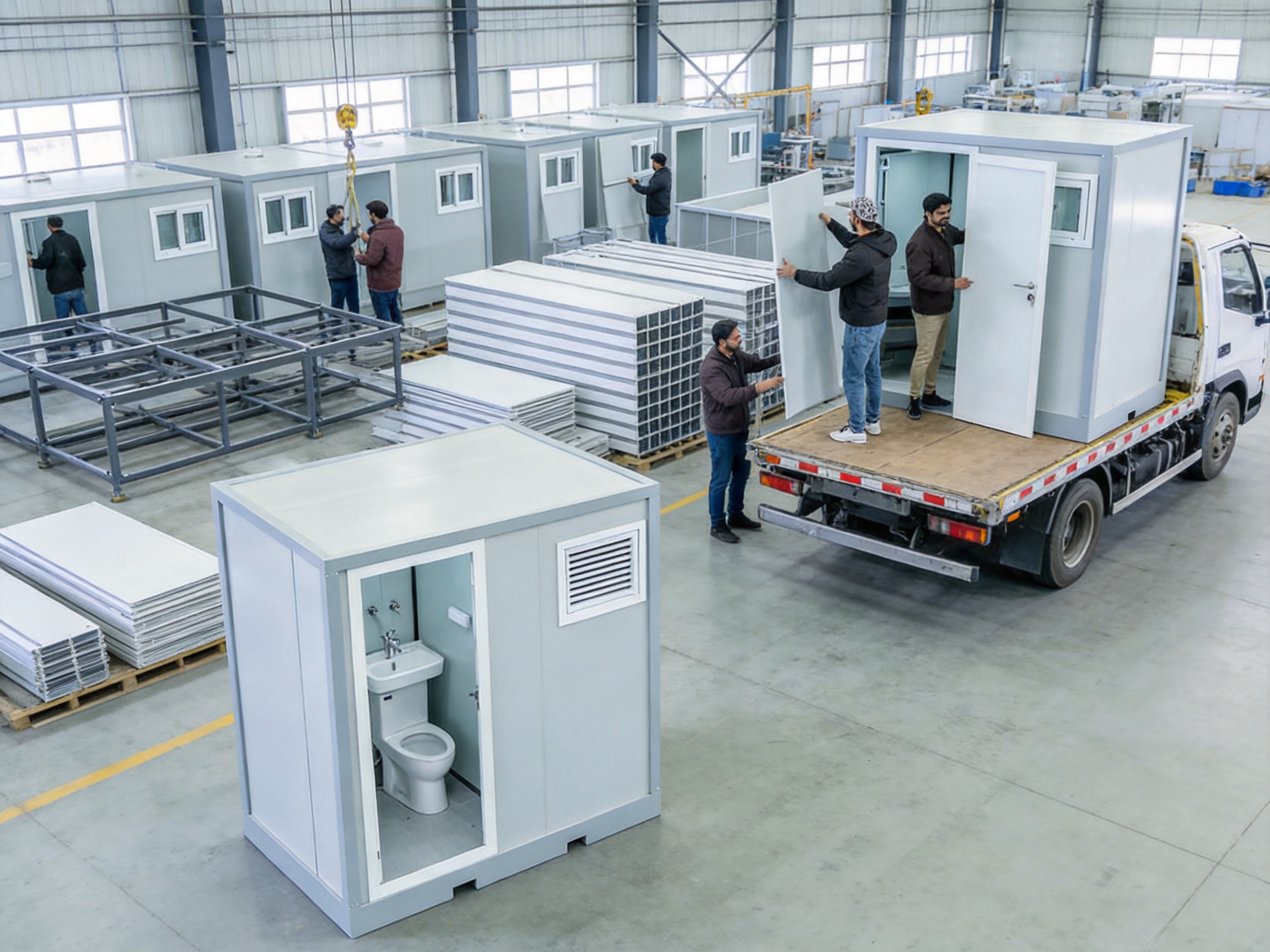
Reliable sanitation is essential wherever people work, travel, gather, or require temporary accommodation. Construction sites, outdoor events, emergency response locations, campsites, remote work areas, public parks, and temporary housing projects all need restroom facilities that can be delivered quickly and operated safely. In many of these environments, a conventional permanent bathroom is impractical because construction takes too long, utility connections are unavailable, or the facility may only be needed for a limited period.
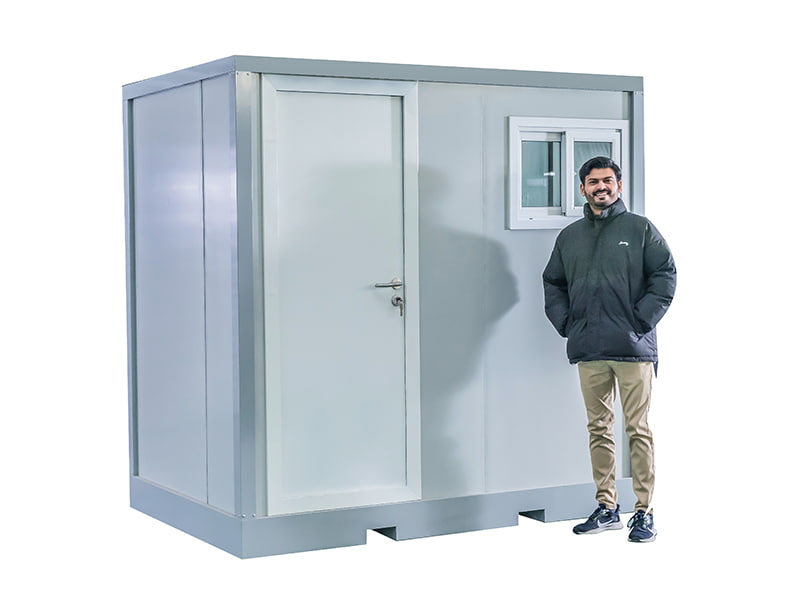
The Single-Person XL Outdoor Portable Toilet provides a practical response to these challenges. Designed as a spacious private restroom for one user, it combines mobility, durability, quick deployment, and the option to include washing or hygiene facilities. Its larger interior distinguishes it from many standard portable toilets, which often prioritize compact transportation over user comfort. This XL configuration creates a more comfortable personal space while retaining the flexibility required for temporary and mobile applications.
The unit is suitable for organizations and individuals seeking a portable sanitation station that offers more than a basic toilet compartment. It can be configured with a washbasin or personal hygiene setup, helping transform a simple restroom into a compact sanitation and washing station. This additional functionality is particularly valuable in locations where users need to wash their hands, clean equipment, change clothing, or maintain personal hygiene without walking to a separate facility.
Manufactured by Suzhou Taimao Integrated Housing Co., Ltd., the product benefits from the company’s broader expertise in modular construction, prefabricated buildings, steel structures, and integrated building systems. The manufacturer combines factory-controlled production, modular design, quality management, and practical customization to create portable facilities that can be deployed in a wide range of environments.
Content
- 1 What Is a Single-Person XL Outdoor Portable Toilet?
- 2 Why Outdoor Sanitation Requires a Better Design
- 3 Key Product Advantages
- 4 Applications Across Multiple Industries
- 5 Comparison with Standard Portable Toilets
- 6 Manufacturing Strengths of the Supplier
- 7 Installation and Deployment Considerations
- 8 Maintenance and Hygiene Management
- 9 How the Product Supports More Efficient Projects
- 10 Ordering and Customization Process
- 11 Suitability for Different Customer Priorities
- 12 Why Choose an Experienced Modular Manufacturer?
- 13 Frequently Asked Questions
- 13.1 What is the primary purpose of this portable toilet?
- 13.2 How is the XL model different from a standard portable toilet?
- 13.3 Can a washbasin be installed inside?
- 13.4 Can the unit be used on a construction site?
- 13.5 Is the portable toilet suitable for emergency relief?
- 13.6 Can the unit be moved after installation?
- 13.7 What type of foundation is required?
- 13.8 Does the product require permanent utility connections?
- 13.9 How is the unit cleaned?
- 13.10 Can the portable toilet be used with modular houses?
- 13.11 Can the product be customized?
- 13.12 Who manufactures the product?
- 14 Conclusion
- 15 References
- 16 Product: Single-Person XL Outdoor Portable Toilet
What Is a Single-Person XL Outdoor Portable Toilet?
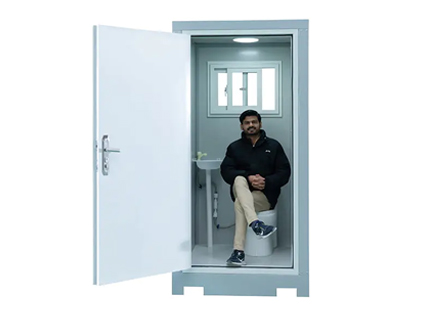
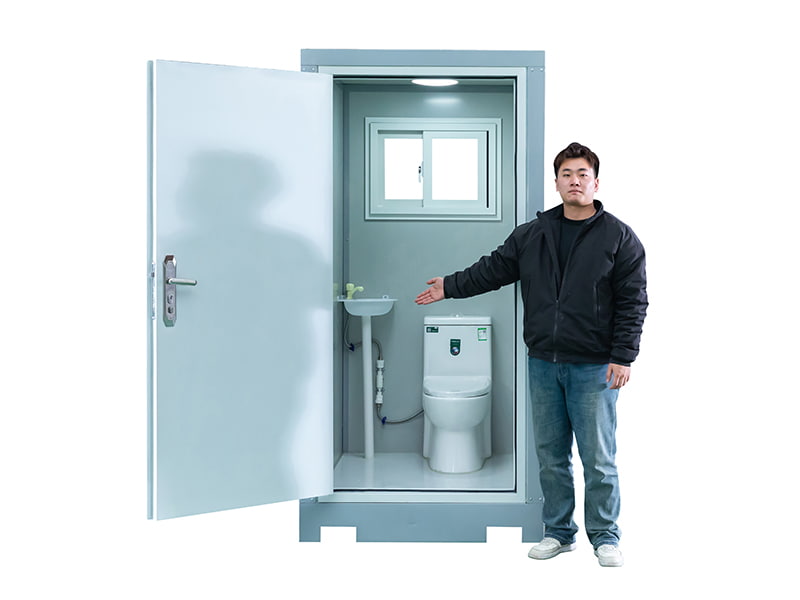
The Single-Person XL Outdoor Portable Toilet is a mobile restroom unit intended for individual use. It provides a private enclosed compartment with more internal space than many conventional compact portable toilets. The additional room improves user comfort and allows greater freedom of movement during entry, use, cleaning, and maintenance.
Although the unit is designed for one person at a time, the spacious layout can support a wider range of applications. It may serve as a standalone outdoor toilet, a temporary restroom for a construction project, a personal sanitation station at a camping location, or an emergency hygiene facility. Depending on project requirements, the interior can be equipped with a washbasin or other hygiene-related components.
The XL design is especially useful in situations where a narrow, highly compressed toilet cabin would create discomfort or limit usability. A more generous interior can make the facility easier to access, easier to clean, and more suitable for users carrying personal belongings or protective equipment. It can also help project operators provide a more acceptable restroom experience without installing a full permanent building.
Unlike a conventional bathroom constructed on site, this portable restroom is prepared as a modular product. It can be delivered to the required location, positioned, connected to the appropriate systems, and placed into service after setup. This reduces the time and labor associated with traditional construction and makes the unit suitable for changing site conditions.
Why Outdoor Sanitation Requires a Better Design
Outdoor sanitation facilities must perform in conditions that are often more demanding than those found inside permanent buildings. They may be exposed to rain, wind, dust, sunlight, temperature fluctuations, rough handling, repeated relocation, and intensive daily use. A successful portable restroom therefore needs more than a basic enclosure. It must combine structural stability, weather resistance, user privacy, functional planning, and maintenance convenience.
Compact portable toilets can be efficient for high-volume deployment, but their limited interior dimensions may not suit every project. Users may feel confined, and cleaning personnel may have less room to work. In addition, a very small compartment may not accommodate optional washing facilities without sacrificing comfort.
The Single-Person XL Outdoor Portable Toilet addresses these limitations by placing greater emphasis on personal space. Its design gives the user a private room rather than an extremely narrow compartment. The result is a more comfortable experience for workers, visitors, campers, emergency personnel, and residents of temporary accommodation projects.
The larger interior can also support more flexible planning. A basic configuration can focus on toilet use, while an enhanced configuration can include a washbasin, handwashing equipment, hygiene accessories, or other site-specific elements. This adaptability makes the product useful to customers with different operational priorities.
Single-Person XL Outdoor Portable Toilet
Key Product Advantages
XL Private Space for Improved Comfort
The most important advantage of this product is its spacious single-user compartment. Many portable restroom products are designed to occupy the smallest possible footprint. While compactness can simplify transportation, it may compromise the user experience. A cramped interior can make entry and movement uncomfortable and may be difficult to clean thoroughly.
The XL interior provides a more comfortable balance between portability and usable space. Users have greater freedom to turn, stand, sit, organize personal items, and exit the unit. The larger room also creates a more welcoming environment for facilities intended to remain in service for extended periods.
For construction workers wearing safety clothing, boots, helmets, or protective equipment, additional space can be especially valuable. The same is true for outdoor staff carrying equipment or for emergency responders working in difficult conditions. Instead of forcing users into a highly restricted enclosure, the product provides a more practical personal facility.
Enhanced Privacy
Privacy is a central requirement for any restroom. In temporary facilities, privacy can be difficult to achieve when units are placed in open areas or near busy work zones. The enclosed single-person layout of this portable toilet gives each user a dedicated private space.
A clearly defined individual compartment can improve user confidence and encourage proper use of the facility. This is important on construction sites, in temporary worker accommodation, at outdoor events, and in emergency shelters. A private restroom can also help site managers create a more dignified environment for workers and visitors.
Optional Washbasin and Hygiene Facilities
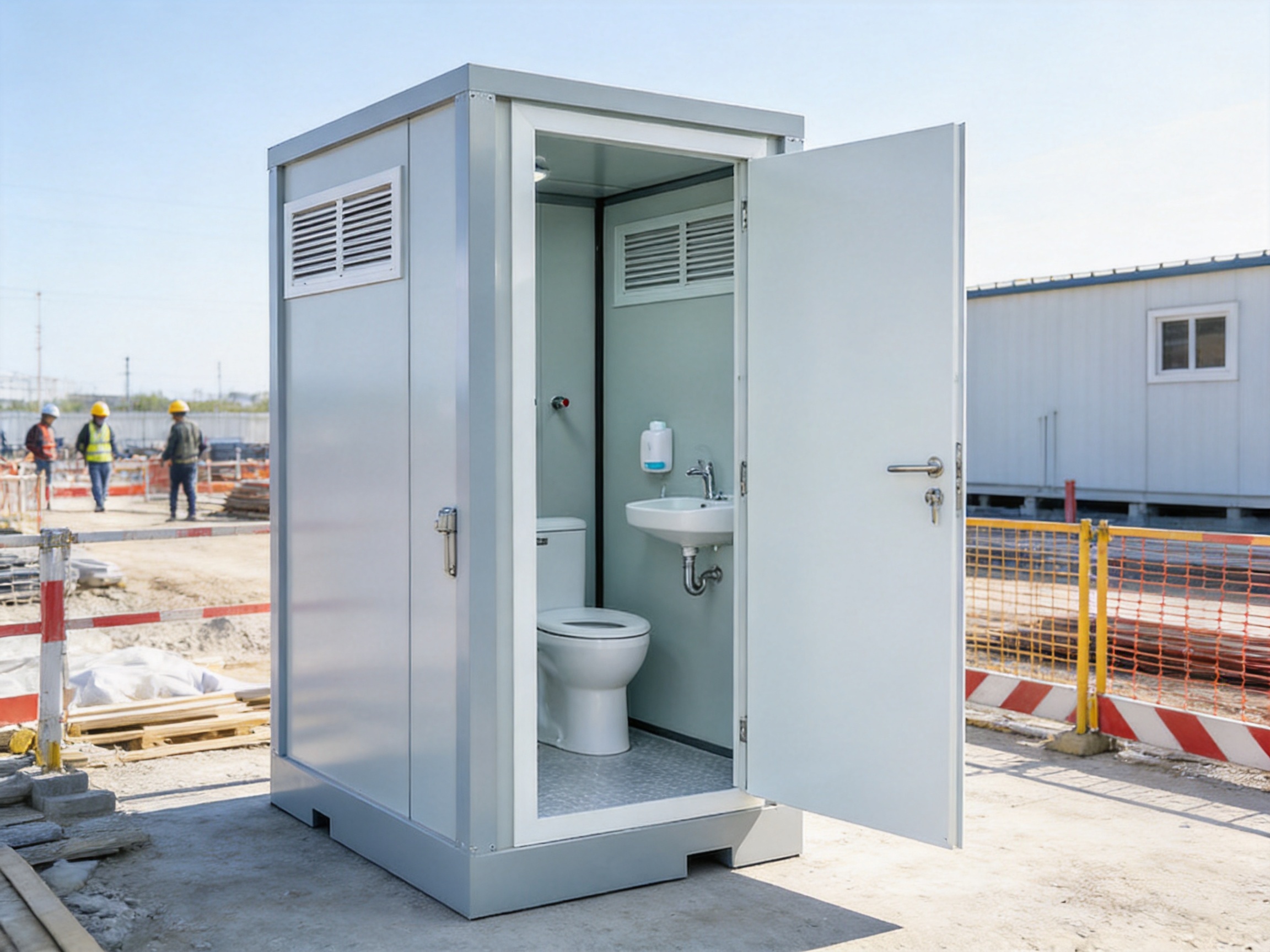
The unit can be equipped with a washbasin or personal hygiene setup. This option expands its function beyond toilet use and allows it to operate as a compact sanitation station. Users may wash their hands, rinse small items, or complete basic personal care without moving to another building.
Integrated hygiene facilities are particularly valuable where water access is limited or where the restroom is located far from a central service area. Construction projects, outdoor camps, disaster relief sites, and temporary settlements can benefit from combining multiple sanitation functions in one mobile unit.
Adding a washbasin can also support better hygiene management. Handwashing immediately after restroom use is easier when the required facility is located inside the same private space. Depending on the project configuration, customers can discuss the desired plumbing, water supply, drainage, and accessory arrangements with the manufacturer.
Durable and Stable Construction
A portable restroom must be strong enough to withstand repeated use and relocation. The product is designed for outdoor deployment, with a robust structure intended to remain stable during normal operation. Its durability supports use at temporary worksites, remote locations, and other environments where permanent buildings are unavailable.
Structural stability is important not only for product life but also for user confidence. A unit that feels secure underfoot and remains properly positioned is more comfortable and safer to use. A stable structure also helps protect doors, fixtures, wall panels, and internal components during regular service.
The manufacturer’s experience in steel structures and integrated housing contributes to a practical approach to structural design. Components can be produced according to controlled manufacturing procedures, helping maintain consistency between units and supporting reliable assembly at the project site.
Weather-Resistant Outdoor Performance
Outdoor restrooms must continue to function in changing weather. Rain, wind, dust, and sunlight can place stress on exterior materials and internal components. The Single-Person XL Outdoor Portable Toilet is designed for outdoor conditions and can be deployed in locations where exposure to the elements is unavoidable.
Weather-resistant construction helps protect the interior from routine environmental exposure and supports a cleaner, more comfortable user experience. Proper site placement remains important, and customers should select a stable, level location with appropriate drainage and access for service. Nevertheless, a product designed for outdoor use provides a stronger foundation than an improvised enclosure or an interior-only solution.
Quick Deployment
Speed is one of the major advantages of modular sanitation products. Once the unit has been transported and positioned, it can be prepared for use far more quickly than a newly constructed permanent restroom. This is useful when a project must begin immediately or when an existing facility becomes unavailable.
Fast deployment is valuable during emergency relief operations, where sanitation needs may arise within hours or days. It is also useful for construction contractors who must provide worker facilities before the main project buildings are completed. Event organizers can deploy temporary restrooms according to attendance needs, while campsite operators can add facilities as demand changes.
The ready-to-use character of the product reduces the number of separate construction activities required at the site. Customers can focus on placement, utility connections, internal inspection, and operating procedures rather than coordinating masonry, framing, finishing, and long-duration installation work.
Portable and Flexible Use
Mobility allows the unit to follow changing project requirements. A construction company may move a restroom as work zones change. An event organizer may use the same unit at different venues. An emergency agency may transport it from one response location to another. A campsite may reposition facilities as the site layout develops.
This flexibility improves the return on investment because the facility is not permanently tied to a single location. It can be treated as a reusable asset rather than a one-time construction project. When a temporary project ends, the unit can be cleaned, inspected, stored, and redeployed.
Applications Across Multiple Industries
Construction Sites
Construction sites often begin operations before permanent buildings are ready. Workers need accessible sanitation from the first day of activity, but constructing a permanent bathroom may interfere with schedules and increase costs. A portable XL restroom can be placed near the active work area and moved as the project progresses.
The larger interior is helpful for workers wearing protective clothing and carrying tools. An optional washbasin can support hand hygiene, which is especially important after contact with dust, construction materials, fuels, coatings, or other substances. The unit can also complement temporary offices, site accommodation, storage units, and prefabricated worker facilities.
Camping and Outdoor Recreation
Camping areas and outdoor recreation sites frequently require sanitation facilities that are easy to install without constructing permanent buildings. The XL portable toilet can serve individual campsites, seasonal accommodation areas, adventure tourism facilities, and temporary outdoor bases.
Its private interior creates a more comfortable experience than a rudimentary outdoor toilet. Where the product is configured with a washbasin, campers can access basic washing facilities in the same unit. This can improve convenience and reduce pressure on shared buildings during busy periods.
Emergency Relief and Disaster Response
After floods, earthquakes, storms, fires, or other emergencies, existing sanitation infrastructure may be damaged or overloaded. Temporary restrooms can be delivered to shelters, field hospitals, distribution centers, and recovery work zones.
The product’s quick deployment and relocatable design support changing emergency conditions. Relief organizations can position units close to where they are most needed, then move them as populations relocate or permanent services are restored. The single-user privacy arrangement also contributes to dignity and orderly operations in stressful environments.
Temporary Worker Accommodation
Temporary housing projects often require more than sleeping rooms. Sanitation facilities are a critical part of safe and comfortable accommodation. The Single-Person XL Outdoor Portable Toilet can be used as a standalone facility or as part of a broader modular housing layout.
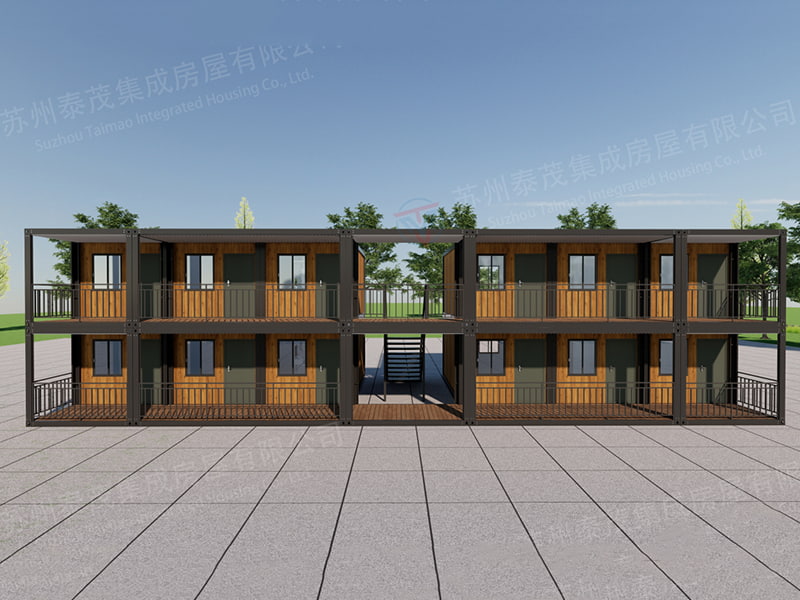
It may complement K-Type prefabricated houses, container houses, folding container houses, and double-wing expandable container houses. By combining portable restrooms with modular accommodation, project planners can create complete temporary living or working environments with shorter installation periods.
Outdoor Events and Public Activities
Concerts, exhibitions, sports competitions, festivals, markets, and public gatherings may require additional restrooms for a limited period. Portable units can be installed before the event and removed afterward, avoiding the cost and permanence of conventional construction.
The XL configuration can be selected when organizers want to provide a more comfortable option for attendees, staff, or performers. It can also be used in staff-only areas, VIP zones, service compounds, and locations where a washbasin is required.
Remote Industrial and Infrastructure Projects
Mining areas, road projects, energy installations, agricultural operations, and infrastructure construction may take place far from urban services. Transporting workers to distant public restrooms is inefficient and may create safety concerns. A mobile sanitation facility can be positioned closer to the operating area.
Because the product is intended for outdoor use and relocation, it suits projects whose work fronts or service areas change over time. Its use can reduce unnecessary travel and help companies establish more organized site facilities.
Comparison with Standard Portable Toilets
Portable restroom products vary widely in size, construction, configuration, and intended use. A compact standard unit may be appropriate when the main objective is to provide the maximum number of toilets in the smallest possible space. However, that format may not be ideal when comfort, hygiene, or multifunctionality is more important.
The Single-Person XL Outdoor Portable Toilet is positioned as a more spacious and flexible alternative. It is not simply designed to provide the minimum possible enclosure. Instead, it emphasizes personal space and the possibility of adding hygiene facilities.
| Evaluation Area | Compact Standard Portable Toilet | Single-Person XL Outdoor Portable Toilet |
|---|---|---|
| Interior space | Focused on compact use and efficient footprint | Expanded single-user space for greater comfort |
| Privacy | Individual enclosure, often with limited movement | Private room with a more spacious interior |
| Hygiene options | Usually focused on toilet use | Can be equipped with a washbasin or hygiene setup |
| User comfort | Suitable for short-duration use | Better suited to longer-term or comfort-sensitive applications |
| Mobility | Generally relocatable | Designed for relocation and flexible deployment |
| Application range | Events and basic temporary use | Construction, camping, emergency relief, accommodation, and outdoor projects |
| Maintenance access | May be constrained by compact dimensions | More generous space can simplify inspection and cleaning |
| Configuration flexibility | Often limited to a basic restroom layout | Can be adapted with additional sanitation features |
This comparison does not mean that every application requires the largest available unit. Compact toilets remain useful when space is extremely limited or when a project needs many units in a concentrated area. However, customers who value privacy, comfort, washing capability, and repeated use may find the XL design more suitable.
Manufacturing Strengths of the Supplier
Experience in Integrated Housing
Suzhou Taimao Integrated Housing Co., Ltd. specializes in modular building solutions, including container houses, prefabricated houses, mobile homes, temporary housing, and steel structure systems. This experience is relevant to portable restroom production because sanitation units require the same disciplined approach to structural design, panel assembly, finishing, transport, and site installation found in larger modular buildings.
A manufacturer with integrated housing experience can view the restroom as part of a complete project rather than as an isolated product. This supports coordination with accommodation units, offices, kitchens, storage facilities, and other temporary structures. Customers can therefore develop a more unified site plan and source multiple modular products from one experienced supplier.
Factory-Controlled Production
Manufacturing in a controlled factory environment offers several advantages over constructing every element at the project site. Materials can be received, measured, cut, assembled, finished, and inspected according to established procedures. Workers operate with consistent tools and workstations, while supervisors can monitor production stages more effectively.
Factory production also reduces the impact of rain, dust, poor lighting, and other site conditions that can affect construction quality. Components can be prepared before delivery, allowing the final installation to focus on placement and connection rather than extensive fabrication.
For portable restrooms, factory control is especially helpful because the unit must balance structural strength, water management, interior finishing, ventilation, door operation, and cleaning access in a relatively compact product. Standardized production processes can improve repeatability while still allowing project-specific options.
Modular Design and Customization
Modular design allows the manufacturer to create a repeatable product platform while adapting selected features to customer requirements. Different projects may require different internal fixtures, exterior finishes, utility arrangements, color selections, or deployment quantities.
The basic XL layout can serve as a starting point for customization. Customers may request an internal washbasin, personal hygiene equipment, or other practical additions. They can also discuss transport arrangements, placement conditions, operating frequency, and maintenance expectations before production begins.
Customization is most effective when it is managed within a structured manufacturing system. Rather than redesigning every unit from the beginning, the supplier can adapt proven modular components and integrate them into a coherent configuration. This helps maintain efficiency while addressing real site needs.
Integration of Building Systems
The company’s broader modular building capabilities include the integration of structure, insulation, mechanical and electrical services, HVAC, interior finishes, and smart home technologies into unified building systems. Although a portable toilet is smaller and simpler than a complete modular building, the same integrated design philosophy can improve its reliability and usability.
Integrated planning helps avoid conflicts between walls, fixtures, drainage lines, electrical components, ventilation, and access panels. It also supports cleaner production because different systems are coordinated before the unit reaches the customer’s site.
When optional washing facilities are included, integration becomes especially important. Water supply, drainage, fixture placement, cleaning access, and user movement must work together. A manufacturer familiar with integrated building services is better positioned to plan these details systematically.
Digital Support and Project Coordination
Modern modular construction benefits from digital design, production coordination, and documentation. Digital tools can assist with layout planning, component control, configuration review, manufacturing communication, and project scheduling. These tools are valuable when customers request multiple units or need portable sanitation facilities coordinated with a larger temporary building project.
Digital project support can reduce misunderstandings between the customer, design team, production department, and installation personnel. It can also help track revisions and confirm that selected options are reflected in the final manufacturing plan.
Focus on Quality and Safety
Portable facilities must be safe, stable, and suitable for repeated operation. The supplier’s stated commitment to quality and safety supports a process in which structural design, material selection, assembly, and finishing are considered together.
Quality management should include inspection of incoming materials, verification of key dimensions, review of assembly quality, testing of doors and fixtures, and final inspection before shipment. Customers should confirm the specific inspection and certification documents available for their project, especially when the unit will be used in regulated commercial, industrial, or public environments.
Environmentally Responsible Construction Approach
Prefabricated manufacturing can help reduce material waste by organizing cutting and assembly in a controlled environment. Modular products can also reduce the amount of wet construction, packaging waste, and repeated site activity required during installation.
The reusable nature of a relocatable restroom provides another environmental benefit. Instead of demolishing a temporary building after a project ends, the unit can be cleaned, maintained, transported, and used again. This supports a more circular approach to temporary infrastructure.
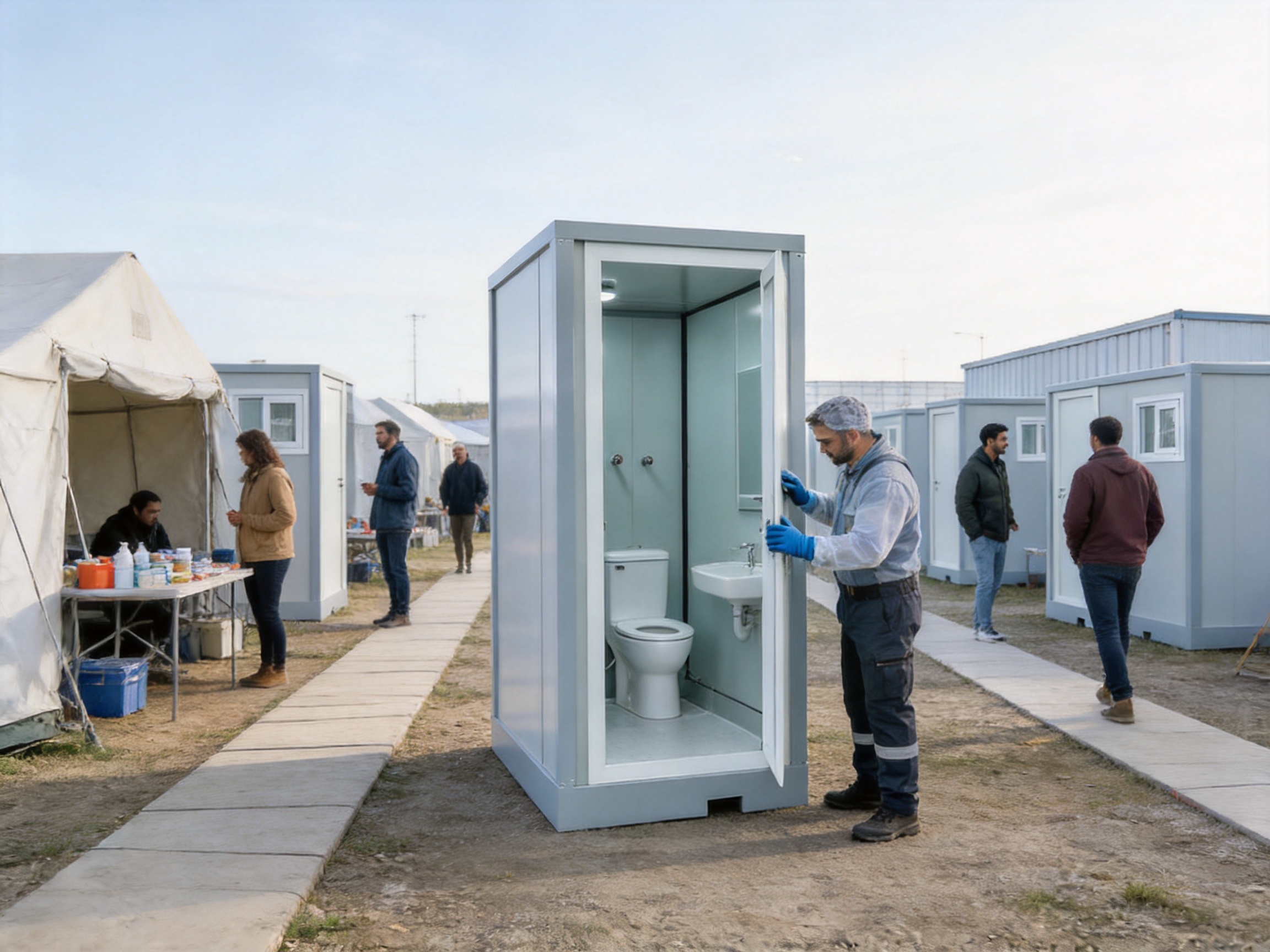
Installation and Deployment Considerations
Site Selection
Before delivery, the customer should choose a level and stable location. The surface should support the unit under expected operating conditions and should not collect standing water. A site with practical access for delivery vehicles, service personnel, and maintenance equipment is preferable.
The unit should be positioned where users can reach it safely and where privacy can be maintained. Depending on the application, customers may consider screening, lighting, pathways, security, weather exposure, and separation from food preparation or sleeping areas.
Utility Planning
The basic deployment plan should identify whether the unit requires a water supply, drainage connection, waste tank, electrical service, ventilation, or other supporting systems. Requirements may vary according to the selected configuration and local regulations.
If a washbasin is included, the project team should determine the source of clean water and the method for handling wastewater. In remote areas, self-contained tanks or other approved systems may be appropriate. In developed sites, the unit may connect to existing water and drainage networks, subject to professional review and local requirements.
Transport and Positioning
Portable units must be handled correctly during loading, unloading, and positioning. Customers should follow the supplier’s instructions for lifting points, vehicle access, support conditions, and protection of doors and fixtures. Proper handling reduces the risk of structural damage and helps ensure the unit is ready for service after delivery.
Because the product is designed for flexible relocation, transport planning should be included from the beginning. A project may require multiple deployments, seasonal movement, or relocation as work areas change. The selected transport method should match the unit configuration and local road or site conditions.
Maintenance and Hygiene Management
Regular maintenance is essential for any portable restroom. A spacious unit may be easier to clean and inspect, but it still requires a clear service routine. Operators should establish cleaning intervals based on user volume, climate, project duration, and the type of waste management system installed.
Routine cleaning may include floor washing, fixture disinfection, touch-point cleaning, odor control, waste removal, replenishment of soap and handwashing supplies, and inspection of doors, locks, ventilation components, and drainage systems. A written checklist can help staff maintain consistent standards.
The optional washbasin creates additional maintenance responsibilities. Water supply lines, faucets, basins, drains, and wastewater systems should be inspected regularly. Leaks should be corrected promptly to prevent moisture damage, unpleasant odors, or unsafe floor conditions.
At the end of a project, the unit should be emptied or disconnected according to the applicable sanitation procedures, thoroughly cleaned, inspected, and prepared for storage or relocation. Preventive maintenance helps extend the product’s service life and supports reliable performance at the next site.
How the Product Supports More Efficient Projects
Temporary infrastructure can affect the schedule of an entire project. If workers lack convenient sanitation, productivity may decline and site logistics may become more complicated. Providing a nearby portable restroom helps reduce unnecessary travel and creates a more organized working environment.
Quick deployment also allows the main project to begin without waiting for a permanent restroom building. This is valuable when construction phases are tightly scheduled or when the site is expected to operate for only a limited period.
The unit’s relocatable nature can reduce the need to purchase separate facilities for different stages of a project. One facility can serve an early construction zone, then move to another area as the site develops. This flexibility can improve asset utilization and simplify temporary site planning.
For emergency and event applications, the ability to deploy and remove the unit quickly can reduce planning risk. Organizers can respond to changing attendance, weather conditions, or operational requirements without committing to permanent structures.
Ordering and Customization Process
A successful purchase begins with a clear description of the intended application. Customers should explain where the unit will be used, how long it will remain in service, how many users are expected, whether relocation is required, and whether a washbasin or hygiene facility is needed.
The supplier can then help review the proposed layout and configuration. Important subjects may include the internal fixture arrangement, exterior appearance, structural requirements, utility connections, delivery conditions, quantity, and project schedule.
For larger projects, customers may benefit from ordering portable restrooms together with other modular facilities. A coordinated package could include worker accommodation, site offices, storage rooms, shower units, kitchens, or temporary classrooms. Sourcing related structures from one supplier can simplify communication and improve consistency across the site.
Before production, the customer should confirm drawings, specifications, optional equipment, packaging, delivery terms, installation responsibilities, and inspection requirements. Clear confirmation at this stage helps avoid delays and ensures that the finished unit matches the planned use.
Suitability for Different Customer Priorities
| Customer Priority | How the XL Portable Toilet Responds |
|---|---|
| Comfort | Provides a larger private interior than many compact portable formats. |
| Privacy | Offers a dedicated single-user enclosed space. |
| Hygiene | Can include a washbasin or personal hygiene setup. |
| Speed | Can be deployed after delivery and setup without long traditional construction. |
| Mobility | Can be relocated as project conditions change. |
| Durability | Uses a robust outdoor-oriented structure for repeated temporary use. |
| Project integration | Can complement modular houses, container buildings, and temporary site facilities. |
| Customization | Can be discussed and configured according to application requirements. |
Why Choose an Experienced Modular Manufacturer?
A portable restroom may appear simple, but dependable performance depends on many connected details. The structure must remain stable, the exterior must withstand outdoor exposure, the interior must be easy to clean, the fixtures must be practical, and transportation must not compromise the unit.
An experienced modular manufacturer understands how to coordinate these details within a production system. Suzhou Taimao Integrated Housing Co., Ltd. brings experience in modular construction, steel structures, prefabricated housing, container-based buildings, and integrated building services. This broader capability supports product development that considers the complete life cycle of the unit, from factory production and shipment to site use, relocation, maintenance, and reuse.
The company’s manufacturing philosophy emphasizes moving as much work as possible from unpredictable construction sites into controlled factory environments. This approach can improve production consistency, shorten site installation, reduce on-site finishing work, and support more efficient project delivery.
For buyers seeking several types of temporary facilities, the advantage is even greater. The same supplier can potentially support a complete modular project that includes portable restrooms, construction site houses, mobile homes, temporary accommodation, and larger prefabricated structures. This creates a unified source for design coordination and manufacturing communication.
Frequently Asked Questions
What is the primary purpose of this portable toilet?
The primary purpose is to provide a spacious, private, and relocatable restroom for one user at a time. It is designed for outdoor sites, temporary facilities, camping, construction projects, emergency response, and other locations where permanent restrooms are unavailable or impractical.
How is the XL model different from a standard portable toilet?
The XL model focuses on a more generous interior space. It is intended to provide greater comfort and freedom of movement than many compact portable formats. It can also be configured with a washbasin or hygiene facility, making it suitable for applications that require more than basic toilet access.
Can a washbasin be installed inside?
Yes. The product can be equipped with a washbasin or a personal hygiene setup. The final arrangement should be confirmed according to the customer’s water supply, drainage, waste management, and operating requirements.
Can the unit be used on a construction site?
Yes. It is suitable for construction sites and can be positioned near active work areas. Its spacious interior can be convenient for workers wearing protective clothing, while an optional washbasin can support hand hygiene.
Is the portable toilet suitable for emergency relief?
Yes. Its quick deployment and relocatable design make it suitable for emergency shelters, disaster response bases, temporary medical areas, and relief distribution locations. Site operators should establish appropriate cleaning, waste management, and utility procedures.
Can the unit be moved after installation?
The product is designed for portable and flexible use, so it can be relocated when project conditions change. Proper transport and lifting procedures should be followed to protect the structure and internal equipment.
What type of foundation is required?
The unit should generally be placed on a stable, level surface suitable for its operating conditions. Specific support requirements may depend on the site, climate, transport method, utility connections, and local regulations. Customers should confirm these details before delivery.
Does the product require permanent utility connections?
Requirements depend on the selected configuration. A basic unit may use a self-contained waste management arrangement, while a configuration with a washbasin may require clean water and wastewater provisions. The supplier can review the intended application and advise on the necessary arrangements.
How is the unit cleaned?
Cleaning should include disinfection of the toilet and touch points, floor and wall cleaning, waste removal, replenishment of hygiene supplies, and inspection of doors, fixtures, ventilation, and drainage. The exact schedule should reflect user volume and local sanitation requirements.
Can the portable toilet be used with modular houses?
Yes. It can complement container houses, folding container houses, double-wing expandable container houses, K-Type prefabricated houses, and steel structure facilities. This makes it useful for complete temporary housing or construction site projects.
Can the product be customized?
Customization can be discussed according to the project. Possible subjects include internal hygiene facilities, utility arrangements, exterior finish, quantity, transport requirements, and coordination with other modular buildings. The final options should be confirmed before production.
Who manufactures the product?
The product is manufactured by Suzhou Taimao Integrated Housing Co., Ltd., a China-based supplier specializing in modular building solutions, prefabricated housing, container structures, mobile homes, temporary facilities, and integrated construction systems.
Conclusion
The Single-Person XL Outdoor Portable Toilet offers a practical alternative to cramped, basic, or improvised outdoor sanitation facilities. Its key strengths are the spacious private interior, optional washbasin or hygiene equipment, durable outdoor-oriented construction, rapid deployment, and flexible relocation.
These advantages make it suitable for construction sites, campsites, emergency relief operations, temporary accommodation, outdoor events, remote industrial projects, and many other applications. Compared with compact standard portable toilets, it gives greater priority to comfort, privacy, hygiene, and long-term usability.
The product is supported by the manufacturing capabilities of Suzhou Taimao Integrated Housing Co., Ltd. The company’s experience in modular buildings, steel structures, prefabricated housing, factory-controlled production, integrated services, and digital project coordination provides a strong foundation for dependable portable facility manufacturing.
For customers planning a temporary sanitation project, the most effective approach is to define the site conditions, expected usage, utility requirements, relocation plans, and hygiene objectives before ordering. With the right configuration and maintenance program, this XL portable restroom can become a durable, reusable, and valuable part of a modern temporary infrastructure system.
References
1. International Organization for Standardization. Principles of Quality Management Systems and Process-Based Manufacturing.
2. World Health Organization. Guidelines for Sanitation and Health.
3. International Labour Organization. Occupational Safety and Health Practices for Construction Sites.
4. United Nations Human Settlements Programme. Guidance on Temporary Housing and Emergency Shelter Infrastructure.
5. International Building Code Council. General Principles for Temporary Structures and Occupied Facilities.
6. Manufacturer-provided product information for the Single-Person XL Outdoor Portable Toilet.
7. Manufacturer-provided information regarding modular housing, prefabricated construction, steel structures, and integrated building systems.
Product: Single-Person XL Outdoor Portable Toilet
For exclusive deals and latest offers, sign up by entering your email address below.

-
TEL:+86 18762912902
-
Email:cntaimao@163.com
-
WhatsApp:
-
Add:Group 5, Cao Village, Zhenze Town, Suzhou, Jiangsu, China
Copyright © Suzhou Taimao Integrated Housing Co., Ltd.
All Rights Reserved.
 Wholesale movable homes for sale
custom built modular homes
Wholesale movable homes for sale
custom built modular homes