


 EN
EN
 русский
 Español
 عربى
عربى Français
Single-Person Outdoor Portable Toilet for Compact, Durable Temporary Sanitation
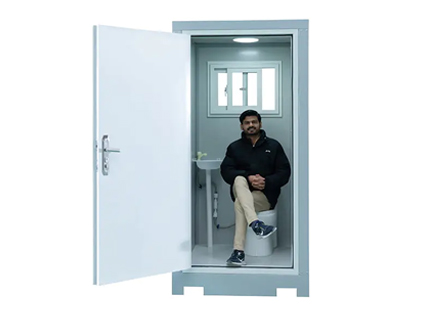
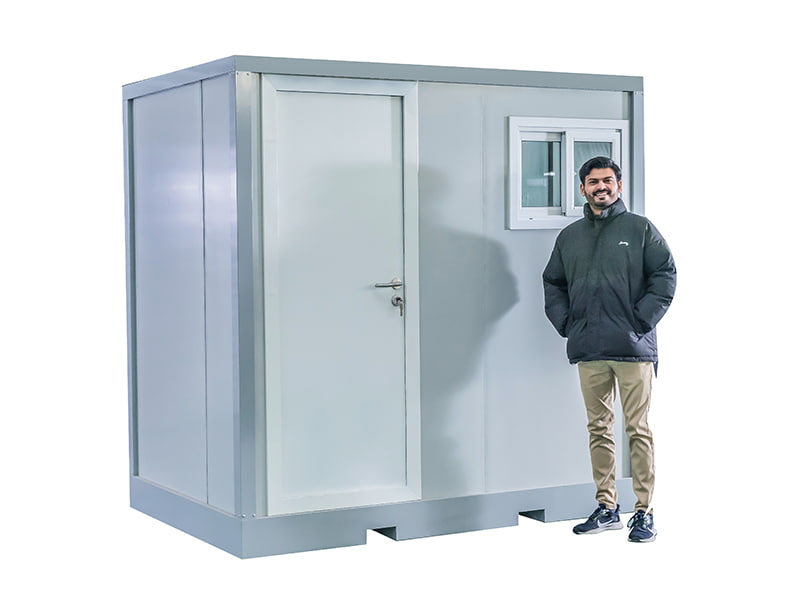
Admin 2026-07-19Temporary sanitation is often one of the most underestimated requirements in outdoor construction, event planning, emergency response, and remote facility management. When people think about project infrastructure, they usually focus first on shelter, power, water, access roads, storage, or safety barriers. Yet a clean, accessible, and dependable restroom is equally essential to health, productivity, user comfort, and regulatory compliance. The Single-Person Outdoor Portable Toilet is designed specifically for these practical needs: it provides a compact, fully functional, easy-to-move restroom solution for temporary or space-limited outdoor environments.
Unlike oversized portable restroom cabins or dual-compartment units that require more installation space and transportation capacity, this single-person model focuses on efficient sanitation in a smaller footprint. It is engineered for individual use, quick deployment, and reliable performance in outdoor conditions. Its value lies in balancing simplicity with durability: it avoids unnecessary complexity while still delivering the essential features required for temporary sanitation. For contractors, event organizers, municipal teams, industrial sites, and facility operators, this makes it a practical and cost-effective choice.
The product belongs to the Portable Restroom Outdoor Toilet category, but it also reflects broader capabilities in modular and prefabricated building manufacturing. Its design philosophy is connected to the same principles used in container houses, folding container houses, expandable container houses, prefabricated housing, and steel structures: standardized manufacturing, strong structural integrity, rapid deployment, portability, and efficient use of materials. Through advanced modular production methods, Suzhou Taimao Integrated Housing Co., Ltd. supports the development of durable mobile sanitation units that are suitable for modern temporary infrastructure needs.
Single-Person Outdoor Portable Toilet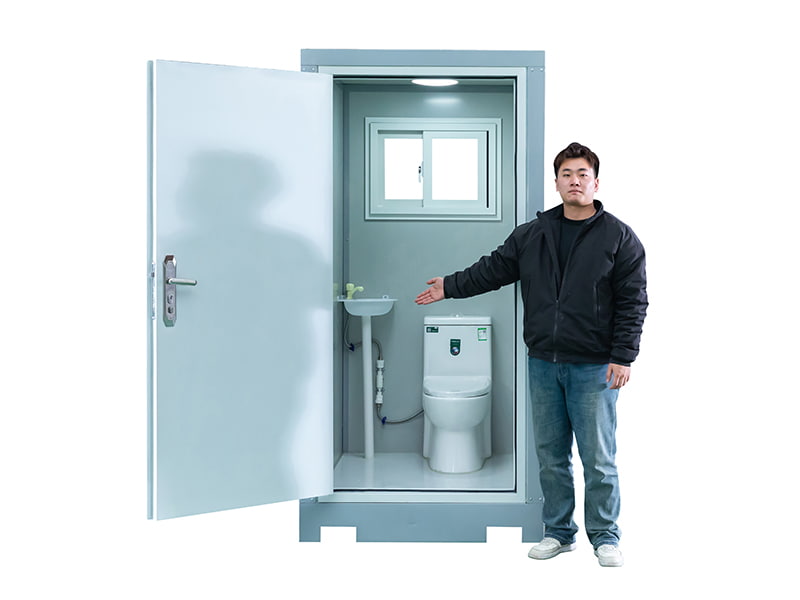
Content
- 1 1. Product Overview: A Compact Restroom Built for Real-World Outdoor Use
- 2 2. Why Compact Sanitation Matters
- 3 3. Core Features and Practical Benefits
- 4 4. Comparison with Common Competitor Solutions
- 5 5. Application Scenarios
- 6 6. Manufacturing Strength Behind the Product
- 7 7. Advanced Production Processes and Quality Control
- 8 8. Advantages for Contractors, Rental Operators, and Facility Managers
- 9 9. Hygiene, Safety, and User Experience
- 10 10. Environmental and Operational Efficiency
- 11 11. Integration with Broader Modular Site Solutions
- 12 12. Purchasing Considerations
- 13 13. Customization and Project Support
- 14 14. Why This Product Stands Out
- 15 15. Q&A Section
- 15.1 Q1: What is the main purpose of the Single-Person Outdoor Portable Toilet?
- 15.2 Q2: How is this product different from XL portable toilets or dual-compartment units?
- 15.3 Q3: Is the unit suitable for construction sites?
- 15.4 Q4: Can it be used for outdoor events?
- 15.5 Q5: Why is portability important?
- 15.6 Q6: Is the product weather-resistant?
- 15.7 Q7: Is this product cost-effective?
- 15.8 Q8: Who are the typical buyers?
- 15.9 Q9: How does the manufacturer’s modular building experience benefit this product?
- 15.10 Q10: Can this toilet be integrated with other temporary site facilities?
- 16 16. Conclusion
- 17 References
- 18 Product: Single-Person Outdoor Portable Toilet
1. Product Overview: A Compact Restroom Built for Real-World Outdoor Use
The Single-Person Outdoor Portable Toilet is a self-contained mobile restroom unit developed for locations where permanent restroom construction is unnecessary, impractical, or too expensive. It is intended for temporary or semi-temporary use, especially in environments that demand fast setup and flexible relocation. Its compact structure makes it particularly suitable for sites where available space is limited, such as urban construction areas, small outdoor events, temporary work zones, roadside maintenance projects, parks, campsites, and temporary public service points.
The defining feature of the product is its small footprint. Many traditional portable restroom solutions are designed with larger cabin dimensions, multiple compartments, or added storage areas. While these may be useful in some applications, they can be difficult to transport, position, or use in confined environments. The single-person design solves this problem by concentrating only on the essential restroom function. It offers an efficient sanitation space without wasting site area.
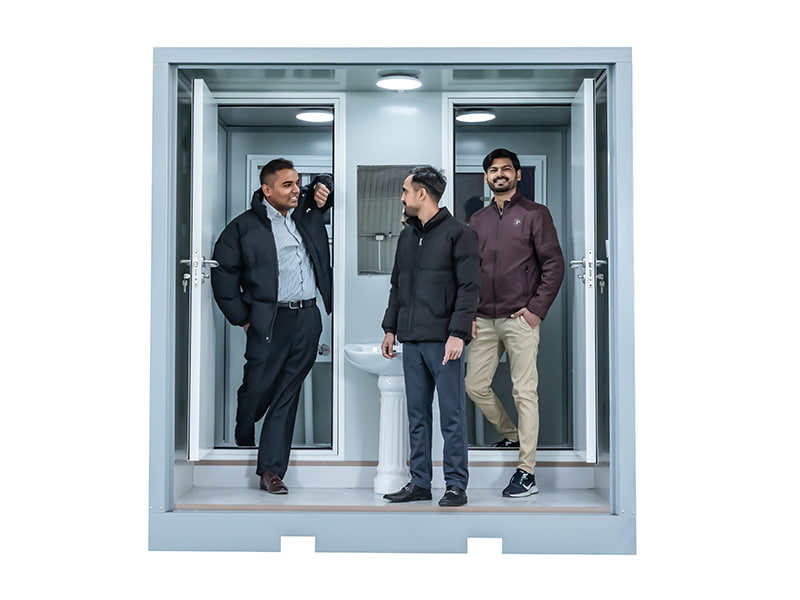
Despite its compact form, the unit is not merely a basic enclosure. It is designed as a complete practical restroom facility for individual use. Users receive privacy, shelter, and essential sanitation access, while site managers benefit from a unit that can be moved, installed, cleaned, and maintained with relative ease. Its robust structure supports use in outdoor settings, and the weather-resistant design helps protect the internal facilities from normal environmental exposure.
The product is especially valuable when site conditions change frequently. On a construction project, for example, work zones may shift as different phases are completed. A portable restroom that can be relocated quickly reduces downtime and keeps sanitation access close to workers. At events, restroom placement may need to be adjusted according to crowd flow, entry points, vendor areas, or safety zones. A compact single-person unit provides the flexibility required for such dynamic environments.
2. Why Compact Sanitation Matters
Space is often one of the most expensive and difficult resources to manage on temporary sites. In dense urban areas, construction zones may be squeezed between active roads, neighboring buildings, pedestrian pathways, utility equipment, and material storage areas. A restroom that occupies too much space can interfere with workflow, vehicle movement, or safety planning. Similarly, small outdoor venues may need restroom access but lack the space for a large sanitation block.
The Single-Person Outdoor Portable Toilet addresses this challenge by reducing the area required for deployment. Its compact size enables flexible positioning in narrow or restricted locations. This does not only save space; it also improves site planning. A smaller restroom unit can be placed closer to where it is needed, reducing the walking distance for workers or visitors. In many settings, convenience improves compliance: people are more likely to use properly designated sanitation facilities when they are easy to access.
Compact sanitation also reduces logistics pressure. A smaller unit is easier to transport, load, unload, and store. For rental companies or facility operators, this can improve fleet efficiency. More units may be transported in fewer trips, or a smaller vehicle may be sufficient for delivery. For end users, quick deployment means the restroom can be made available soon after site preparation, without the delays associated with more complex building installation.
In emergencies or short-duration projects, time is especially critical. When a temporary sanitation requirement appears suddenly, such as during public works repairs, disaster response staging, outdoor medical support, or temporary security operations, a compact portable toilet can be deployed with minimal preparation. The product’s simplicity becomes a major advantage because it reduces dependence on extensive foundation work, complex assembly, or heavy lifting equipment.
3. Core Features and Practical Benefits
The product is built around five central features: compact and space-saving design, durable construction, full restroom functionality, portability, and affordability. Each feature contributes to the overall value of the unit in temporary outdoor sanitation applications.
Compact and Space-Saving
The small footprint is the product’s most immediate advantage. It allows the unit to be used where larger portable toilets, restroom trailers, or modular restroom cabins are not appropriate. A compact restroom can fit into tight service areas, construction access corridors, event sidelines, temporary parking zones, maintenance bases, and small industrial yards. This makes it more adaptable than bulky alternatives.
Space-saving design also supports better site circulation. In construction environments, every square meter may need to be coordinated with cranes, trucks, scaffolding, waste containers, and material movement. In event environments, restroom placement must not block emergency exits, pedestrian flow, or vendor operations. By minimizing its footprint, the unit helps planners maintain safer and more efficient layouts.
Durable Construction
Outdoor sanitation equipment must withstand repeated use, transportation, handling, and exposure to changing weather. The Single-Person Outdoor Portable Toilet is designed with a stable and weather-resistant structure. Durability is not only about surviving harsh conditions; it is also about maintaining usability and appearance over time. A restroom that deforms, leaks, or becomes unstable quickly creates maintenance problems and poor user experience.
A robust structure supports long-term value. For rental businesses, durability improves return on investment because the unit can serve multiple projects. For contractors, it reduces the risk of interruptions caused by damaged sanitation equipment. For public service applications, it improves reliability and reduces complaints.
Fully Functional Restroom Facilities
Although compact, the unit is designed to provide essential restroom functions. This is important because some low-cost portable enclosures may compromise too much on usability. A restroom must offer privacy, adequate interior arrangement, user safety, and practical maintenance access. The product is positioned as a complete sanitation solution for individual use rather than a temporary shell.
The focus on essential functionality makes the unit suitable for a wide range of users. It can support daily worker needs on construction sites, guest needs at temporary events, visitor needs at outdoor service points, or staff needs in remote operational areas. Because it avoids unnecessary luxury features, it remains cost-effective while still meeting the core purpose of sanitation.
Portable and Easy to Move
Portability is central to the product’s value. A temporary restroom must be easy to deploy, remove, and relocate. This unit is designed for quick movement, making it suitable for changing job sites or short-term projects. Easy relocation also helps maintain hygiene and operational efficiency, because site managers can reposition the restroom closer to active work areas or service zones.
Compared with heavier restroom trailers or larger prefabricated restroom blocks, a compact single-person unit reduces transportation complexity. It is easier to integrate into existing logistics plans, especially when sites have limited access or when multiple units need to be distributed across a broad project area.
Practical and Affordable
Cost control is a constant concern in temporary infrastructure. Permanent restroom construction may not be justified for short-term needs, and large portable restroom systems may exceed the budget or space requirements of small projects. The Single-Person Outdoor Portable Toilet provides a practical middle ground: it supplies the necessary sanitation function without excessive cost, installation work, or site occupation.
Affordability should not be understood only as initial purchase price. True cost-effectiveness includes delivery, installation, maintenance, cleaning, relocation, storage, and service life. Because the product is compact, durable, and easy to move, it can help reduce total operating costs over repeated use.
4. Comparison with Common Competitor Solutions
Portable sanitation products vary widely. Some are very basic temporary cabins, some are large luxury restroom trailers, and others are modular toilet blocks built for longer-term use. The Single-Person Outdoor Portable Toilet occupies a practical category: it is intended for individual use in space-limited or temporary environments where durability, portability, and affordability are more important than size or decorative complexity.
The following table compares the product with several common alternatives.
| Comparison Item | Single-Person Outdoor Portable Toilet | XL Portable Toilet | Dual-Compartment Portable Toilet | Restroom Trailer |
|---|---|---|---|---|
| Space Requirement | Very compact; suitable for narrow or restricted sites | Larger footprint; may be difficult in tight areas | Requires wider placement area | Requires vehicle access, leveling space, and larger setup area |
| Deployment Speed | Fast and simple | Moderate | Moderate | Slower due to size and utility requirements |
| Relocation Flexibility | High; easy to move when site layout changes | Moderate | Moderate to low | Low to moderate depending on towing and access |
| Cost Efficiency | High for temporary and small-scale needs | Moderate | Moderate | Lower for budget-sensitive projects |
| Best Use Case | Construction zones, small events, temporary installations, limited-space sites | Higher-capacity individual use where space is available | Two-user or gender-separated basic sanitation | Premium events or long-duration sites with larger budgets |
| Maintenance Burden | Simple and manageable | Moderate | Higher due to more compartments | Higher due to plumbing, tanks, utilities, and accessories |
The table shows that the single-person unit is not designed to replace every type of portable restroom. Instead, it excels in the scenarios where compactness, flexibility, and fast deployment matter most. Compared with XL models, it reduces space requirements and improves mobility. Compared with dual-compartment toilets, it offers a simpler and more space-efficient solution when only individual use is required. Compared with restroom trailers, it is more economical and easier to deploy for practical temporary sanitation.
This targeted advantage is important. Many buyers overpay for capacity or features that their sites do not need. A small construction repair team, for instance, may not need a large trailer or multi-user restroom cabin. A temporary roadside maintenance site may only require one reliable unit. A small outdoor event may need several compact toilets placed at different points rather than one large centralized restroom facility. In these cases, the Single-Person Outdoor Portable Toilet can provide better operational efficiency than larger competitor products.
5. Application Scenarios
Urban Construction Zones
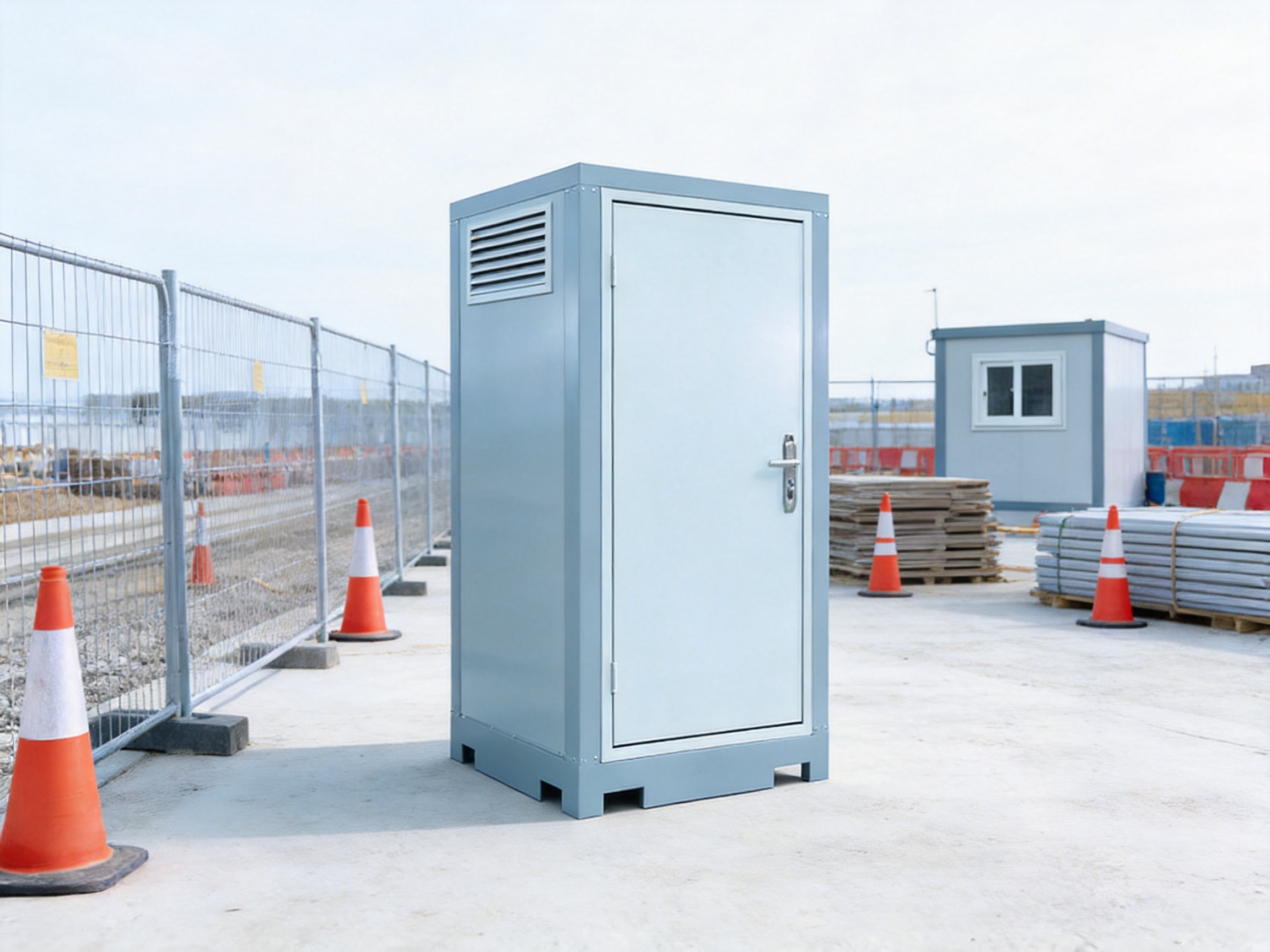
Urban construction sites often operate under severe space restrictions. Workers must share limited areas with equipment, fencing, traffic controls, temporary offices, and material storage. The compact size of the Single-Person Outdoor Portable Toilet allows it to be placed without disrupting site movement. It can be located near worker access points, temporary offices, or active work areas, improving convenience and reducing time lost walking to distant facilities.
Its durability is also useful in construction settings, where portable facilities may be exposed to dust, vibration, frequent handling, and changing weather. The ability to relocate the unit as work progresses from one zone to another helps maintain practical sanitation access throughout the project timeline.
Small Outdoor Events
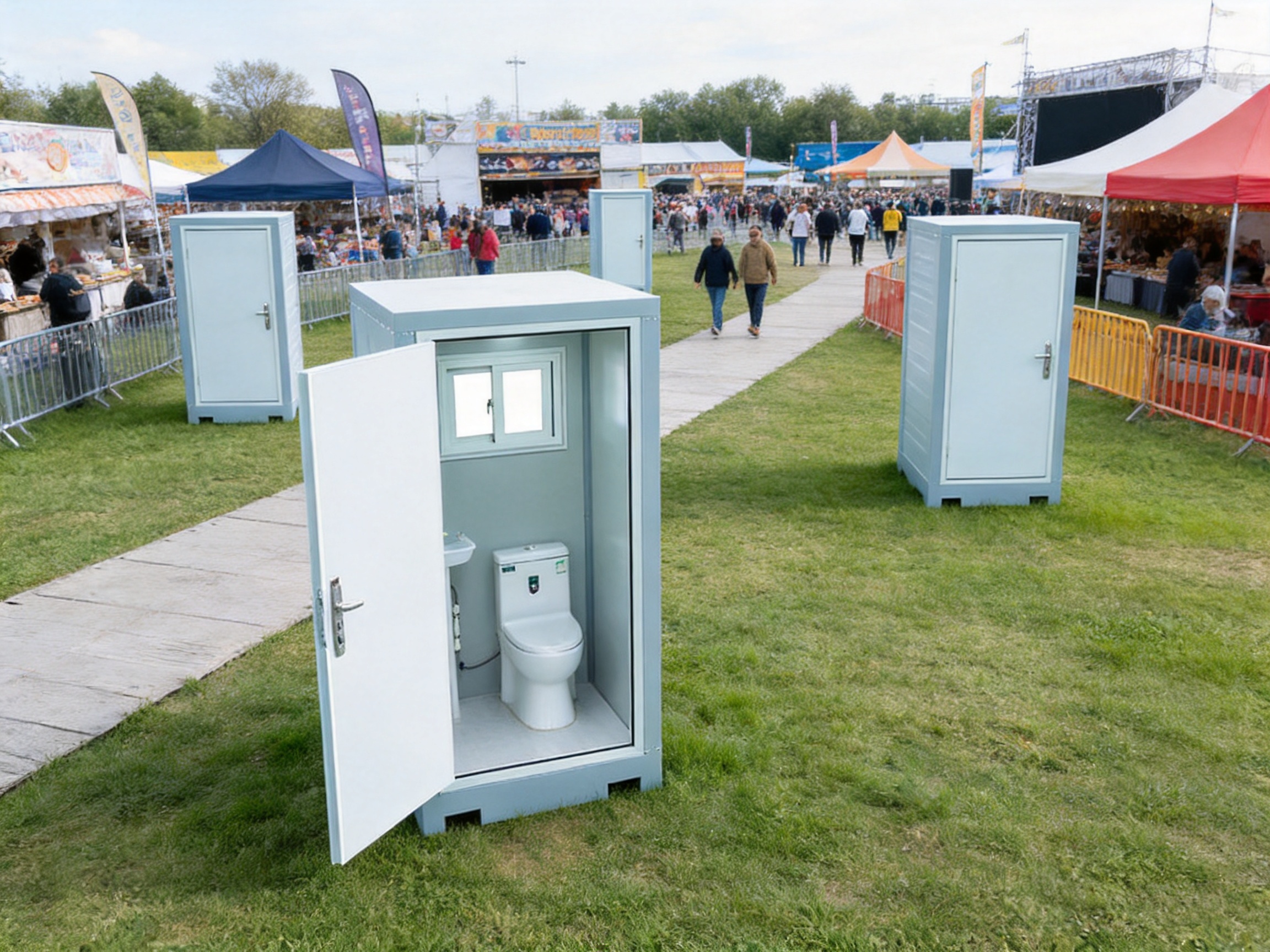
Not every event requires large restroom trailers. Small community gatherings, outdoor markets, sports activities, private functions, public exhibitions, and temporary entertainment areas often need simple, dependable sanitation. A compact portable toilet can be delivered quickly and placed in a discreet, accessible location. Multiple units can also be distributed around a venue to reduce queues and improve visitor convenience.
Because the unit is practical and affordable, it helps event organizers control costs while still providing necessary facilities. Its simple deployment also supports short-duration events where setup and removal must happen within a limited window.
Temporary Installations and Public Service Points
Temporary service points such as vaccination stations, outdoor registration areas, testing centers, security checkpoints, volunteer bases, seasonal markets, and emergency support locations all require sanitation planning. Permanent construction may be impossible or unnecessary. The Single-Person Outdoor Portable Toilet provides a ready-to-use solution that can be installed for the required period and removed afterward.
Its independent and compact design makes it especially useful where infrastructure is temporary but user needs are immediate. It can support staff, volunteers, visitors, or contractors without requiring major site modification.
Remote Work Sites
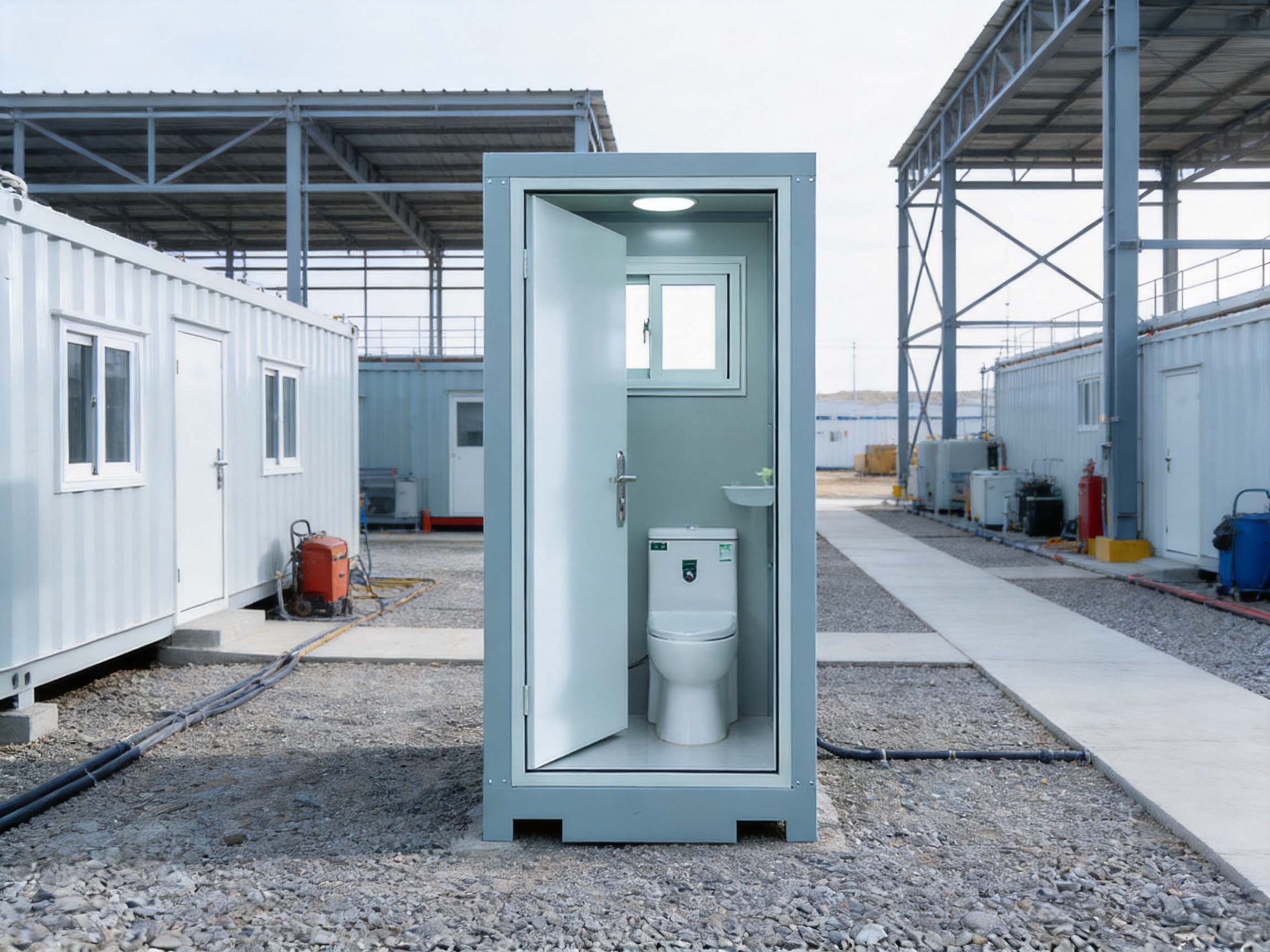
In remote areas, sanitation access is often limited. Utility installation, agricultural work, environmental monitoring, road repair, mining support, and energy projects may take place far from permanent facilities. A portable toilet helps protect worker welfare and supports compliance with health and safety expectations. The compact model is easier to transport to remote sites than larger sanitation systems, especially where road access is limited.
Parks, Campsites, and Recreational Areas
Outdoor recreation areas may have seasonal or temporary sanitation demands. During peak visitor periods, permanent restrooms may be insufficient. Temporary toilets can increase capacity without major construction. A single-person portable toilet can be placed near trails, parking areas, camping zones, or temporary activity areas. Its compactness helps minimize visual and spatial impact while still serving public needs.
6. Manufacturing Strength Behind the Product
The reliability of a portable toilet depends heavily on manufacturing quality. A compact restroom may look simple from the outside, but its performance is determined by material selection, structural design, assembly precision, surface treatment, quality control, and logistics planning. Suzhou Taimao Integrated Housing Co., Ltd. brings modular building expertise to this product category, supporting the development of portable sanitation units that are stable, practical, and suitable for repeated use.
The company specializes in integrated housing and modular building solutions, including container houses, folding container houses, double-wing expandable container houses, K-type prefabricated houses, steel structures, and portable restroom outdoor toilets. This broad product background matters because portable sanitation units benefit from the same industrialized construction principles used in larger modular buildings. These principles include standardization, prefabrication, controlled factory production, transport-oriented design, and rapid on-site deployment.
The company’s modular building philosophy focuses on accelerating project timelines, improving operational efficiency, reducing environmental impact, and maintaining high standards of quality and safety. These values are directly relevant to the Single-Person Outdoor Portable Toilet. The product is intended to save time, reduce site complexity, and deliver reliable performance with minimal installation requirements.
One of the company’s key strengths is its experience with integrated modular systems. Its flagship Structural Insulated Panel modular building approach integrates structure, insulation, mechanical and electrical planning, HVAC considerations, interior finishes, and smart building concepts into unified solutions for broader construction applications. While a portable toilet is simpler than a full modular house, the same manufacturing culture of integration and factory-based quality control supports better product consistency.
Factory-controlled manufacturing provides advantages over purely on-site construction. Materials can be processed under stable conditions, dimensions can be checked more accurately, and assembly procedures can be standardized. Defects can be identified before shipment rather than after installation. This reduces risk for customers and improves the reliability of the finished product.
7. Advanced Production Processes and Quality Control
A high-quality portable restroom must be designed for repeated handling and outdoor exposure. Manufacturing processes should therefore emphasize structural strength, surface durability, accurate assembly, and ease of maintenance. The company’s experience in prefabricated buildings and steel structures supports a disciplined production approach.
Modular Design and Standardization
Standardized design improves manufacturing consistency and simplifies replacement, repair, and scaling. When a portable toilet unit follows a standardized modular design, production teams can control dimensions, connection points, door alignment, internal layout, and accessory installation more effectively. Customers benefit from predictable quality and easier procurement, especially when ordering multiple units.
Standardization also improves delivery planning. Compact modular products can be arranged for transport more efficiently, reducing shipping complexity. For customers managing multiple project sites, consistent unit dimensions make it easier to plan placement and relocation.
Material Selection for Outdoor Durability
Outdoor products face sunlight, rain, temperature variation, wind, dust, and repeated cleaning. Material selection must therefore balance strength, weight, corrosion resistance, and cost. A durable portable toilet should remain stable during normal use and transportation, while resisting common environmental wear. The product’s weather-resistant design is intended to support these needs.
Material quality also affects hygiene and maintenance. Surfaces should support cleaning and resist rapid deterioration. A well-manufactured restroom unit reduces the likelihood of cracks, gaps, deformation, or water intrusion that can create sanitation problems.
Precision Fabrication and Assembly
Precision assembly is important even for compact structures. Doors must open and close properly, panels must align securely, and the overall frame must remain stable. Poor assembly can lead to leakage, instability, difficult maintenance, and shorter product life. Factory-based fabrication allows production teams to maintain tighter control than improvised site assembly.
Because the company has experience manufacturing modular homes and prefabricated structures, it understands the importance of assembly tolerances, connection details, and transport stability. These skills help ensure that portable restroom products are not only functional at delivery but remain reliable after repeated relocation.
Inspection Before Delivery
Quality control should include checks for structural stability, door operation, surface condition, installation accuracy, and general usability. For portable sanitation products, even small defects can affect user experience. A loose door, uneven base, weak fastener, or poorly finished edge can create maintenance issues. Inspection before delivery reduces these risks.
The company’s commitment to quality and safety supports a responsible manufacturing process. Customers purchasing temporary sanitation equipment often need confidence that the product will perform immediately upon arrival. Pre-shipment inspection helps provide that confidence.
8. Advantages for Contractors, Rental Operators, and Facility Managers
The Single-Person Outdoor Portable Toilet delivers benefits to different types of buyers. Contractors value mobility and durability. Rental operators value long service life and easy handling. Facility managers value cost control and dependable performance. Event organizers value quick deployment and space efficiency. Municipal teams value flexibility and public service readiness.
Benefits for Contractors
Construction companies need sanitation solutions that can follow the work. A project may begin with excavation, move to foundation work, then structural work, interior installation, and exterior finishing. The active work area changes over time. A compact portable toilet can be moved as needed, helping workers maintain easy access to restroom facilities.
Contractors also need equipment that can handle rough environments. Construction sites expose facilities to dust, mud, frequent movement, and accidental impacts. The unit’s durable construction helps reduce downtime and replacement costs. Its affordability supports budget control, especially for small and medium-sized projects.
Benefits for Rental Operators
Portable toilet rental companies depend on products that are easy to transport, clean, store, and redeploy. A compact unit improves fleet utilization because it can serve many types of customers. It is suitable for small events, small construction teams, temporary public works projects, and emergency needs. The broader the application range, the easier it is for rental operators to keep units in service.
Durability is especially important for rental operators because units are repeatedly moved between sites. A product that maintains structural integrity over many rental cycles has better long-term value. Simple functionality also reduces maintenance complexity and makes staff training easier.
Benefits for Facility Managers
Facility managers may need temporary restrooms during renovations, seasonal activities, temporary closures of permanent facilities, or special operations. A compact portable toilet can be used as a backup or supplementary restroom. Because it does not require large installation space, it can be placed near building entrances, temporary work areas, parking lots, or outdoor service zones.
Cost-effective temporary sanitation also helps organizations avoid unnecessary capital expenditure. Instead of building permanent restrooms for short-term demand, managers can deploy portable facilities only when needed.
Benefits for Event Organizers
Events are judged not only by entertainment or programming but also by basic visitor comfort. Inadequate restroom access can quickly damage the visitor experience. The Single-Person Outdoor Portable Toilet offers a practical solution for smaller events or for distributed restroom placement at larger venues. Organizers can position units where visitor demand is expected without committing to a large restroom trailer.
The compact unit is also useful for staff-only areas, ticketing zones, temporary backstage areas, vendor sections, or security posts. Its portability supports fast removal after the event, reducing cleanup and site restoration pressure.
9. Hygiene, Safety, and User Experience
A portable toilet must be more than movable. It must provide a safe, private, and acceptable user experience. Even when a product is intended to be affordable, it should not feel unstable or poorly designed. The Single-Person Outdoor Portable Toilet is intended to provide essential restroom functions in a straightforward and dependable way.
Privacy is a fundamental requirement. A single-person layout gives users an enclosed space without sharing the compartment with others. This is especially important at public events and worksites where users may include staff, visitors, contractors, and members of the public.
Stability is also important. Users should feel secure when entering, exiting, and using the unit. A robust structure helps prevent wobbling or deformation under normal conditions. Weather resistance helps maintain comfort and usability during outdoor deployment.
Cleaning and maintenance are central to hygiene. A compact design can make cleaning more efficient because the interior space is focused and accessible. For service providers, faster cleaning means reduced labor time and better turnaround between uses. For site managers, regular maintenance helps preserve user satisfaction and sanitation standards.
Placement also affects safety. The unit should be installed on a stable surface, positioned away from vehicle collision risks, and located where users can access it safely. Good lighting, clear pathways, and regular service scheduling further improve user experience. The product’s compact footprint makes it easier to place in convenient and controlled areas.
10. Environmental and Operational Efficiency
Modern temporary infrastructure must consider environmental responsibility as well as cost. Portable sanitation can reduce the need for permanent construction where demand is temporary. This avoids unnecessary material use, demolition waste, and long-term land occupation. A durable portable toilet can be reused across many projects, spreading its material impact over a longer service life.
The company’s broader modular building mission includes reducing ecological impact through factory-based production and efficient project delivery. Prefabrication can reduce on-site waste, shorten construction time, and improve material control. These principles also support portable restroom manufacturing. A well-designed unit manufactured under controlled conditions can reduce rework, improve consistency, and support repeated reuse.
Operational efficiency is another environmental benefit. Compact units require less transport capacity than larger restroom systems. Easier relocation can reduce unnecessary equipment movement. Durable construction reduces premature replacement. Together, these factors contribute to a more efficient sanitation solution.
In temporary sanitation planning, choosing the right size product is also an environmental decision. Oversized units may consume more material and transport energy than necessary. The single-person model is appropriate when the requirement is individual restroom access in limited spaces. By matching product scale to actual demand, customers can avoid wasteful over-specification.
11. Integration with Broader Modular Site Solutions
Many projects that need portable toilets also need temporary offices, dormitories, storage rooms, guard rooms, kitchens, shower facilities, or equipment shelters. Because Suzhou Taimao Integrated Housing Co., Ltd. provides a wide range of modular building products, customers can source compatible temporary infrastructure from a manufacturer with integrated housing experience.
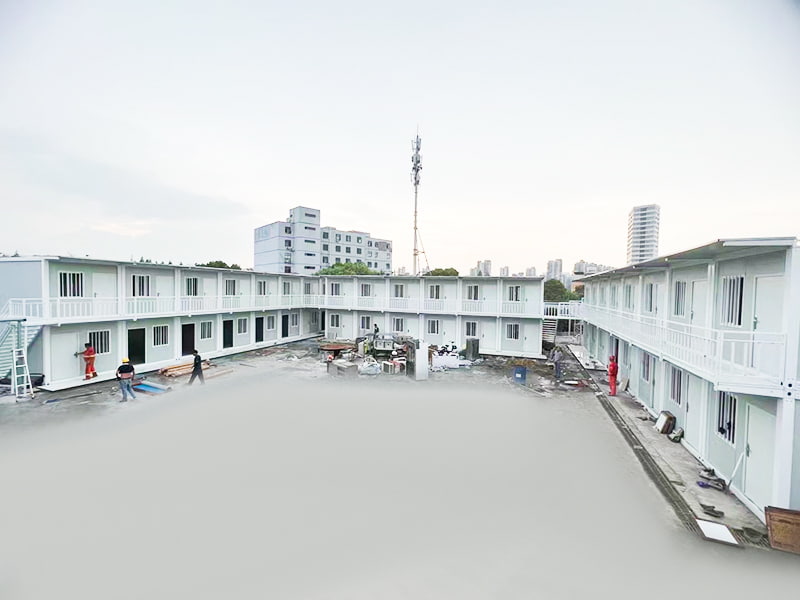
The company’s product categories include assemble container houses, folding container houses, double-wing expandable container houses, K-type prefabricated houses, steel structures, and portable restroom outdoor toilets. This range allows customers to build coordinated temporary site solutions. For example, a construction contractor may require worker accommodation, site offices, storage areas, and portable toilets. An event organizer may need ticket booths, staff rooms, storage cabins, and restrooms. A remote work camp may need modular housing, sanitation, and support structures.
Working with a modular building manufacturer can improve coordination because products are developed around transportability, fast assembly, and site flexibility. Instead of treating sanitation as an isolated afterthought, customers can include portable toilets in a complete temporary infrastructure plan. This improves project readiness and reduces the risk of missing essential facilities during mobilization.
12. Purchasing Considerations
When selecting a portable toilet, buyers should consider site size, expected user volume, duration of use, maintenance schedule, transport conditions, climate exposure, and budget. The Single-Person Outdoor Portable Toilet is best suited for individual use and temporary settings where compactness and portability are major priorities.
For high-traffic events, multiple units may be required. The advantage of compact units is that they can be distributed across the site rather than concentrated in one area. This can reduce walking distance and improve crowd movement. For construction sites, the number of units should match workforce size, work hours, and local sanitation expectations.
Buyers should also consider delivery access. The compact design helps in restricted locations, but the site still needs a suitable placement surface and access route. Proper positioning improves safety, stability, and serviceability. It is also important to plan cleaning and waste management according to the expected use pattern.
Durability should be evaluated as part of total cost. A cheaper but weaker unit may become expensive if it requires frequent repair or replacement. The value of the Single-Person Outdoor Portable Toilet lies in combining affordability with stable, weather-resistant construction. This makes it a practical choice for customers who want cost control without sacrificing basic reliability.
13. Customization and Project Support
Temporary sanitation requirements can vary by region, site type, and user group. While the Single-Person Outdoor Portable Toilet is built around a compact standard concept, customers may have different expectations for configuration, quantity, delivery schedule, or integration with other site facilities. A manufacturer with modular building expertise can provide project-oriented support rather than only selling a standalone product.
Suzhou Taimao Integrated Housing Co., Ltd. supports customized modular building solutions and has experience in temporary housing, mobile homes, construction site houses, and prefabricated structures. This capability is valuable for buyers who need more than one unit or who want sanitation products coordinated with broader site infrastructure.
Project support may include product selection guidance, quantity planning, logistics coordination, and integration with temporary site layouts. In large projects, even simple products must arrive at the right time and fit into the project schedule. A company experienced in modular manufacturing and global project delivery can help reduce procurement uncertainty.
14. Why This Product Stands Out
The Single-Person Outdoor Portable Toilet stands out because it does not try to be the largest or most luxurious option. Instead, it focuses on the most common practical problem in temporary sanitation: how to provide a reliable restroom in a limited space, quickly and affordably. This clarity of purpose is its competitive strength.
Compared with many competitor products, it offers a more space-efficient solution for sites that do not need oversized facilities. Compared with low-quality basic units, it benefits from a manufacturing background rooted in modular building and prefabricated structure production. Compared with complex restroom trailers, it reduces cost, logistics difficulty, and setup time.
Its advantages can be summarized in five key points. First, it saves space and fits restricted locations. Second, it provides essential restroom functions for individual use. Third, it is durable enough for outdoor deployment. Fourth, it is portable and easy to relocate as site needs change. Fifth, it offers practical affordability for temporary sanitation planning.
These strengths make the product suitable for construction teams, event organizers, rental companies, public service operators, remote work managers, and facility maintenance teams. It is a straightforward solution for a universal need.
15. Q&A Section
Q1: What is the main purpose of the Single-Person Outdoor Portable Toilet?
A: The main purpose is to provide a compact, reliable, and fully functional restroom solution for temporary outdoor locations or sites with limited space. It is designed for individual use and can be deployed quickly in construction zones, events, remote worksites, temporary installations, and public service areas.
Q2: How is this product different from XL portable toilets or dual-compartment units?
A: XL and dual-compartment units require more space and may be harder to move. The single-person model focuses on space efficiency and portability. It is better suited for narrow, crowded, or budget-sensitive sites where one compact restroom unit is sufficient.
Q3: Is the unit suitable for construction sites?
A: Yes. Its compact footprint, durable structure, and portability make it highly suitable for construction sites, especially urban construction zones where space is limited and the restroom may need to be relocated as work progresses.
Q4: Can it be used for outdoor events?
A: Yes. It is suitable for small outdoor events and can also be used as a distributed restroom option at larger venues. Its easy deployment helps event organizers provide sanitation access without requiring large trailers or permanent facilities.
Q5: Why is portability important?
A: Temporary sites often change layout. A portable toilet that can be moved quickly helps maintain convenient restroom access, improves site efficiency, and reduces downtime. Portability also simplifies delivery, removal, and redeployment.
Q6: Is the product weather-resistant?
A: The unit is designed with a stable and weather-resistant structure for outdoor use. Proper placement and routine maintenance will help support reliable performance in normal outdoor conditions.
Q7: Is this product cost-effective?
A: Yes. Its cost-effectiveness comes from its compact design, practical functionality, easy transportation, simple relocation, and durable construction. It helps customers avoid unnecessary spending on larger sanitation systems when a single-person solution is sufficient.
Q8: Who are the typical buyers?
A: Typical buyers include construction contractors, portable toilet rental companies, event organizers, municipal service teams, facility managers, remote work operators, and organizations managing temporary outdoor activities.
Q9: How does the manufacturer’s modular building experience benefit this product?
A: Modular building experience supports better design standardization, factory-controlled production, structural reliability, transport-oriented planning, and quality inspection. These strengths help improve the consistency and durability of portable restroom products.
Q10: Can this toilet be integrated with other temporary site facilities?
A: Yes. Since the manufacturer also produces container houses, folding container houses, expandable container houses, prefabricated houses, and steel structures, customers can coordinate portable toilets with broader temporary site infrastructure.
16. Conclusion
The Single-Person Outdoor Portable Toilet is a practical response to a common challenge: providing dependable sanitation where space, time, and budget are limited. It delivers the essential restroom function in a compact, durable, and portable form. For temporary outdoor projects, this combination is often more valuable than oversized capacity or unnecessary complexity.
Its competitive advantage lies in precise suitability. It is not too large for restricted sites, not too complicated for quick deployment, and not too costly for short-term needs. It is built for real working conditions, where equipment must be easy to move, simple to maintain, and strong enough for repeated use.
Backed by the modular manufacturing capabilities of Suzhou Taimao Integrated Housing Co., Ltd., the product benefits from a broader industrial foundation in prefabricated buildings, container houses, and steel structures. The company’s strengths in factory production, integrated design, quality control, and rapid project delivery enhance the value of this portable restroom solution.
For contractors, rental companies, event planners, public service teams, and facility managers, the Single-Person Outdoor Portable Toilet offers a dependable answer to temporary sanitation needs. It saves space, supports mobility, controls cost, and delivers practical restroom functionality wherever permanent facilities are unavailable or unnecessary.
References
1. International Code Council. International Plumbing Code: Guidelines for sanitary facility planning and temporary service considerations.
2. World Health Organization. Guidelines on Sanitation and Health: Principles for safe and accessible sanitation infrastructure.
3. Occupational Safety and Health Administration. Sanitation Requirements for Temporary Workplaces and Construction Environments.
4. Modular Building Institute. Permanent and Relocatable Modular Construction: Industry principles for prefabrication, efficiency, and quality control.
5. United Nations Environment Programme. Resource Efficiency in the Building and Construction Sector: Sustainable approaches to material use and prefabrication.
6. American National Standards Institute. Portable Sanitation and Temporary Facility Standards: General concepts for user safety, hygiene, and service planning.
Product: Single-Person Outdoor Portable Toilet
For exclusive deals and latest offers, sign up by entering your email address below.

-
TEL:+86 18762912902
-
Email:cntaimao@163.com
-
WhatsApp:
-
Add:Group 5, Cao Village, Zhenze Town, Suzhou, Jiangsu, China
Copyright © Suzhou Taimao Integrated Housing Co., Ltd.
All Rights Reserved.
 Wholesale movable homes for sale
custom built modular homes
Wholesale movable homes for sale
custom built modular homes