

 EN
EN
 русский
 Español
 عربى
عربى Français
Single-Person XL Outdoor Portable Toilet: A More Comfortable and Flexible Sanitation Solution
Admin 2026-07-23Outdoor sanitation is often treated as a temporary necessity, but the quality of a restroom facility can significantly affect comfort, health, privacy, productivity, and the overall experience of people using a site. Construction projects, campsites, emergency response areas, public events, remote work locations, and temporary accommodation projects all require sanitation facilities that are easy to transport, quick to install, durable in changing weather, and suitable for repeated use. The Single-Person XL Outdoor Portable Toilet is designed to meet these requirements while offering a more spacious and private interior than many conventional portable restroom units.
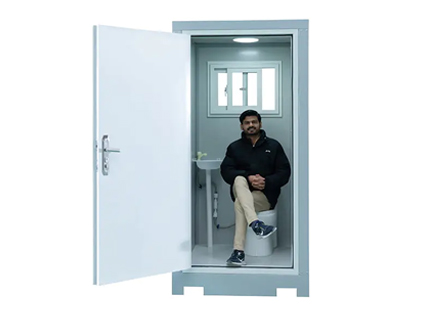
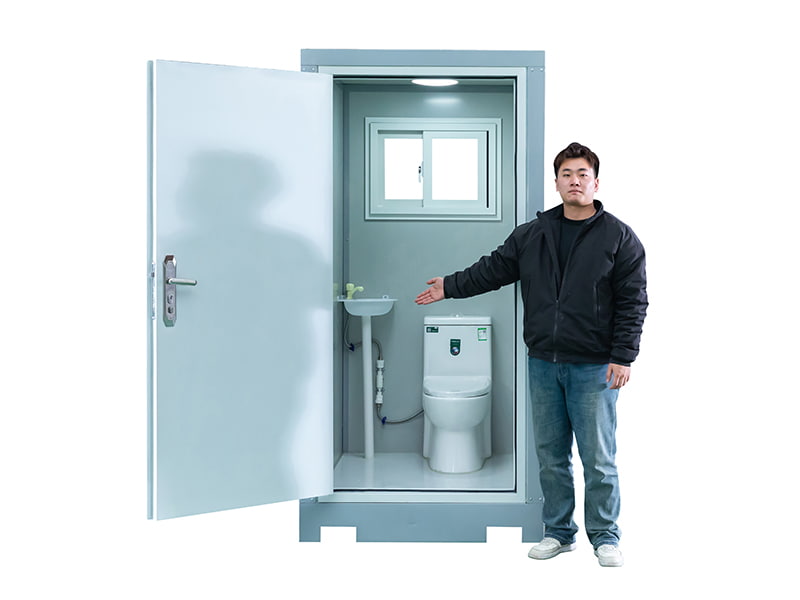
This product is a single-user mobile restroom designed for outdoor deployment. Its XL interior provides additional room for movement, improving the user experience compared with narrow standard portable toilets. It can also be configured with a washbasin or personal hygiene facilities, allowing it to function as more than a basic toilet enclosure. Depending on the project, it can serve as a private restroom, a washing station, or a compact sanitation cabin for temporary facilities.
The product is manufactured and supplied by Suzhou Taimao Integrated Housing Co., Ltd., a company specializing in modular building solutions, prefabricated structures, container houses, temporary housing, and integrated construction systems. Its manufacturing capabilities are supported by modular design, factory-based production, integrated building technologies, and digital software support. These strengths are particularly relevant to portable sanitation products because they help improve consistency, simplify installation, and support customized configurations.
Content
- 1 Understanding the Single-Person XL Outdoor Portable Toilet
- 2 Why XL Interior Space Matters
- 3 Flexible Washbasin and Hygiene Configurations
- 4 Advantages Over Conventional Portable Toilets
- 5 Durability for Outdoor Conditions
- 6 Fast Deployment and Operational Efficiency
- 7 Manufacturing Strengths of the Supplier
- 8 Connection with SIP Modular Technology
- 9 Applications Across Different Industries
- 10 Maintenance and Service Considerations
- 11 Customization for Project Requirements
- 12 Why Choose a Modular Manufacturer for Portable Sanitation
- 13 Environmental and Resource Considerations
- 14 Purchasing and Project Planning Checklist
- 15 Frequently Asked Questions
- 15.1 What is the Single-Person XL Outdoor Portable Toilet?
- 15.2 How is it different from a standard portable toilet?
- 15.3 Can a washbasin be installed inside?
- 15.4 Where can the unit be used?
- 15.5 Is the unit suitable for long-term temporary use?
- 15.6 How quickly can it be deployed?
- 15.7 Can the product be moved to another location?
- 15.8 Is the unit suitable for emergency response?
- 15.9 Can customers order customized configurations?
- 15.10 What does the manufacturer specialize in?
- 15.11 What should be considered before installation?
- 16 Conclusion
- 17 References
- 18 Product: Single-Person XL Outdoor Portable Toilet
Understanding the Single-Person XL Outdoor Portable Toilet
The Single-Person XL Outdoor Portable Toilet is intended for one user at a time. Unlike dual-compartment portable toilets or compact standard units, it concentrates on individual comfort and privacy. The interior is larger than a typical single-user portable toilet, creating a less restrictive environment for people who need additional space to enter, turn, sit, or use hygiene equipment.
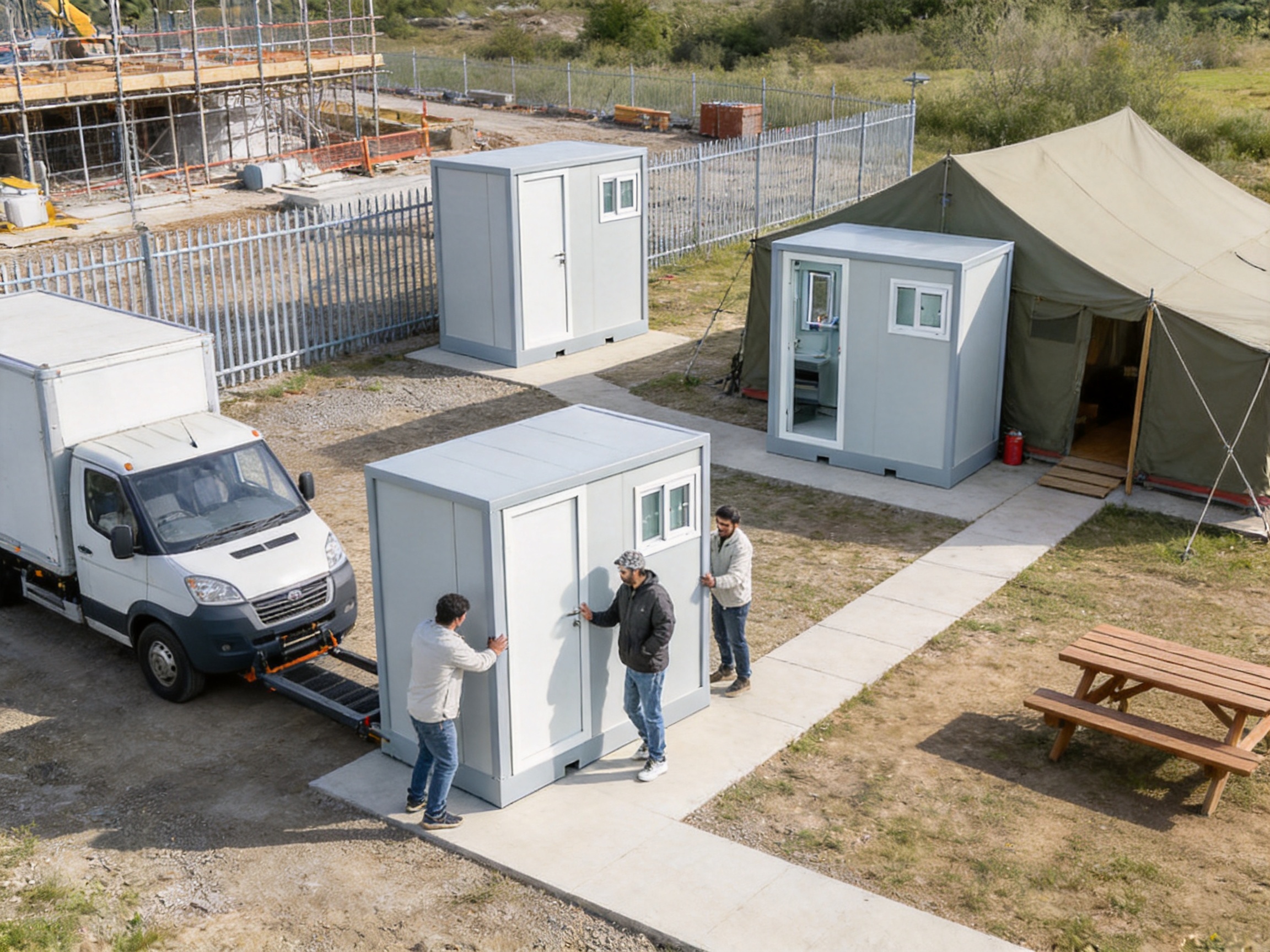
The unit is suitable for locations where a permanent restroom is unavailable, impractical, or still under construction. It can be transported to a site, positioned where it is needed, and prepared for use after setup. This makes it useful for construction sites, temporary worker accommodation, outdoor festivals, camping areas, disaster relief operations, remote work locations, and other situations where permanent infrastructure may not yet exist.
The basic design focuses on several practical priorities: privacy, portability, durability, fast deployment, and flexible interior use. The unit can be used as a restroom only, or it can be supplied with additional hygiene equipment such as a washbasin. This configuration flexibility allows project managers to select a setup that matches the expected users, duration of deployment, available utilities, and local sanitation requirements.
Its single-person format also supports controlled access. A user can occupy the complete compartment without sharing the room with another person. This is important in public areas, work zones, temporary housing projects, and emergency facilities where privacy and personal dignity must be maintained.
Why XL Interior Space Matters
One of the most important advantages of this product is its larger interior. Many portable toilets are designed primarily to minimize footprint and transportation volume. While compact dimensions can reduce logistics costs, they can also create an uncomfortable experience. Users may have limited room to move, difficulty positioning themselves, and insufficient space for personal belongings or hygiene equipment.
The XL single-user design takes a different approach. It provides a more generous interior while retaining the advantages of a mobile structure. This makes the unit more comfortable for a broader range of users and more practical when the facility must include a washbasin, handwashing equipment, or other personal hygiene features.
Additional space can also help reduce the feeling of confinement that is common in narrow portable toilets. A restroom that feels clean, private, and accessible is more likely to be accepted by users and properly maintained by site operators. In environments where facilities may be used repeatedly throughout the day, this can improve satisfaction and reduce complaints.
The larger layout is also helpful for cleaning and maintenance. A cramped interior can make it difficult for service personnel to inspect surfaces, remove waste, or clean around fixtures. A roomier design can make routine servicing more manageable, particularly when the unit is deployed for an extended period.
Comfort for Daily Outdoor Use
Temporary does not necessarily mean short-term. Construction sites, remote camps, infrastructure projects, and event venues may require portable sanitation facilities for weeks or months. When a portable toilet is used regularly, interior comfort becomes an important operational factor rather than a luxury.
The XL interior offers more room for users to enter and exit comfortably. It can also accommodate personal hygiene equipment without making the space excessively restrictive. For workers and visitors who may use the facility several times a day, this additional comfort can make a meaningful difference.
Improved Privacy
Privacy is central to the design of a single-person restroom. The user has an enclosed personal space rather than a shared or divided arrangement. This is valuable in public events, temporary housing areas, emergency response sites, and workplaces where people may prefer a more private sanitation environment.
The single-user layout can also help site planners place facilities in locations where privacy needs to be carefully considered. Units can be arranged individually, with appropriate spacing and access routes, instead of relying only on larger multi-compartment restroom blocks.
Flexible Washbasin and Hygiene Configurations
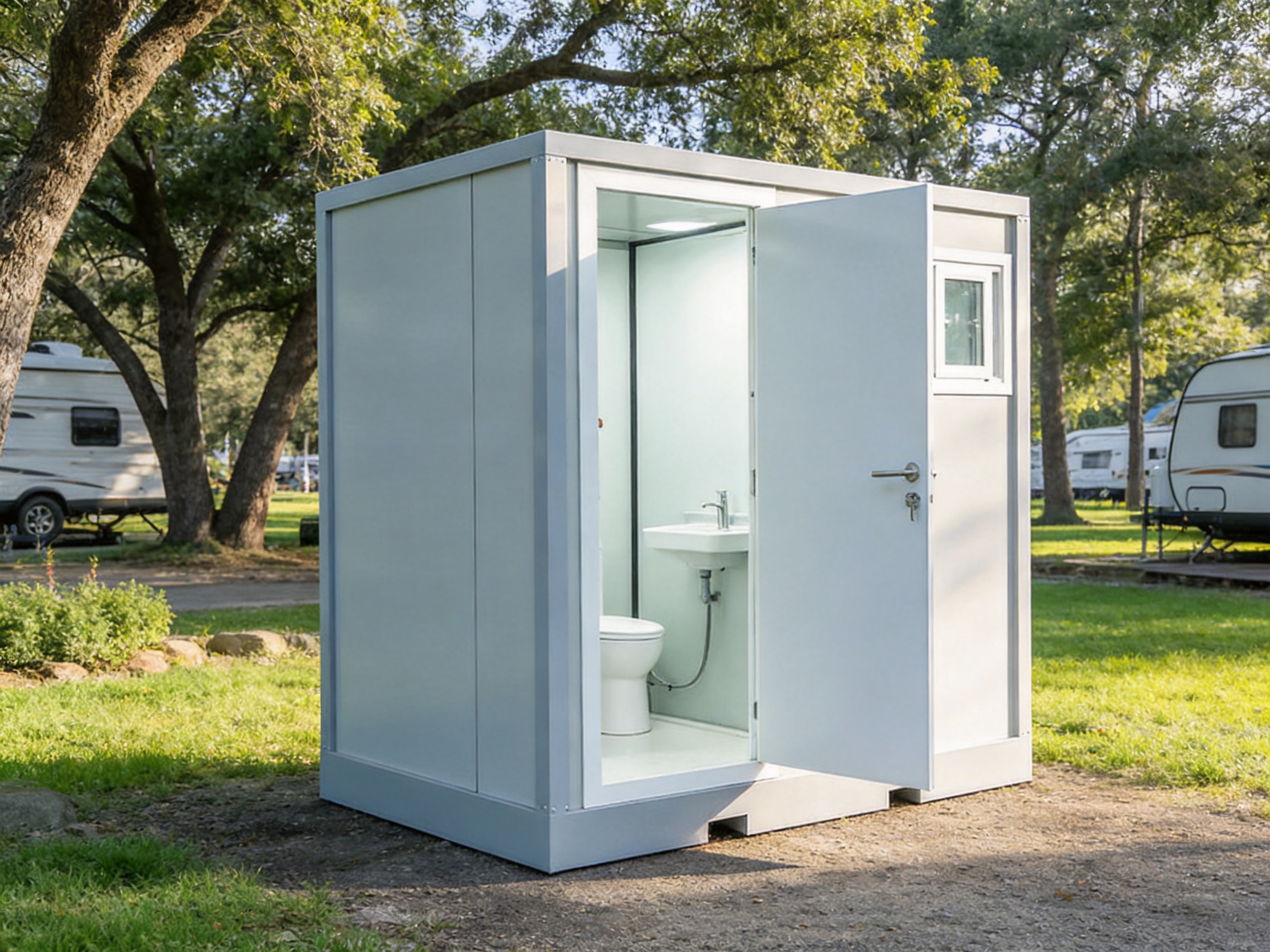
A major distinguishing feature of the Single-Person XL Outdoor Portable Toilet is the ability to add a washbasin or personal hygiene setup inside the unit. This option expands the function of the product from a basic toilet enclosure into a personal sanitation station.
Handwashing is an important part of effective sanitation. In many temporary facilities, the toilet and handwashing station are separate, which may be acceptable for some projects but inconvenient in others. Integrating a washbasin into the same private compartment can simplify use, improve personal hygiene, and reduce the need for users to move between separate facilities.
The internal hygiene configuration can be selected according to the application. A project may require a simple washbasin, a handwashing arrangement, or a broader personal hygiene setup. The exact equipment and utility connections should be determined during project planning, based on local regulations, drainage conditions, water availability, and the intended duration of use.
This flexibility is valuable for remote locations where there may be limited infrastructure. A unit that combines toilet and washing functions can reduce the number of separate structures required on site. It may also simplify the layout of temporary camps, work areas, and relief facilities.
Applications for Hygiene-Focused Facilities
The product can be used in temporary accommodation areas where occupants need a private restroom and washing space. It may also support outdoor work teams, construction personnel, field researchers, campsite visitors, and emergency responders.
In emergency relief situations, a compact but spacious sanitation unit can be deployed near temporary shelters, medical points, distribution centers, or field offices. Hygiene facilities are especially important in emergency environments because the concentration of people and limited access to permanent utilities can increase sanitation risks.
For events, the washbasin option can help organizers provide a more complete user experience. It may be particularly useful for family areas, VIP areas, outdoor dining locations, camping sections, and sites where permanent plumbing is unavailable.
Advantages Over Conventional Portable Toilets
The portable restroom market includes many compact units designed for short-term use. These products can be effective when basic sanitation and minimal footprint are the only requirements. However, they may not satisfy projects that prioritize interior space, integrated hygiene functions, repeated relocation, or longer deployment periods.
The Single-Person XL Outdoor Portable Toilet offers several advantages over a conventional narrow portable toilet.
| Evaluation Area | Conventional Compact Portable Toilet | Single-Person XL Outdoor Portable Toilet |
|---|---|---|
| Interior space | Usually optimized for minimum footprint | Designed with a larger single-user interior |
| User comfort | Basic and functional | More room for movement and personal use |
| Privacy | Private, but often in a restrictive compartment | Private single-user environment with additional space |
| Hygiene equipment | Often supplied as a separate facility | Can be equipped with a washbasin or personal hygiene setup |
| Deployment | Suitable for temporary placement | Designed for quick setup and flexible relocation |
| Application range | Basic events and short-term sites | Construction, camping, emergency relief, and temporary facilities |
| Longer-term usability | May be less comfortable during extended use | Better suited to repeated daily use because of its roomier layout |
The table illustrates the product’s positioning. It is not simply a larger version of a standard portable toilet. It is a more flexible sanitation module intended for projects where user comfort, privacy, and hygiene are important operational considerations.
More Practical Than a Dual-Compartment Arrangement
Dual-compartment portable toilets may be useful when a project needs two users to access separate facilities from one general structure. However, a dual-compartment arrangement does not always provide the best experience for individual users. Each compartment may be narrow, and adding a washbasin or hygiene equipment can be difficult.
The Single-Person XL concept uses the available space for one user. Instead of dividing the structure into multiple small rooms, it creates a more spacious personal environment. This can be a better solution for sites that value comfort and privacy over maximum user capacity per unit.
For certain projects, it may also be more efficient to deploy several independent XL units in different locations. This can reduce walking distance, distribute restroom access across a large site, and allow individual units to be assigned to specific work areas or accommodation zones.
More Versatile Than a Basic Toilet-Only Unit
A toilet-only unit may be sufficient for short events, but many projects require additional sanitation functions. The ability to add a washbasin or hygiene setup makes this product adaptable to changing site needs.
For example, a construction site may initially require a simple restroom during the early phase of work. As the workforce grows or the project continues, the same unit may be upgraded or configured with additional washing facilities. This type of flexibility can help reduce the need to replace the entire structure when requirements change.
Durability for Outdoor Conditions
Outdoor portable facilities must withstand transport, positioning, weather exposure, repeated use, and routine servicing. The Single-Person XL Outdoor Portable Toilet is designed as a robust and stable structure suitable for outdoor deployment.
Durability is important not only for protecting the unit itself but also for maintaining a safe and acceptable user environment. A restroom structure must remain stable when positioned on a site, resist ordinary outdoor exposure, and maintain its functional condition during repeated relocation and use.
The product’s weather-resistant approach supports deployment in changing outdoor conditions. Before installation, the site should still be assessed for ground stability, drainage, wind exposure, access for service vehicles, and local environmental conditions. Proper positioning and anchoring, where required by the project, are essential parts of responsible deployment.
A durable structure can also support a lower total cost of ownership. If a portable toilet can be moved, reused, and maintained over multiple projects, the investment may deliver value beyond a single event or construction phase. Reusability is especially important for contractors, rental companies, event operators, and organizations that manage multiple temporary sites.
Designed for Relocation
Portability is not limited to the ability to move a unit once. A practical mobile restroom should be suitable for repeated relocation as a project develops. Construction sites change as work progresses, and event or emergency layouts may need to be adjusted quickly.
The Single-Person XL Outdoor Portable Toilet is designed for frequent relocation. Its mobile format allows site managers to place the unit close to active work areas, temporary accommodation, field offices, or public access points. When the location changes, the unit can be transported and installed at the next required position.
Relocation planning should include access routes, lifting or handling equipment, utility disconnection, waste management, and final positioning. When these factors are considered in advance, the product’s portable design can provide a practical advantage over permanent or semi-permanent facilities.
Fast Deployment and Operational Efficiency
Temporary projects often operate under tight schedules. A restroom facility that requires lengthy construction, extensive site preparation, or complex finishing work can delay the opening of a site. The Single-Person XL Outdoor Portable Toilet is intended for quick deployment and can be ready for use after setup.
Fast deployment is especially valuable in emergency response, construction mobilization, outdoor events, and temporary worker accommodation. A unit can be delivered to the required location, connected or prepared according to its configuration, and placed into operation without waiting for a full permanent building program.
The product also supports phased project development. A site can begin with a limited number of portable units and add more as the workforce, visitor population, or accommodation capacity increases. This allows sanitation capacity to grow with demand rather than requiring a large initial construction project.
For contractors and facility operators, standardized deployment can make planning easier. Similar units can be ordered for multiple locations, and staff can develop consistent procedures for placement, cleaning, inspection, and relocation.
Reducing Site Disruption
Traditional restroom construction may involve excavation, masonry, plumbing installation, electrical work, interior finishing, and long inspection processes. A portable modular unit can reduce the amount of on-site activity required, particularly when most components are prepared in a controlled factory environment.
Less site work can mean fewer disturbances to ongoing operations. This is important on construction sites where access is limited, in protected outdoor areas where ground disturbance should be minimized, and in emergency settings where rapid installation is more important than permanent construction.
Manufacturing Strengths of the Supplier
Suzhou Taimao Integrated Housing Co., Ltd. specializes in integrated housing and modular building solutions. Its product categories include assembled container houses, folding container houses, double-wing expandable container houses, portable restroom outdoor toilets, K-type prefabricated houses, and steel structures.
This broader product experience is relevant to the manufacture of portable toilets. A mobile restroom is not an isolated piece of equipment; it is a compact building that must combine structural stability, weather resistance, interior functionality, transport considerations, and service access. Experience across modular housing and steel structure products can support a more comprehensive approach to portable sanitation design.
The company emphasizes globally certified modular building solutions, modular design, proprietary manufacturing technologies, and end-to-end digital software support. These capabilities can contribute to a more organized product development and manufacturing process, particularly when customers require customized layouts or larger site programs.
Factory-Based Production
Factory production provides greater control over the manufacturing environment than completely site-built construction. Components can be measured, assembled, inspected, and finished under more consistent conditions. This can help reduce the effects of weather interruptions, inconsistent workmanship, and difficult site logistics.
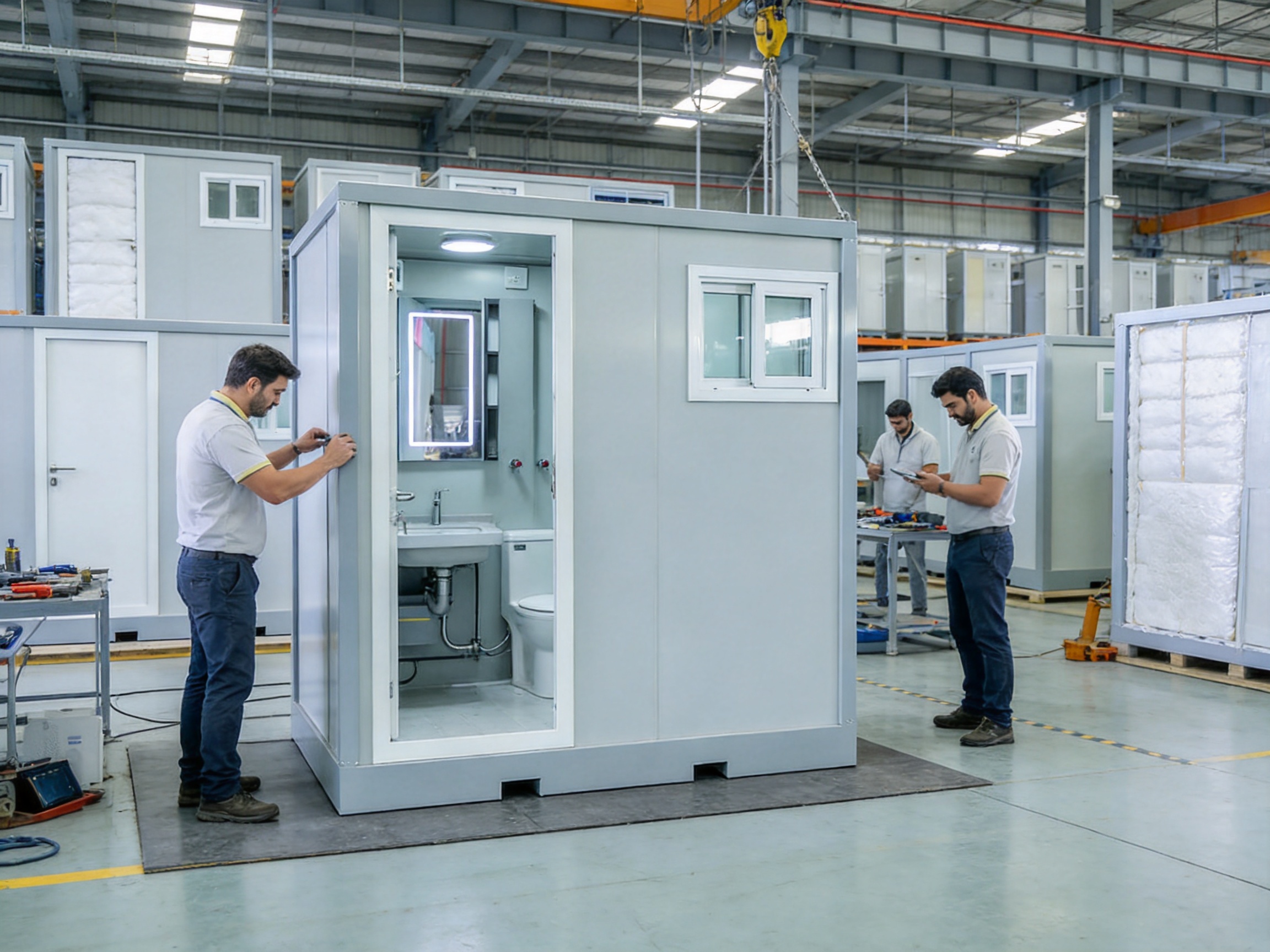
For a portable restroom, factory-based assembly may include structural preparation, wall and roof installation, door fitting, interior surface finishing, equipment integration, and quality checks before shipment. The final process depends on the selected specification, but the underlying principle is the same: complete as much work as practical before the unit reaches the customer’s site.
Factory production can also improve repeatability. When multiple units are ordered for a construction project or event program, standardized manufacturing procedures help ensure that units have consistent dimensions, appearance, equipment positions, and operating characteristics.
Integrated Modular Design
The company’s modular building approach integrates structure, insulation, MEP systems, HVAC, interior finishes, and smart home technologies into unified solutions. Although a portable toilet has a more specialized function than a complete modular home, the same integrated design philosophy can be applied to sanitation modules.
Instead of treating the structure, plumbing, ventilation, interior surfaces, and accessories as unrelated parts, an integrated approach considers how they work together. This can simplify installation, improve service access, and reduce conflicts between different components.
For units equipped with washbasins or hygiene facilities, integrated planning is especially important. Water supply, drainage, ventilation, fixture positioning, cleaning access, and electrical requirements must be considered as one system. A modular design process can make these relationships easier to coordinate before production begins.
Digital Software Support
Digital software support can improve communication between the customer, design team, factory, and installation personnel. It may be used to coordinate layouts, equipment positions, customization requirements, production information, and project documentation.
For customers ordering several portable restroom units, digital coordination can help ensure that each unit matches the intended application. For example, one group may require toilet-only configurations, while another may include washbasins or additional hygiene equipment. Documenting these differences before production can reduce misunderstandings and improve delivery accuracy.
Connection with SIP Modular Technology
The company’s flagship SIP modular building system integrates structural insulated panels with other building systems, including insulation, MEP, HVAC, interior finishes, and smart technologies. This system reflects the company’s focus on moving significant construction and finishing work into controlled factory environments.
Portable restroom products may not use the same configuration as a complete SIP modular building, but the manufacturing principles remain relevant. Controlled prefabrication can support rapid assembly, consistent quality, and reduced on-site construction. The company’s broader understanding of modular systems also provides a foundation for developing specialized temporary facilities.
Factory-prefabricated modules can be shipped to a project site after major production steps have been completed. Assembly and commissioning can then be completed in a shorter time than conventional construction. For temporary sanitation, this means that the customer can focus on site placement, utility preparation, commissioning, and operational management rather than building the entire structure from the beginning.
Applications Across Different Industries
Construction Sites
Construction sites are one of the most direct applications for the Single-Person XL Outdoor Portable Toilet. Workers need convenient sanitation facilities throughout the workday, even when the permanent building has not yet been completed.
The unit can be positioned near work zones, site offices, worker rest areas, or temporary accommodation. Its larger interior can make repeated daily use more comfortable, while its portable format allows the location to change as construction progresses.
For projects with multiple phases, portable sanitation units can be moved from early-stage work areas to later-stage zones. This can help maintain access without building separate temporary restroom structures at each stage.
Camping and Outdoor Recreation
Camping areas and outdoor recreation sites often need sanitation facilities in locations far from permanent buildings. A portable toilet with optional washing equipment can provide a more complete experience for campers, visitors, and staff.
The XL layout may be useful for family camping areas, long-stay campsites, remote tourism facilities, and locations where visitors expect greater privacy and comfort. The unit can also support temporary outdoor programs, seasonal recreation sites, and nature-based accommodation projects.
Emergency Relief and Disaster Response
During emergencies, permanent infrastructure may be damaged, inaccessible, or insufficient for the affected population. Portable sanitation units can be deployed near temporary shelters, field hospitals, command posts, food distribution areas, and relief worker accommodation.
The quick-deployment design is valuable when time is critical. The single-person format supports privacy, and the optional hygiene equipment can help meet basic washing needs in locations where ordinary facilities are unavailable.
Emergency deployment requires careful planning for waste collection, water supply, drainage, cleaning schedules, accessibility, lighting, and safe placement. The product provides a structural solution, while local authorities and relief organizations must establish appropriate sanitation management procedures.
Temporary Accommodation
Temporary housing projects may need independent restroom modules when accommodation units do not include complete sanitary facilities. The Single-Person XL Outdoor Portable Toilet can serve workers, visitors, or residents in temporary camps, project housing areas, and remote accommodation zones.
Its independent structure allows sanitation facilities to be distributed across a site. This can be useful when accommodation units are arranged in groups or when the project requires flexible expansion.
Events and Public Gatherings
Outdoor events require facilities that can be installed quickly, used intensively, and removed or relocated after the event. The product can serve markets, festivals, sports activities, exhibitions, fairs, weddings, and community gatherings.
Organizers may deploy individual units near activity areas, food service zones, camping sections, staff areas, or entrances. The optional washbasin configuration can provide a more complete sanitation solution for guests and personnel.
Maintenance and Service Considerations
Portable sanitation performance depends on more than the structure itself. Regular cleaning, inspection, waste management, ventilation, and timely servicing are essential. A spacious interior can support easier maintenance, but operators should still establish a clear service schedule based on user volume and deployment duration.
Before placing the unit into service, operators should inspect the door, ventilation openings, interior surfaces, fixtures, drainage connections, and any optional washbasin equipment. The unit should be positioned on a stable surface with adequate access for cleaning and servicing.
When a washbasin is installed, the water supply and drainage arrangement should be checked regularly. Any leaks, blockages, or damaged fittings should be addressed promptly. Where water is not continuously available, the project may require a tank-based solution or another approved supply arrangement.
Cleaning frequency should be adjusted according to the number of users. A facility at a busy event may require several inspections per day, while a remote low-traffic site may follow a less frequent schedule. Clear maintenance procedures help preserve cleanliness, safety, and user confidence.
Ventilation and Odor Control
Ventilation is an important part of restroom comfort. Outdoor restroom units should be designed and positioned to support air movement while maintaining privacy and weather protection. Operators should keep ventilation openings unobstructed and inspect them during routine servicing.
Odor management depends on ventilation, cleaning, waste handling, temperature, and correct use of the sanitation system. The unit should be serviced according to the selected toilet technology and local operating requirements.
Ground Conditions and Placement
The XL portable toilet should be placed on stable, reasonably level ground. Poor placement may affect door operation, user safety, drainage, and structural stability. Sites should be evaluated for standing water, erosion, soft soil, vehicle access, and exposure to severe weather.
In areas affected by strong winds or other environmental risks, the project team should apply suitable anchoring and safety measures according to local standards and the manufacturer’s installation guidance.
Customization for Project Requirements
Different customers have different sanitation requirements. A construction contractor may prioritize ruggedness and repeated relocation. A campsite operator may prioritize comfort and washing facilities. An emergency organization may prioritize speed of delivery and simple service procedures. An event organizer may need a specific quantity and consistent appearance across a large site.
The modular nature of the product supports discussions about configuration before production. Customers can review the intended use, number of users, deployment period, available utilities, required hygiene equipment, transport arrangements, and site conditions.
Customization may involve the interior arrangement, washbasin option, sanitation equipment, exterior finish, access requirements, ventilation arrangement, or project quantity. The final specification should be confirmed with the supplier so that the selected configuration is compatible with the planned installation and operating environment.
For larger developments, the portable toilet can also be considered as part of a broader modular site plan. It may be coordinated with container houses, folding accommodation units, worker facilities, offices, steel structures, and other temporary buildings. This integrated approach can help create a more organized and efficient temporary site.
Why Choose a Modular Manufacturer for Portable Sanitation
A company focused only on small restroom units may not have the same broader understanding of temporary buildings, steel structures, transport systems, and integrated utilities. A modular housing manufacturer can approach portable sanitation as part of a complete site infrastructure strategy.
Suzhou Taimao Integrated Housing Co., Ltd. combines experience in modular construction, container housing, prefabricated buildings, and steel structures with factory-based manufacturing and digital support. This combination can be beneficial for customers who require more than a single off-the-shelf unit.
The company’s stated mission is to accelerate project timelines, improve operational efficiency, minimize ecological impact, and maintain high standards of quality and safety. These objectives align with the needs of temporary sanitation projects, where rapid delivery, dependable construction, reusability, and efficient site installation are central concerns.
Its end-to-end approach also supports communication from design through production and delivery. Customers can discuss site requirements at an early stage, confirm the intended configuration, and coordinate the unit with other modular products used in the same project.
Environmental and Resource Considerations
Portable and modular construction can help reduce unnecessary site work. By completing much of the manufacturing in a controlled factory environment, the project may reduce on-site waste, shorten construction activity, and limit ground disturbance compared with building a permanent restroom from scratch.
Reusability is another important consideration. A portable restroom that can be relocated to new sites may serve multiple projects over its service life. This can reduce the need to build and demolish temporary structures for each separate application.
Resource efficiency also depends on the selected sanitation system, water use, cleaning program, waste treatment, and transportation planning. Customers should evaluate the complete operational cycle rather than considering only the initial product purchase.
The company’s focus on minimizing ecological impact in its modular building mission provides a framework for discussing responsible temporary construction. In practice, customers should work with the supplier and local service providers to select appropriate water, drainage, waste, and maintenance solutions for the intended location.
Purchasing and Project Planning Checklist
Before purchasing the Single-Person XL Outdoor Portable Toilet, buyers should identify how the unit will be used. The following questions can support an efficient specification process.
First, determine the expected number of users and the daily frequency of use. This will influence the number of units required and the cleaning schedule.
Second, confirm whether the unit should include a washbasin or additional hygiene facilities. The selected configuration should match the available water supply, drainage arrangement, and local requirements.
Third, review the site conditions. Consider ground stability, access for delivery vehicles, location of service routes, wind exposure, drainage, lighting, and proximity to users.
Fourth, determine the expected deployment period. A short event, a seasonal campsite, and a multi-year construction project may require different service and durability planning.
Fifth, consider future relocation. If the unit will be moved several times, transportation access and handling procedures should be planned from the beginning.
Sixth, confirm regulatory and accessibility requirements. Local rules may define sanitation, wastewater, ventilation, hygiene, fire safety, public access, and disability access provisions.
Finally, discuss customization and delivery arrangements with the supplier. Early technical communication can reduce delays and ensure that the finished unit is appropriate for its intended use.
Frequently Asked Questions
What is the Single-Person XL Outdoor Portable Toilet?
It is a spacious mobile restroom designed for one user at a time. It provides more interior room than many conventional compact portable toilets and can be used for outdoor sites, camping, emergency relief, construction projects, and temporary facilities.
How is it different from a standard portable toilet?
The main difference is the larger single-user interior. The product is designed to provide greater comfort and privacy, with more room for movement. It can also be configured with a washbasin or personal hygiene equipment, making it more versatile than a basic toilet-only unit.
Can a washbasin be installed inside?
Yes. The unit can be equipped with a washbasin or another personal hygiene setup, subject to the selected configuration and the water supply, drainage, and installation conditions of the project.
Where can the unit be used?
It can be used at construction sites, campsites, outdoor events, emergency relief locations, temporary accommodation areas, remote work zones, and other sites where permanent restroom facilities are unavailable or insufficient.
Is the unit suitable for long-term temporary use?
It is designed for outdoor use, repeated relocation, and frequent deployment. Its larger interior can make it more comfortable for extended temporary use. The actual service life and suitability depend on site conditions, maintenance, user volume, sanitation equipment, and operating practices.
How quickly can it be deployed?
The unit is designed for quick deployment and can be prepared for use after setup. The total installation time depends on delivery access, ground preparation, optional equipment, utility connections, and local inspection requirements.
Can the product be moved to another location?
Yes. Portability and flexible relocation are key features. Before moving the unit, operators should disconnect utilities, secure the interior, arrange suitable handling equipment, and confirm that the new location is stable and accessible.
Is the unit suitable for emergency response?
Yes. Its private single-user layout, optional hygiene facilities, and quick-deployment design make it suitable for temporary emergency sanitation. Emergency operators must also arrange waste management, water supply, cleaning, lighting, and compliance with local public health requirements.
Can customers order customized configurations?
Customization can be discussed according to the project’s space, hygiene, utility, transport, and operational requirements. Customers should provide the intended application and site conditions so the supplier can confirm an appropriate configuration.
What does the manufacturer specialize in?
Suzhou Taimao Integrated Housing Co., Ltd. specializes in modular building solutions, container houses, folding container houses, expandable container houses, portable restrooms, K-type prefabricated houses, and steel structures. Its capabilities include modular design, factory manufacturing, integrated systems, proprietary technologies, and digital software support.
What should be considered before installation?
Important considerations include stable ground, drainage, access for delivery and servicing, wind exposure, utility connections, lighting, privacy, waste collection, local regulations, and the required cleaning schedule.
Conclusion
The Single-Person XL Outdoor Portable Toilet is a practical alternative to narrow, basic portable restroom units. Its spacious single-user compartment focuses on comfort and privacy, while the optional washbasin or hygiene setup expands its function into a more complete personal sanitation station.
The product is suitable for construction sites, outdoor recreation, emergency relief, public events, temporary accommodation, and remote facilities. Its durable and stable outdoor structure, quick deployment, portability, and flexible configuration make it useful for both short-term and extended temporary projects.
Its strongest advantage is the combination of mobility and user-oriented space. Instead of treating portability as a reason to minimize the interior, the design provides a larger personal environment while preserving the convenience of a relocatable module. This makes it a strong option for projects where user experience, privacy, hygiene, and operational flexibility are all important.
The product is further supported by the manufacturing strengths of Suzhou Taimao Integrated Housing Co., Ltd. The company’s experience in modular buildings, prefabricated structures, container houses, steel systems, integrated utilities, factory production, and digital coordination provides a broad foundation for producing and customizing portable sanitation solutions.
For customers planning a temporary facility, the best results will come from evaluating the restroom as part of the complete site system. User numbers, cleaning frequency, water and drainage, transportation, placement, environmental conditions, and regulatory requirements should all be considered before ordering. With proper planning and maintenance, the Single-Person XL Outdoor Portable Toilet can provide a comfortable, private, and dependable sanitation solution wherever permanent facilities are not yet available.
References
1. Product information supplied for the Single-Person XL Outdoor Portable Toilet.
2. Company information supplied for Suzhou Taimao Integrated Housing Co., Ltd.
3. General principles of modular and prefabricated construction, including factory-based assembly and integrated building systems.
4. General principles of temporary sanitation facility planning, including cleaning, waste management, ventilation, water supply, drainage, and site placement.
5. General principles of outdoor facility management for construction sites, events, camping areas, emergency response locations, and temporary accommodation projects.
Single-Person XL Outdoor Portable Toilet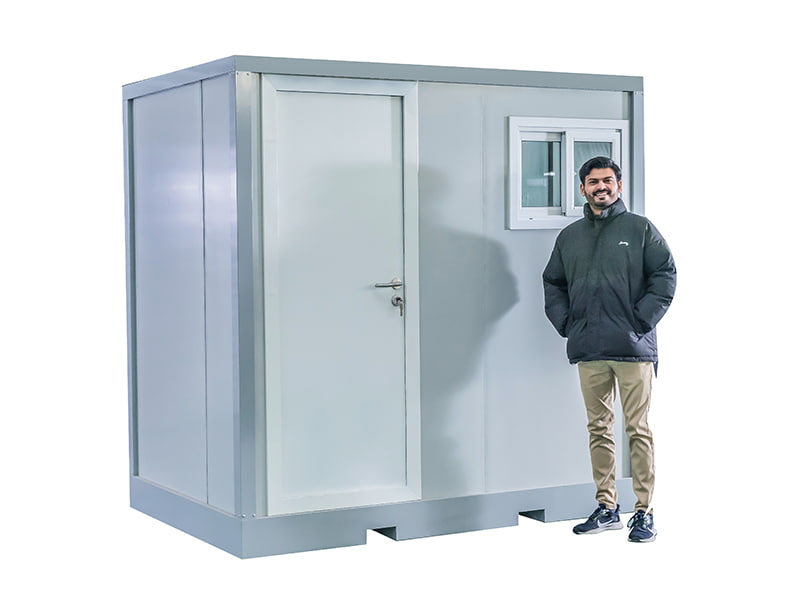
Product: Single-Person XL Outdoor Portable Toilet
For exclusive deals and latest offers, sign up by entering your email address below.

-
TEL:+86 18762912902
-
Email:cntaimao@163.com
-
WhatsApp:
-
Add:Group 5, Cao Village, Zhenze Town, Suzhou, Jiangsu, China
Copyright © Suzhou Taimao Integrated Housing Co., Ltd.
All Rights Reserved.
 Wholesale movable homes for sale
custom built modular homes
Wholesale movable homes for sale
custom built modular homes