

 EN
EN
 русский
 Español
 عربى
عربى Français
Single-Person Outdoor Portable Toilet: A Compact, Reliable Solution for Temporary Sanitation
Admin 2026-07-27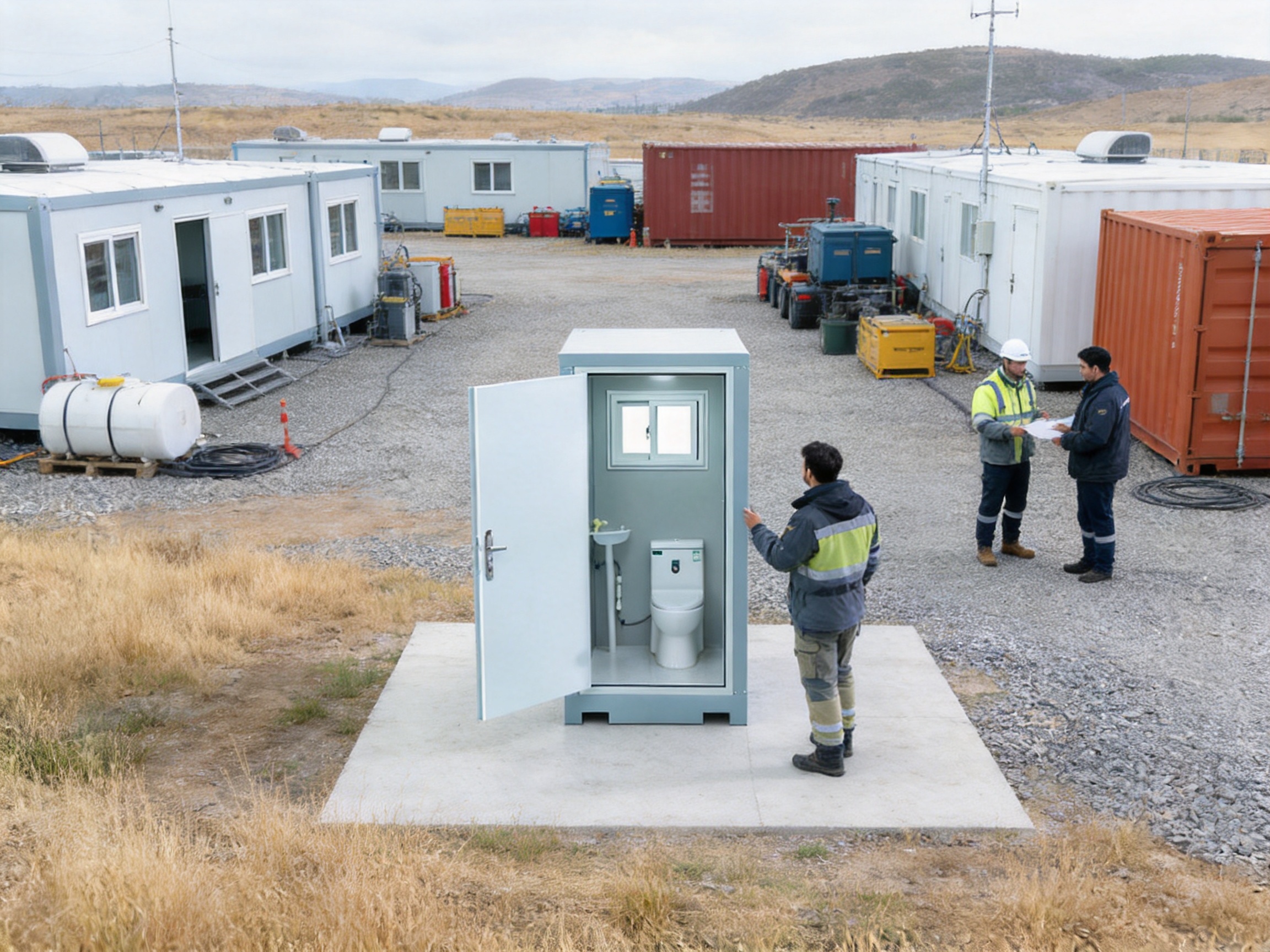
Access to clean, private, and dependable sanitation is essential at construction sites, outdoor events, temporary work areas, public facilities, campsites, and emergency response locations. However, providing restroom facilities can be difficult when a project has limited space, changing site conditions, or a short installation schedule. Permanent buildings may be too expensive or time-consuming, while oversized portable restroom units may occupy more land than necessary. The Single-Person Outdoor Portable Toilet offers a practical alternative by combining a compact footprint with the essential functions required for individual restroom use.
This portable restroom is designed for customers who need a mobile sanitation facility without the unnecessary size and cost of a larger unit. It is particularly suitable for small construction zones, urban renovation projects, temporary installations, roadside work areas, small outdoor gatherings, and locations where one-person access is sufficient. Its compact design helps site managers use available space more efficiently while maintaining a dedicated and private restroom environment.
The product is supplied by Suzhou Taimao Integrated Housing Co., Ltd., a Chinese manufacturer specializing in modular building systems, portable houses, container houses, prefabricated structures, and temporary facilities. The company combines factory-controlled production with integrated design and engineering capabilities. This manufacturing background is important because a portable toilet is not simply a plastic enclosure or a basic movable cabin. It must be durable, stable, weather-resistant, practical to transport, and suitable for repeated deployment in different environments.
By applying modular manufacturing principles to a compact sanitation product, the manufacturer can support efficient production, consistent quality, and flexible project requirements. Customers can therefore obtain a portable restroom that addresses immediate sanitation needs while benefiting from the broader experience of a company focused on prefabricated construction.
Content
- 1 Understanding the Single-Person Outdoor Portable Toilet
- 2 Why Compact Size Matters in Outdoor Projects
- 3 Key Product Advantages
- 4 Comparison with Common Alternative Solutions
- 5 Applications Across Different Industries
- 6 Manufacturing Strengths Behind the Product
- 7 Quality, Safety, and Reliability Considerations
- 8 Installation and Deployment Planning
- 9 Maintenance and Long-Term Value
- 10 Customization and Project Matching
- 11 Environmental and Operational Benefits
- 12 Why Choose an Experienced Modular Manufacturer
- 13 Purchasing Checklist for Buyers
- 14 Q&A About the Single-Person Outdoor Portable Toilet
- 14.1 What is the main purpose of this portable toilet?
- 14.2 How is it different from a larger portable restroom?
- 14.3 Can the unit be moved to another location?
- 14.4 Is it suitable for construction sites?
- 14.5 Can it be used at an outdoor event?
- 14.6 Does the product require maintenance?
- 14.7 What makes the product cost-effective?
- 14.8 Can it be used as part of a larger modular site?
- 14.9 Does the manufacturer provide other modular building products?
- 14.10 What should buyers confirm before ordering?
- 15 Conclusion
- 16 References
- 17 Product: Single-Person Outdoor Portable Toilet
Understanding the Single-Person Outdoor Portable Toilet
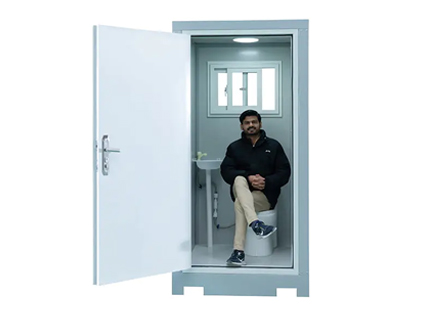
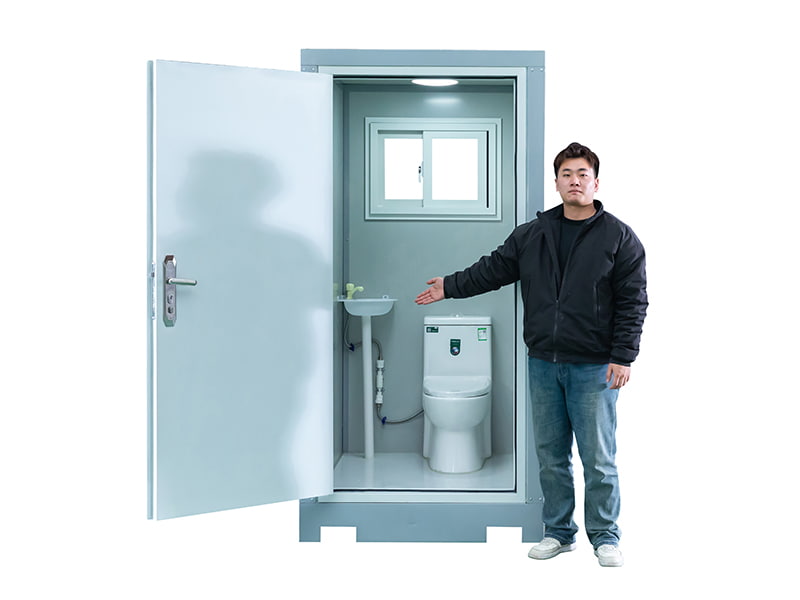
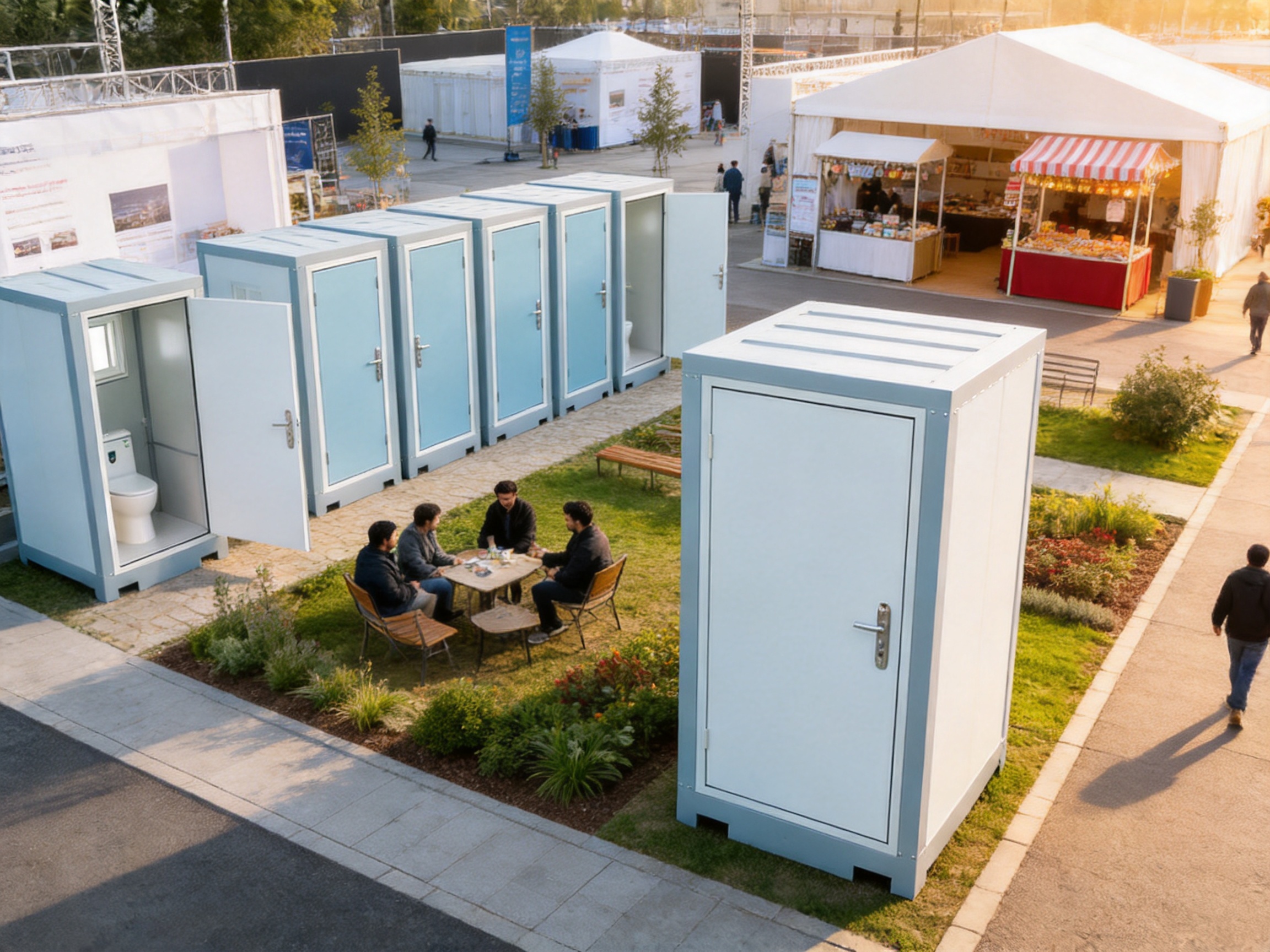
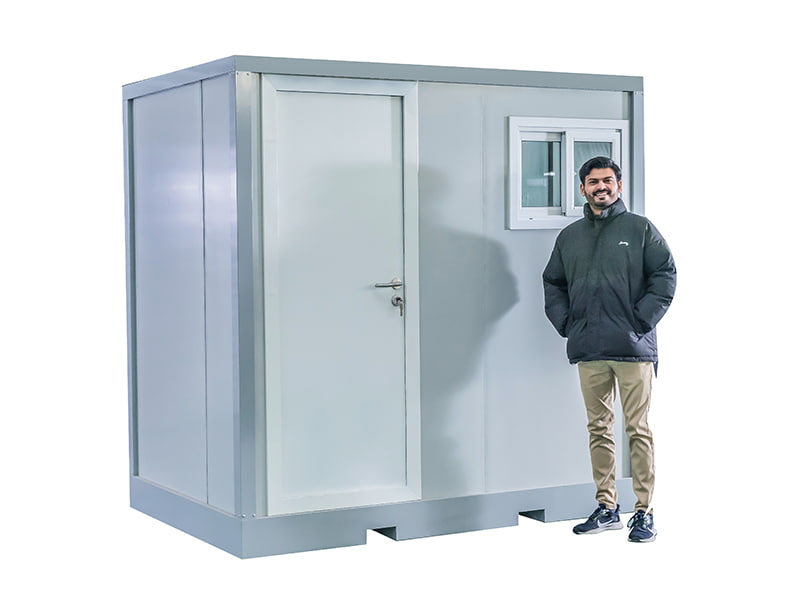
The Single-Person Outdoor Portable Toilet is a self-contained mobile restroom solution intended for individual use. Its main purpose is to provide a private and functional sanitation space in places where a conventional indoor bathroom is unavailable, impractical, or too costly to construct. The unit is small enough for locations with restricted access or limited land, yet it is designed to include the basic facilities expected from a temporary restroom.
Unlike larger portable toilets designed for high-volume public use, this model emphasizes space efficiency. It does not require a large installation area, and it can be positioned near a work zone, event area, temporary office, site entrance, or other location where users need convenient access. Its single-person configuration also supports privacy and helps reduce the unused space associated with oversized restroom structures.
The unit can be relocated when site requirements change. This feature is valuable for construction contractors, event organizers, property managers, municipal departments, and emergency service teams. A facility that can move with a project provides greater flexibility than a fixed restroom building. When a construction phase ends, the portable toilet may be transferred to another work area rather than dismantled as permanent construction.
Although compact, the product is intended to offer more than a temporary enclosure. It is a complete and practical sanitation solution for individual users. The design focuses on essential restroom functions, structural reliability, ease of deployment, and affordability. These qualities make the unit appropriate for customers who want a simple facility that can be delivered and installed without a complex building program.
Single-Person Outdoor Portable Toilet
Why Compact Size Matters in Outdoor Projects
Land availability is a major consideration in many temporary projects. Construction sites in cities often have narrow boundaries, dense surrounding development, and strict requirements for material storage and worker movement. A conventional restroom building may consume valuable space that could otherwise be used for equipment, access routes, storage, or work operations. A large portable restroom unit can create similar problems if the site is already crowded.
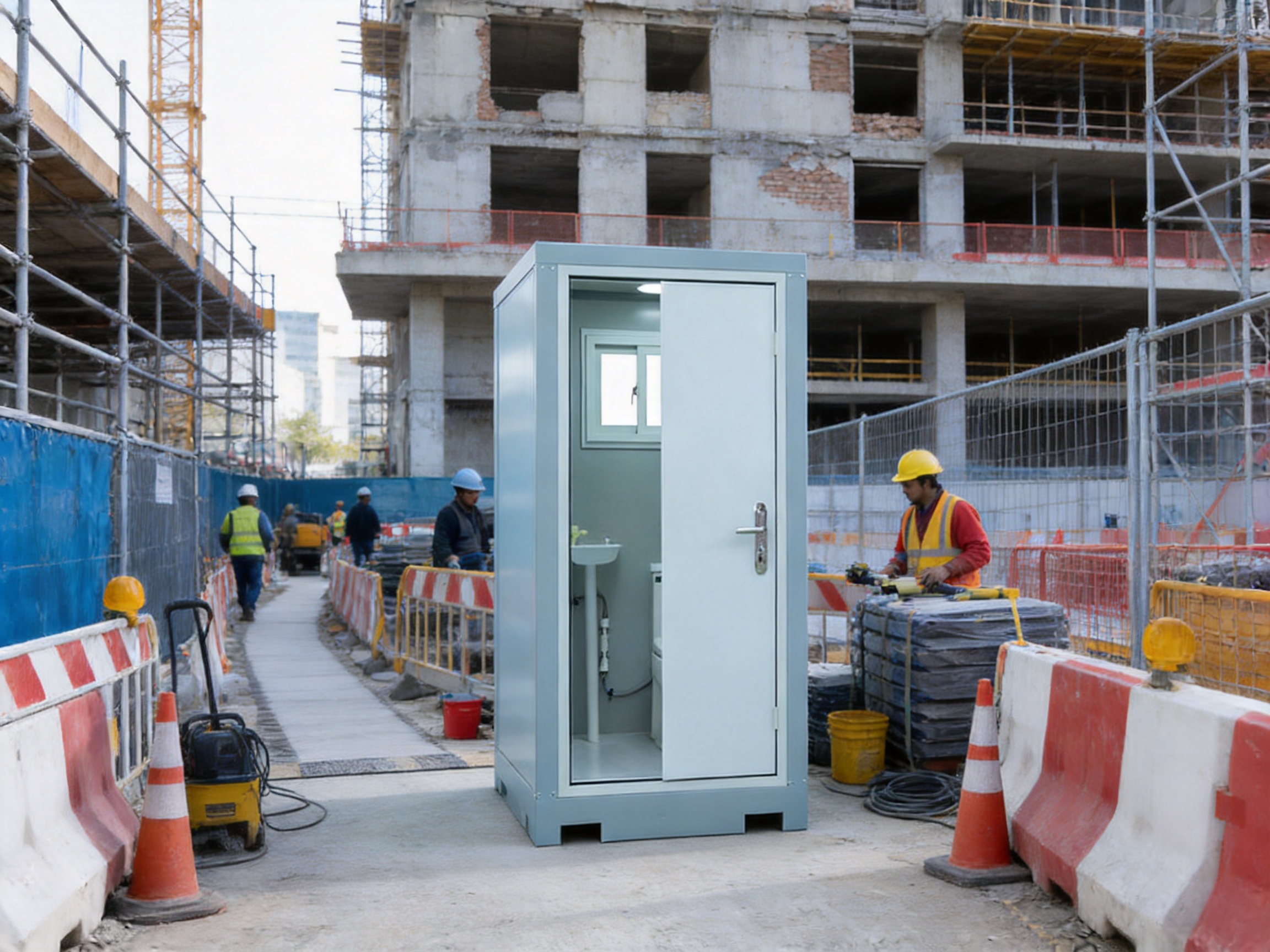
The compact footprint of the Single-Person Outdoor Portable Toilet allows project planners to place sanitation facilities in a more practical location. It can be positioned near workers without blocking important routes or taking up excessive operational space. In an urban renovation project, for example, the unit may fit within a restricted work compound where a larger facility would be difficult to deliver or install.
Small event venues can also benefit from a space-saving restroom solution. Events held in courtyards, private properties, roadside areas, gardens, or temporary exhibition spaces may need a restroom but may not have sufficient room for several large units. A single-person facility can be selected according to expected attendance and site layout. Multiple compact units may also be arranged in a controlled way when additional capacity is required.
Compact design can improve logistics as well. A smaller unit is generally easier to handle, position, and relocate than a bulky structure. It may require less preparation of the installation area and can be incorporated into a temporary site plan without extensive ground modification. These characteristics support faster deployment and help reduce the disruption caused by installing temporary facilities.
Space efficiency does not mean that the facility should sacrifice usability. The objective is to avoid unnecessary external size while retaining the essential internal functions of a restroom. This balance is one of the product’s principal advantages over competitors that focus primarily on maximum capacity rather than efficient single-user access.
Key Product Advantages
Compact and Space-Saving Design
The most visible advantage of this model is its compact configuration. It is developed for individual use, so the structure does not need to provide multiple compartments or excessive circulation space. This makes it suitable for sites where every square meter has operational value.
A smaller footprint can simplify placement near construction teams, temporary accommodation, outdoor workstations, event areas, and public service locations. It can also help customers comply with site limitations when local conditions restrict the size or position of temporary structures. By choosing a unit proportioned for its intended purpose, customers can avoid paying for capacity they do not need.
Durable Construction
Outdoor sanitation facilities must tolerate changing weather and repeated use. The Single-Person Outdoor Portable Toilet is built around a stable and durable structure intended for temporary outdoor service. A weather-resistant design helps the unit remain functional in different seasonal conditions and supports longer service life when it is properly installed and maintained.
Durability is especially important for construction sites and rental applications. A facility may be moved from one project to another, exposed to dust and moisture, and used by different groups of workers. A weak structure can lead to frequent repairs, poor user confidence, and higher ownership costs. A robust unit is better positioned to deliver reliable service across multiple deployments.
Essential Restroom Functionality
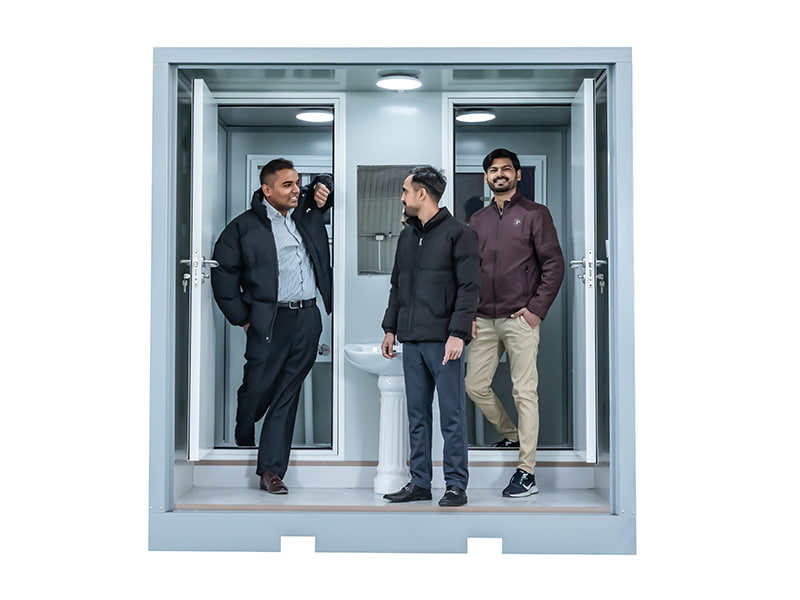
The product is designed to provide the basic facilities needed for individual restroom use. Its purpose is not to add unnecessary complexity but to deliver a practical, private, and usable sanitation environment. This makes it suitable for customers who value dependable daily operation rather than decorative features or excessive internal space.
Essential functionality also makes the unit easier to understand and manage. Site operators can focus on placement, cleaning, inspection, and routine servicing without dealing with a complicated building system. The result is a straightforward facility that can be integrated into a wide range of temporary projects.
Portability and Relocation
Portability is a central part of the product concept. Temporary projects change frequently, and a facility that remains fixed in one location may become inconvenient when work areas move. This unit can be relocated as needed, supporting phased construction, changing event layouts, seasonal operations, and emergency deployments.
Relocation can also improve asset utilization. Instead of purchasing separate facilities for each short-term site, an organization may move a portable restroom between locations according to demand. Contractors, rental companies, and project managers can therefore use the same unit more efficiently over its operating life.
Practical and Affordable Operation
The compact design, straightforward function, and portable structure contribute to a cost-effective sanitation solution. Customers can address restroom requirements without investing in a permanent building or selecting a larger unit than necessary. This is particularly valuable for small businesses, temporary contractors, event organizers, and organizations operating under strict project budgets.
Affordability should not be judged only by the initial purchase price. Total value also includes transportation, installation, maintenance, relocation, and long-term usability. A portable toilet that is easy to deploy and suitable for repeated use may offer a better overall return than a low-cost product that requires frequent repair or replacement.
Comparison with Common Alternative Solutions
Customers considering temporary sanitation facilities typically compare several options, including permanent restroom construction, large portable restroom units, improvised site cabins, and basic low-cost enclosures. Each option has a purpose, but the Single-Person Outdoor Portable Toilet offers a distinct balance between convenience, size, durability, and cost.
| Solution | Main Strength | Common Limitation | Best-Fit Application |
|---|---|---|---|
| Permanent restroom building | Long-term infrastructure and full building integration | Higher construction cost, longer schedule, and limited mobility | Permanent facilities and large developed sites |
| Large multi-compartment portable restroom | Higher simultaneous user capacity | Requires more space and may exceed the needs of small sites | Large events and high-traffic locations |
| Improvised temporary enclosure | Low initial complexity | May provide weaker durability, privacy, weather resistance, and consistency | Very short-term or highly controlled applications |
| Single-Person Outdoor Portable Toilet | Compact, mobile, functional, and practical | Designed for individual use rather than large crowds | Small construction sites, temporary projects, and limited-space locations |
Compared with permanent construction, the portable unit offers a shorter path from purchase to use. There is no need to complete a full foundation, structural shell, interior fit-out, or permanent utility installation before obtaining a basic restroom facility. This helps project owners respond to immediate needs and preserve capital for core construction activities.
Compared with a large portable restroom, the single-person model may be more efficient when expected demand is modest. A large unit can be unnecessary for a small crew or a low-attendance event. Selecting a product that matches actual usage can lower transportation requirements and make site planning easier.
Compared with improvised structures, a purpose-designed portable toilet provides a more dependable result. A manufactured unit is developed with structural stability, outdoor service, user privacy, and repeated deployment in mind. Its factory production also supports more consistent construction than a facility assembled from unrelated materials at the project location.
The right choice depends on capacity, project duration, local regulations, service arrangements, and site conditions. Nevertheless, for individual use in space-constrained environments, a compact manufactured portable restroom offers a strong combination of practical benefits.
Applications Across Different Industries
Construction and Renovation Sites
Construction workers often operate before permanent plumbing and interior facilities are complete. A portable restroom allows site managers to provide basic sanitation during excavation, structural work, renovation, and finishing stages. The unit can be placed near the active work area while keeping the rest of the site organized.
Urban renovation projects are a particularly suitable application. Buildings may remain occupied, public facilities may be unavailable, and the project boundary may be narrow. A compact single-person toilet can provide a dedicated facility without requiring major changes to the surrounding property.
For phased developments, portability is equally valuable. As workers move from one section of a project to another, the facility can be repositioned to maintain convenient access. This can support worker welfare and reduce unnecessary travel across the site.
Small Outdoor Events
Outdoor events vary greatly in size and format. Private celebrations, local markets, small exhibitions, sports activities, temporary performances, and community gatherings may not justify a large restroom installation. The Single-Person Outdoor Portable Toilet can be included in an event plan where a modest amount of restroom capacity is required.
Its limited footprint helps event organizers preserve space for seating, displays, service counters, pedestrian routes, and emergency access. Because the unit is portable, organizers can position it according to the expected flow of visitors and remove it after the event concludes.
Temporary Commercial and Industrial Facilities
Temporary warehouses, storage areas, roadside service points, agricultural operations, and industrial projects may require sanitation before permanent facilities are available. A portable toilet provides a practical interim solution that can remain in service for the duration of the temporary operation.
Businesses can also use the unit as an auxiliary facility during renovation or expansion. If an existing restroom is closed for repair, a portable replacement can help maintain basic operations while the permanent facility is unavailable.
Emergency and Remote Operations
Emergency response teams and temporary field operations often work in locations where infrastructure has been damaged or has not yet been established. A portable restroom can support relief stations, temporary accommodation areas, field offices, and logistics bases.
Its mobility makes it useful when an operation changes location. In remote areas, simple deployment and dependable construction are important because repair resources may be limited. A compact unit can be integrated into a broader temporary infrastructure plan that includes modular offices, portable housing, storage facilities, and other prefabricated structures.
Public and Institutional Projects
Municipal projects, parks, road maintenance programs, public works, and temporary education or service facilities may need additional sanitation capacity. The product can serve as a supplementary restroom where permanent facilities are insufficient or unavailable.
Its single-user design may be appropriate for controlled locations where privacy, accessibility of placement, and low site impact are more important than high-volume throughput. Project managers can evaluate the number of units required according to expected users and operating hours.
Manufacturing Strengths Behind the Product
The performance of a prefabricated facility is closely connected to the production system used to manufacture it. Suzhou Taimao Integrated Housing Co., Ltd. specializes in integrated housing and modular building solutions rather than treating each product as an isolated item. This broader expertise supports the development of portable restrooms with an understanding of structures, panels, interior functions, transportation, assembly, and site operation.
The company’s manufacturing approach is based on controlled factory production. Producing components and assemblies in a managed environment can help reduce the variability associated with fully outdoor construction. Materials can be processed according to defined procedures, work can be organized into repeatable stages, and quality checks can be completed before shipment.
Factory production also supports more predictable project planning. When a portable facility is manufactured in advance, customers can coordinate delivery and site preparation with greater confidence. The unit arrives as a finished or substantially completed product rather than requiring extensive construction at the destination.
Integrated Design and Engineering
Integrated housing requires coordination between structural components, enclosure systems, internal functions, and installation requirements. The manufacturer’s experience in modular buildings provides a foundation for considering these elements together. This helps avoid the problems that can occur when a facility is designed as a collection of unrelated parts.
For a portable restroom, integrated design may include the relationship between the external shell, interior space, access, stability, weather protection, and transportation requirements. Even a small unit benefits from careful coordination because limited dimensions leave less room for design errors or inefficient use of space.
The company also offers modular design capabilities for different types of structures, including container houses, folding container houses, double-wing expandable container houses, K-type prefabricated houses, and steel structures. This product range demonstrates experience with compact buildings, relocatable systems, prefabrication, and project-specific configurations.
Controlled Prefabrication
Prefabrication moves a significant portion of production away from the project site and into a controlled manufacturing environment. This can improve consistency and reduce the amount of on-site labor required. For customers managing tight schedules, the ability to receive a prepared unit can be more efficient than arranging separate construction trades at the destination.
Controlled prefabrication can also help protect production activities from weather interruptions. Although outdoor installation conditions still matter, much of the fabrication work takes place before the product is shipped. This supports more stable scheduling and may shorten the time between order confirmation and field deployment.
Manufacturing in repeatable stages can support inspection at several points in the process. Structural assemblies, enclosure elements, internal fittings, and final appearance can be reviewed before the product leaves the factory. Early identification of issues is generally more efficient than correcting them after delivery.
Experience with Structural Insulated Panel Systems
The company’s flagship Structural Insulated Panel, or SIP, modular building system integrates structure and insulation with other building functions. While the Single-Person Outdoor Portable Toilet is a compact sanitation product rather than a complete residential module, the company’s knowledge of integrated panel-based construction is relevant to its approach to prefabricated facilities.
SIP-oriented manufacturing emphasizes the coordination of structural performance, insulation, interior finishes, mechanical and electrical services, heating and cooling systems, and smart building technologies. This type of integrated thinking encourages the manufacturer to consider the full service life of a product rather than focusing only on its external shell.
For portable facilities, the practical benefit is a production culture that values assembly accuracy, factory completion, efficient transportation, and rapid site installation. These principles can support product quality across different categories of modular construction.
Digital Software Support and Project Coordination
The company describes its operations as including end-to-end digital software support. Digital tools can assist with design coordination, production planning, documentation, and communication between the factory and project stakeholders. These capabilities are especially useful when customers require customized arrangements or are purchasing products for overseas projects.
Better coordination can reduce misunderstandings about dimensions, finishes, delivery requirements, installation procedures, and project timing. It can also help connect the product order with a broader site plan that includes temporary offices, accommodation, storage, and other modular facilities.
For international customers, clear documentation and structured communication are important parts of supplier performance. A manufacturer that can coordinate design and production information systematically is better prepared to support projects across different markets and operating conditions.
Quality, Safety, and Reliability Considerations
A portable restroom must be stable and appropriate for its intended environment. Before installation, customers should evaluate the ground condition, drainage requirements, access for delivery, exposure to wind, and distance from other site activities. A well-manufactured unit still requires suitable placement and responsible site management.
The durable and weather-resistant design of this product is intended to support outdoor use, but regular inspection remains important. Operators should check the external structure, access components, interior surfaces, and sanitary systems according to the service plan. Prompt attention to small issues can help preserve user comfort and extend the operating life of the unit.
Safety also includes transportation and relocation. The unit should be handled using appropriate equipment and procedures. Customers should confirm loading, unloading, and placement instructions with the supplier before moving the facility. A controlled relocation process protects the product, workers, and nearby property.
Hygiene management is another essential consideration. Cleaning frequency should reflect the number of users, operating hours, weather, and project duration. A compact restroom can be easy to maintain when service access is planned correctly. Site operators should establish a routine for cleaning, waste management, odor control, and inspection.
Because requirements differ by location, customers should also verify applicable local regulations. These may relate to sanitation, accessibility, waste handling, ventilation, placement, worker facilities, or temporary structures. The supplier can help clarify product information, while the customer remains responsible for confirming local approval and operational requirements.
Installation and Deployment Planning
Successful deployment begins with site selection. The chosen location should be convenient for users but should not obstruct vehicles, lifting equipment, emergency routes, material storage, or active construction work. It should provide adequate access for delivery and future servicing.
The ground should be sufficiently stable and level for the portable restroom’s intended use. Site managers may need to prepare a firm base or make minor adjustments to improve stability. Drainage and surface conditions should also be considered, particularly in regions with heavy rainfall or seasonal flooding.
Delivery planning should account for road access, gate widths, overhead clearance, turning space, and unloading equipment. These details are important even for a compact unit. Early coordination can prevent delays and reduce the risk of damage during handling.
Once positioned, the facility should be checked for stability, access, privacy, and overall operating condition. The customer should review the product’s specific installation and service instructions with the supplier. If the unit is part of a larger modular site, its location should be coordinated with other buildings and temporary utilities.
The relatively simple deployment process is one of the product’s advantages over permanent construction. The customer can provide sanitation capacity without establishing a full building project. This supports rapid response when a temporary facility is needed with limited advance preparation.
Maintenance and Long-Term Value
Maintenance has a direct effect on the user experience and product lifespan. A portable restroom should be cleaned according to a consistent schedule, with additional service during periods of heavy use. Interior and exterior surfaces should be inspected for dirt, moisture accumulation, damage, or signs of wear.
Moving parts, access components, and structural connections should be checked periodically. If a problem is identified, it should be reported and addressed promptly rather than allowing it to affect safety or usability. A documented maintenance schedule can help contractors and facility managers manage several units across different locations.
Proper maintenance improves the economic value of portability. A well-maintained unit can be redeployed to multiple projects, reducing the need to purchase replacement facilities for every new site. This is especially valuable for construction companies, rental operators, event service providers, and public agencies.
Cleaning and waste management arrangements should be established before the unit enters service. The product is a physical facility, but sanitation performance depends on the complete operating system around it. Responsible servicing ensures that the compact design remains an advantage rather than becoming a limitation during periods of heavy use.
Customers should also consider storage between projects. When the unit is not in use, it should be stored in a location that protects it from unnecessary impact and environmental exposure. Clear records of inspection, cleaning, relocation, and repairs can support reliable performance over time.
Customization and Project Matching
Different projects may have different requirements for appearance, placement, quantity, service duration, and supporting facilities. The Single-Person Outdoor Portable Toilet is intended as a practical standard solution, but customers should discuss their project conditions with the manufacturer before ordering.
Project matching may involve evaluating the number of users, expected operating hours, climate, transportation route, site dimensions, and installation period. A supplier with experience in modular buildings can also help customers consider the relationship between the restroom and other temporary facilities.
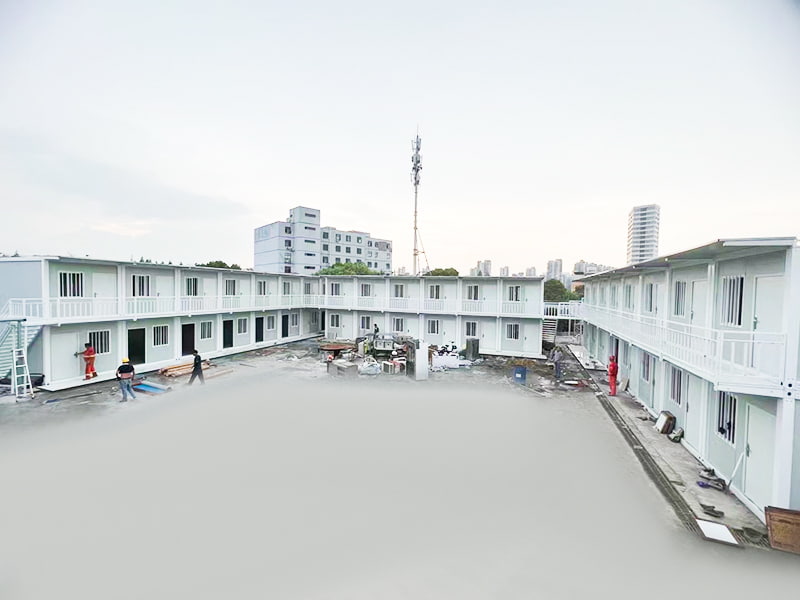
For a construction project, for example, the restroom may be located alongside a portable office, worker accommodation unit, storage container, or site security cabin. For an event, it may need to fit within a carefully planned visitor route. For an emergency operation, it may be one component of a rapidly deployable modular base.
Customers should request clear information about available configurations, materials, internal facilities, delivery conditions, and service recommendations. Confirming these details in advance helps ensure that the selected unit is appropriate for its intended purpose.
Environmental and Operational Benefits
Portable and prefabricated construction can reduce the amount of on-site building activity required for temporary facilities. Instead of constructing a new restroom at every location, a manufactured unit can be delivered, used, relocated, and potentially reused. This approach can reduce repeated material consumption and avoid unnecessary permanent alterations to temporary sites.
Factory production may also improve material planning. Components can be prepared according to a defined design, reducing the uncertainty associated with assembling a facility from miscellaneous materials at the destination. Better planning can support more efficient use of labor and reduce avoidable site waste.
The company’s broader mission includes reducing ecological impact through modular construction and controlled manufacturing. Its integrated building systems are intended to accelerate project timelines, improve operational efficiency, and support quality and safety. These principles are relevant to the portable restroom because a compact, reusable facility can contribute to more flexible and resource-conscious project planning.
Environmental performance depends on the complete life cycle of the product. Customers should consider transportation distance, service practices, cleaning materials, waste handling, storage, and eventual reuse. A durable unit that can serve multiple projects may provide greater long-term value than a disposable or short-life alternative.
Compactness can also have operational benefits. A smaller unit may require less space for installation and may be easier to incorporate into an existing site without removing vegetation, modifying surfaces extensively, or reorganizing large areas. These benefits should be evaluated together with local environmental and sanitation requirements.
Why Choose an Experienced Modular Manufacturer
Choosing a supplier for a portable restroom involves more than selecting a product image. Customers need confidence in manufacturing consistency, communication, delivery coordination, product support, and the supplier’s ability to understand temporary building requirements. An experienced modular manufacturer brings knowledge that may not be available from a general trading company.
Suzhou Taimao Integrated Housing Co., Ltd. focuses on modular and prefabricated structures across several product categories. Its portfolio includes container houses, folding container houses, double-wing expandable container houses, portable restrooms, K-type prefabricated houses, and steel structures. This range indicates experience with products that must be manufactured, transported, assembled, and used in changing project environments.
The company’s integrated approach connects design, production, software support, and site delivery considerations. This can be valuable for customers planning more than one temporary facility or requiring a coordinated modular solution. Instead of treating a restroom as an unrelated accessory, the supplier can understand how it fits into the overall project infrastructure.
Factory-based production can also support repeat orders. Contractors and organizations that require multiple units may benefit from standardized manufacturing, consistent appearance, and predictable product coordination. A reliable supplier relationship can simplify procurement for future construction phases and new project locations.
International customers should evaluate communication, documentation, shipping arrangements, applicable standards, and after-sales support before placing an order. The manufacturer’s experience with globally oriented modular building solutions can help establish a more structured procurement process, although every project should still be reviewed according to its destination requirements.
Purchasing Checklist for Buyers
Before purchasing the Single-Person Outdoor Portable Toilet, buyers should define the intended application. Important questions include where the unit will be used, how many people will use it, how long it will remain in service, and whether it will be moved between sites.
Customers should confirm the available product configuration and essential restroom facilities. They should also ask about construction materials, weather resistance, internal finishes, cleaning access, maintenance recommendations, and any installation requirements.
Transportation should be discussed early. Buyers need to know how the unit will be packed, loaded, unloaded, and positioned. Information about delivery access, lifting requirements, and storage can help prevent unexpected logistics costs.
Customers should request a quotation that clearly separates product cost, packaging, transportation, optional services, and any applicable charges. If the unit will be used in another country, the buyer should also confirm import documentation and local compliance requirements.
Finally, the buyer should evaluate the supplier’s production capability and communication process. Questions about manufacturing lead time, quality inspection, order confirmation, replacement components, and technical support can provide a clearer understanding of the complete purchasing experience.
Q&A About the Single-Person Outdoor Portable Toilet
What is the main purpose of this portable toilet?
The main purpose is to provide a compact, private, and functional restroom for individual use in temporary or outdoor locations. It is suitable for construction sites, small events, temporary installations, and other places where permanent sanitation facilities are unavailable or impractical.
How is it different from a larger portable restroom?
This model is designed around space efficiency and individual use. A larger portable restroom may provide multiple compartments or higher simultaneous capacity, but it also requires more installation space. The single-person model is intended for customers who need a practical facility without the size of a high-capacity unit.
Can the unit be moved to another location?
Yes. Portability is one of its key features. The unit can be relocated as project conditions change, provided that transportation and handling are performed according to appropriate safety procedures and supplier recommendations.
Is it suitable for construction sites?
Yes. Its compact footprint, durable structure, and mobile design make it suitable for small construction zones, renovation projects, phased developments, and temporary work areas. Site managers should select a stable location that does not obstruct construction access or emergency routes.
Can it be used at an outdoor event?
Yes. It can be used for small events, private gatherings, local markets, outdoor activities, and temporary exhibitions. Event organizers should determine the number of units required according to attendance, event duration, service arrangements, and local regulations.
Does the product require maintenance?
Yes. Regular cleaning, sanitation, inspection, and waste management are necessary for safe and comfortable operation. The service schedule should reflect usage levels and project conditions. Operators should also inspect structural and access components periodically.
What makes the product cost-effective?
Its compact size helps avoid paying for unnecessary capacity, while its portability supports reuse at different locations. The product can also reduce the time and expense associated with constructing a permanent restroom for a temporary project. Total value should include purchase, delivery, installation, maintenance, and relocation costs.
Can it be used as part of a larger modular site?
Yes. It can support a modular construction site that includes portable offices, accommodation units, storage structures, container houses, or other prefabricated facilities. Its compact design allows it to be incorporated into a coordinated temporary site plan.
Does the manufacturer provide other modular building products?
Yes. Suzhou Taimao Integrated Housing Co., Ltd. specializes in a range of modular and prefabricated products, including container houses, folding container houses, double-wing expandable container houses, K-type prefabricated houses, steel structures, and portable restroom facilities.
What should buyers confirm before ordering?
Buyers should confirm the intended use, available configuration, dimensions, materials, delivery conditions, installation requirements, cleaning arrangements, local regulations, production schedule, and after-sales support. These details help ensure that the selected unit matches the project’s actual needs.
Conclusion
The Single-Person Outdoor Portable Toilet is a practical answer to a common temporary infrastructure challenge. It provides essential restroom functionality in a compact structure that can be deployed where space is limited and relocated when project requirements change. Its durable construction, weather-resistant design, portability, and affordable operating concept make it suitable for construction sites, small events, temporary commercial facilities, public projects, and emergency operations.
Its strongest advantage over larger or improvised alternatives is the balance between efficiency and usability. The unit is not designed to replace a high-capacity restroom installation at a major event. Instead, it serves customers who need a reliable individual facility without excessive size, cost, or installation complexity.
The product also benefits from the manufacturing capabilities of a company focused on integrated modular construction. Suzhou Taimao Integrated Housing Co., Ltd. combines modular design, controlled factory production, prefabrication experience, digital project support, and knowledge of structural systems. These strengths provide a foundation for consistent manufacturing and coordinated delivery.
For buyers, the most important step is to match the product with the actual site conditions. Careful planning of placement, transportation, servicing, local compliance, and expected usage will help ensure successful operation. When these factors are properly managed, the Single-Person Outdoor Portable Toilet can provide a dependable sanitation facility with the flexibility required by modern temporary projects.
References
1. International Organization for Standardization. Principles of Quality Management and Process Control.
2. International Organization for Standardization. Environmental Management Systems and Life-Cycle Considerations.
3. International Labour Organization. Guidance on Welfare Facilities and Sanitation for Construction Workers.
4. Modular Building Institute. General Principles of Off-Site and Modular Construction.
5. World Health Organization. Guidelines for Sanitation, Hygiene, and Health Protection.
6. Manufacturer product information for the Single-Person Outdoor Portable Toilet.
7. Manufacturer information concerning modular design, prefabricated construction, Structural Insulated Panel systems, and integrated building solutions.
Product: Single-Person Outdoor Portable Toilet
For exclusive deals and latest offers, sign up by entering your email address below.

-
TEL:+86 18762912902
-
Email:cntaimao@163.com
-
WhatsApp:
-
Add:Group 5, Cao Village, Zhenze Town, Suzhou, Jiangsu, China
Copyright © Suzhou Taimao Integrated Housing Co., Ltd.
All Rights Reserved.
 Wholesale movable homes for sale
custom built modular homes
Wholesale movable homes for sale
custom built modular homes