

 EN
 русский
 Español
 عربى
 Français
Two-Person Outdoor Portable Toilet: A Complete Guide to Portable, Hygienic, and Rapid-Deployment Sanitation
Admin 2026-10-15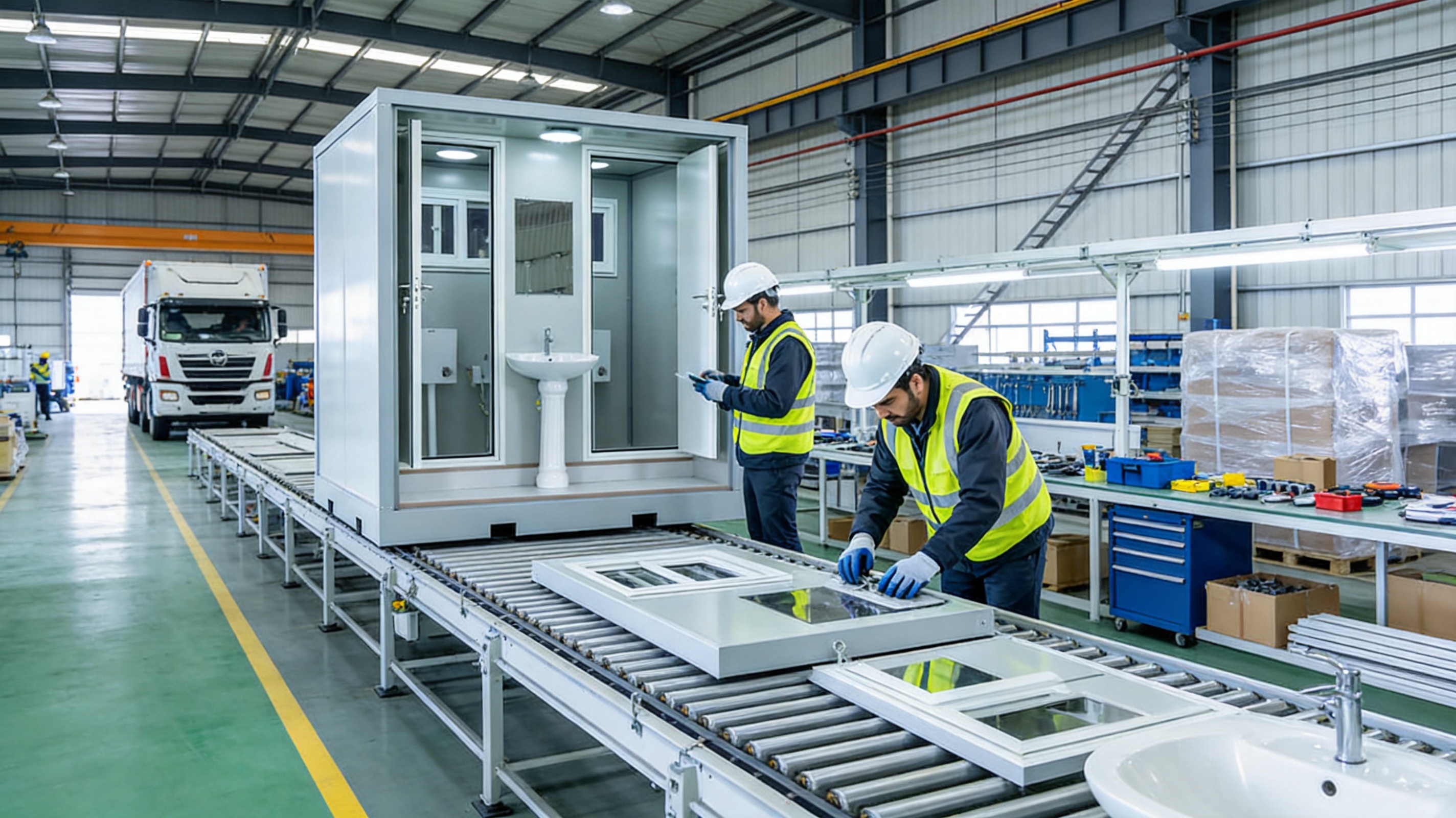
Reliable sanitation is one of the most important requirements at outdoor events, construction sites, campsites, disaster-relief locations, temporary settlements, and remote work areas. When a permanent restroom building is unavailable or impractical, a portable toilet must provide more than basic functionality. It should be stable, hygienic, private, easy to deploy, simple to relocate, and capable of operating in changing outdoor conditions.
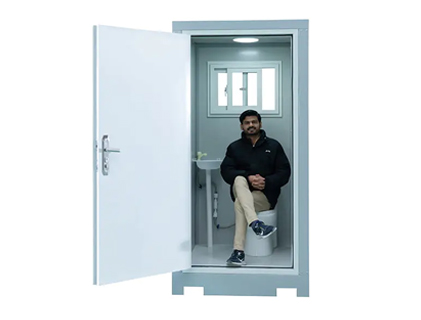
The Two-Person Outdoor Portable Toilet is designed as a practical mobile restroom solution for exactly these situations. It combines separate male and female compartments, an external handwashing sink, built-in lighting, and a robust portable structure in one pre-assembled unit. Instead of requiring a lengthy construction process, the unit can be transported to the required location and prepared for use within a short period.
This product is part of a broader approach to prefabricated construction developed by Suzhou Taimao Integrated Housing Co., Ltd. The company applies factory-based manufacturing, modular design principles, controlled assembly procedures, and integrated building technologies to produce practical solutions for temporary and permanent applications. Although the portable toilet serves a specialized sanitation purpose, it benefits from the same manufacturing philosophy used in the company’s wider range of container houses, prefabricated buildings, steel structures, and modular facilities.
For users who need an efficient alternative to constructing permanent restrooms or installing multiple basic portable toilet units, this dual-compartment design offers a balanced combination of privacy, convenience, mobility, and operational efficiency.
Content
- 1 Why Portable Sanitation Matters
- 2 Product Overview
- 3 Separate Compartments for Better Privacy and Organization
- 4 Built-In Lighting for Safer Nighttime Use
- 5 External Handwashing Sink and Hygiene Support
- 6 Rapid Deployment for Time-Sensitive Projects
- 7 Durability in Outdoor Conditions
- 8 Advantages Compared with Basic Single-Unit Portable Toilets
- 9 Advantages Compared with Constructing a Permanent Restroom
- 10 Application Scenarios
- 11 Factory-Based Manufacturing and Quality Control
- 12 Integrated Modular Manufacturing Expertise
- 13 Shipping, Placement, and Deployment Considerations
- 14 Maintenance and Long-Term Operational Value
- 15 Environmental and Resource Considerations
- 16 How to Evaluate a Supplier
- 17 Customization and Project Coordination
- 18 Safety and Regulatory Planning
- 19 Q&A
- 19.1 What is the Two-Person Outdoor Portable Toilet?
- 19.2 Why are there separate male and female compartments?
- 19.3 Does the unit include lighting?
- 19.4 Is a handwashing sink included?
- 19.5 Can the unit be used at construction sites?
- 19.6 Can it be used during disaster relief operations?
- 19.7 Is the facility delivered ready for immediate use?
- 19.8 How does it compare with two separate basic portable toilets?
- 19.9 Can the unit be relocated?
- 19.10 Can the product be customized?
- 19.11 What should be prepared before delivery?
- 19.12 Who manufactures this portable restroom?
- 19.13 How should the facility be maintained?
- 20 Conclusion
- 21 References
- 22 Product: Two-Person Outdoor Portable Toilet
Why Portable Sanitation Matters
Sanitation facilities are essential wherever people gather, work, travel, or temporarily live. Construction projects may operate far from completed buildings. Outdoor festivals may attract large crowds for only a few days. Campsites and recreational areas may lack sufficient permanent infrastructure. Emergency-response teams may need to establish facilities quickly after floods, earthquakes, storms, or other disasters.
In all these situations, traditional construction can be too slow, too expensive, or too inflexible. Constructing a permanent restroom requires site preparation, foundations, utilities, plumbing, electrical work, interior finishing, inspections, and long-term maintenance planning. These steps are reasonable for a permanent building, but they may not be suitable for a temporary project or rapidly changing site.
Basic single-compartment portable toilets can solve part of the problem, but they may create other challenges. Separate units can require more ground space, more frequent movement, and more complicated servicing. They may not provide an external handwashing station, and many basic models do not include integrated lighting. For events or sites operating at night, the absence of lighting can reduce convenience and create safety concerns.
The Two-Person Outdoor Portable Toilet addresses these practical limitations by bringing two independent restroom compartments and key supporting features together in a single mobile facility. This makes it suitable for applications where efficient use of space and quick deployment are important.
Product Overview
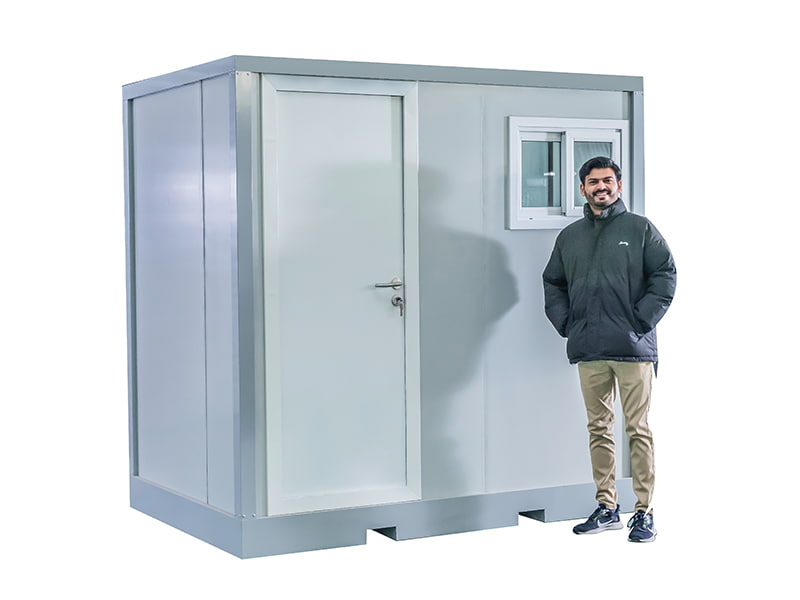
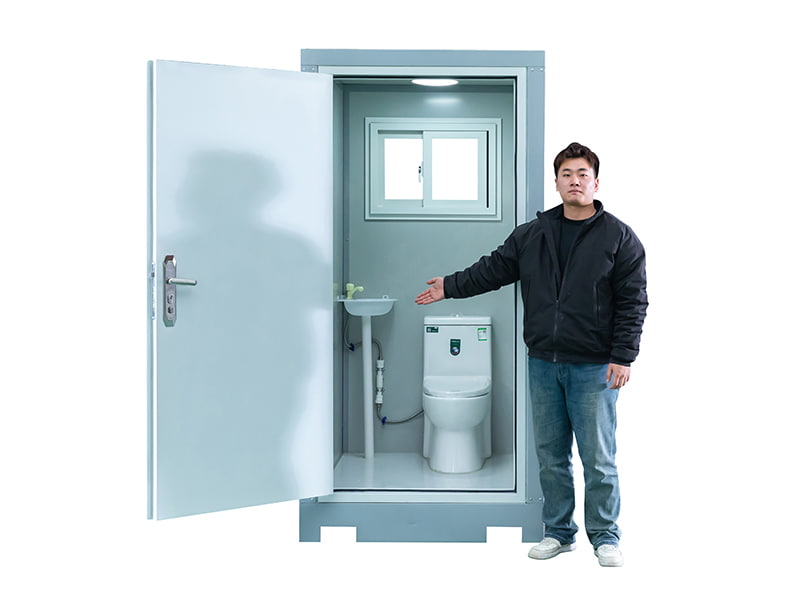
The Two-Person Outdoor Portable Toilet is a compact, durable, and fully functional mobile restroom unit. It is designed for outdoor use and can support a variety of temporary or semi-permanent sanitation requirements.
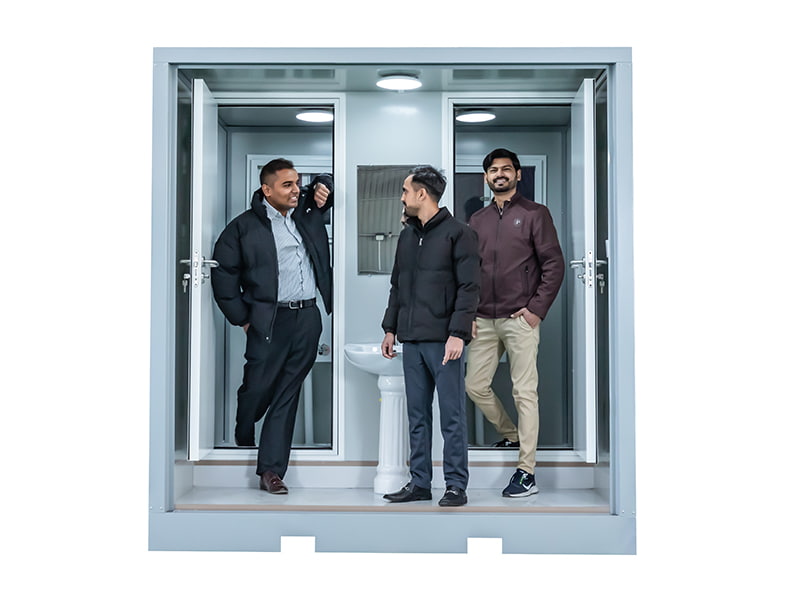
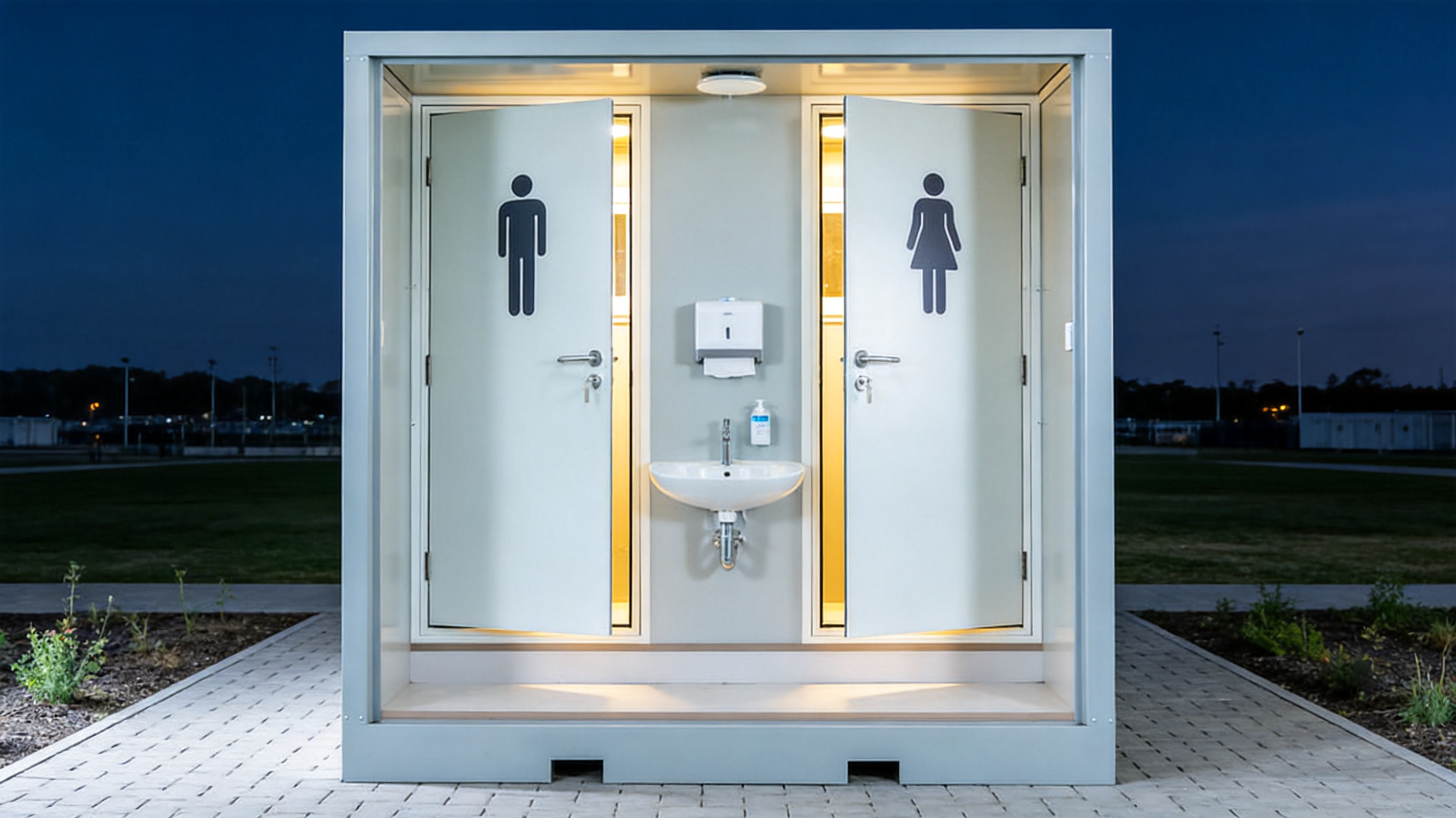
The unit includes separate male and female compartments, allowing users to access independent facilities while preserving privacy. An external handwashing sink supports basic hygiene immediately after restroom use. Built-in lighting makes the facility more practical during evening operations, nighttime events, cloudy conditions, or locations with limited surrounding illumination.
Its structure is designed to withstand frequent relocation and outdoor exposure. The pre-assembled configuration reduces the amount of work required at the destination. Instead of constructing a restroom from individual components, users can arrange transportation, position the unit, connect or prepare the necessary supporting services, and place it into operation according to the specific site plan.
The product is not intended to replace a large permanent public restroom building in every application. Its principal value is flexibility. It provides a ready-to-use sanitation point wherever a permanent building is unavailable, delayed, or unnecessary.
| Feature | Practical Benefit | Typical Application |
|---|---|---|
| Separate male and female compartments | Improves privacy and supports orderly access | Events, worksites, campsites, and public-use areas |
| Built-in lighting | Improves nighttime usability and visibility | Evening events, construction sites, and emergency locations |
| External handwashing sink | Encourages hygiene and convenient hand cleaning | Food-service areas, festivals, camps, and work zones |
| Portable structure | Allows relocation as site needs change | Temporary projects, seasonal facilities, and disaster relief |
| Pre-assembled design | Reduces on-site installation time and labor | Rapid-deployment and time-sensitive projects |
| Weather-resistant construction | Supports outdoor use under changing conditions | Outdoor venues and construction environments |
Separate Compartments for Better Privacy and Organization
One of the most important advantages of this product is its dual-compartment arrangement. The independent male and female restrooms create a clearer and more comfortable user experience than a single shared facility.
For event organizers, separate compartments can help manage visitor flow and reduce confusion. At construction sites, the arrangement provides a more inclusive facility for mixed workforces. In temporary accommodation or emergency-response areas, separate access points and private spaces can improve dignity and organization.
Privacy is especially important in outdoor environments, where facilities are often positioned in open areas and used by people who may not have access to other buildings. A well-planned dual-compartment unit provides a stronger sense of separation than simply placing two individual toilet fixtures in an exposed temporary structure.
The two-compartment format can also make better use of the available footprint. Rather than distributing several small units across a site, organizers can position one combined facility near the area where sanitation services are most needed. This may simplify pedestrian access, cleaning routes, supervision, and site planning.
Built-In Lighting for Safer Nighttime Use
Outdoor facilities are frequently used after sunset or in areas where surrounding lighting is limited. The integrated lighting system helps users identify the facility, enter and exit more confidently, and use the interior without relying entirely on portable lamps or external floodlights.
Lighting also supports operational safety. Workers responsible for cleaning, inspection, maintenance, and service access can perform their tasks more easily when the interior is visible. Event managers may benefit from reduced dependence on temporary extension cables and separate lighting equipment.
The built-in system should be considered part of the facility’s integrated design rather than an optional afterthought. When lighting is planned during factory production, wiring routes and lighting positions can be coordinated with the structure. This can help create a cleaner installation and reduce the need for improvised electrical arrangements on-site.
Users should still evaluate the power arrangement before deployment. Depending on the project, the facility may require connection to an available electrical supply or another suitable power solution. Site operators should also follow appropriate electrical safety procedures and confirm that the installation complies with local requirements.
Two-Person Outdoor Portable Toilet
External Handwashing Sink and Hygiene Support
Handwashing is a fundamental part of effective sanitation. A restroom facility without convenient access to hand cleaning may be less practical, especially at public events, food-service locations, construction sites, and emergency camps.
The external handwashing sink provides a dedicated location for users to clean their hands after using the restroom. Placing the sink outside the compartments makes it visible and accessible without requiring users to re-enter the toilet area. It can also support better circulation by separating restroom use from handwashing activity.
For event organizers, the sink can help communicate a clear hygiene standard. It may be positioned near the exit area or along a natural pedestrian path, depending on the site plan. At worksites, it may be used by employees before meals, after handling materials, or after completing tasks that involve dust, soil, or other contaminants.
The sink and associated water arrangements should be managed according to local health and environmental regulations. Depending on the location, operators may need to provide a clean-water supply, a drainage or wastewater collection system, soap, paper towels, hand dryers, or other hygiene accessories. The product provides the physical platform for handwashing, while final service arrangements should be planned according to the application.
Rapid Deployment for Time-Sensitive Projects
Speed is a major consideration in temporary infrastructure. Construction schedules can change quickly, public events may have fixed opening dates, and emergency facilities may be required immediately. A pre-assembled portable toilet can reduce the time between delivery and operation.
Traditional construction normally involves multiple trades working in sequence. A typical permanent restroom may require ground preparation, framing, wall construction, roof installation, plumbing, electrical installation, waterproofing, finishing, fixture installation, and inspection. Each stage can create delays, especially when weather conditions, labor availability, or material delivery becomes a problem.
The portable unit shifts much of the preparation to a controlled factory environment. Major components are assembled before shipment, reducing the amount of work required at the destination. Once the unit arrives, site personnel can focus on positioning, leveling, service connections, inspection, and final cleaning rather than building the entire facility from the ground up.
This approach is especially valuable for short-term events. If the facility will be used for only a few days or weeks, a long construction period may be disproportionate to the project’s duration. A mobile restroom can be delivered, operated during the event, and relocated or stored afterward.
Rapid deployment is also important in disaster relief. Emergency managers may need to establish sanitation points before permanent utilities and buildings are restored. A portable facility can help support displaced residents, medical teams, rescue workers, and logistics personnel while longer-term recovery work continues.
Durability in Outdoor Conditions
Outdoor sanitation facilities are exposed to conditions that do not affect indoor buildings to the same extent. Rain, wind, dust, sunlight, temperature changes, repeated cleaning, and frequent relocation can all influence service life and appearance.
The Two-Person Outdoor Portable Toilet is built around a robust and stable structure intended for outdoor use. Its design prioritizes practical strength and reliable operation rather than treating the facility as a temporary object that can be used without care.
A strong structure can provide several benefits. It helps the facility remain stable during normal use, reduces movement caused by everyday activity, and supports safer access. Durable surfaces can also make cleaning and maintenance more manageable. Weather-resistant construction helps the unit remain functional when exposed to changing outdoor conditions, although no portable facility should be placed without considering wind, drainage, local climate, and site-specific safety requirements.
Proper installation remains essential. The ground should be sufficiently stable, reasonably level, and suitable for the expected load. Water should be prevented from collecting around entrances or service points. In locations with strong winds, operators should consider appropriate anchoring or other site-protection measures. The unit’s mobility does not eliminate the need for responsible positioning.
Advantages Compared with Basic Single-Unit Portable Toilets
Portable sanitation products vary considerably in design and capability. Basic single-unit toilets may be suitable for small, low-traffic applications, but they can be less efficient when privacy, hygiene, lighting, and user volume are important.
The Two-Person Outdoor Portable Toilet offers several advantages over a basic single-compartment alternative.
More Efficient Use of Site Space
One combined dual-compartment unit can provide two separated restroom spaces without requiring two unrelated units to be positioned and managed independently. This can simplify site layout and may reduce the amount of space required for access paths between units.
Improved User Privacy
The male and female compartments are planned as independent facilities. This arrangement offers a more organized experience than a shared single-compartment facility and can be more appropriate for public events, mixed workforces, and community-use locations.
Integrated Hygiene Support
The external handwashing sink is included as part of the facility concept. Buyers do not need to create an entirely separate handwashing area merely to provide basic hygiene support. Additional supplies and service connections may still be required, but the primary platform is already incorporated.
Better Nighttime Functionality
Built-in lighting provides a feature that is often missing from entry-level portable toilets. This can improve usability after dark and reduce the need to position separate lighting equipment near the facility.
Reduced Coordination Complexity
When two independent portable toilets are used, the purchaser must consider two units, two delivery positions, cleaning access for both, and potentially separate service arrangements. A combined unit can simplify procurement, transportation planning, and daily site management.
Advantages Compared with Constructing a Permanent Restroom
A permanent restroom building may be the best long-term solution for a fixed facility with stable demand. However, it is not always the most suitable answer for a temporary or rapidly changing project.
The portable unit generally offers a shorter deployment period and lower site disruption. It can be used while a permanent building is being planned or constructed. It may also be relocated when the project moves to another phase or when an event ends.
Permanent construction often requires a larger initial investment and a longer approval process. It may also involve extensive foundations and utility work. A mobile facility avoids much of this work, although purchasers must still confirm local requirements relating to placement, wastewater, electrical supply, accessibility, fire safety, and public health.
Flexibility is perhaps the strongest advantage. A permanent building is tied to one location. A portable toilet can support different projects during its useful life. This can improve asset utilization for construction companies, event-service providers, municipalities, emergency-response organizations, and rental operators.
Application Scenarios
Outdoor Events and Festivals
Concerts, fairs, sports competitions, exhibitions, weddings, markets, and community celebrations often require additional restroom capacity. The Two-Person Outdoor Portable Toilet can supplement existing public facilities or serve as a temporary restroom station in an open venue.
Its separate compartments support a broad range of users, while the lighting and handwashing sink improve convenience. Event planners can position the facility near visitor areas while keeping it separate from food preparation zones and high-traffic entrances.
Construction Sites
Construction workers need reliable restroom access before a permanent building is completed. A portable unit can be delivered at the beginning of a project and remain in service as work progresses.
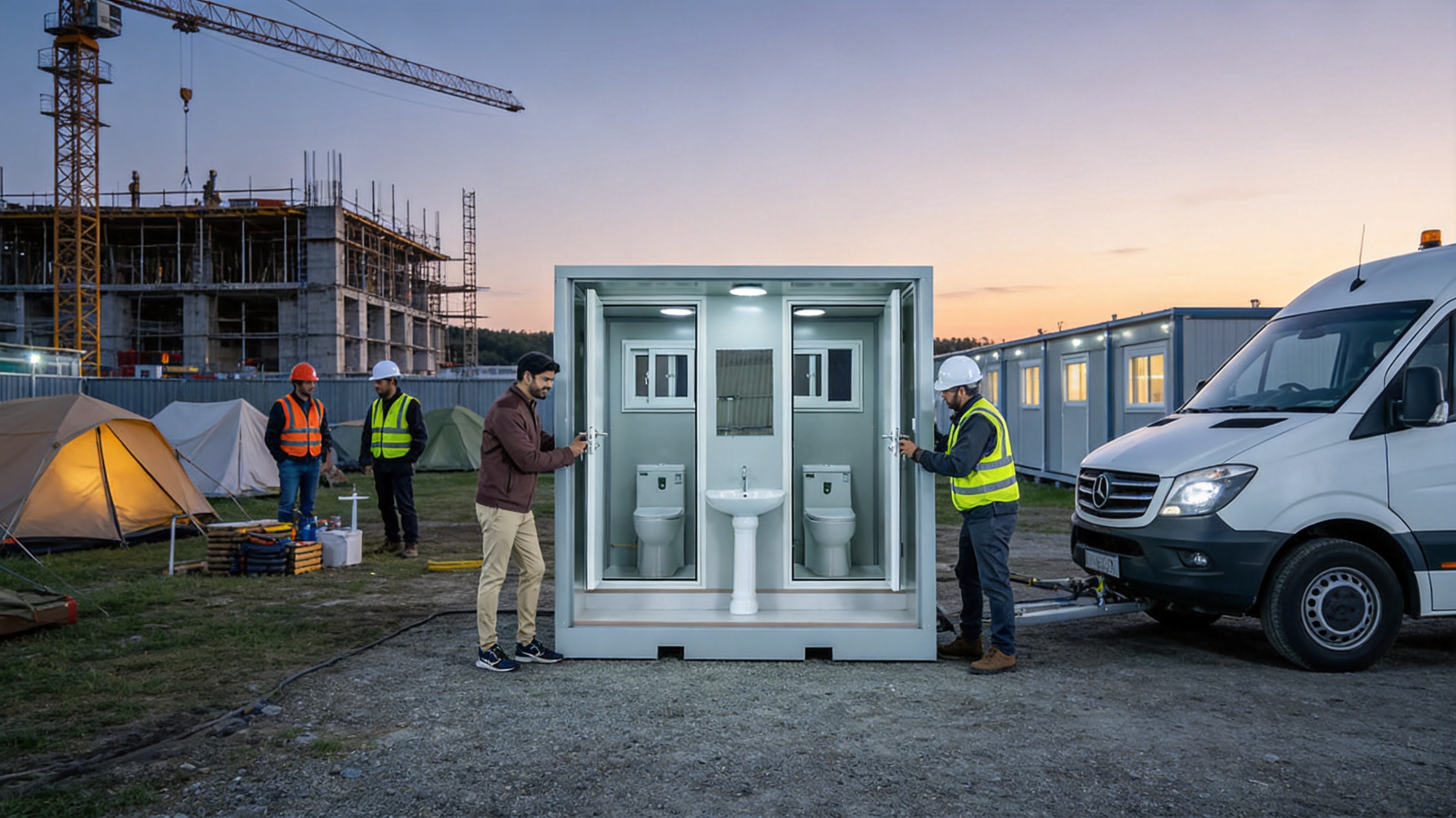
Because construction sites frequently change, mobility is particularly useful. The unit can be repositioned as buildings, roads, storage areas, and access routes develop. Its strong structure and outdoor-ready design are appropriate for demanding work environments, provided that the site is prepared correctly.
Camping Areas and Recreational Locations
Campgrounds, temporary outdoor recreation areas, fishing sites, and seasonal accommodation projects may not have sufficient permanent sanitation infrastructure. A portable facility can add capacity without requiring a large building program.
The compact format may be useful for locations where land disturbance should be minimized. Operators can install the unit near user zones while planning suitable water, wastewater, cleaning, and maintenance arrangements.
Emergency and Disaster Relief
After a natural disaster or other emergency, normal sanitation systems may be damaged or overloaded. Portable toilets can be deployed to support temporary shelters, field offices, medical stations, logistics hubs, and public gathering points.
The pre-assembled design is valuable in these conditions because response teams may have limited time and labor. The facility can help restore basic dignity and hygiene while more extensive infrastructure repairs are underway.
Temporary Housing and Remote Work Areas
Remote industrial projects, agricultural operations, road works, utility projects, and temporary worker accommodations may need independent sanitation facilities. The unit can be used alongside container houses, prefabricated offices, storage buildings, or temporary accommodation units.
Its separate compartments can help support a mixed workforce, while its mobility allows the sanitation service to follow changing work zones.
Factory-Based Manufacturing and Quality Control
The quality of a portable facility depends not only on its visible appearance but also on how consistently its components are designed, fabricated, assembled, and inspected. Factory production offers important advantages compared with uncontrolled on-site construction.
Suzhou Taimao Integrated Housing Co., Ltd. applies modular manufacturing principles across its product range. The company specializes in integrated housing solutions, including container houses, folding container houses, double-wing expandable container houses, detachable container houses, K-type prefabricated houses, steel structures, and portable restroom facilities.
For the Two-Person Outdoor Portable Toilet, factory-based production can support repeatable dimensions, consistent component placement, organized electrical installation, controlled surface finishing, and systematic inspection before dispatch. Production in a dedicated facility also reduces the effect of weather interruptions that can affect outdoor construction.
Design Coordination
Manufacturing begins with coordinated design. The structure, compartments, lighting, sink position, access areas, and service interfaces must work together. A coordinated design reduces the risk of conflicts between components and allows production teams to prepare materials more efficiently.
Modular design also makes it easier to adapt the product to different project requirements. Depending on the order and applicable regulations, buyers may discuss finish selections, color preferences, service arrangements, signage, transport considerations, and other project-specific details with the manufacturer.
Controlled Material Preparation
Factory production allows materials to be measured, cut, prepared, and organized before assembly. This can improve consistency and reduce avoidable waste. Proper material preparation is particularly important for portable structures because components must be strong enough for repeated handling while remaining practical to transport.
Steel structural elements, enclosure materials, doors, fixtures, lighting components, sinks, and other parts can be managed through a planned production sequence. The objective is to produce a stable, functional unit rather than a collection of unrelated site-installed items.
Integrated Assembly
Integrating major systems during factory assembly helps reduce installation work at the destination. Lighting components can be positioned within the structure, internal spaces can be completed in advance, and the handwashing station can be incorporated into the overall layout.
This method can improve the relationship between the building envelope and its internal equipment. It can also reduce the number of trades required on-site and limit the possibility of inconsistent workmanship between different installers.
Pre-Delivery Inspection
Before shipment, a portable facility should be reviewed for structural condition, door operation, fixture installation, lighting function, surface quality, cleanliness, and packaging security. Factory inspection allows problems to be identified before the product reaches the customer’s site.
Pre-delivery checks do not replace final site inspection. Transportation, unloading, placement, and service connection can affect the unit. However, factory quality control creates a stronger starting point and can reduce commissioning time.
Integrated Modular Manufacturing Expertise
The company’s broader manufacturing strengths support the development of practical mobile facilities. Its experience with modular buildings enables it to coordinate structure, enclosure systems, insulation, interior finishes, electrical services, and other components as part of an integrated product.
The company describes its flagship SIP modular building system as integrating structure, insulation, mechanical, electrical, plumbing, heating, ventilation, air-conditioning, interior finishes, and smart-home technologies into a unified solution. While the Two-Person Outdoor Portable Toilet serves a different function from a residential or commercial modular building, this systems-based experience is relevant to its production approach.
Instead of treating construction as a sequence of disconnected site activities, integrated manufacturing moves a substantial portion of the work into a controlled factory environment. This can improve production planning, shorten on-site assembly, and support more predictable results.
The company also emphasizes digital software support and end-to-end project assistance. For buyers managing multiple units or larger temporary facilities, coordinated communication can help with product selection, layout planning, manufacturing progress, logistics, and deployment.
These capabilities are particularly valuable for international purchasers, contractors, distributors, event-service companies, and organizations that need repeat orders. A supplier that understands both individual products and wider modular construction systems may be better positioned to support a phased project or a mixed facility package.
Shipping, Placement, and Deployment Considerations
Transportation planning should begin before the unit leaves the factory. Buyers should confirm delivery access, road conditions, unloading equipment, site dimensions, and the final position of the facility.
The destination should provide a stable and reasonably level base. The unit should be positioned so that doors can open fully, users can approach safely, cleaning personnel can reach the facility, and service connections can be inspected. The surrounding area should also have suitable drainage to reduce the risk of standing water.
Where the facility is intended for public use, organizers should consider pedestrian flow and accessibility. It should not block emergency routes, vehicle access, fire equipment, or other critical site functions. Adequate lighting around the exterior may be useful even when the unit has built-in interior lighting.
Depending on the project, the unit may require connections or arrangements for electrical power, clean water, wastewater, cleaning supplies, and waste servicing. These requirements should be clarified before delivery to avoid delays after arrival.
For projects involving frequent relocation, the operator should establish a handling procedure. Moving a portable building without suitable equipment or preparation can damage the structure or create safety hazards. Relocation should be performed by trained personnel using appropriate lifting, transport, and securing methods.
Maintenance and Long-Term Operational Value
Regular cleaning is essential for any shared sanitation facility. A maintenance schedule should cover toilet compartments, floors, doors, handles, the handwashing sink, lighting fixtures, exterior surfaces, and service areas.
High-use locations may require cleaning several times per day. Event organizers should assess expected visitor numbers, operating hours, weather, and available service personnel. Construction sites may require a routine based on workforce size and site conditions.
The handwashing station should be supplied with clean water and appropriate consumables. Soap, towels, and other hygiene materials should be checked regularly. Wastewater and sanitation systems must be serviced in accordance with local rules and the selected operating arrangement.
Lighting should be inspected periodically to confirm reliable operation. Doors, locks, hinges, ventilation openings, and structural connections should also be reviewed. Early identification of minor issues can prevent more serious operational problems.
Proper maintenance improves user satisfaction and can extend the useful life of the unit. It also protects the owner’s investment, particularly when the facility is intended for repeated deployment across multiple projects.
Environmental and Resource Considerations
Prefabricated production can support more efficient use of materials and labor by moving work into a controlled manufacturing environment. Planned cutting, standardized components, and repeatable assembly may help reduce waste compared with uncoordinated site construction.
Mobility can also reduce the need to construct multiple permanent facilities for temporary activities. A reusable unit may serve different projects over time, potentially reducing the material demand associated with repeated short-term construction.
Environmental performance depends on the complete operating system, not only the building structure. Water consumption, wastewater treatment, cleaning chemicals, transport distance, energy use, and end-of-life handling should all be considered when evaluating the facility.
For buyers seeking a lower-impact solution, it is useful to discuss material selection, energy-efficient lighting, water-saving fixtures, reusable components, and responsible disposal or recycling procedures with the supplier. Site-specific environmental requirements should always be reviewed before deployment.
How to Evaluate a Supplier
Choosing a portable toilet supplier involves more than comparing the initial purchase price. Buyers should evaluate product functionality, manufacturing capability, communication, customization support, quality control, delivery coordination, and after-sales assistance.
A capable supplier should be able to explain the structure, materials, service requirements, installation process, and maintenance recommendations clearly. The supplier should also identify which items are included and which must be arranged by the purchaser.
For larger orders, buyers may request production drawings, component information, inspection procedures, packaging details, loading plans, and delivery schedules. Clear documentation can reduce misunderstandings and support smoother project execution.
Suzhou Taimao Integrated Housing Co., Ltd. presents itself as a manufacturer and supplier of modular building solutions with experience in integrated design and factory production. Its product range allows customers to source portable sanitation facilities alongside other temporary or modular structures when a project requires a complete site solution.
This broader product capability can be useful for construction companies, developers, emergency organizations, event contractors, and international distributors. A single supplier may be able to coordinate portable toilets with container offices, accommodation units, dining facilities, storage rooms, and other site buildings.
Customization and Project Coordination
Although the standard Two-Person Outdoor Portable Toilet already includes important functions, project requirements may vary. Buyers may need to consider exterior appearance, signage, placement, utility interfaces, access arrangements, or coordination with other temporary buildings.
Customization should be discussed before production begins. The feasibility of any modification depends on structural design, manufacturing schedules, transport limitations, local regulations, and the intended use of the facility.
For projects with several units, the supplier may assist with layout planning and deployment sequencing. Units can be arranged near work areas, visitor zones, temporary housing, or emergency-service points. A coordinated plan may improve user access and reduce unnecessary movement across the site.
Communication is especially important for export orders. Buyers should confirm packaging, shipping dimensions, loading methods, documentation, delivery terms, and responsibility for unloading and site installation. Early coordination reduces the risk of unexpected costs or delays.
Safety and Regulatory Planning
Portable sanitation facilities must be used responsibly and in accordance with applicable local requirements. Rules may address wastewater handling, electrical connections, public access, accessibility, fire safety, ventilation, hygiene, and temporary structure placement.
The purchaser is responsible for confirming the regulations applicable to the project location. Requirements may differ between countries, cities, construction sites, public events, and emergency facilities.
Operators should inspect the facility after delivery and before public use. The inspection should confirm that the structure is stable, doors function correctly, lighting operates, the handwashing station is ready, surfaces are clean, and the service arrangements are secure.
In areas exposed to strong wind, heavy rain, snow, or extreme temperatures, additional site precautions may be necessary. The facility should not be treated as fully self-sufficient without reviewing local environmental and operational conditions.
Q&A
What is the Two-Person Outdoor Portable Toilet?
It is a mobile restroom facility with separate male and female compartments, built-in lighting, an external handwashing sink, and a robust outdoor-ready structure. It is designed for events, construction sites, campsites, emergency locations, and other temporary or semi-permanent applications.
Why are there separate male and female compartments?
The separate compartments improve privacy, support more organized user access, and make the facility suitable for mixed public events, construction workforces, temporary communities, and emergency-response locations.
Does the unit include lighting?
Yes. The product includes a built-in lighting system intended to improve visibility and usability at night or in low-light conditions. The purchaser should confirm the required power arrangement and comply with local electrical safety requirements.
Is a handwashing sink included?
Yes. An external handwashing sink is included to support hygiene and convenience. Water supply, wastewater handling, soap, towels, and other consumables should be arranged according to the project’s operating requirements.
Can the unit be used at construction sites?
Yes. Its portable and durable design makes it suitable for construction projects, particularly when permanent restroom facilities are not yet available or when work areas change during the project.
Can it be used during disaster relief operations?
Yes. The pre-assembled design and rapid-deployment characteristics make it suitable for temporary shelters, field offices, medical areas, logistics centers, and other emergency locations, subject to appropriate site preparation and service arrangements.
Is the facility delivered ready for immediate use?
The unit is pre-assembled to reduce on-site work and can be prepared quickly after delivery. Final deployment may still require positioning, leveling, inspection, electrical connection, water supply, wastewater arrangements, cleaning, and compliance checks.
How does it compare with two separate basic portable toilets?
The combined unit provides two independent compartments in one coordinated structure. It also includes integrated lighting and an external handwashing sink, which may reduce the need for separate supporting equipment and simplify site management.
Can the unit be relocated?
Yes. It is designed as a portable facility and can be moved when site requirements change. Relocation should be performed with suitable equipment and by trained personnel to protect the structure and maintain safety.
Can the product be customized?
Project-specific options may be available depending on the order, manufacturing process, local regulations, and transport requirements. Buyers should discuss requested changes with the supplier before production.
What should be prepared before delivery?
The buyer should prepare a stable and reasonably level location, confirm delivery access, arrange unloading equipment if needed, plan electrical and water services, establish wastewater handling, and confirm any local permits or inspections.
Who manufactures this portable restroom?
The product is supplied by Suzhou Taimao Integrated Housing Co., Ltd., a China-based manufacturer specializing in modular building solutions, prefabricated structures, container houses, steel structures, and portable facilities.
How should the facility be maintained?
It should be cleaned regularly, supplied with hygiene materials, inspected for lighting and door operation, checked for structural or surface damage, and serviced according to the selected water and wastewater systems. High-traffic locations may require multiple cleaning cycles per day.
Conclusion
The Two-Person Outdoor Portable Toilet provides a practical answer to the need for fast, hygienic, and flexible outdoor sanitation. Its separate male and female compartments support privacy, while built-in lighting improves nighttime functionality and the external handwashing sink strengthens hygiene performance.
Compared with basic single-unit portable toilets, it offers a more complete facility package. Compared with permanent restroom construction, it provides greater mobility, shorter deployment time, and lower site disruption for temporary applications. Its value is especially clear at outdoor events, construction sites, campsites, emergency facilities, remote work areas, and temporary accommodation projects.
The product also benefits from a factory-based manufacturing approach. By coordinating structure, fixtures, lighting, finishes, and service features before delivery, the manufacturer can reduce on-site work and support more consistent production. Suzhou Taimao Integrated Housing Co., Ltd.’s broader experience in modular construction, integrated building systems, prefabricated housing, and steel structures provides a foundation for delivering coordinated temporary infrastructure solutions.
Successful operation still depends on proper site preparation, local compliance, utility planning, cleaning, and regular maintenance. When these factors are managed correctly, the Two-Person Outdoor Portable Toilet can provide reliable sanitation wherever a permanent facility is unavailable, delayed, or impractical.
References
1. Suzhou Taimao Integrated Housing Co., Ltd. Product information for the Two-Person Outdoor Portable Toilet.
2. Suzhou Taimao Integrated Housing Co., Ltd. Company information on modular building systems, prefabricated construction, SIP technology, and factory-based manufacturing.
3. General principles of temporary sanitation planning for outdoor events, construction sites, campsites, and emergency-response operations.
4. General guidance on portable facility placement, hygiene management, wastewater handling, electrical safety, and outdoor maintenance.
5. General prefabricated construction practices relating to modular design, controlled factory assembly, transportation, site deployment, and quality inspection.
Product: Two-Person Outdoor Portable Toilet

For exclusive deals and latest offers, sign up by entering your email address below.

-
TEL:+86 18762912902
-
Email:cntaimao@163.com
-
WhatsApp:
-
Add:Group 5, Cao Village, Zhenze Town, Suzhou, Jiangsu, China
Copyright © Suzhou Taimao Integrated Housing Co., Ltd.
All Rights Reserved.
 Wholesale movable homes for sale
custom built modular homes